DBR3
- 30/01/2013The car was subsequently rebuilt as DBR1/4 and can seen on the DBR1 page
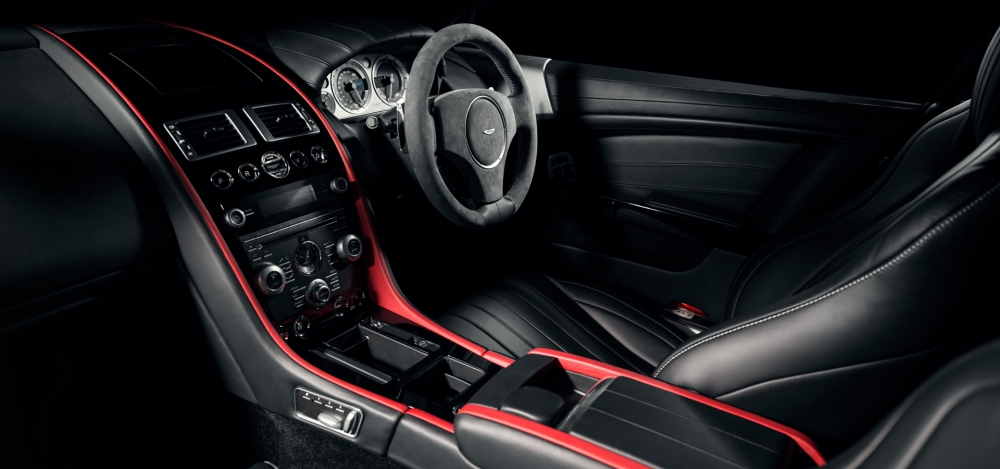
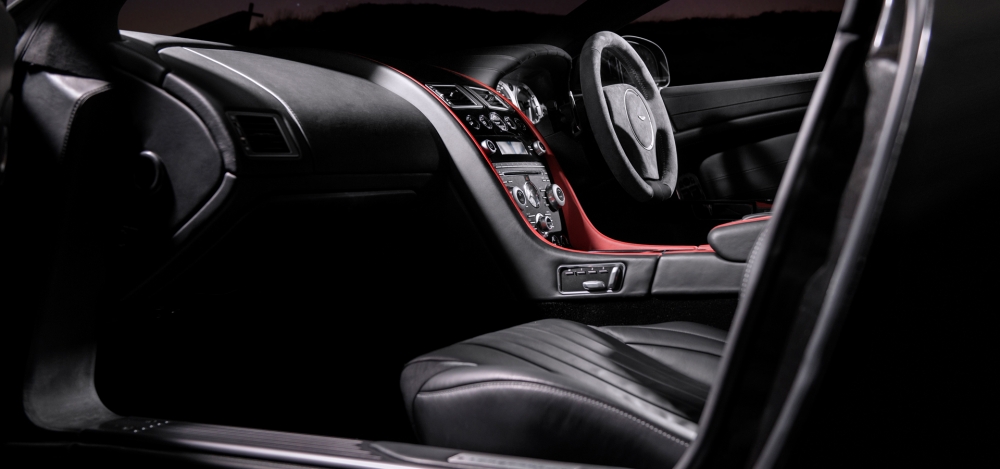
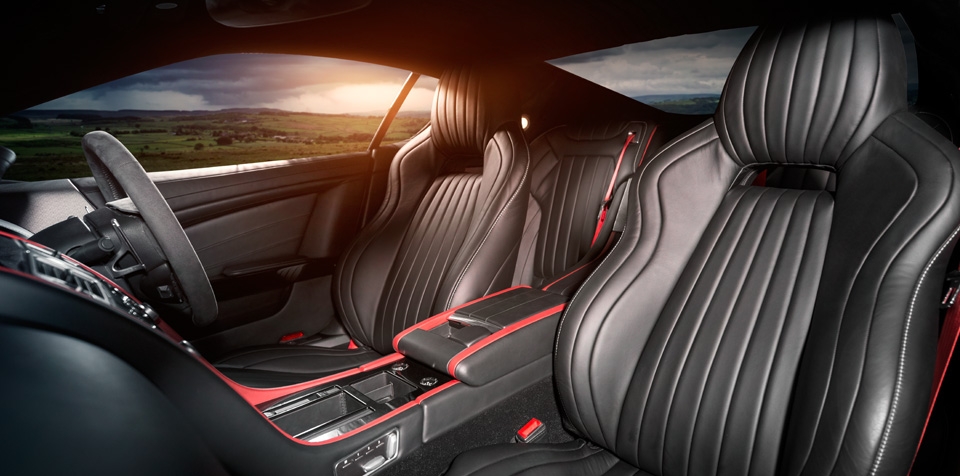
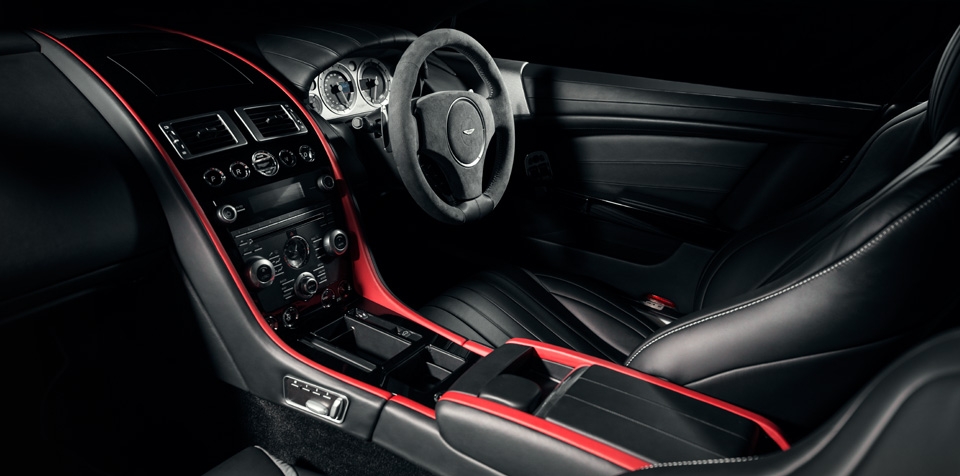
The last nine examples of the DB9, actually called ‘Last of the 9’ were built to identical specification with special touches by Q by Aston Martin. All coupes, and all finished in a real heritage colour of Cumberland Grey (remember the 1980’s Bond spec V8). The interiors feature Bitter Chocolate Semi-Aniline hide with a rather unusual gold coloured welt and thread.
Photos from Aston Martin Lagonda and Dr Andy Palmer
This race car performance is matched by authentic motorsport styling. Once again painted in Stirling Green with lime green accents, the Vantage AMR Pro not only takes its colour scheme from Aston Martin Racing’s V8 Vantage GTE racer, but uses the same bonnet and rear wing as the World Endurance Championship winner.
To compliment these authentic motorsport parts, Aston Martin’s design team has designed a new front bumper that incorporates a new bold full-height front grille, a new front valance and splitter, front fenders, sill appliques and a revised rear diffuser.
The racing theme continues inside, with extensive use of carbon fibre, lavish Dark Knight Alcantara upholstery with lime green accents and a custom roll cage designed by Q by Aston Martin. The result is a Vantage that looks as spectacular as it drives.
Announced at the 2017 Geneva Motor show as part of the launch of the new AMR line, Dr Palmer announced that AML will be putting Vantage AMR Pro into production in an extremely limited series of no more than 7 cars.
Their first attempt at an Aston was this aggressive looking DB9 first shown at the Frankfurt IAA, September 2005. From what I can tell you from the press release, here are some of the modifications
This particular example is I believe a concept to demonstrate the ability of the firm. The butterfly doors are a unique additional modification that Mansory did not subsequently offer to customers. Two years later, Mansory also offered their customisation programme on the DB9 Volante.
Photographs with the kind permission of Mansory
I first photographed the car at Coys Festival 1995, then again in 1998 at Coys where it was to race. Unfortunately it crashed heavily in practice – don’t ask to see the pictures!
DP215 eventually ran in it’s first race since Reims in 1963 when it competed in the pre-64 GT race at the final Coys Festival at Silverstone during the Summer 2000 and achieved 13th place.
The swept Kamm tail of the DP cars was found to be essential after wind tunnel tests showed massive lift at 175mph. The 4 litre, six cylinder engine of DP215 developed a huge 326 bhp at 5800 rpm – sufficient to achieve 198.5 mph down the Mulsanne straight during practice.
It appears that the entire body of the Cyrus is remanufactured from extremely light ‘prepress autoclave carbon’ including both wing extensions for the front and rear and also side skirts and bonnet which comes with ‘power domes’ in place of the grilles. The Cyrus is claimed to be about 70 kg lighter than the donor car. Exactly how Mansory get a gold thread into the carbon weave isn’t known but much if the interior facings on the example featured here match the exterior carbon. The car shown here is probably the first Cyrus built, based on a DB9 donor car. It was shown at the 2010 Geneva Motor Show on the Mansory company stand.
The engine of the Cyrus remains unchanged from the original donor car, although Mansory are happy to fit a sports exhaust system and sports catalytic converter plus a high performance manifold, liberating another 28 bhp allowing modest improvement to the performance. The Cyrus is fitted with 10 spoke ultra-light wheels, the lightest forged wheels available. Fitted with Dunlop Sport Maxx tyres, the front wheels are 20 inch in diameter and 9 inches wide; the rears are 21 inch diameter and 10.5 inches wide 295/25 tyres.
Mansory are keen to point out that they only intend to build, or more accurately, convert 15 of these cars although no information is available as to how close they are in completing this number. Car #7 has been spotted for sale and features a more traditional matte black carbon weave. The cost of the Cyrus is dependant on the final spec but the conversion is priced in the region of €380,000 plus the cost of the donor DB9 or DBS.
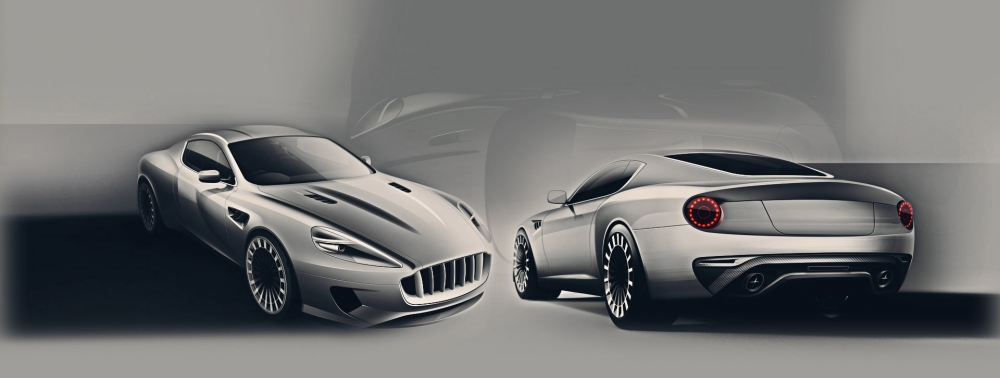
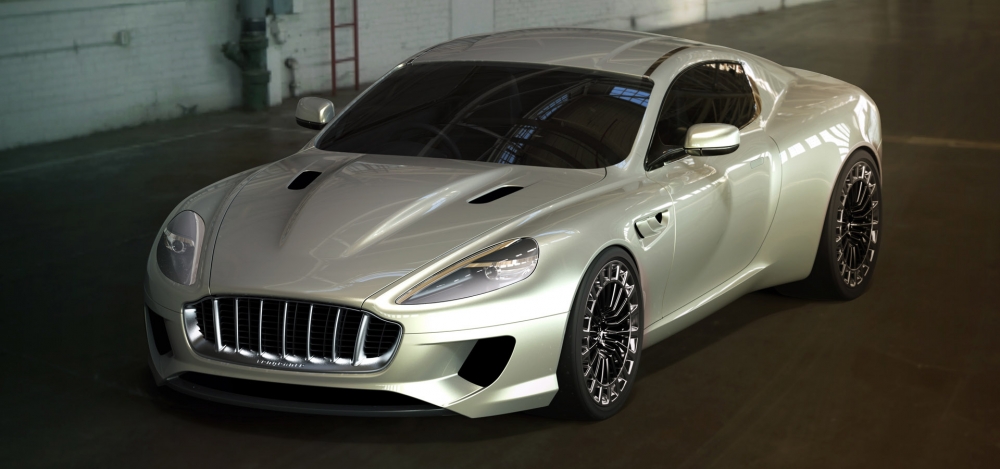
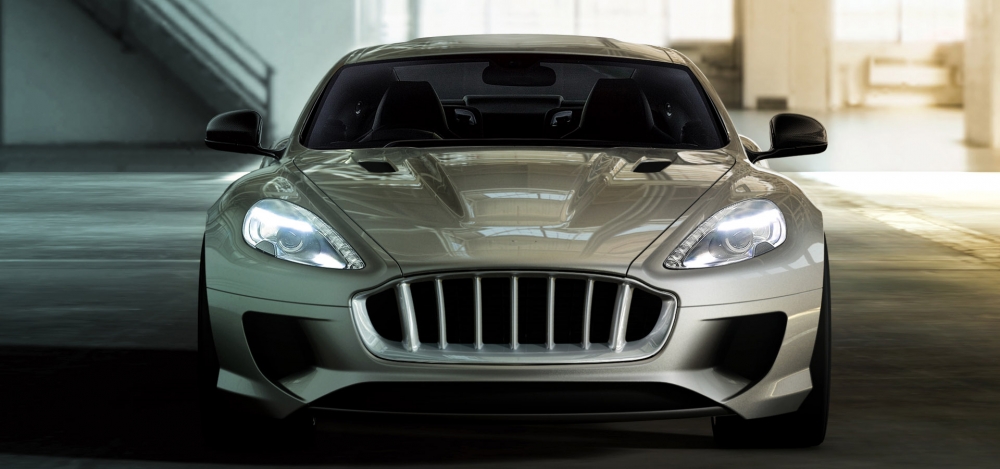
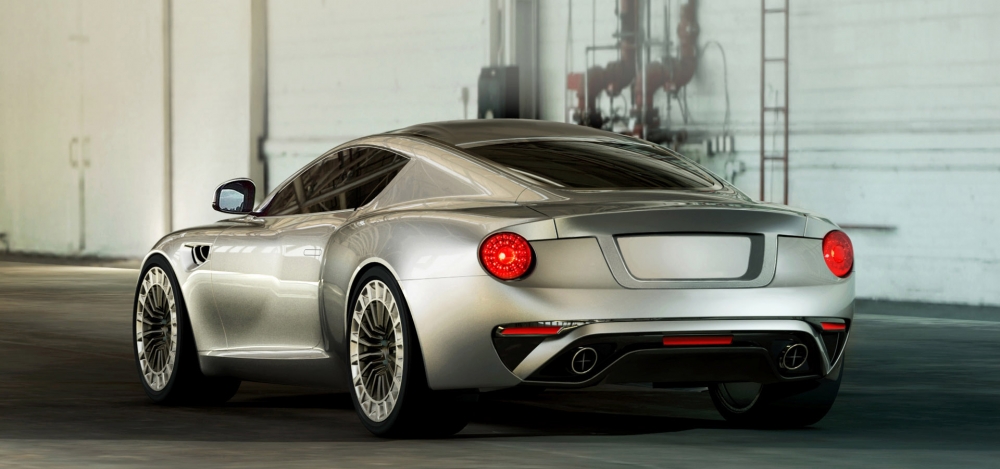
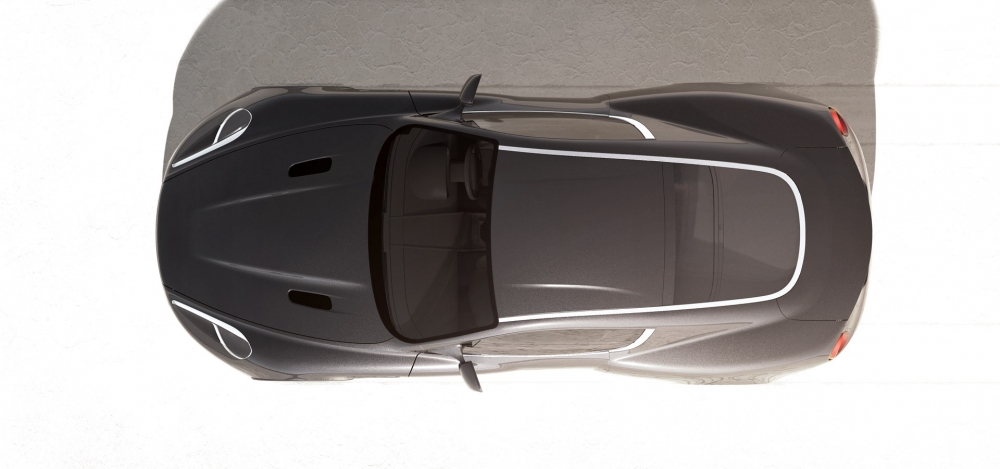
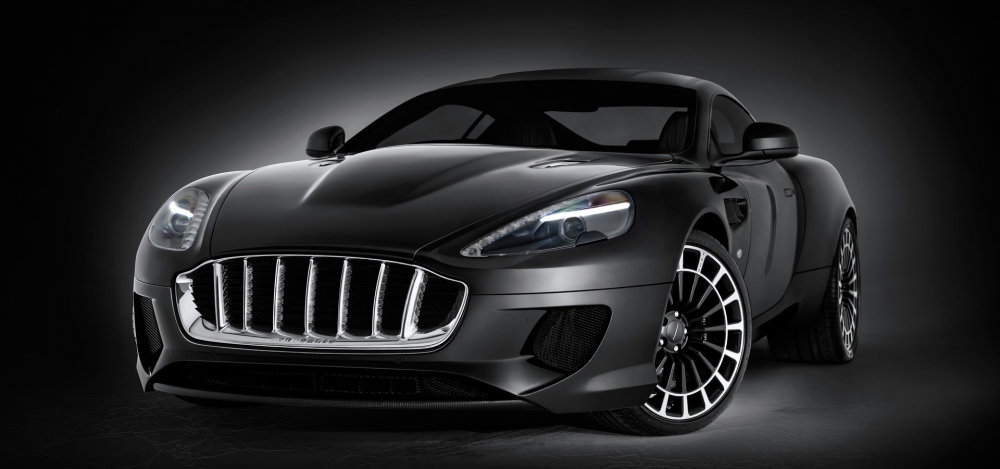
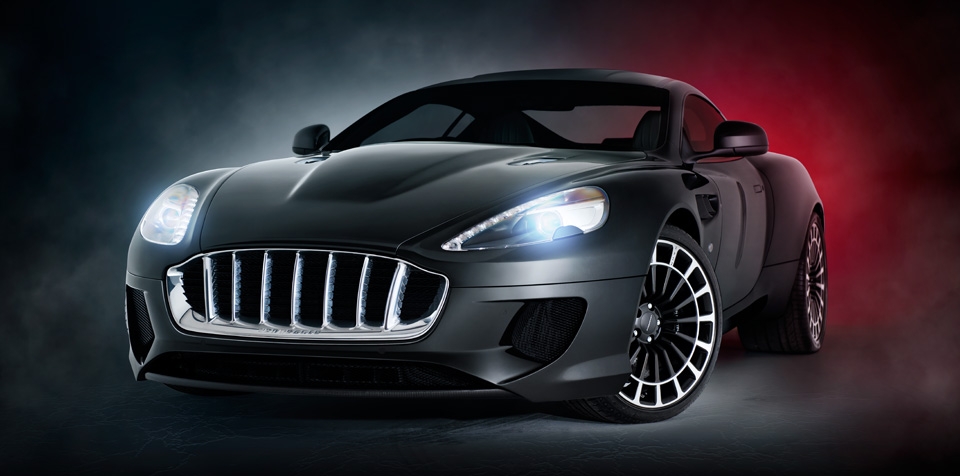
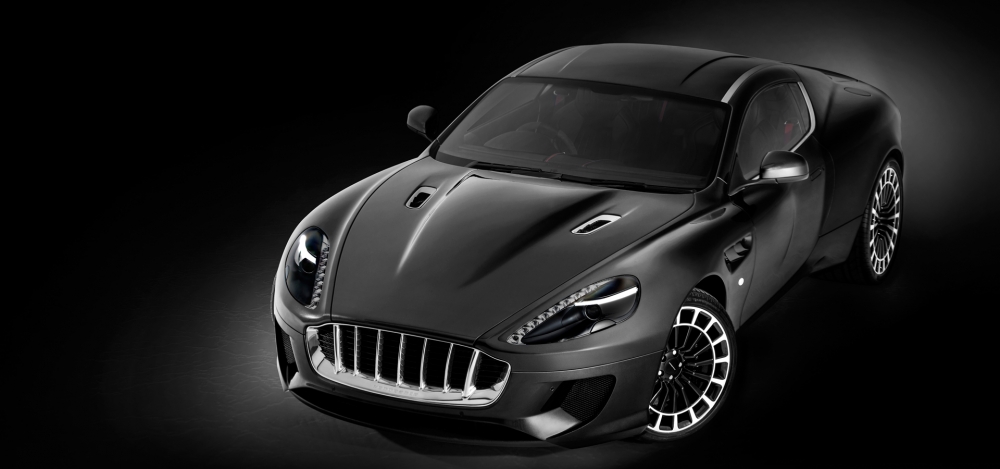
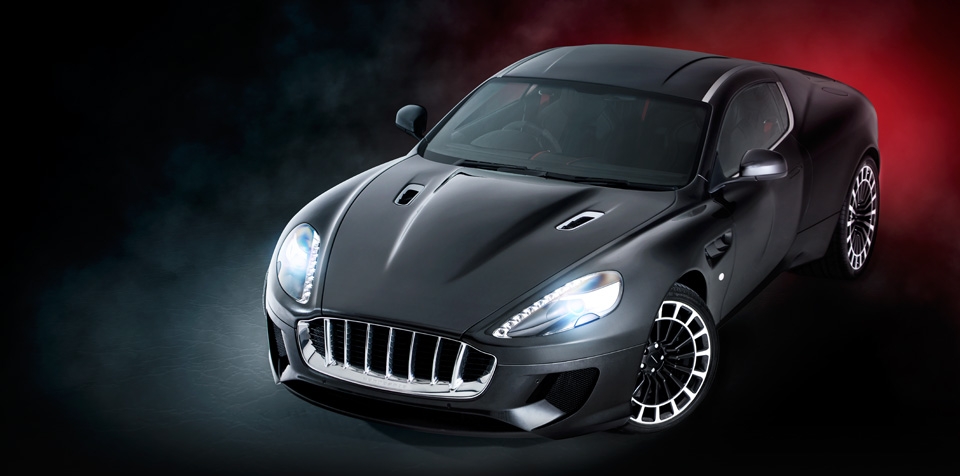
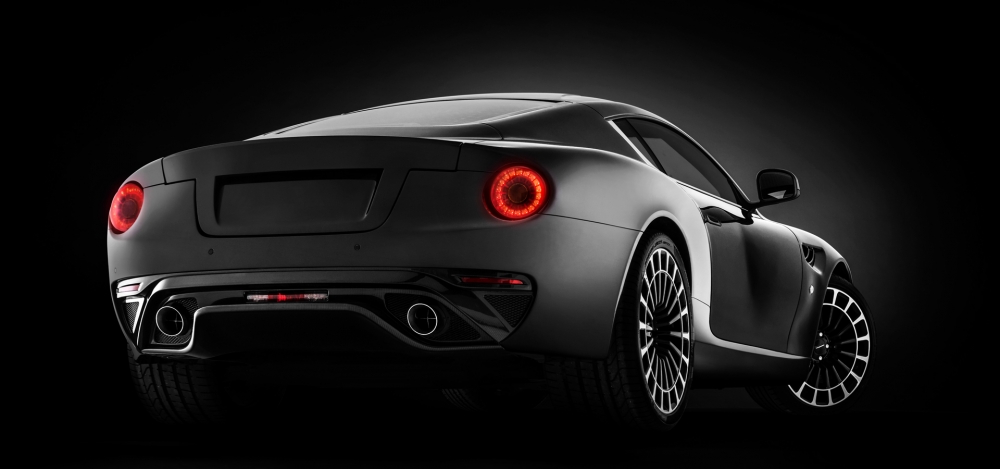
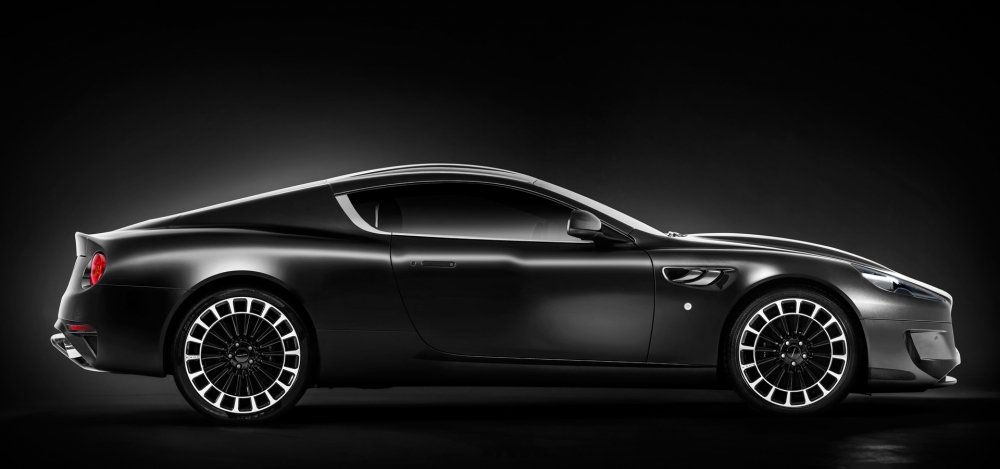
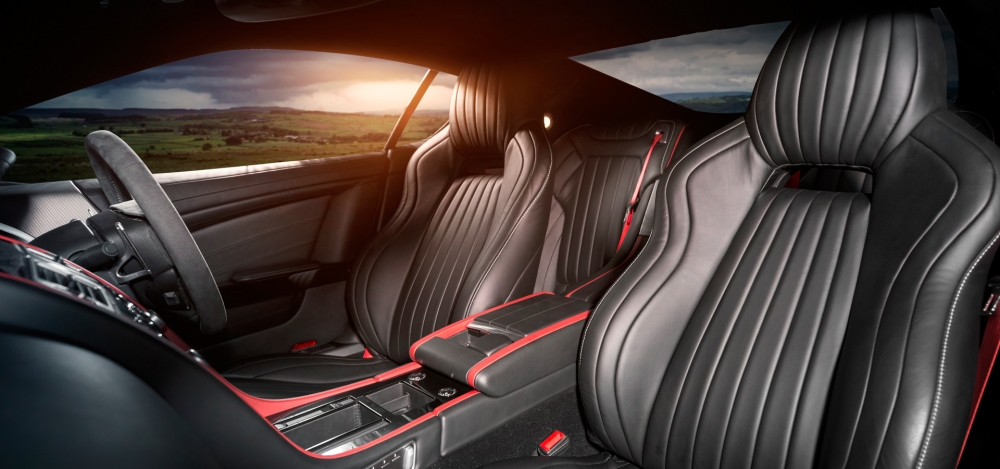
Mechanically, the Vengeance is based on the unmodified underpinnings of a 2016MY DB9 but the coachwork is totally new, designed to “evoke the silhouette of a sabre tooth on the prowl”. Almost all the panels are made in hammer formed aluminium, whereas the roof halo is finished in polished stainless steel and the bumpers and skirts are in a lightweight composite. Of special note is the polished grille made from a billet of aluminium. Unique 20-inch ‘roulette’ designed alloys feature at the front while even bigger 21-inch wheels are used at the rear; the rear LED lights follow a similar theme.
The Vengeance is the work of a team of over 40 automotive experts in a Midlands based coachbuilder and every vehicle will be built on a brand new chassis supplied directly from Aston Martin. Built with the agreement of Aston Martin, prices for this extremely limited edition begin at £300,000 with an expected build run of just 5 cars.
Finished in Stratus White, the car boasted blue tinted mirror caps and rear diffuser and unique red, white and blue exterior wing badges. The interior was lavishly trimmed in a deep Aurora Blue leather, with bespoke ‘Zagato’ wave quilting, anodised blue rotaries and Union Jack embroidery.
Each example was priced at RMB 2,088,000 (the equivalent of £236,000). This might appear much more expensive than a typical car in Europe and the US but I suspect that much of the extra was accounted for by local taxation.
The total production did reach the promised 5, made up of three Roadsters and two coupes.
The specs for the V8 Vantage S Roadster Great Britain are as follows
•2017MY V8 Vantage S Roadster, LHD, Sportshift 2 transmission
•Stratus White coachwork with blue mirror caps are rear light finishers
•Platinum Finish grille and mesh, bright tailpipe finisher, Bright Side Strake
•Unique red, white and blue exterior wing badges
•5 Spoke Gloss Black Diamond turned wheels
•Red Brake Callipers
•Aurora Blue interior with Cream Truffle stitching, with bespoke ‘Zagato’ wave quilting
•Piano Black facia with Iridium Interior Trim Pack
•Caspian Blue carpets, Atlantic Blue hood, Tailors Grey headlining
•Bang & Olufsen Beosound Audio
•Optional cost equipment fitted as standard: Front Parking Sensors, Clear Rear Lamps, Reversing Camera
All nine cars were built to the same cosmetic specification with coachwork in the historic V8 colour of Cumberland Grey and interiors featuring Bitter Chocolate Semi-Aniline hide with a rather unusual gold coloured welt and thread.
Seven of the nine were built in left had drive for markets around the world leaving only 2 for UK customers.
Some photographs provided with the kind assistance of my friends at Nicholas Mee and Co