Latest News - 01/09/24

What's New @ AstonMartins.com?

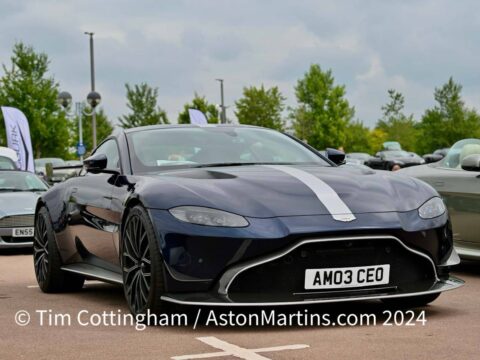
Vantage AM6 CEO by Q

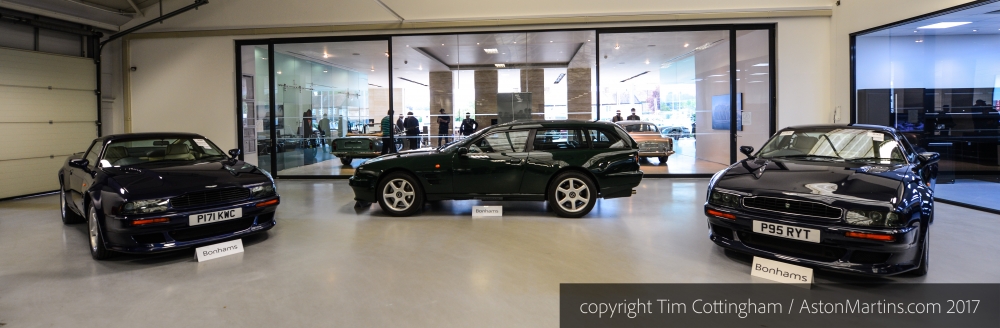
Virage Lagonda 5 Door Shooting Brake

The badge on the tailgate of the 5 door spells ‘Vacances’ although I’ve never known the car described in this way. This left hand driver car started life as an early Virage production coupe before the extensive conversion process. The finished car with Hunter Green coachwork was built to full 6.3 engine specification together with a five speed manual gearbox. Also with rear facing child seats in the luggage compartment, this must hold the record as the Aston Martin with the most seats, with space for 7 people.

To the best of my knowledge, this car, chassis 50005 was a conversion of an early Virage by Works Service and is perhaps the only one especially converted. A small batch of six further 5 door shooting brakes were subsequently made of an overseas Royal family. Instead of a 12 inch stretch, these six cars, built from scratch rather than concerted, were made with an extra 16 inches added to the wheelbase

Virage Lagonda 4 door LWB


Virage 6.3 Lightweight

The chassis were built partly to Vantage spec and the panelling was done in production alongside the regular cars with a unique hybrid combination of Virage 6.3 and Vantage styling cues.  Special identifying features of the 6.3 Lightweight are

  • Vantage grille flanked by twin BMW headlights in a rectangular aperture
  • Vantage style rear wheel arches
  • Regular Virage rear light clusters
  • Vantage like bonnet with a pronounced power bulge with oversized cooling vents
  • Cooling vents were added along the flanks for cooling the rear brakes
  • The wheels used were highly polished spilt-rim OZ’s with a diameter of 18 inches
  • Stripped back interior with two seats only
  • Vantage derived carbon-fibre dashboard,  doors and even some of the exterior panels
  • Red starter button and oversized rev counter
  • 6.3 litre engines with peak power was in the region of 500 bhp
  • Four speed automatic Torqueflite gearbox.

It is believed that, once completed, the ‘Lightweights’ were about 100 kg lighter than a regular Virage coupe and 150 kg lighter than a regular 6.3.

The three cars were eventually completed and shipped out to the Royal customer overseas.  Such was the secrecy surrounding their construction, no photographs of the completed cars have yet been found. The pictures here have been kindly provided by Aston Martin Works

V8 Sportsman Shooting Brake

These photographs are from the 2010 Bonhams Paris auction catalogue when one car was initially put up for sale and then withdrawn shortly before the sale. The car was again offered for sale by the French auction house, Cornette de Saint Cyr in Paris, October 2014. Photographs have also borrowed from their catalogue.

Virage Coupe

Virage Coupe

Still displacing 5,340cc, the engine was certified for all markets so even the US car produced 330 bhp @ 5300rpm and torque of 350lb/ft @ 4000rpm, a significant improvement against the 250bhp as seen in federal AMV8’s throughout most of the 1980s. Before production of the Virage ended, AML revised published power and torque down to 310bhp and 340 lb/ft which I suspect was due tighter emission controls being introduced.

As with many Aston Martins throughout history, certain parts are borrowed from other cars. For instance, the rear light clusters are from the VW Scirocco; headlamps courtesy of the Audi 100. Whilst some might say that this a bad thing, but without these small but expensive to manufacture parts, there would be no Aston Martin today. What must be remembered was that the body panels were individually hand made especially for the specific car and the engine was assembled by just one man who will have spent a whole working week on it alone.

The Virage name was briefly revived for 2012 Model Year with the DB9 derived, V12 powered Virage, a GT that sat between the DB9 and the DBS. Other than a name, the 2012 cars shared nothing with the original Virage.

Production of the Virage Coupe continued until 1994; a year or so later, the car was replaced in the range by the V8 Coupe.

Vantage Special Type I – 4 door saloon

The customer approved the design sketches of a stretched 4 door Vantage and also the development of an even more powerful 600 bhp version of the 5.3 litre twin supercharged engine. Despite the four door coachwork, the Special Type I saloon was badged as an Aston Martin in defiance of the previous decision surrounding the badging of the 4 door Virage cars as Lagondas.

Only three Type I saloons were made, one each in red, grey and black, all right hand drive and with the four speed automatic transmission. Even though AML may have wanted to put the car into limited production, as the styling work was done exclusively for the client, this was sadly out of the question.

These photographs have been kindly provided by Aston Martin Works

Vantage Special Type II – 4 door saloon

The outcome was a more rounded high wasted saloon, with a tapering boot yet still with the familiar six headlight front. Three Vantage Special Type II saloons were completed, all to V600 specification, right hand drive and with automatic transmission. A plan for a Shooting Brake based on the Vantage Type II sadly never proceeded beyond the design stage.

All of the photographs have been kindly provided by Aston Martin Works

V12 Vantage Carbon Black ‘Q by Aston Martin’

This car in in fact the only European example of the late model, numbered V12 Vantage Carbon Black, one of the ‘final forty’ offered in the US and other selected markets with the optional all black gloss painted wheels, black window surrounds (DLO) and black grille.

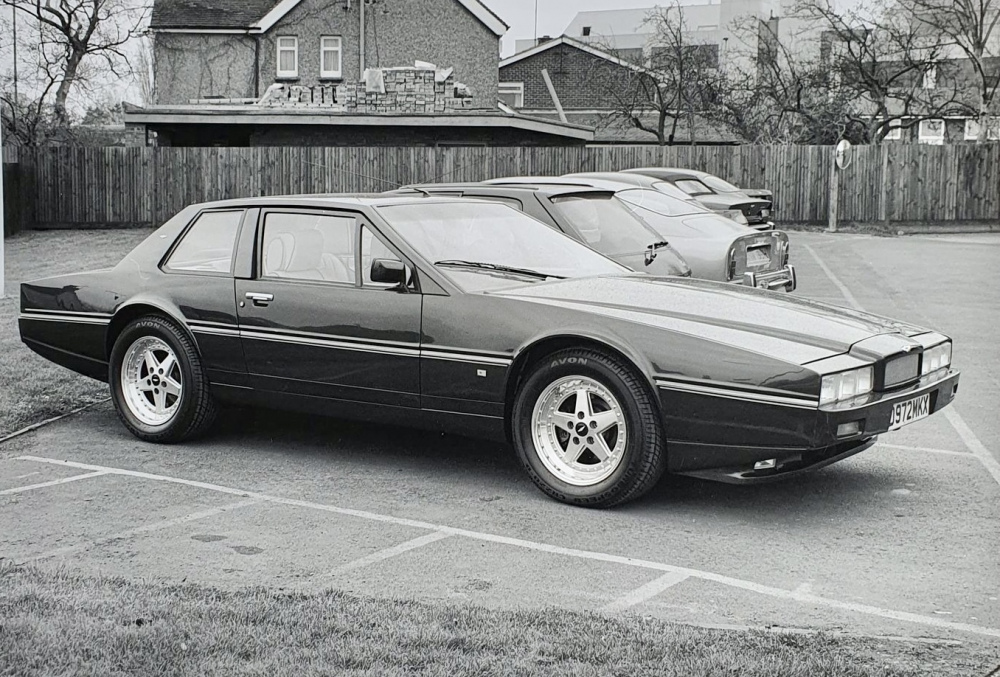
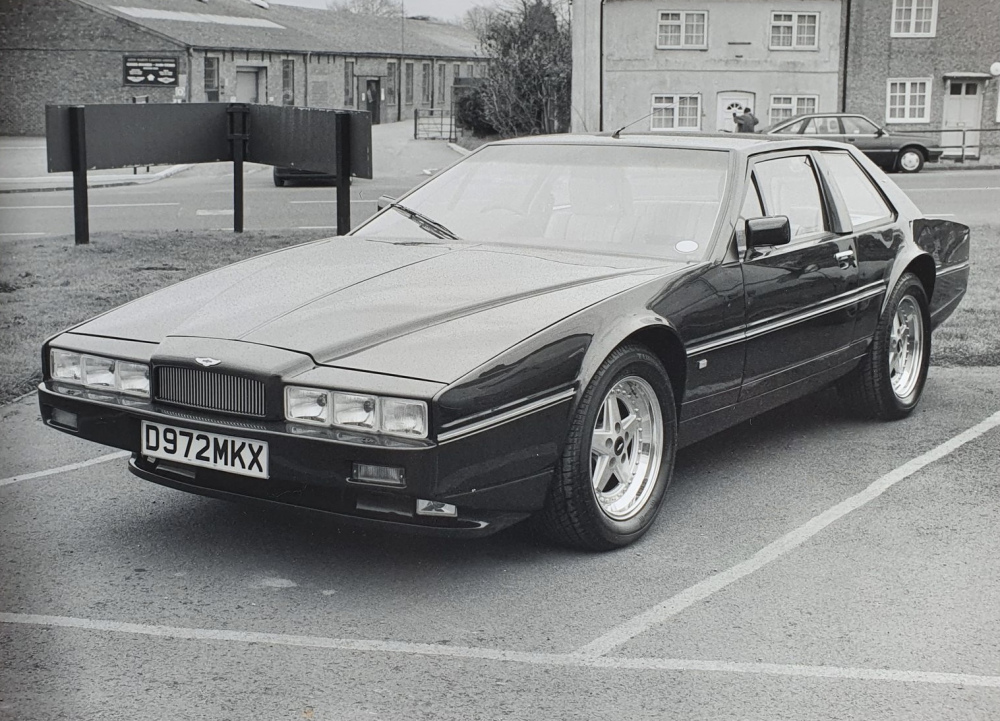
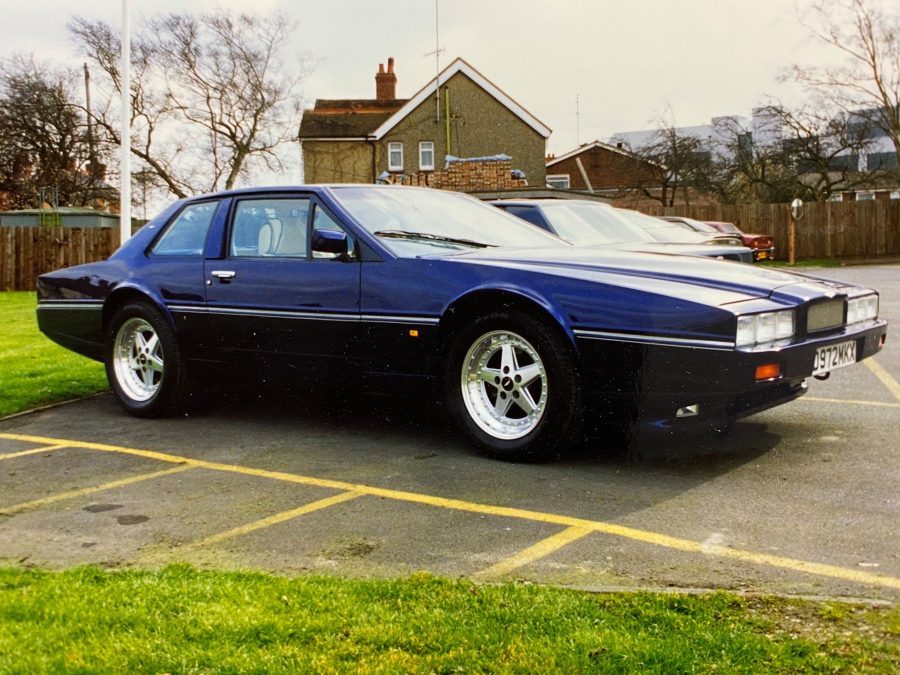
DP2034/1 2-door Lagonda Virage Mule

Once AML engineering team had finished with DP2034/1, the car eventually crossed over Tickford Street to Works Service where is was comprehensively rebuilt, fully finished, painted, trimmed and sold to an overseas collector. Keith Riddington of Classicmobila has allowed me to use his colour period image of the car, circa 1993.

The car has quite an unusual and unique appearance and not just because of the two door coachwork. Whilst the six fixed headlamps and rear lights are straight from the 1987 facelift Lagonda (series 4), the side profile has retained the side crease of the original design. Now fitted with the same split-rim as the Virage 6.3 litre Coupe, the wheel arches have quite a pronounced lip.

In 2023, the long term owner of the 2-door Lagonda Virage mule decided to offer the car for sale by auction by Bonhams at their Goodwood Revival sale. I was able to see the car prior to the auction when it was shown for the first time in the UK for 30 years at the AMHT Festival held at the British Motor Museum, Gaydon.

Vantage Special Series I

Three delete build chassis were put together in production before being taken across the road to Works Service where the build process would continue. The design is considered by many to be the best looking with the cleanest styling of all the Special Series cars and from head on and front quarter view, had a look not dissimilar to the DB4 GT Zagato which was the brief.  An interesting feature of the Series I was the use of DB7 doors which also allowed the use of frameless door glass.

Three of the Special Series I’s were built, all to right hand drive, V600, automatic transmission specification.

These photographs have been kindly provided by Aston Martin Works

« Newer PostsOlder Posts »