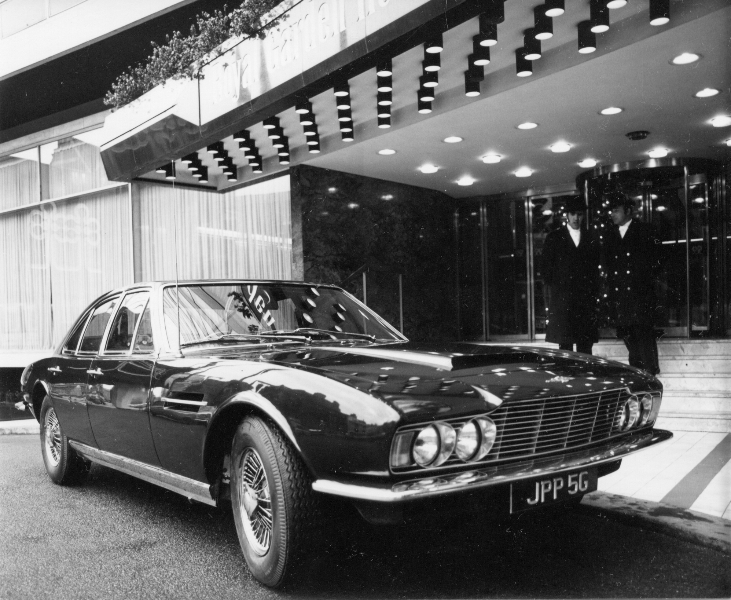
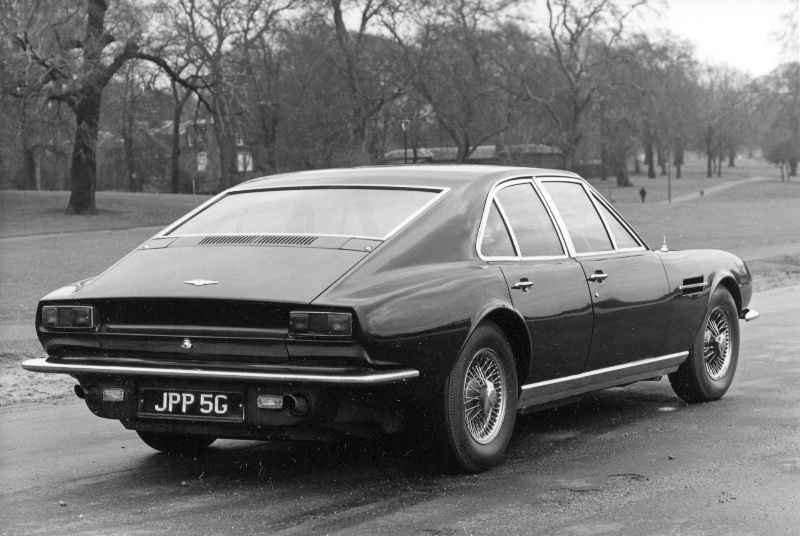
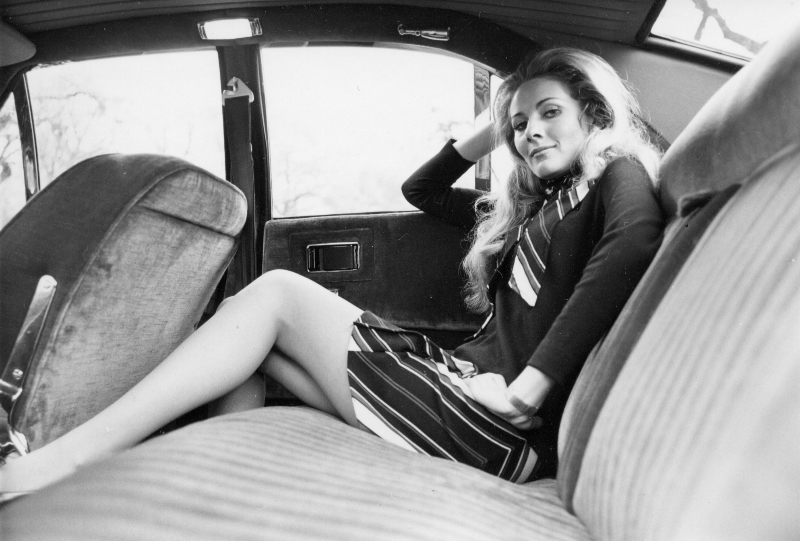
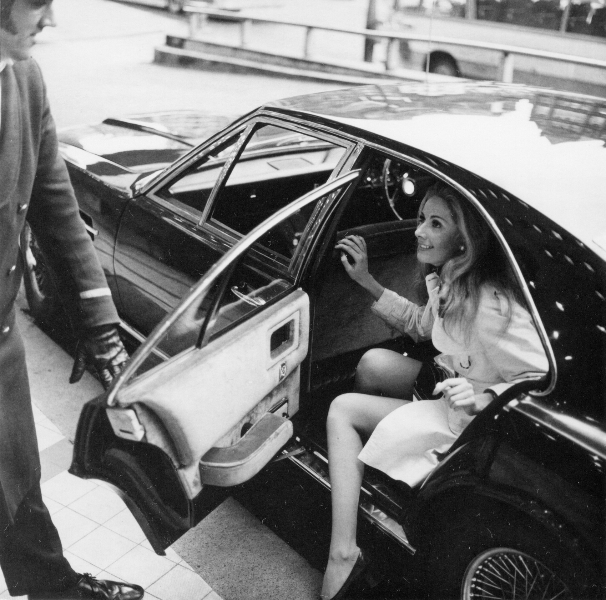
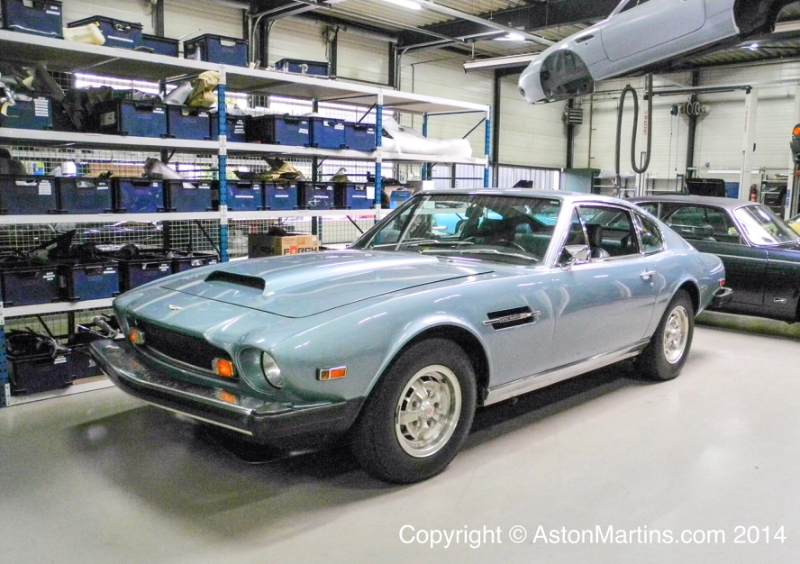
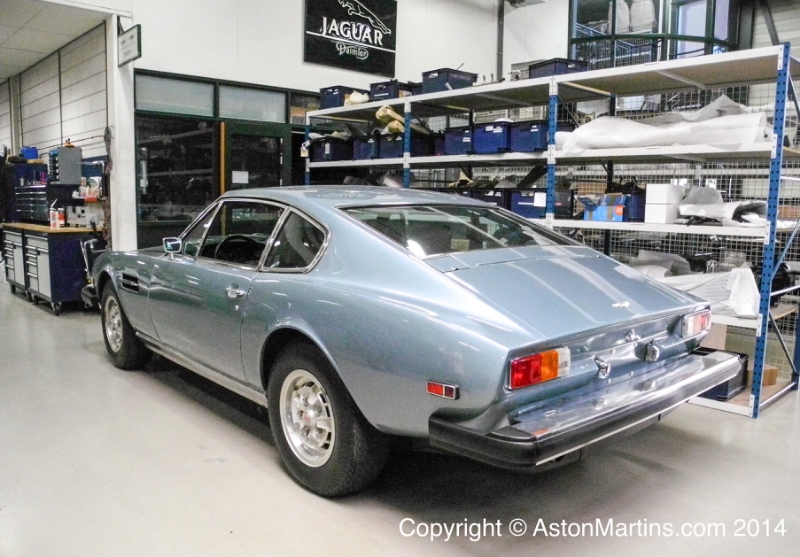
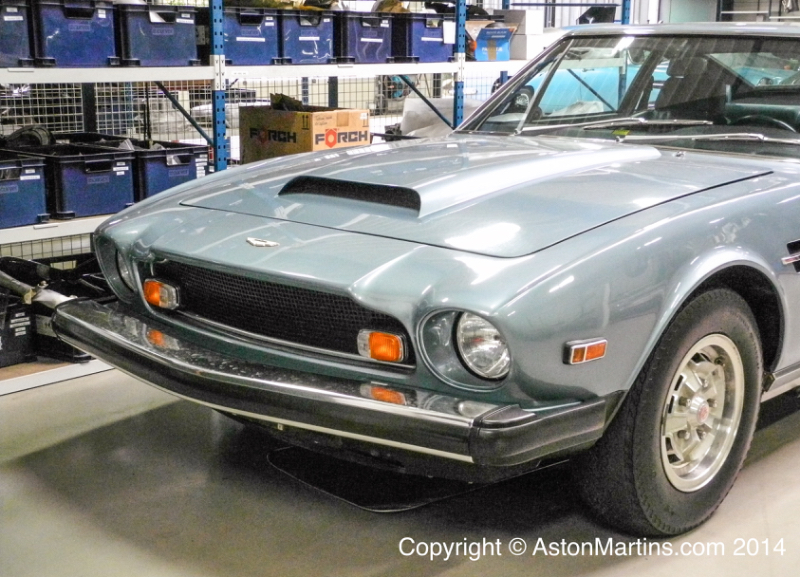
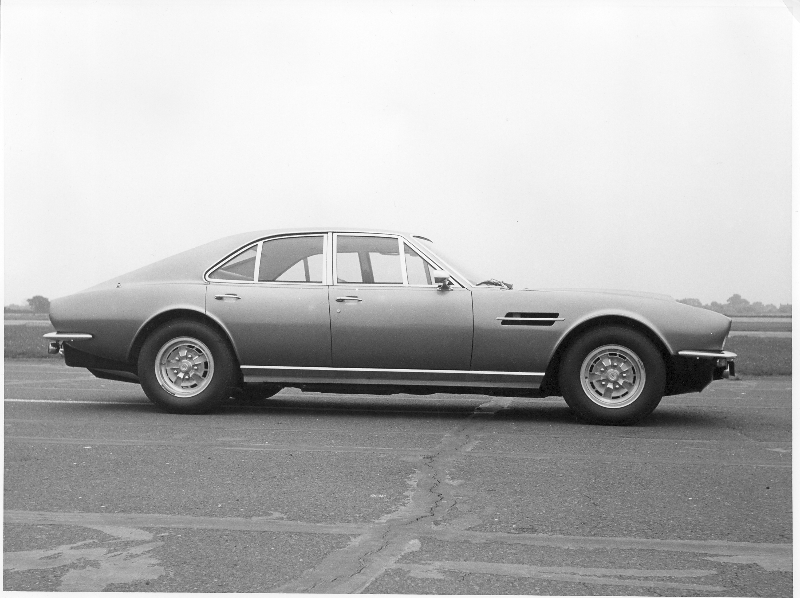
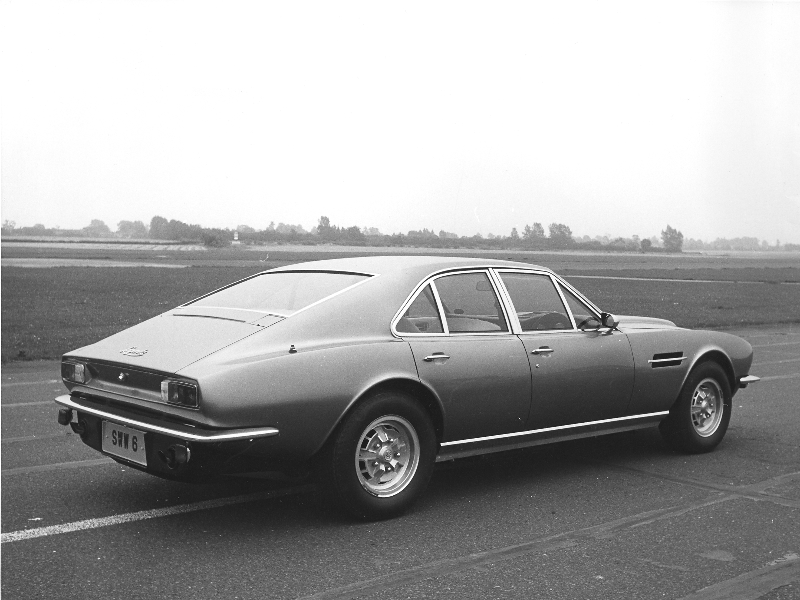
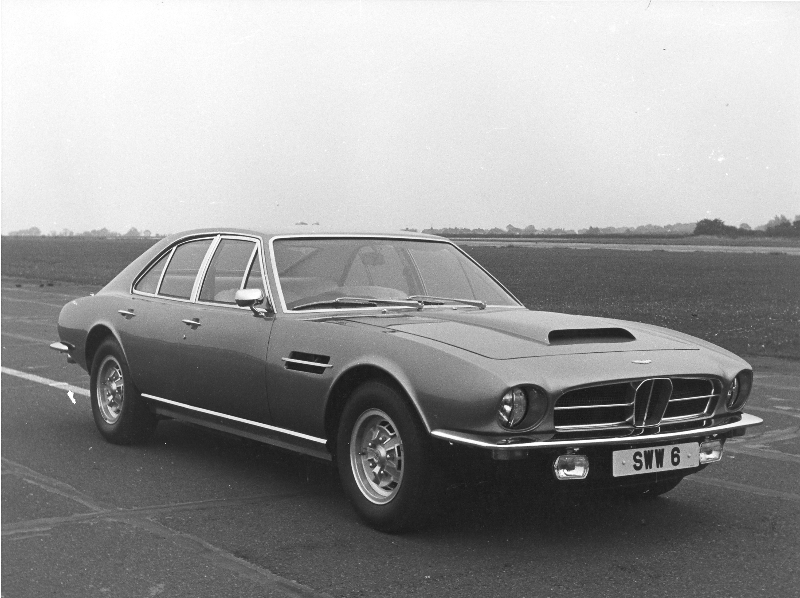
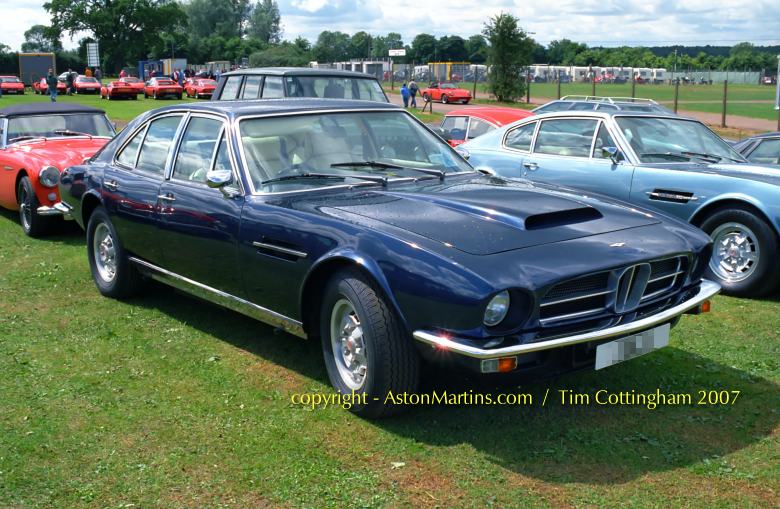
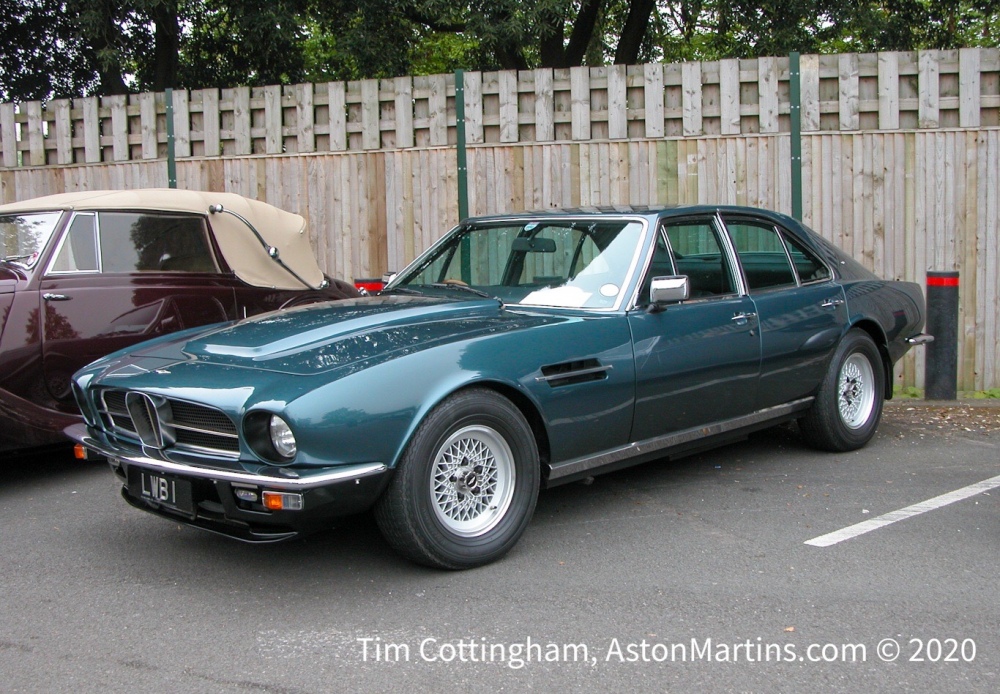
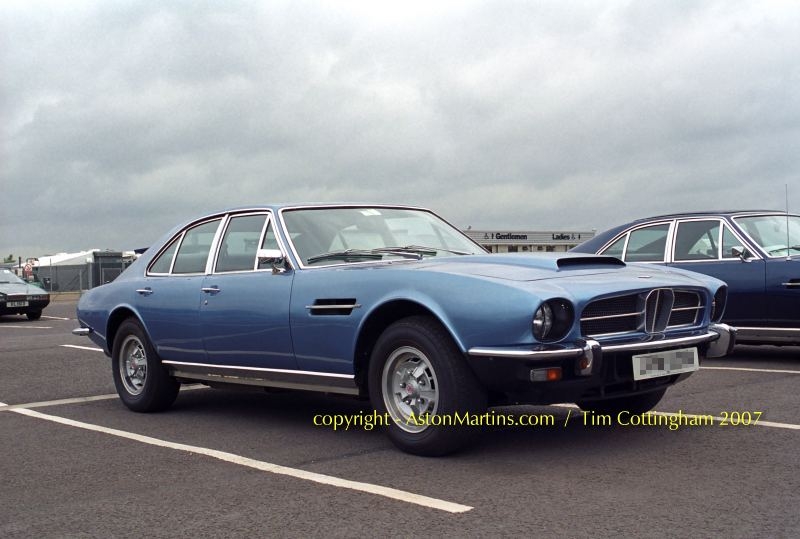
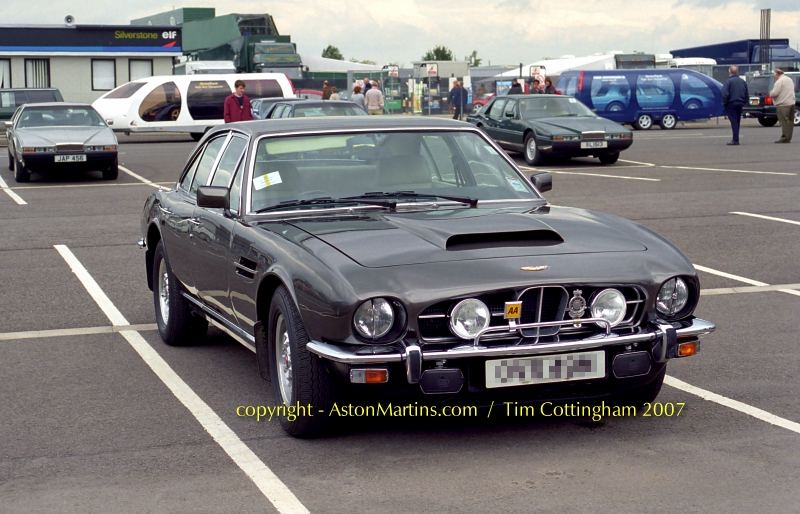
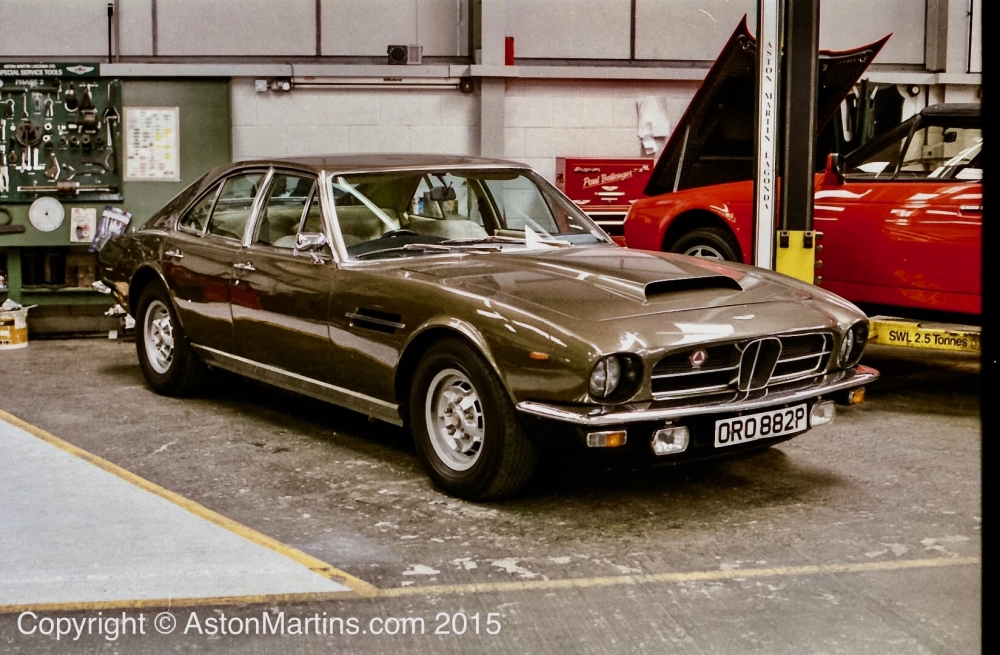
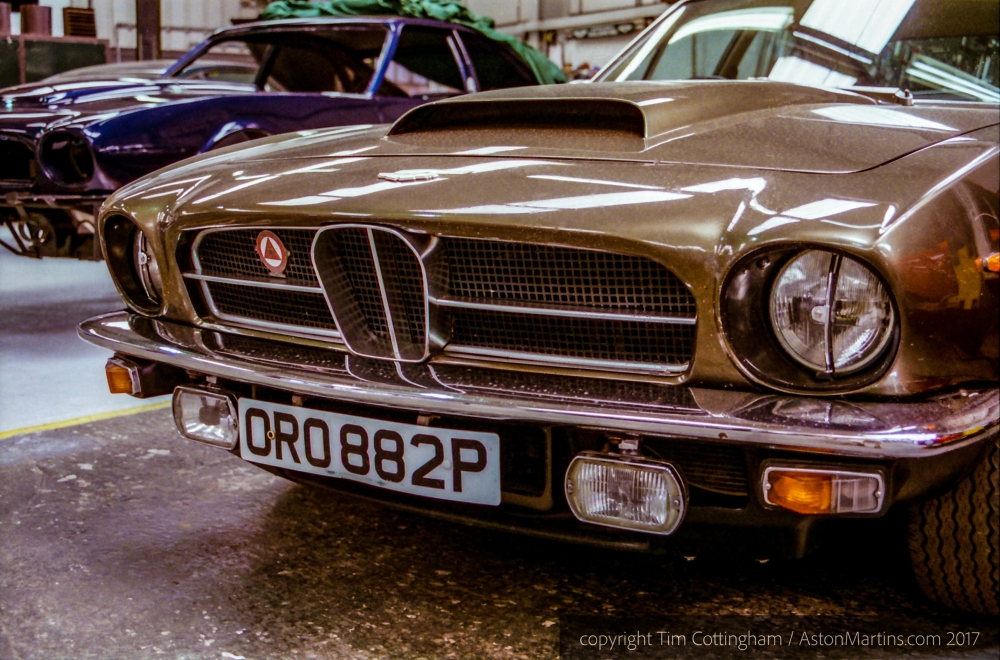
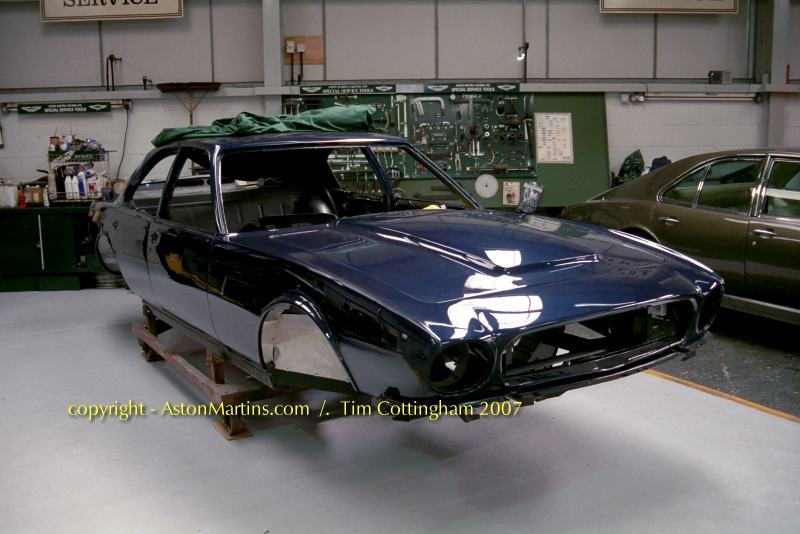
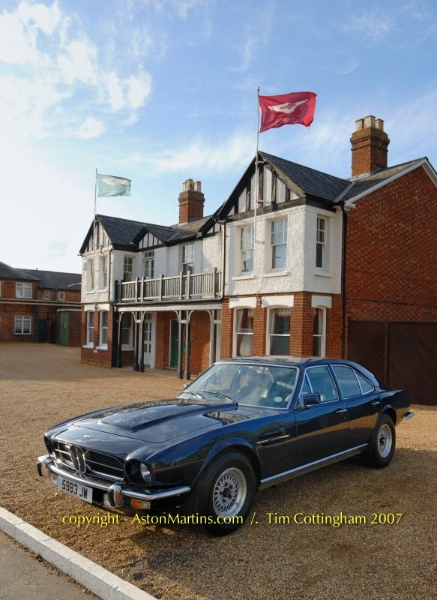
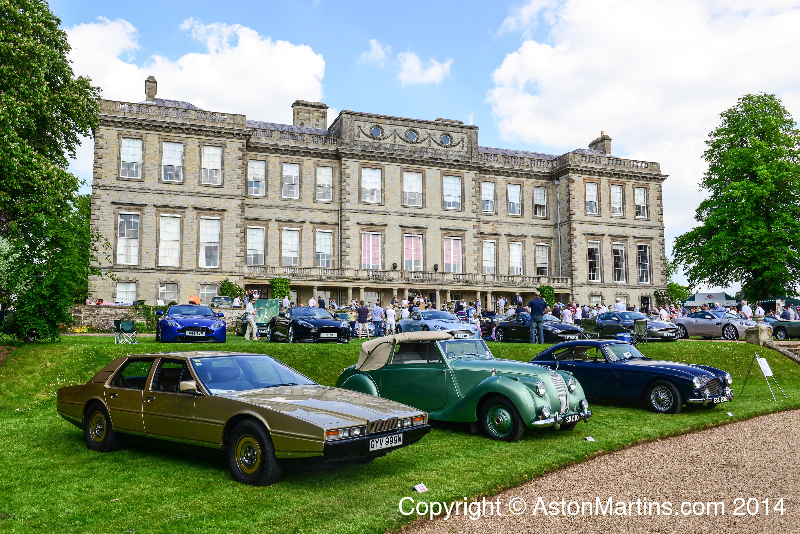
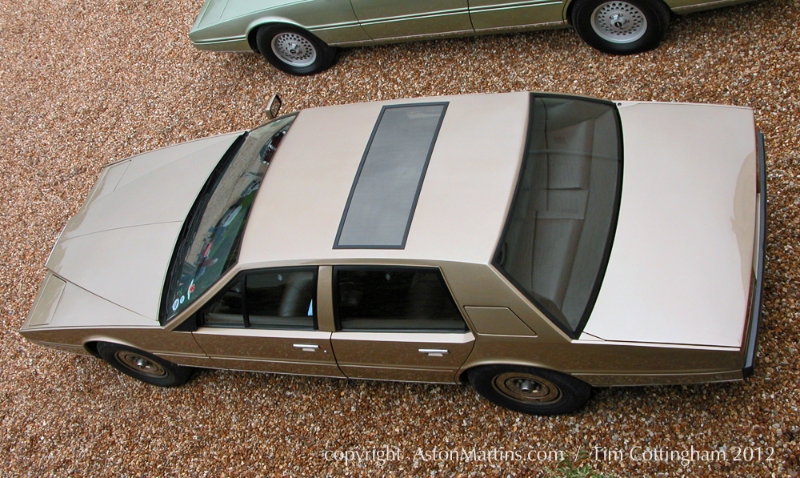
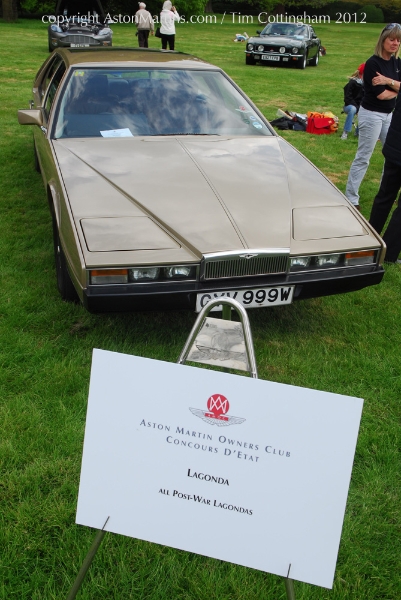
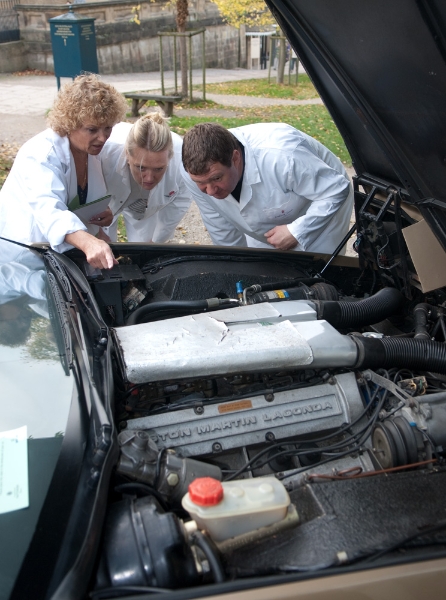
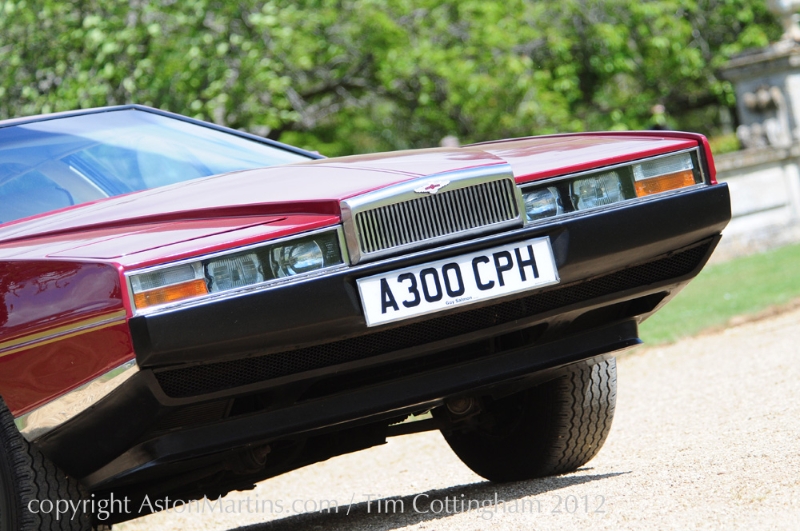
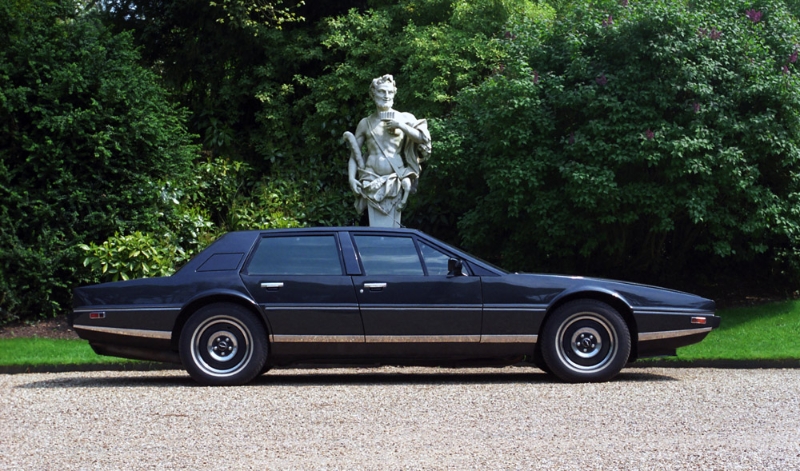
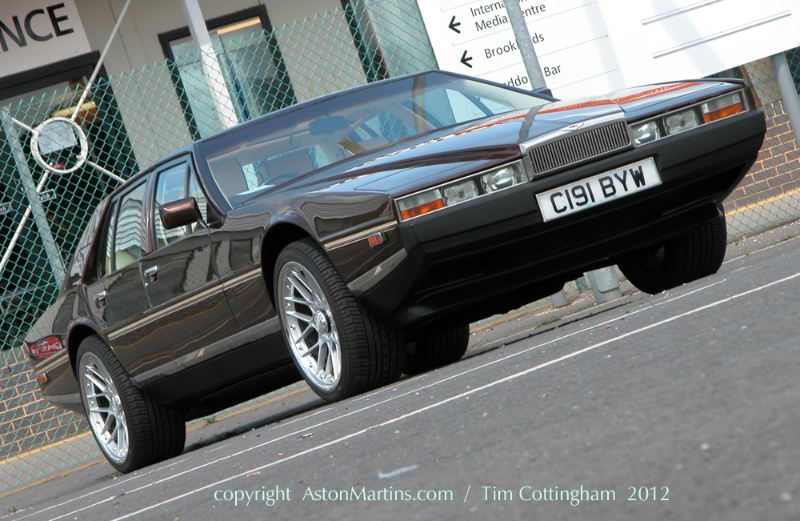
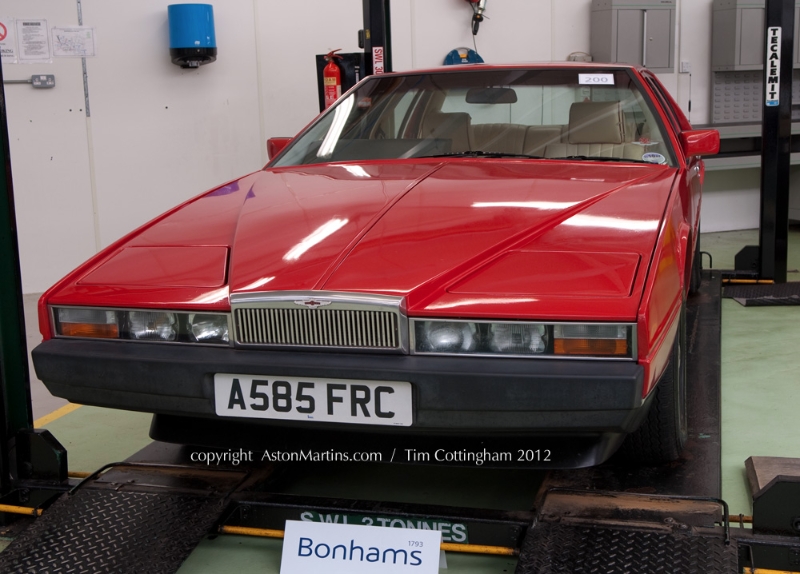
The prototype car was built as a luxury saloon for the personal use of the Sir David Brown during 1969 and despite the wire wheels, was originally fitted with a 5 litre prototype of the V8 engine (now replaced by a production 5.3 litre). GKN Alloy wheels and ventilated disc brakes were a later addition. The car was painted in Sir David’s personal colour of Roman Purple and was upholstered in period red coloured velour. Subsequently the Lagonda been repainted dark blue and the velour replaced by more traditional leather.
The V8 Lagonda remains unique. The production version of the car was not offered for sale until 1974 with the introduction of the rare V8 Lagonda.
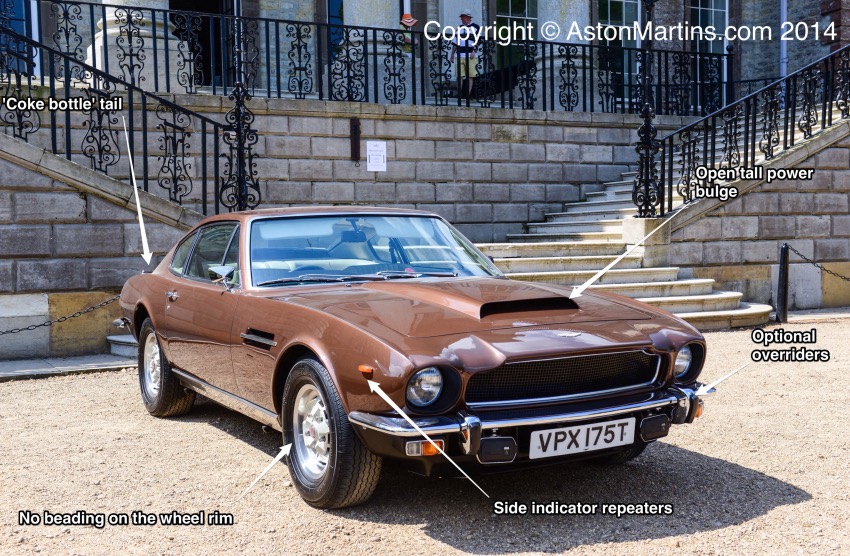
Externally the Weber carburettor V8 featured a noticeably larger air intake and bulge extending to back of the bonnet to cover the four twin choke 42 mm Webers and airbox. Another change to the body which allows for easy identification of these cars and beyond is the panel below the rear screen. Previously this panel had louvers but these were deleated and the panel and gained a small lip just above the boot lid. There were many other detailed improvements to the car with revised front seats, revised switches, improved cooling to engine and transmission plus a new fuel tank which gave more luggage space.
Initially performance was still very impressive from the 310 bhp 5.3 litre engine. The automatic car could top 146 mph and hit 0 to 60 mph in 6.2 seconds (Autocar, Sept 1973). The manual was even quicker at 155 mph and 5.7 seconds (Motor, Sept 1973). Although as emission regulations became tighter, peak power output fell to around 280bhp and performance suffered. Thus in January 1977, the engine was modified to ‘Stage 1’ tune with new camshafts, and an exhaust system developed for the V8 Vantage. Just occasionally, these cars are referred to as V8 ‘S’. This went someway to restoring the power output to a more respectable 304bhp.
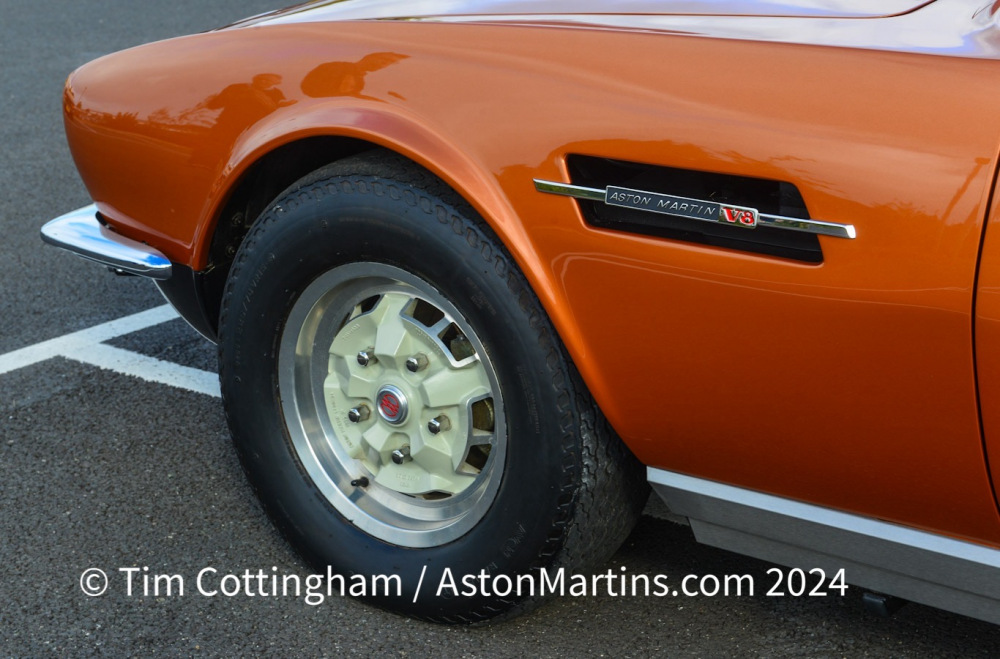
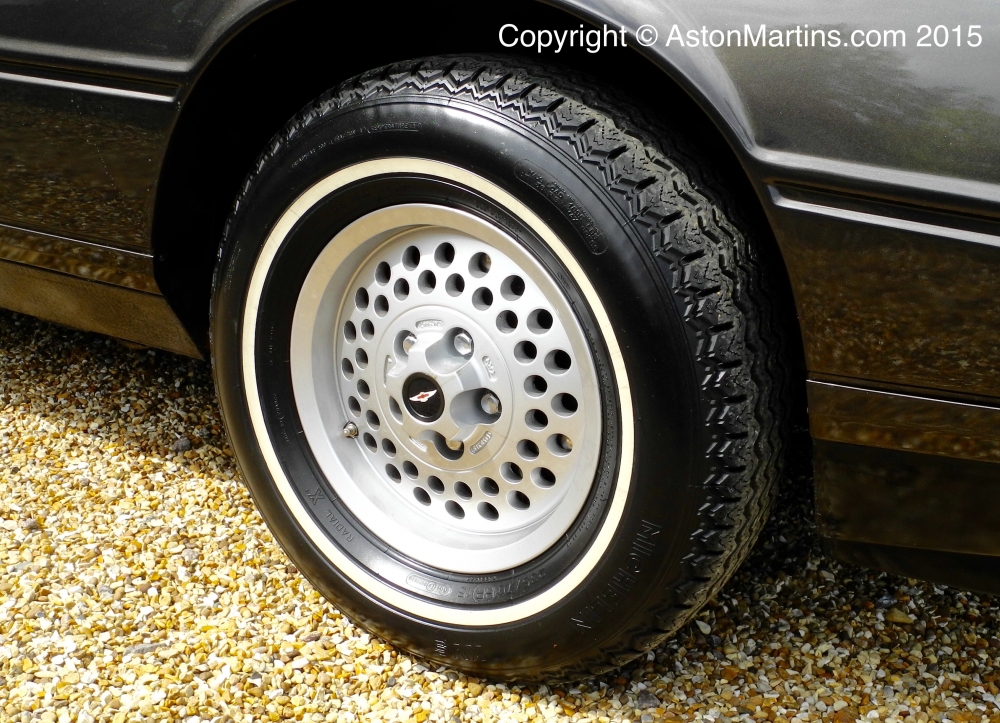
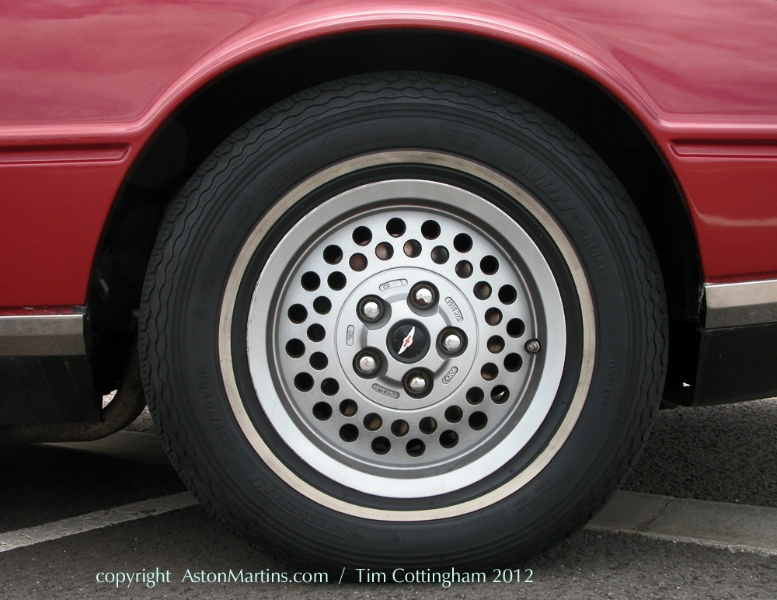
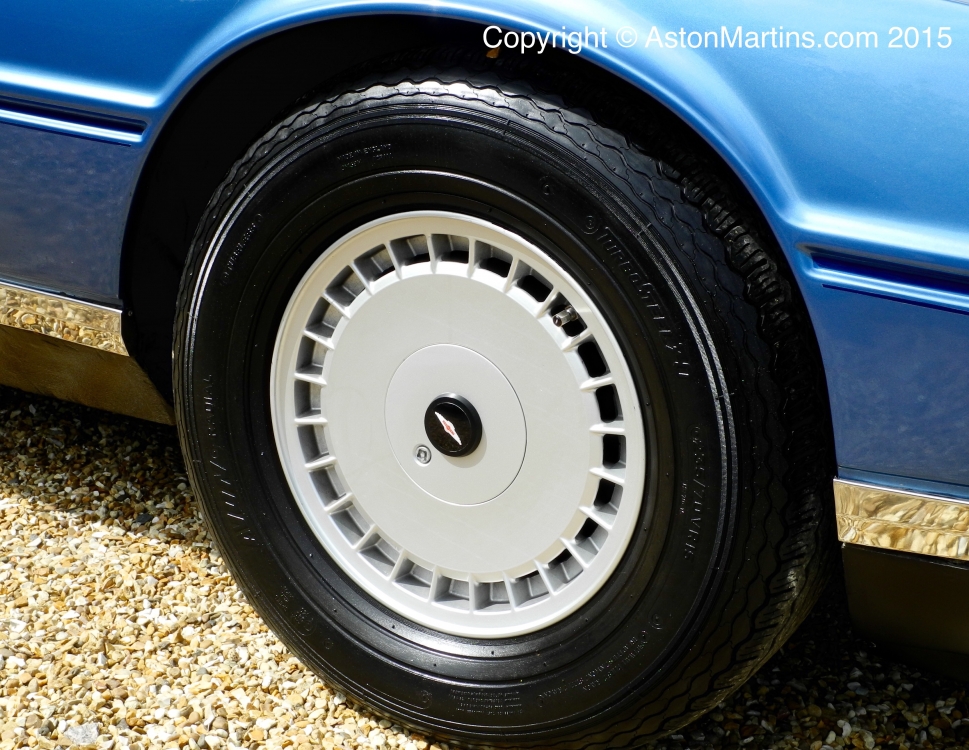
The GKN alloy wheels on the V8 are of two basic types. The earlier type, with a ridge around the circumference takes tubed tyres whereas the later type has a smooth rim.
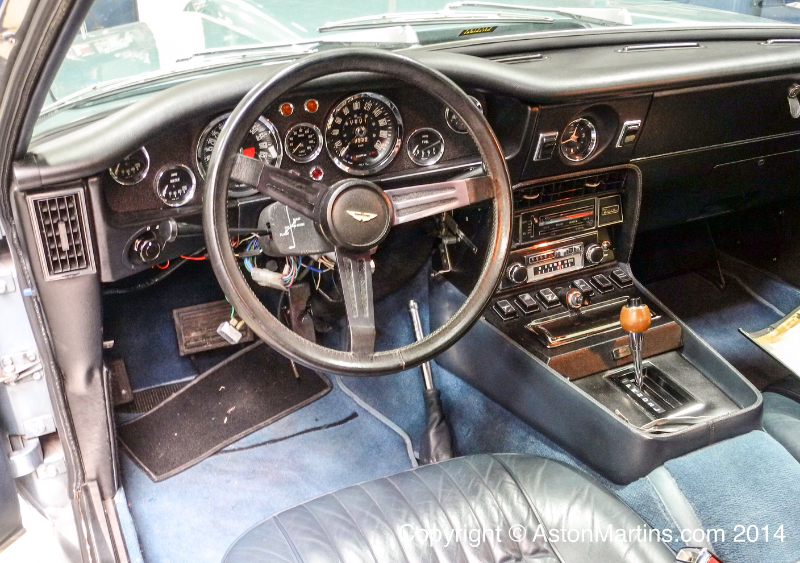
The interior picture below illustrates the cockpit of a 1973 V8 photographed during Coys Auction at Silverstone, 1998. It features a traditional combination of stone Connolly Hide and Wilton carpets. Note the lack of walnut veneer – wood in an Aston Martin is a relatively new phenomenon seen on a small number of late Weber carb V8’s and on most cars since the ‘Oscar India’ V8 upto the end of DB7 production.
The gallery below shows a very rare 1974 North American spec AM V8 complete with period 5 mph impact bumpers. Many cars built like this have, perhaps sensibly, been converted to the lighter weight and more aesthetically pleasing European chrome bumpers. Not this car (yet) which has spent all of it’s life in Canada. Delivered very late in 1974, it was one of, if not the last AM V8 delivered in North America prior to the factory stopping production.
Production of the V8 was interrupted for over a year between December 1974 and Spring 1976, when the company hit financial difficulties.
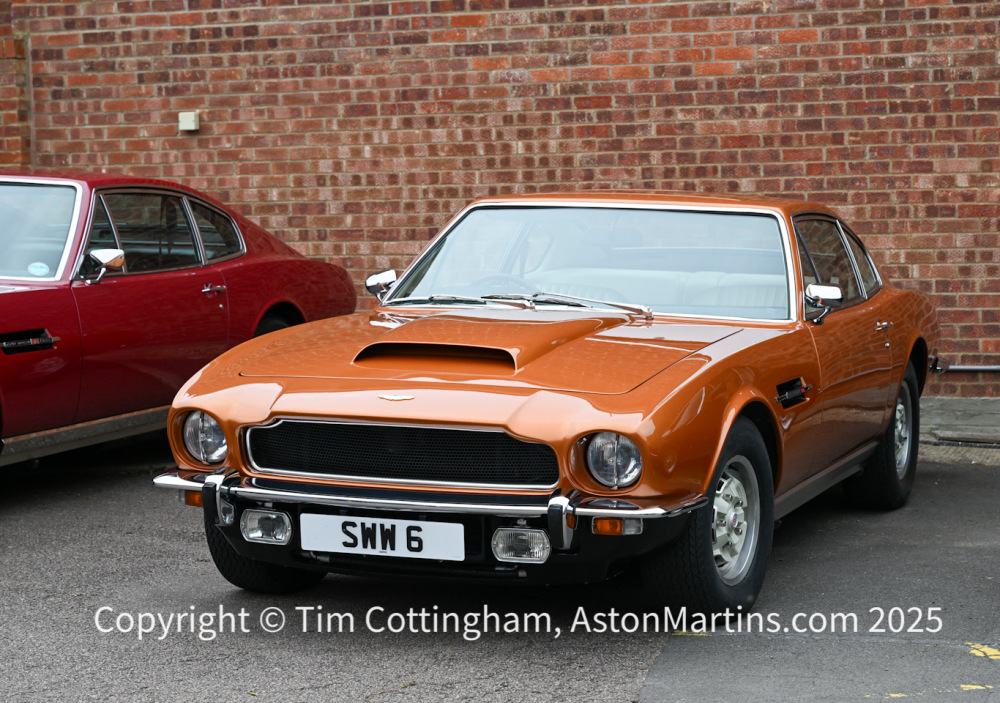
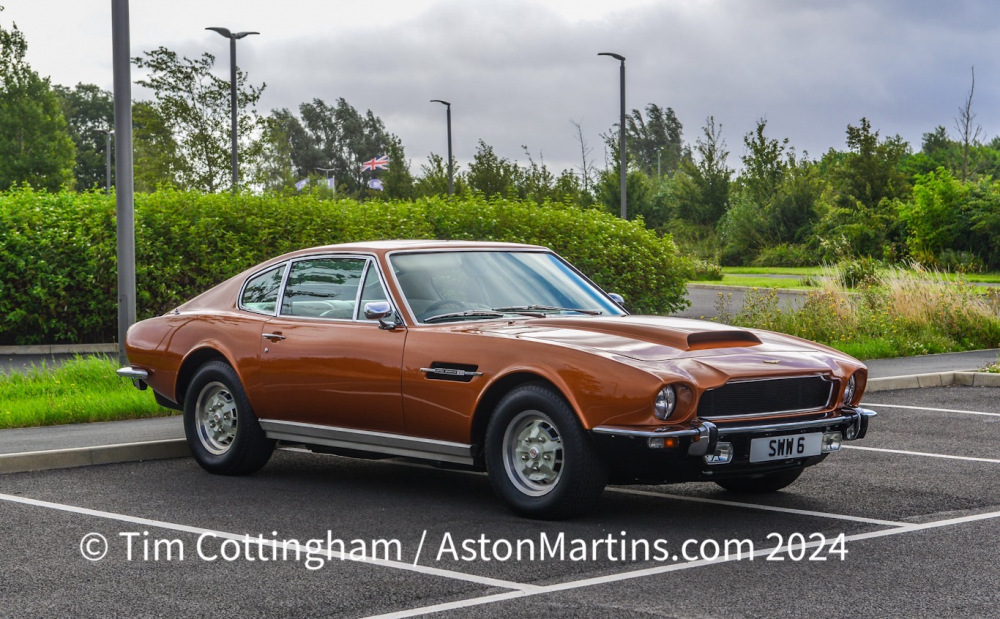
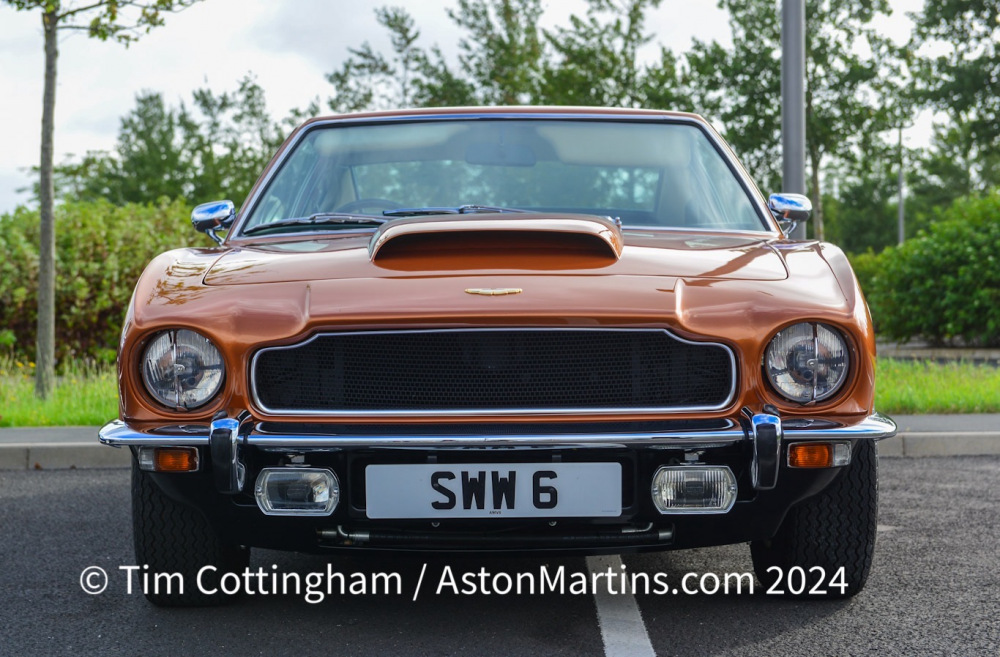
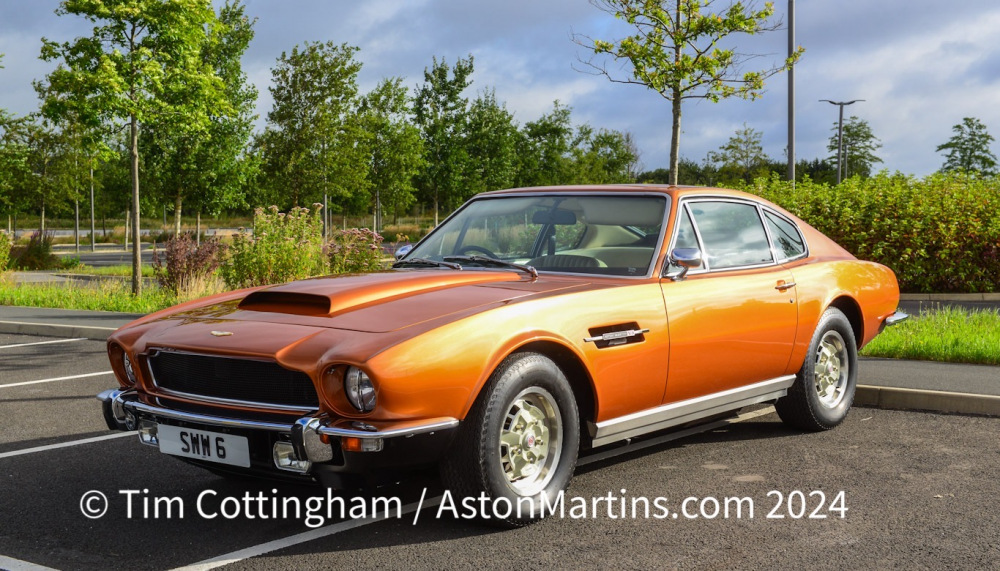
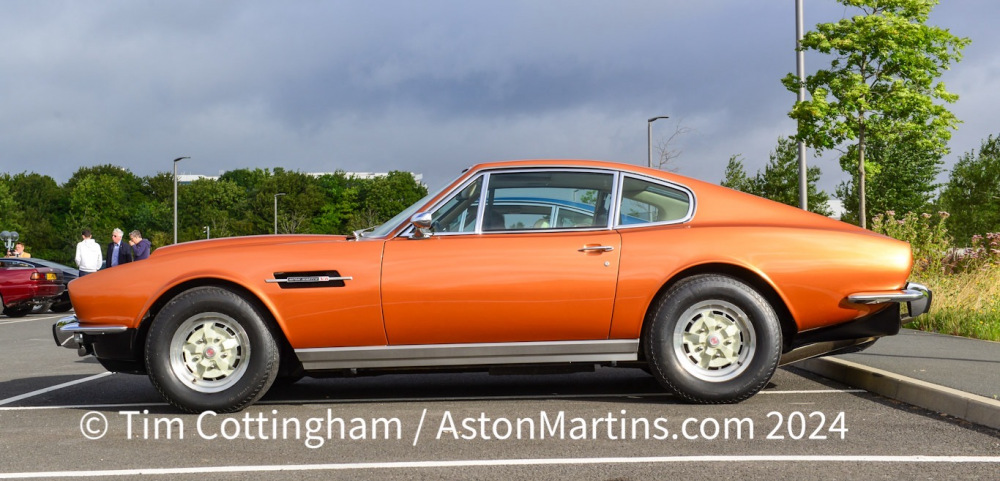
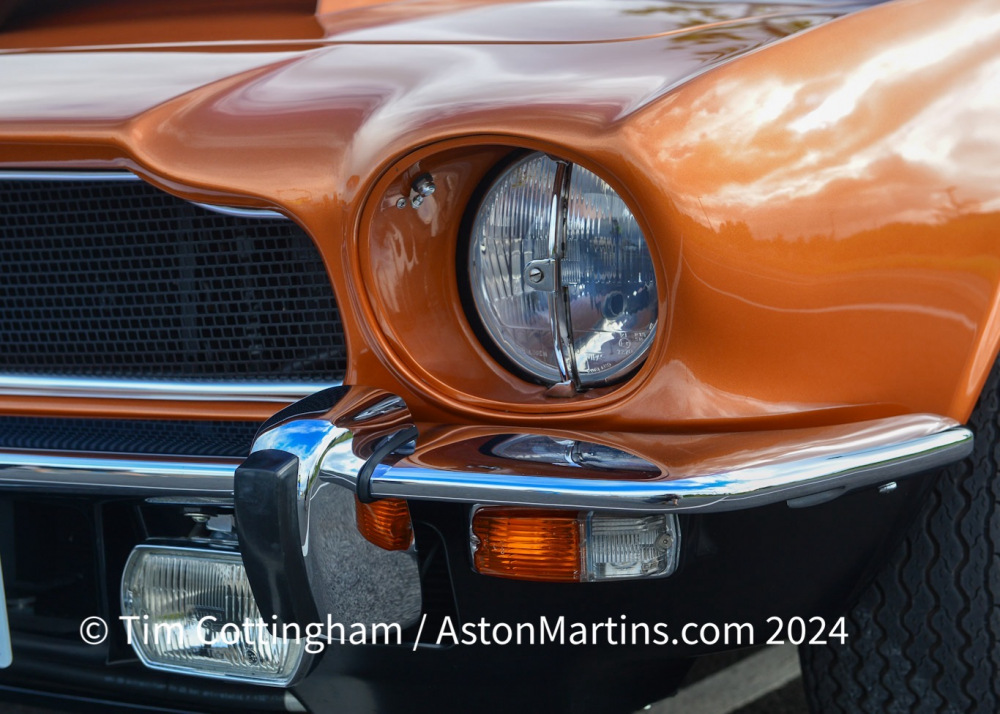
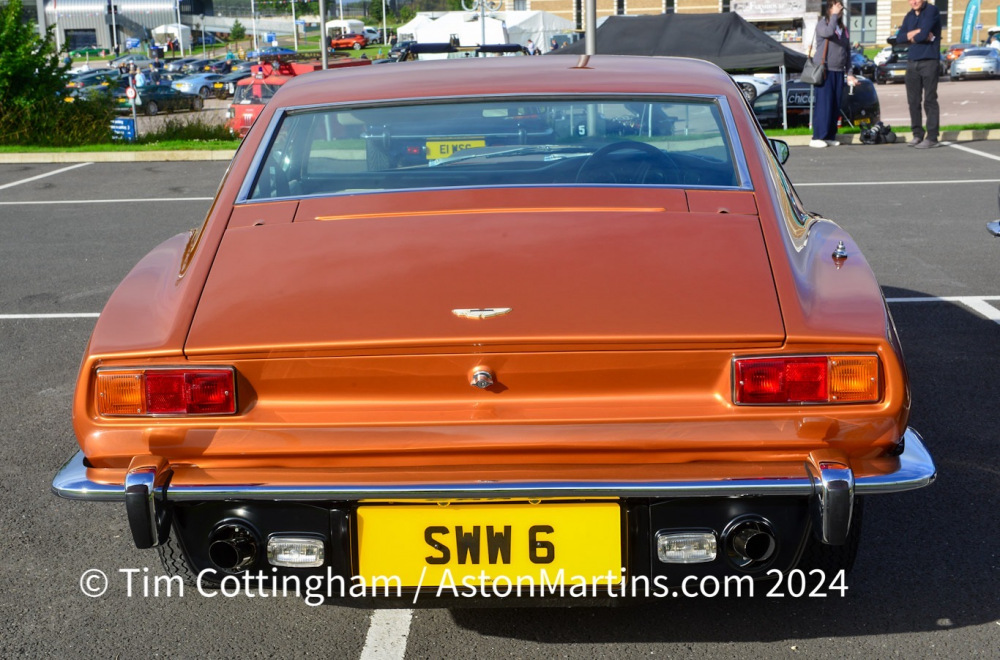
The car below featured on the AML stand at the 1974 Earls Court Motorshow. It still carries the eye catching Rich Gold coachwork NS has the plate, SWW 6, which was previously owned by William Wilson the chairman of AML up until the company fell into administration at the end of 1974.
In total, 967 examples were produced until the much improved Oscar India was introduced in October 1978. These are the most numerous of all the AM V8 ‘series’ with many more examples than previously built for export with left hand drive.
Identification points of a later example of the AM V8 with Weber carburettor (AMOC series 3)
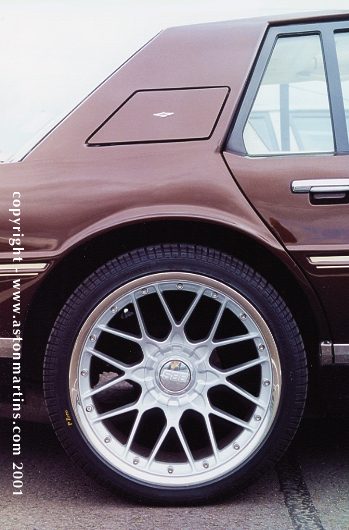
The bonnet scoop was finally closed on the Oscar India V8 – leaving a pleasantly sculptured power bulge. Many cars were also fitted with twin Cibie driving lamps within the radiator intake plus fog lamps under the front bumper. The GKN wheels remained standard from the introduction of the model but were replaced by the attractive BBS cross spoke type with 8 inch rims from 1983.
One of the principle external changes to the Oscar India was the incorporation of a neat integral spoiler, under the guidance of William Towns, the cars original designer. On of the photographs in nthe gallery below compares the rear of a blue Oscar India with a brown Bosch f.i. car.
Also in the gallery is a later V580 spec Oscar India, fitted with the BBS wheels, was photographed at Coys festival, 1998. Performance from the carburettor fed V8 remained strong with a 146 mph top speed and 60 mph coming up from rest in as little as 6.6 seconds, even with the commonly fitted auto box (although both Autocar and Motor magazines couldn’t do better than 7.2). But the AM V8 didn’t now have to provide ultimate thrills, the V8 Vantage fulfilled that role admirably.
The Torqueflite three speed automatic gearbox was fitted to a vast majority of non Vantage V8’s. AML was able to buy them from Chrysler for the small sum of just £150 which was tiny compared to the £1500 cost of the ZF 5 speed manual.
The interior if the Oscar India cars was comprehensively revised in line with the recently introduced Volante, with the re-introduction of burr walnut dash and door cappings. The last time wood was seen in an Aston Martin was in the DB2/4. Also the headlining was changed from cloth to leather – needing around nine hides in total for the car. A popular myth is that AML keep a tenth hide so that the leather could be repaired if it became damaged – nice story, shame that it isn’t actually true.
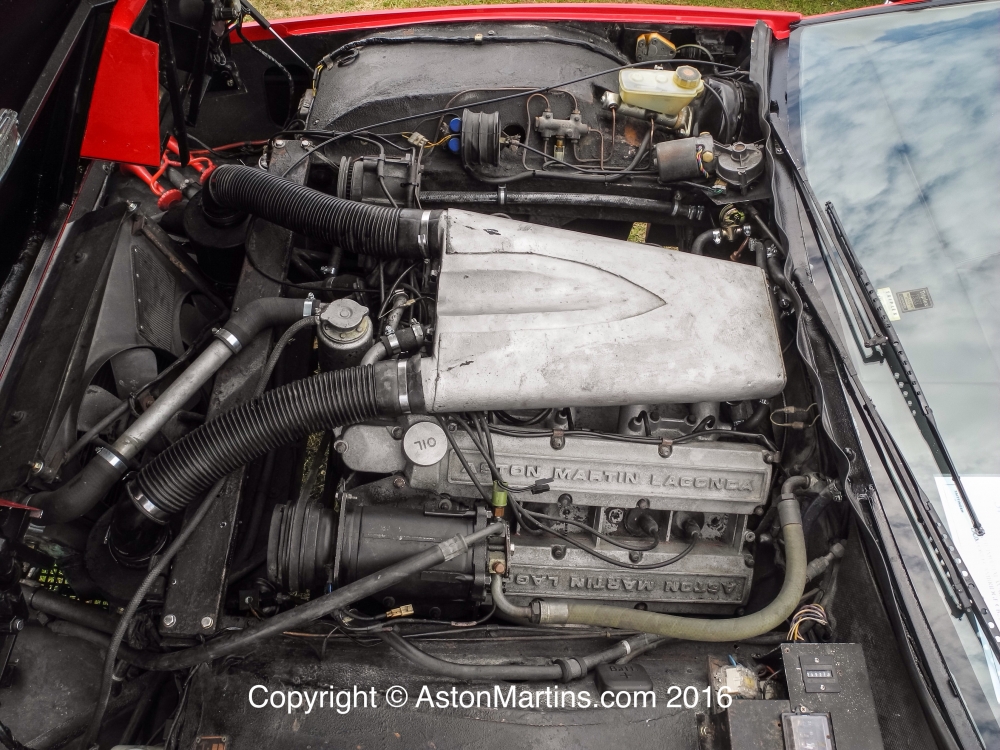
During seven and a half years of production, a total of 291 cars were made. Many small but important changes were of course made during the build period. Principally, 1980 saw the introduction of the V580 series engine – from a desire to standardise engine parts across the entire AML V8 range. Based on the head from the Lagonda, the V580 had larger and Tuftirided dished valves, polynomial camshaft profiles, smaller cylinder head porting barrel-shaped pistons and a higher compression ratio of 9.3:1 (US cars down to 8.0:1). The engine became quieter with improved economy and better mid-range torque.
The Blue car above is number 12004, photographed at Coys Festival, Silverstone in 1994. The Red car above Chassis number 2, photographed outside the showroom of Nicholas Mee in London during 2001: considered to be the most original of the seven cars.
Above is featured chassis number 5. This car has been very sympathetically updated by the Aston Martin specialist, R.S.Williams (RSW). The rear has been modified to ‘Oscar India’ specification with the neat rear integral lip, BBS cross spoke alloy wheels with the front having the discrete POW air dam and Oscar bonnet bulge. I also believe the engine has been uprated to RSW 7.0 litre specification and the interior has been updated to late 1980’s V8 spec. The car was photographed before the AMOC St. Georges day parade in Windsor in April 2005
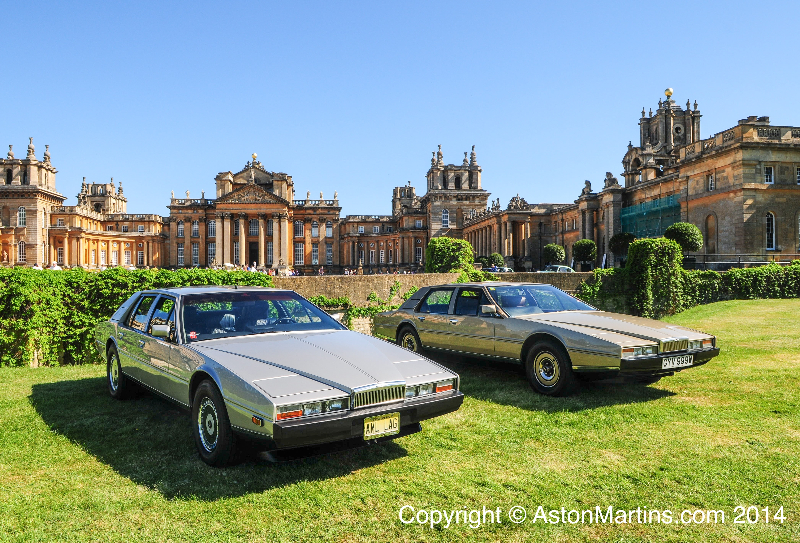
Photographed at the Millennium Lagonda display at the AMOC Horsfall meeting, 2000, here are chassis numbers 12001 (brown car) and 12003 (light blue car). Number 1 was William Wilson’s car (initially registered SWW 6) who at the time was chairman of AML. Number 3, the 1974 Earls Court Show Car, now has an RSW 7.0 litre engine conversion.
This is the final car, chassis number 12007, which is one of the only two examples originally built with a manual gearbox, still fitted in 1998 when I saw the car. I am now led to believe that both manual cars are now converted to 7 litre RSW autos. 12007 has recently been brought upto 1989 specification and has featured in Octane, January 2004. The close up of the grille shows the headlight wash system that was standard equipment on the Lagonda.
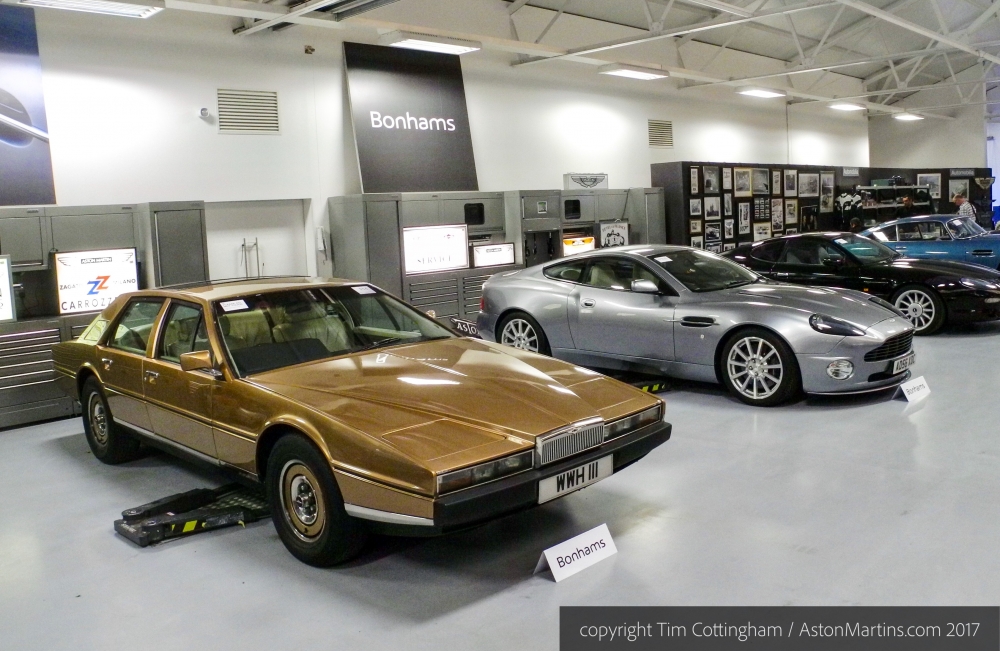
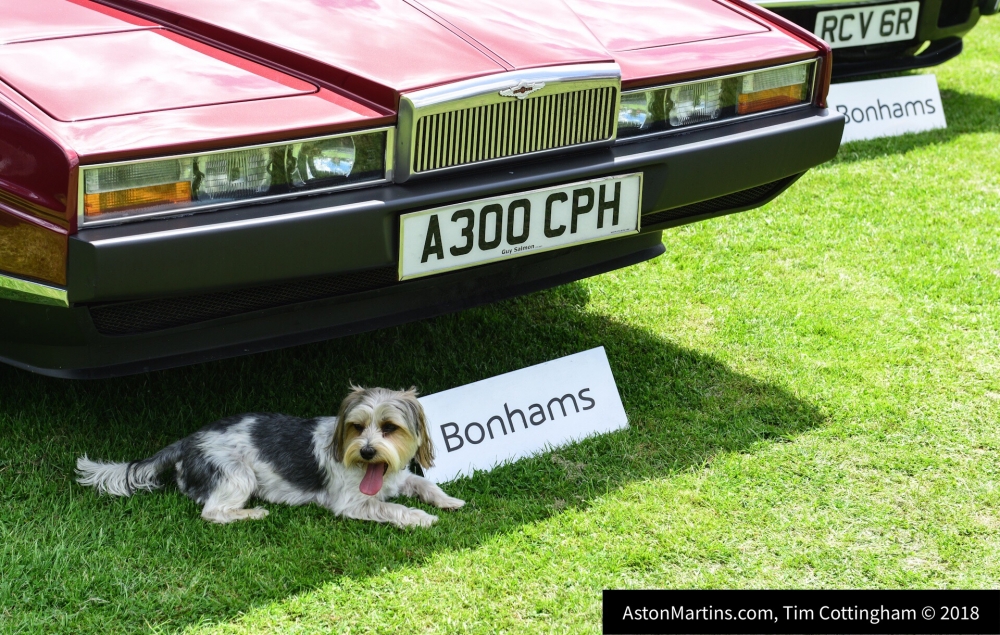
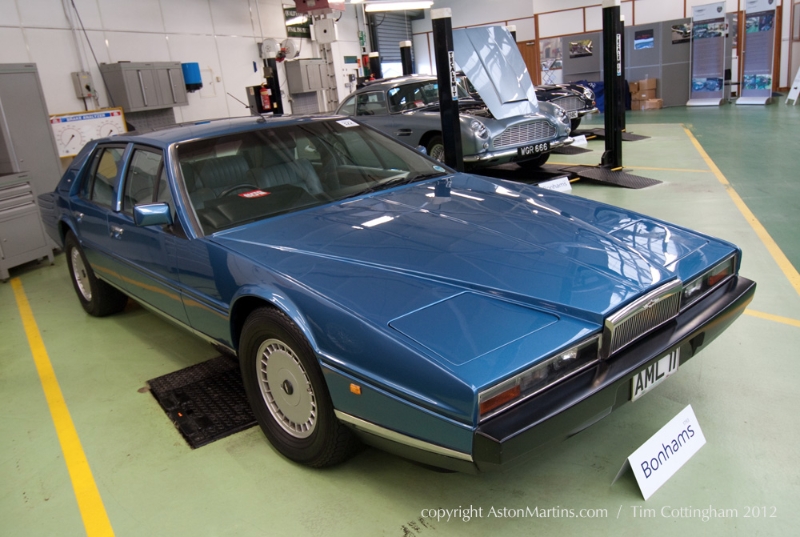
But the four door Lagonda story wasn’t over over until 30 years later in 2007. An eighth chassis and superstructure (12008) was assembled at the factory but never finished following the company going into receivership in 1974. . After many years, Roger Bennington owner of Stratton Motor Company, the Norfolk Aston Martin dealer, tracked down both the chassis and other parts still kept in the factory parts department. The project, initially photographed in June 1998, took more than nine years to complete. Once finished in 2007, I caught up with the 12008 parked outside Sunnyside during the AM/Bonhams auction. Finished in metallic Rolls Royce Royal Blue with grey leather interior with contrasting piping, this Lagonda has been uprated to the specification of a 1989 Aston Martin Vantage, including the more powerful Vantage engine plus uprated suspension and brakes.
I believe that during the Summer of 2007, 12008, effectively a brand new car, was on sale with a substantial price tag
The engine number suffix became V/585 (5 = 5 litre, 85 = 1985) and although no more powerful than the previous Oscar India V8 (305bhp), it was both cleaner and more fuel efficient. The fuel injection arguably makes Weber e.f.i. V8 the easiest of the V8’s to live with too. Almost all were built with the familiar 3 speed Chrysler Torqueflite automatic gearbox
Weber e.f.i. V8’s were all fitted with the attractive cross spoke BBS wheels with 8 inch rims. The swan song of the AM V8 achieved production of only 59 examples during a production run of a little over 3 and a half years. They are considered as rare and desired keenly by enthusiasts especially with the extremely rare 5 speed ZF manual transmission, available as a cost option.
For some time, these cars were known as the series 5 V8 by the AMOC, but this designation has now fallen out of common use.
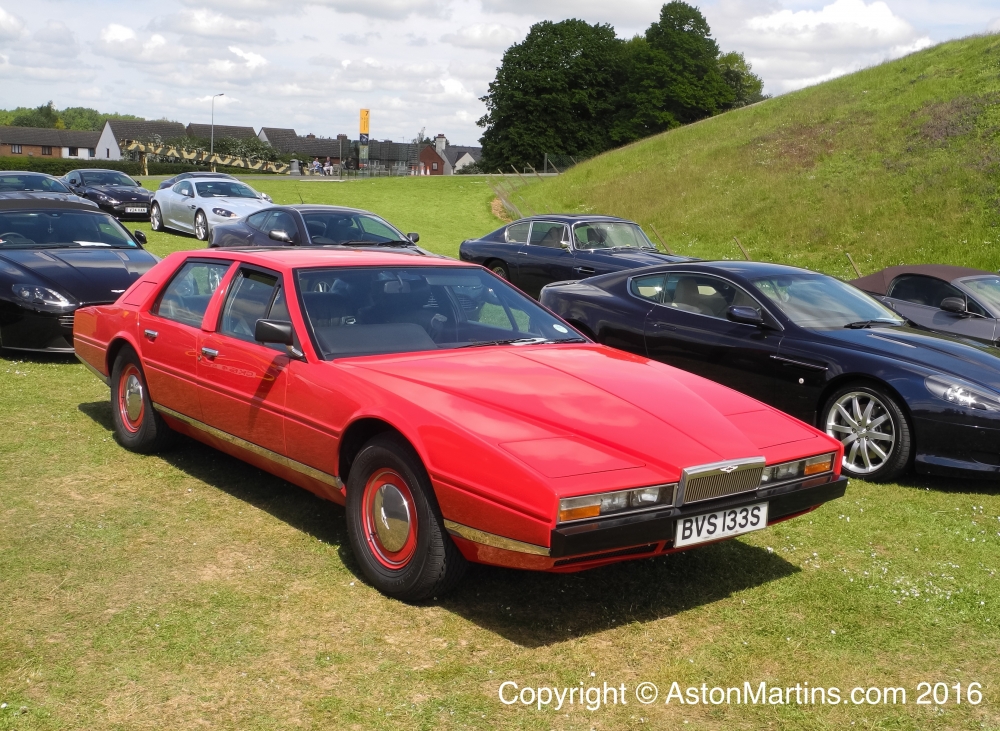
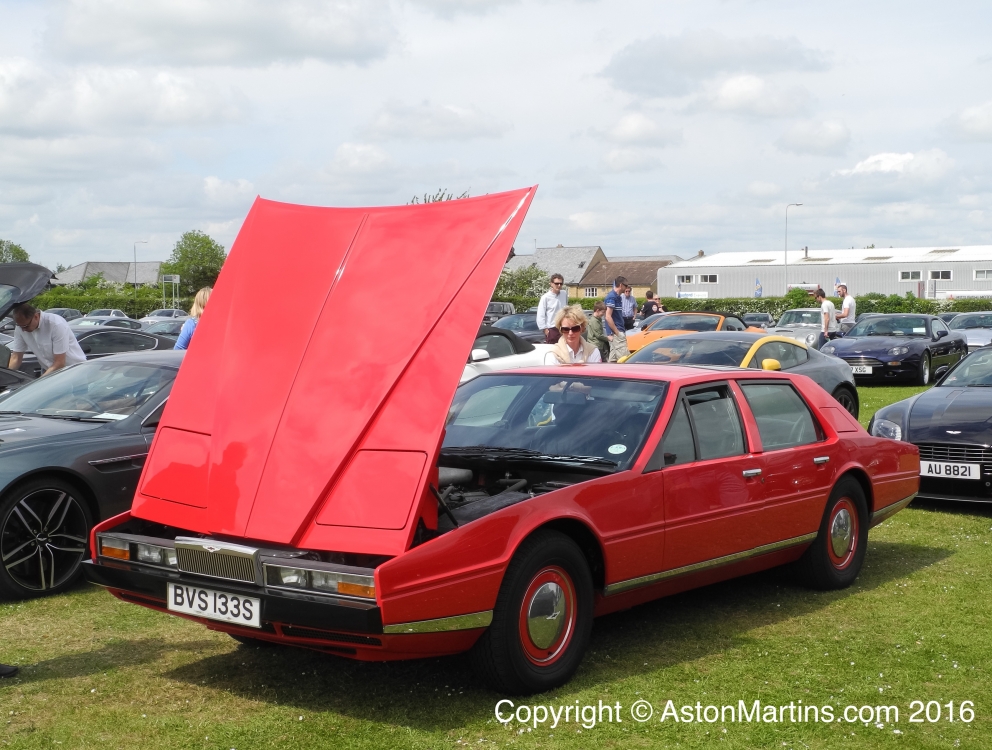
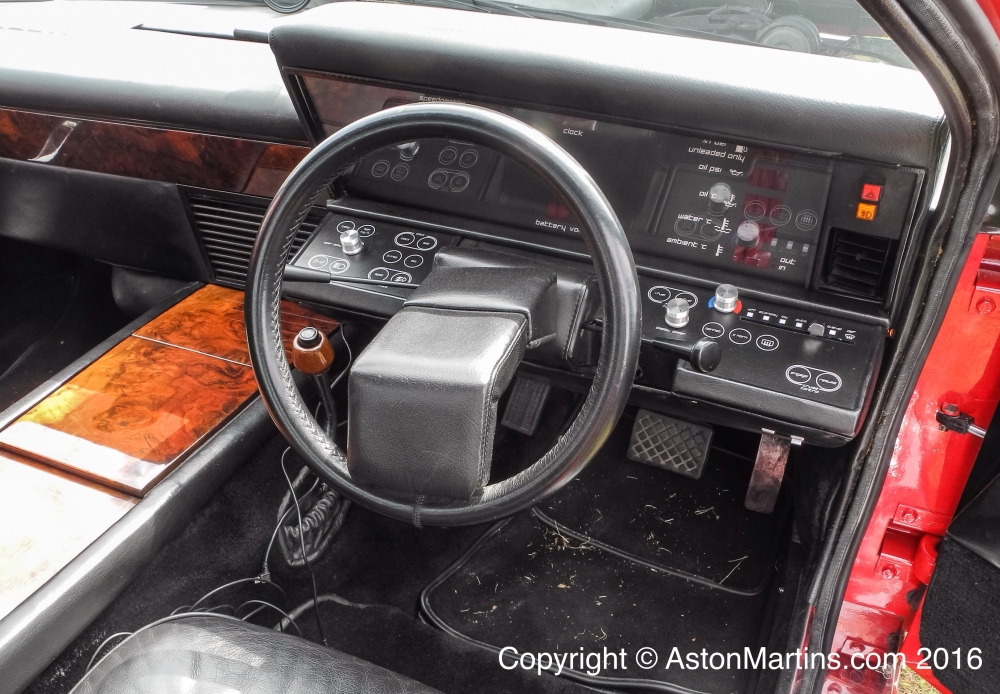
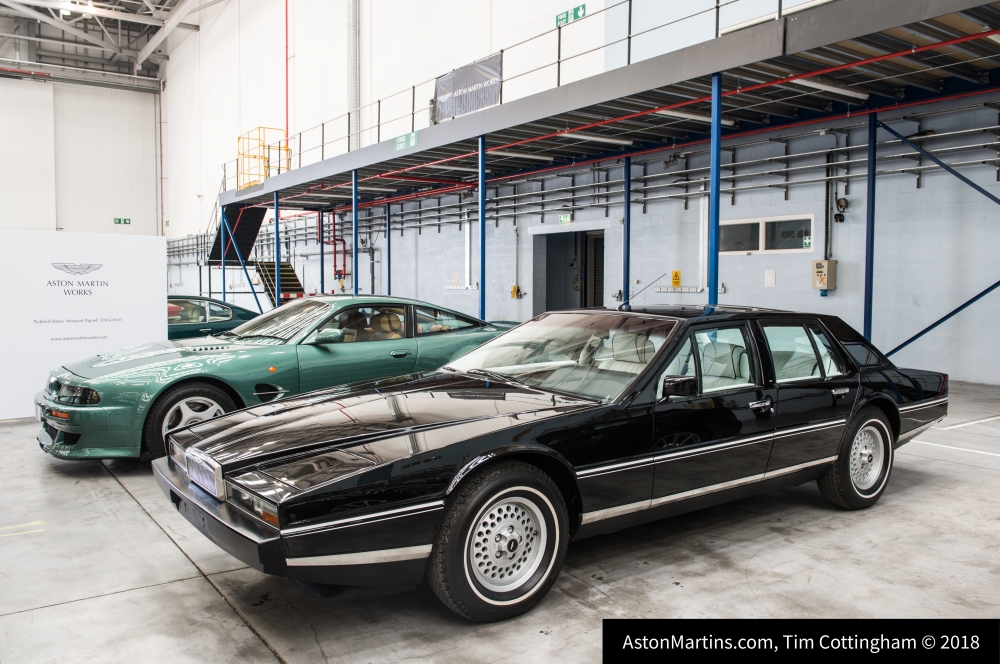
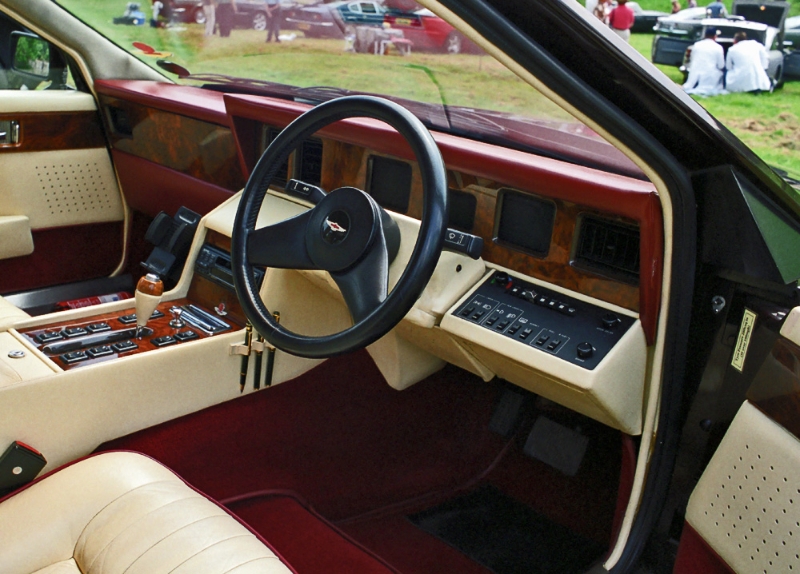
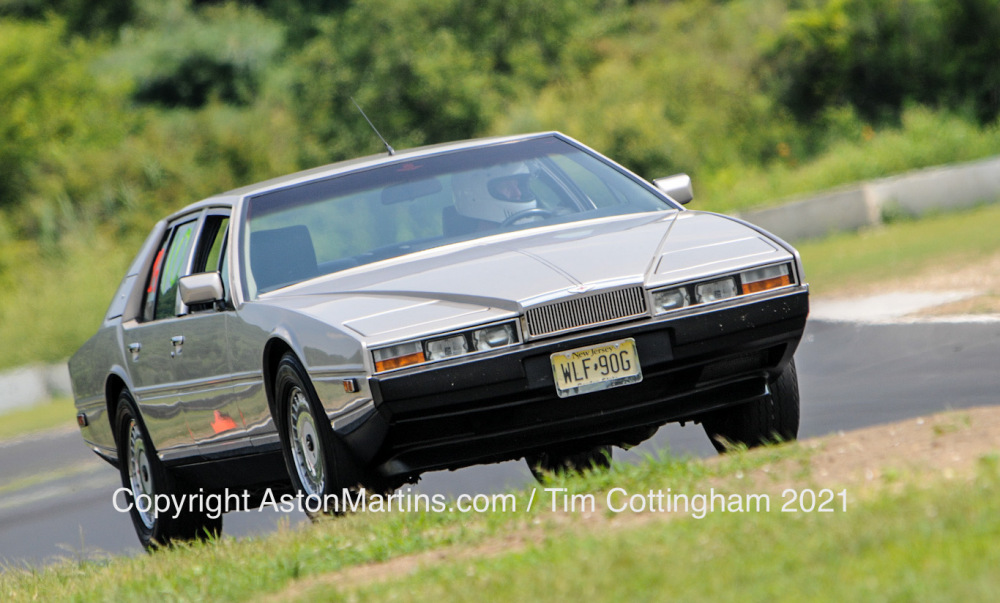
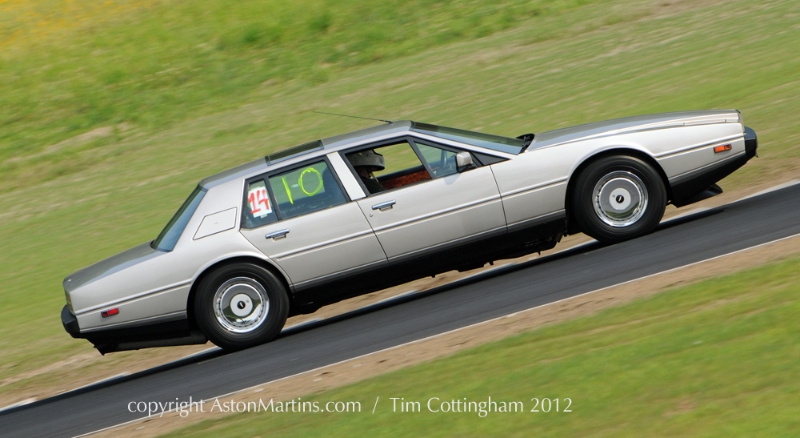
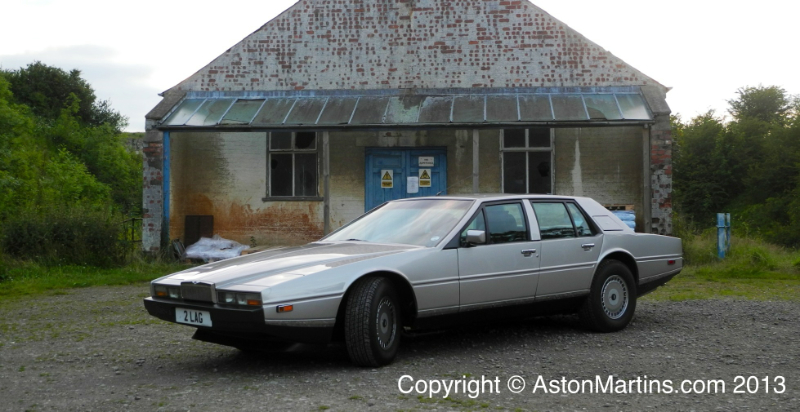
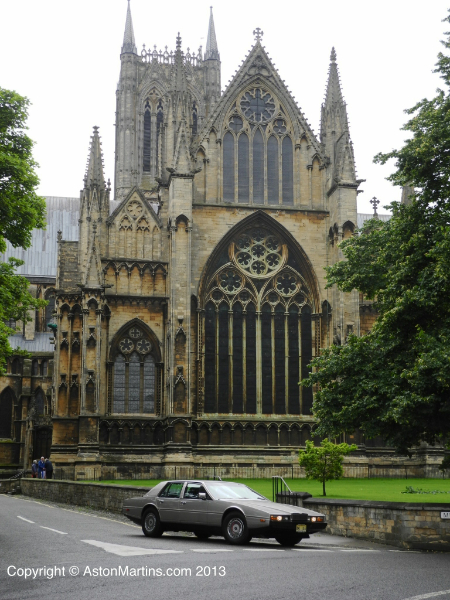
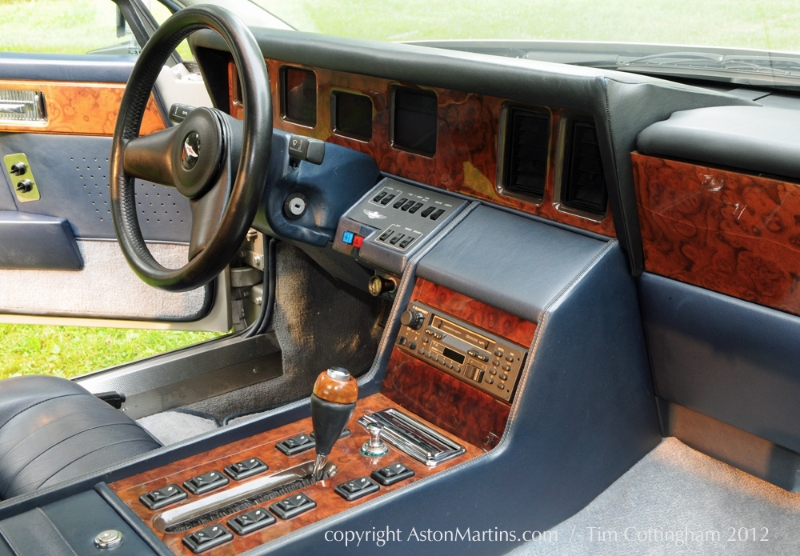
The Aston Martin Lagonda was without doubt THE star of the 1976 Motor Show at Earls Court in London and was featured on the cover of very many motoring magazines worldwide. The first prototype saloon was engineered by a team under Mike Loasby in a quite remarkable nine months from styling drawings to Motor Show concept car. As well as the aerodynamic wedge shape, the Lagonda was yet more remarkable for its unique electronic instrumentation and switchgear, developed at the Cranfield Institute of Technology . This had been greatly influenced by AML director and shareholder, Peter Sprague who was also deeply involved with National Semiconductor in the US. Mike Loasby had visited the headquarters of National Semiconductor in California and became enamoured with the touch sensitive switches in the elevators. As it happened, the production cars had a totally redesigned computer and instrumentation developed and built in the USA by the Javelina Corporation.
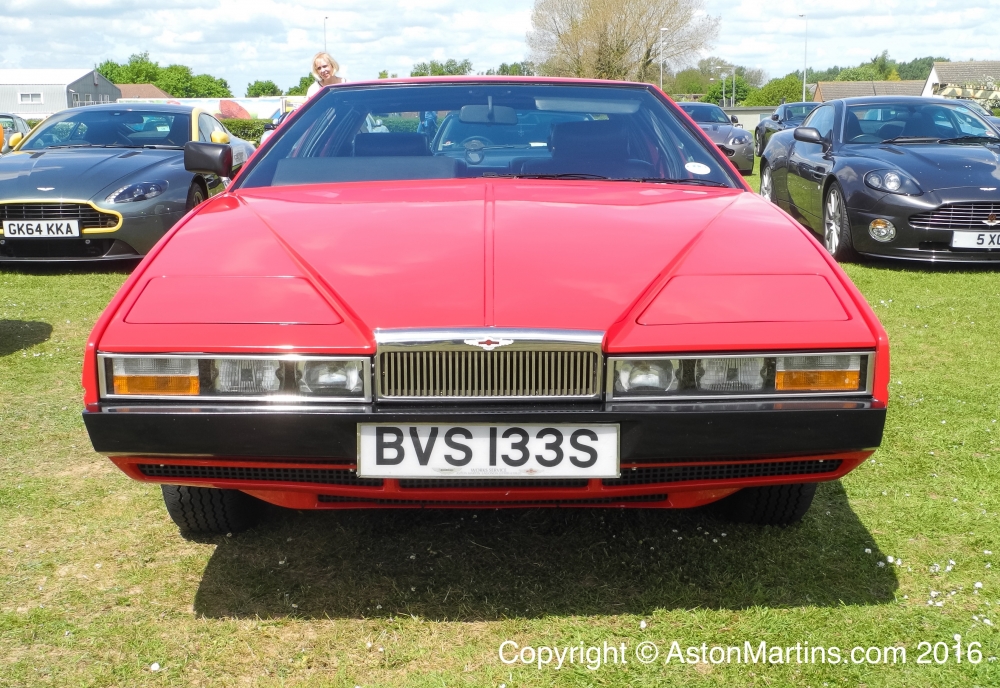
In fact, the prototype, L/13001/R, was at the time a complete non-runner; footage shot by the BBC at the time showing the car moving was actually the car coasting down a hill under gravity. The Lagonda followed the classic 1970’s trend of wedge styling with low bonnet line and sharp creases. Pop up lights as already seen in such sports cars as the Ferrari 308, Lotus Esprit, Triumph TR7 and Lamborghini Countach were another feature. The Lagonda had become perhaps the ultimate expression of the school of ‘folded paper’ design but with 4 doors and genuine 4 seater accommodation; low slung and obviously aerodynamic yet spacious and comfortable too. To owners and enthusiasts, it’s simply known as ‘the wedge’.
Sadly the prototype car was broken up by the factory around 1979 which is a bit of a shame as it would be considered as the jewel in the crown of any classic Aston Martin collection. Press images or that car shown here were almost certainly taken by factory photographer, Roger Stowers and are used with the kind assistance of the Aston Martin Heritage Trust.
Another famous pre-production Lagonda was LOOR/13008, purchased by Lady Tavistock for her husband as a wedding anniversary gift. Whilst 13008 was considered as the first production car, it was still not really fully road ready for His Lordship. Sadly the car had embarrassingly broken down just before being presented to the press in April of 1978 at the family home of Lord and Lady Tavistock, Woburn Abbey.
This, perhaps the most famous of Lagonda’s is now fully working, restored and back at home in the UK.
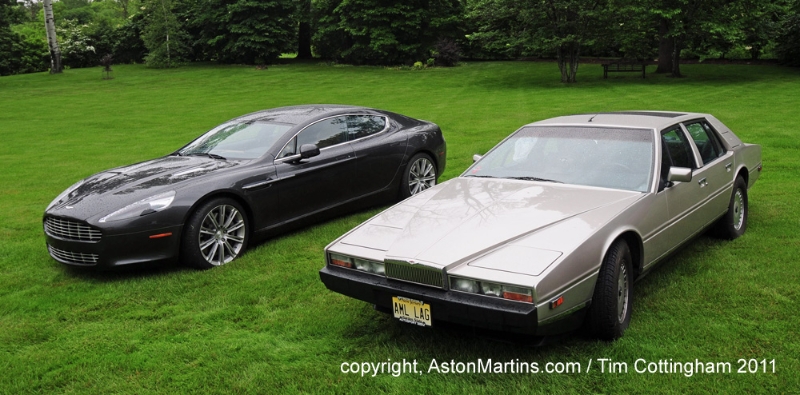
The AMOC has a way of categorising the products of AML to prevent confusion between models. The earlier Lagonda V8 is known as the series 1 – the wedge shaped Lagondas are known as the series 2, 3 and 4, based on engine spec and body style. The factory has tended to differentiate Lagonda’s by instrument type. The series 2 to 4 cars are also erroneously referred to as the ‘Towns’ Lagonda – which is absolutely true, but the series 1 car was also designed by William Towns too. When Towns styled the 4 door wedge shaped Lagonda, he also worked on a series of two door versions which never saw the light of day – I’ve been fortunate enough to see the original drawings which are terribly interesting. Interestingly that 10 years later, AML did build a 2 door Lagonda which was in fact a prototype for the Virage. Sadly I have never seen the car.
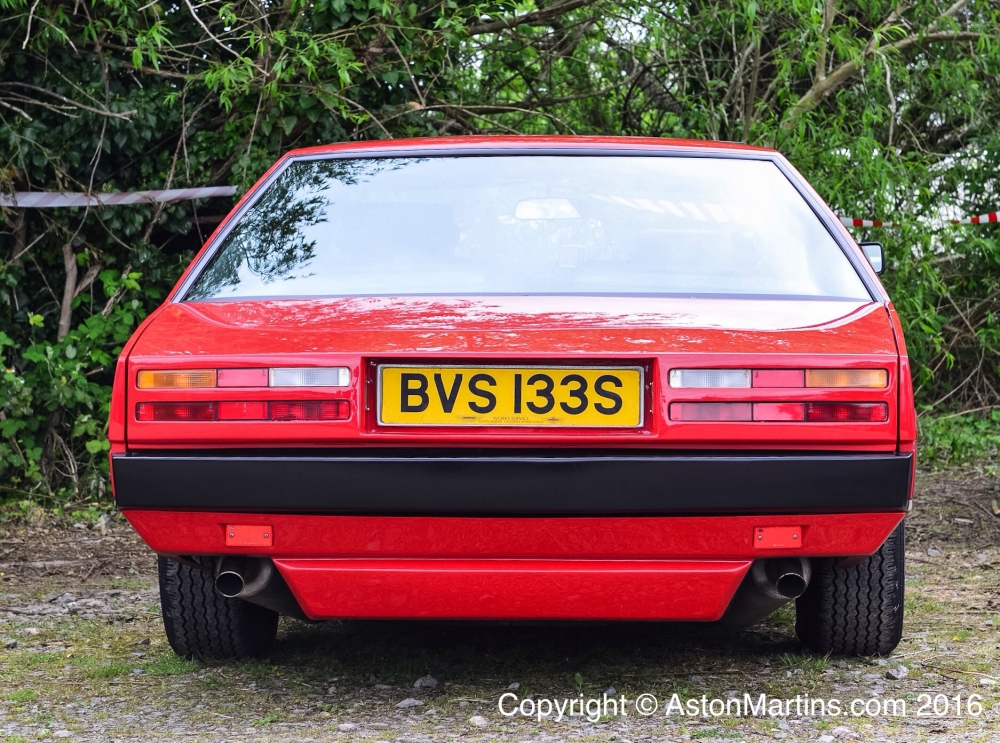
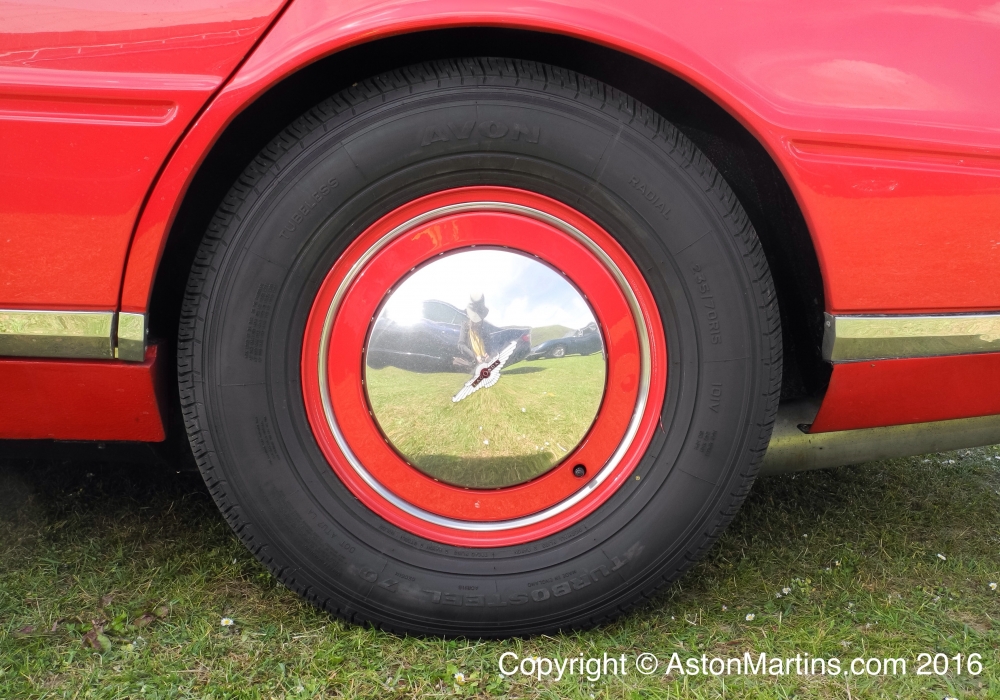
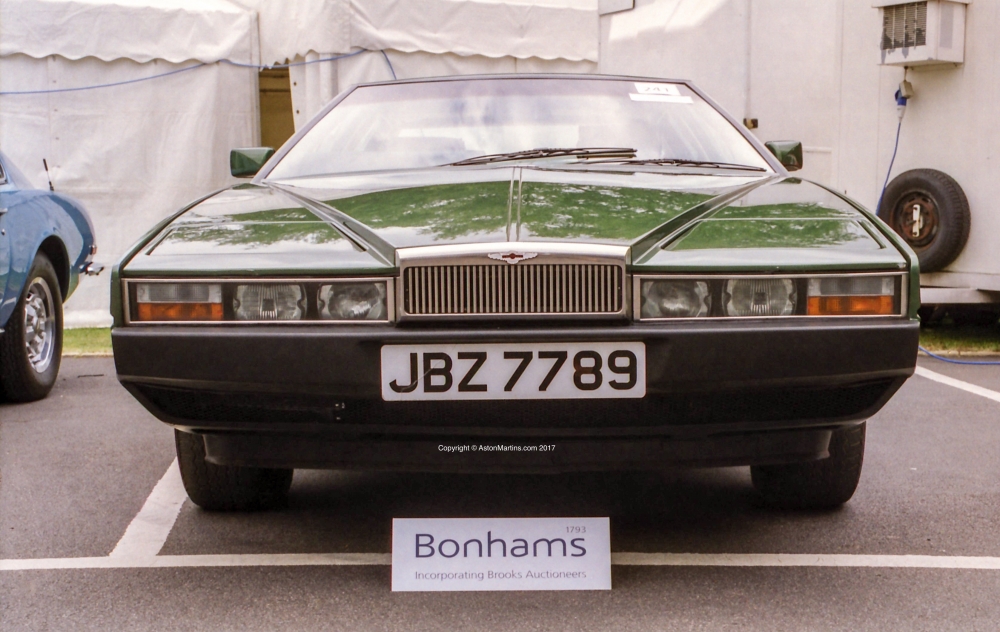
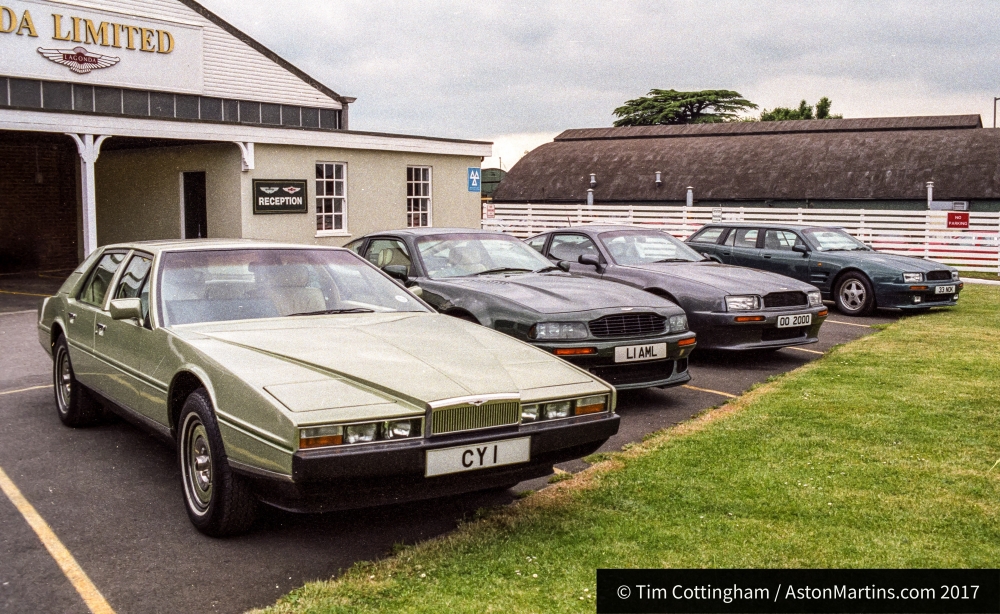
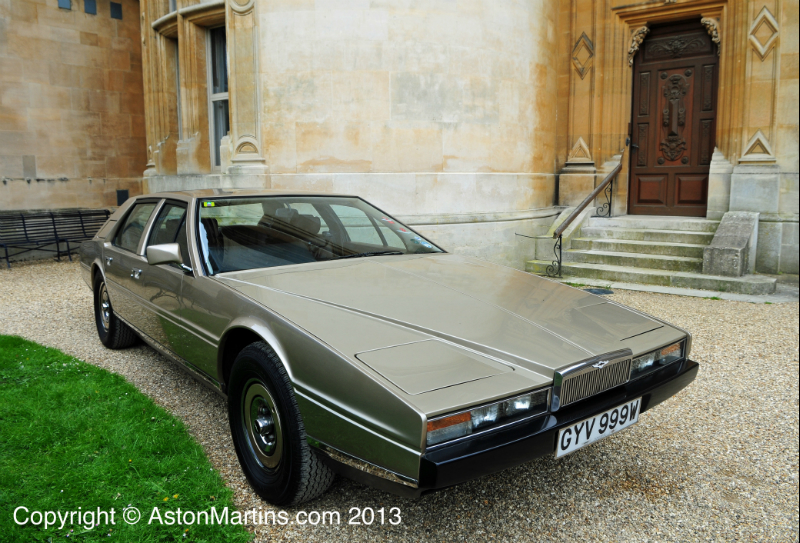
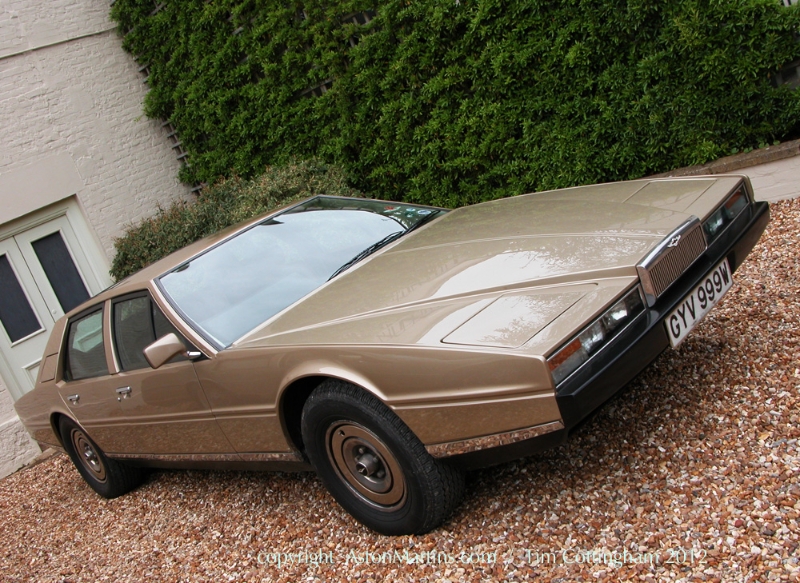
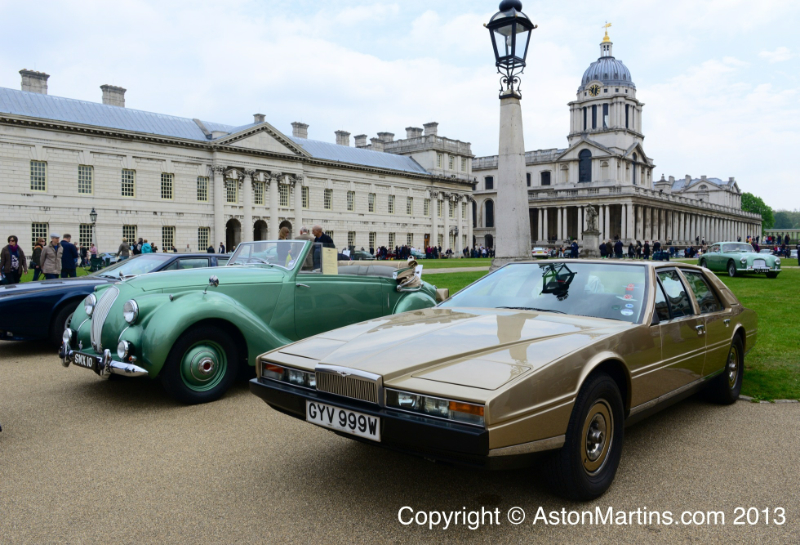
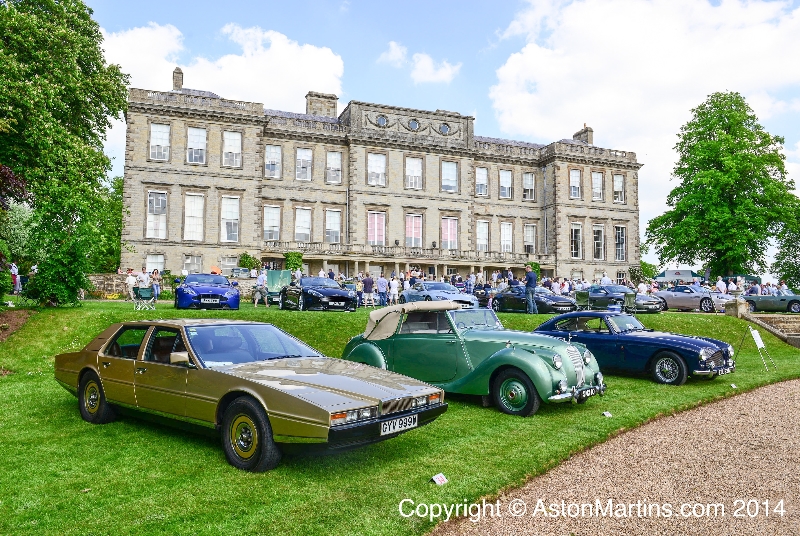
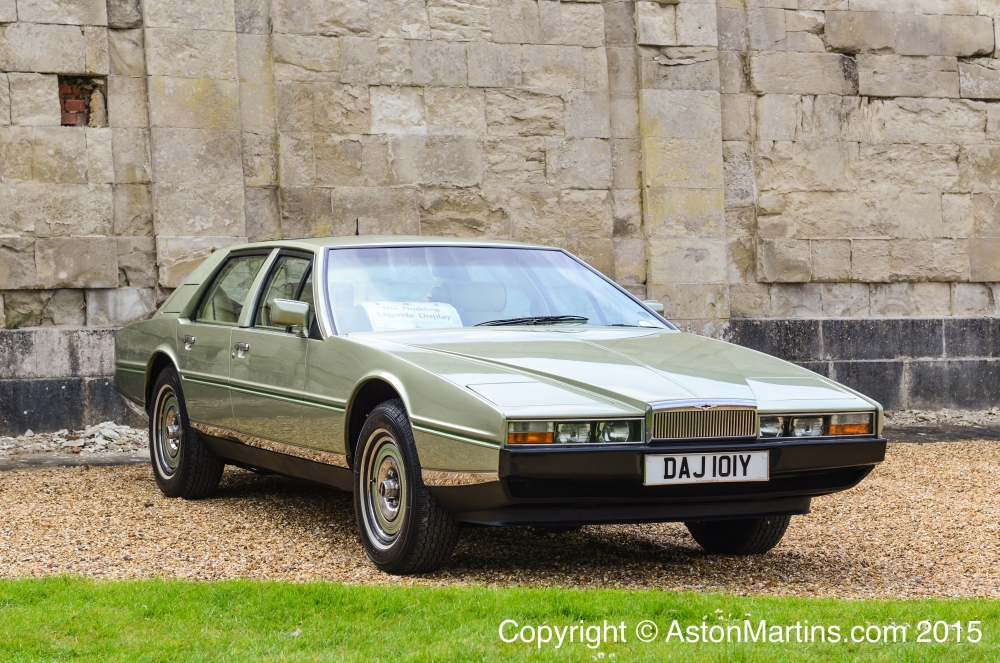
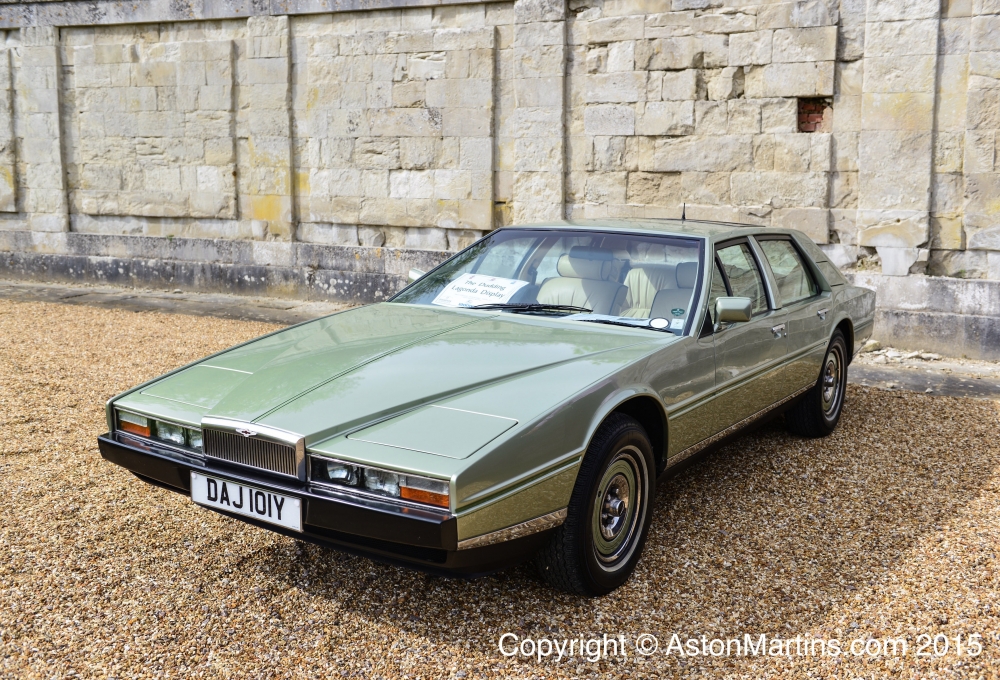
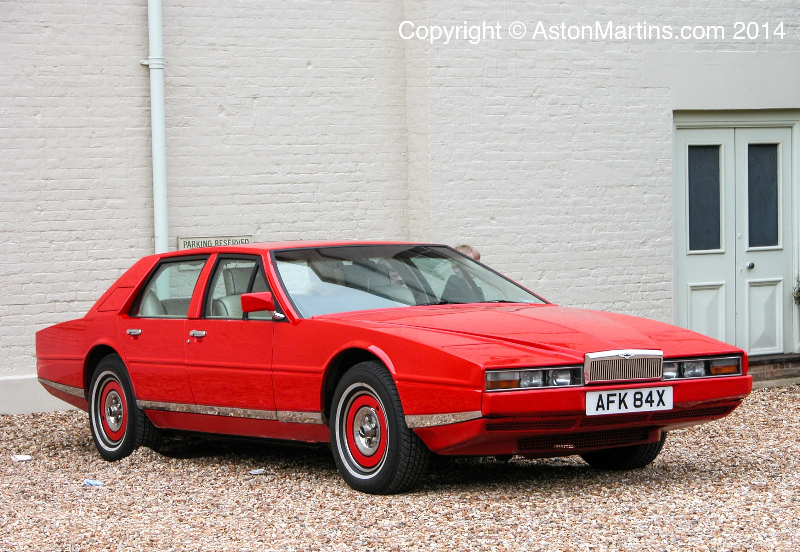
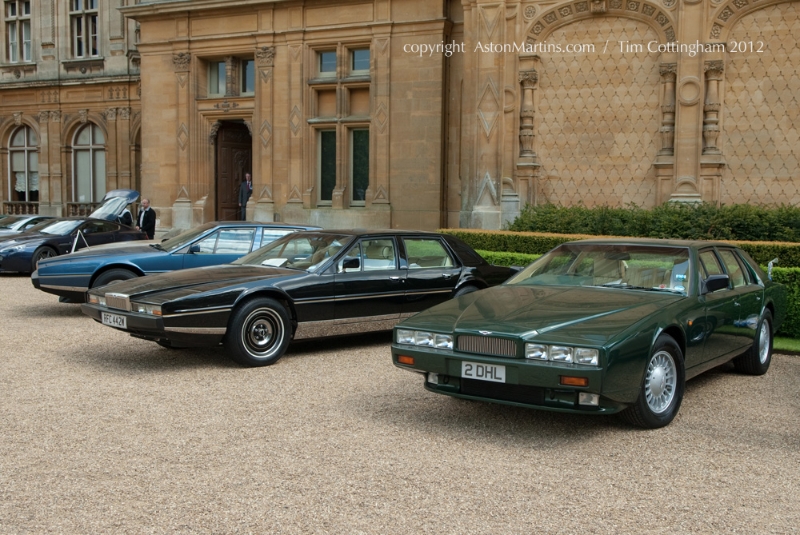
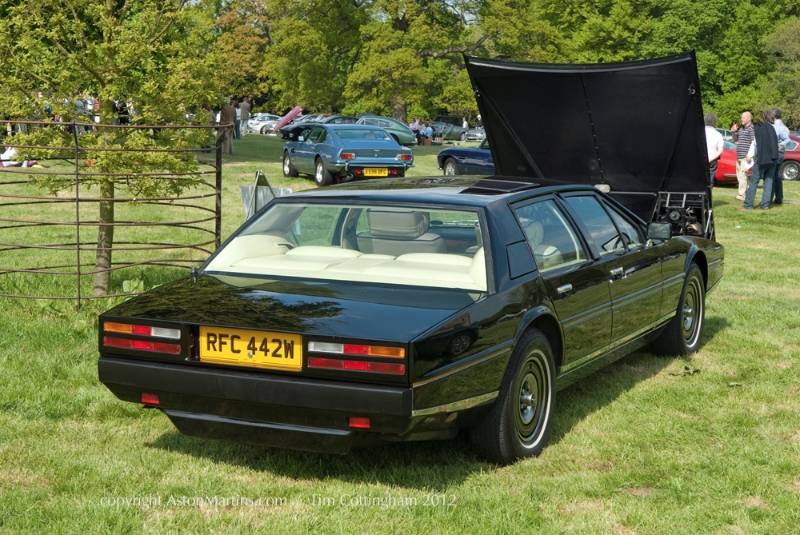
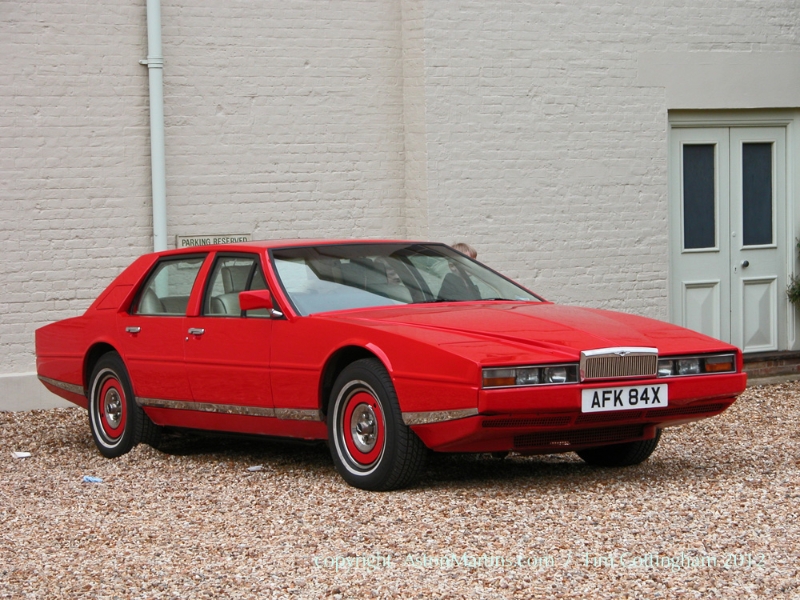
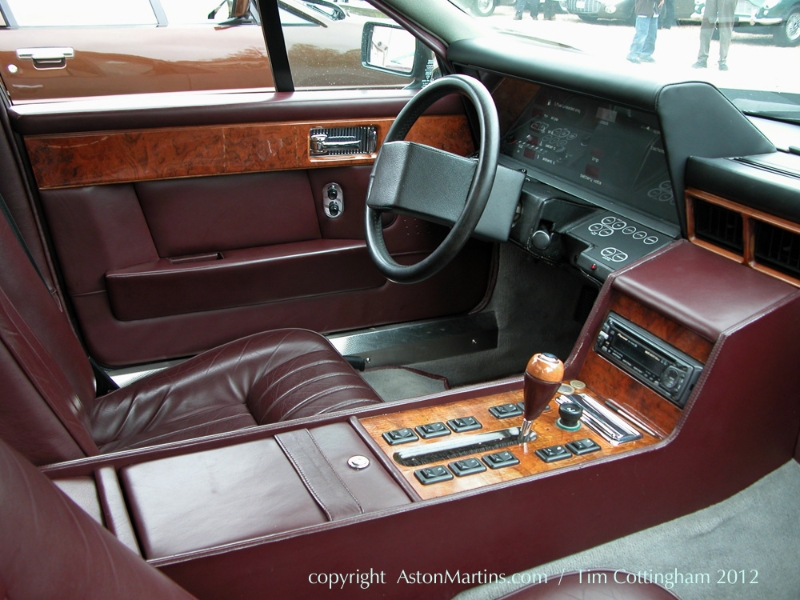
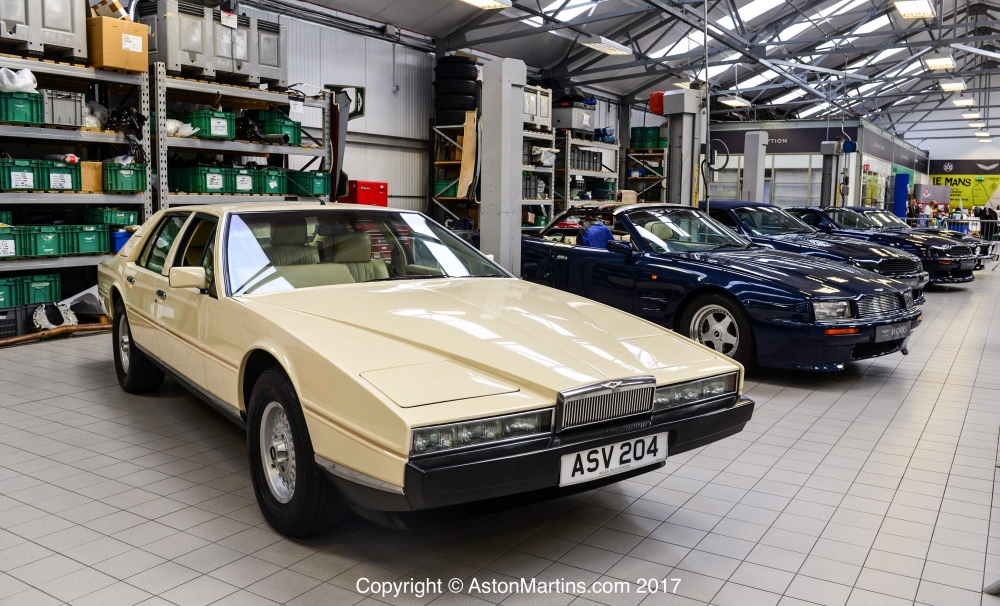
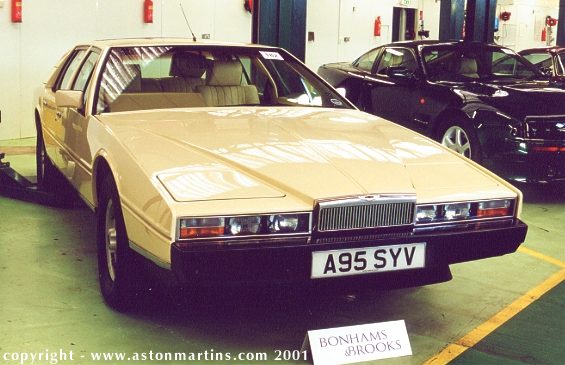
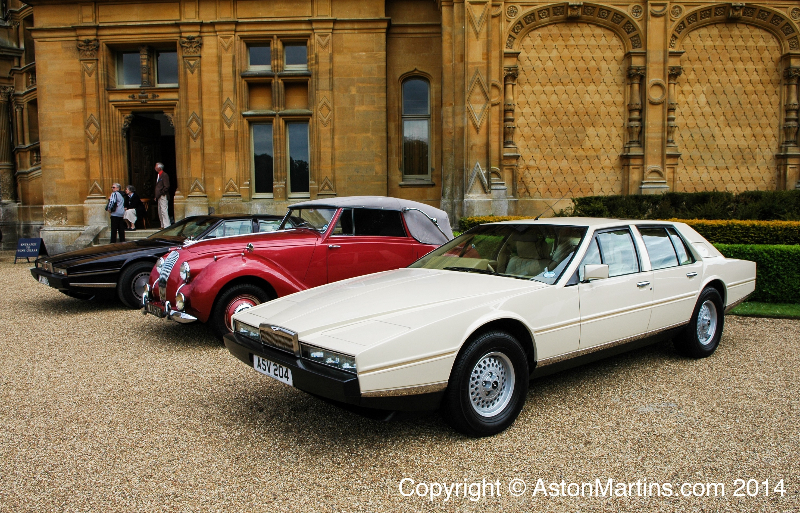
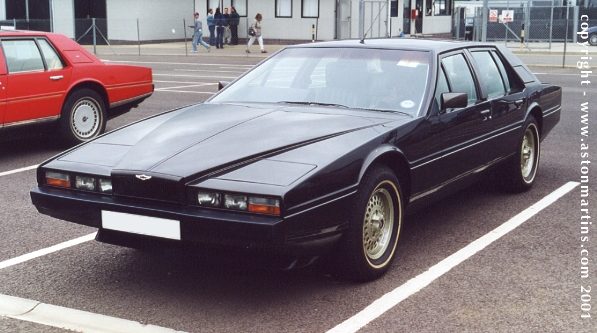
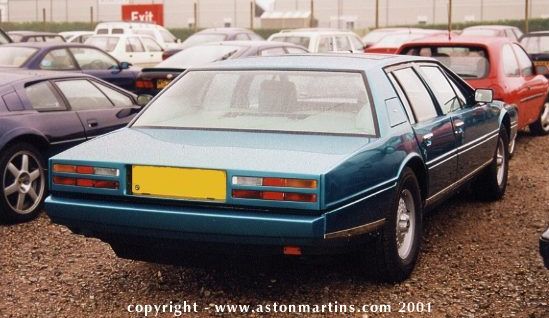
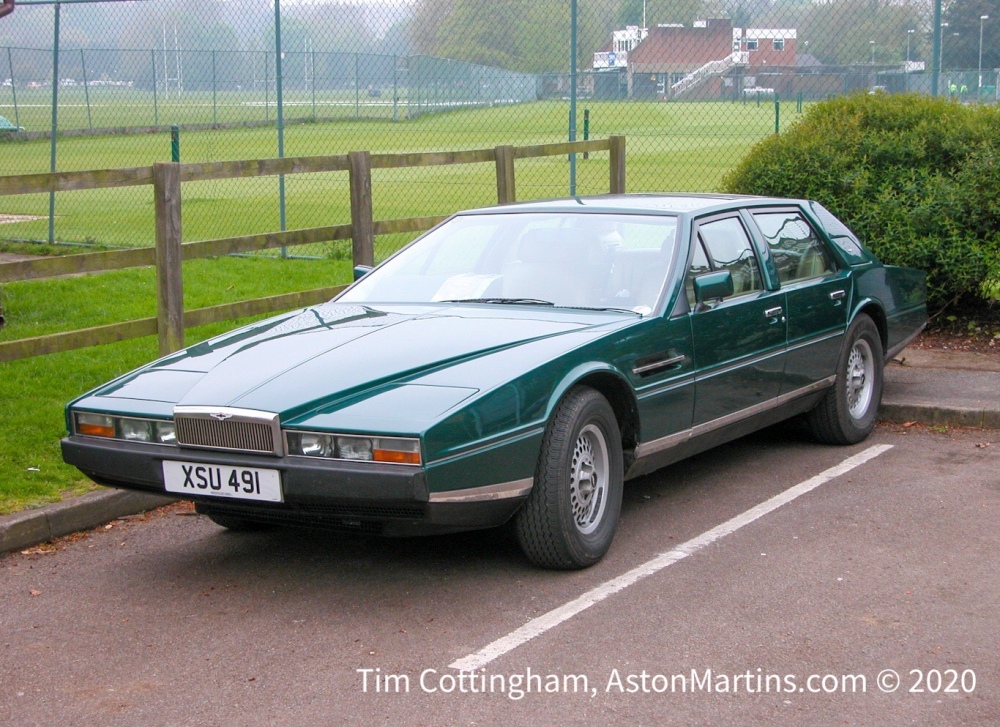
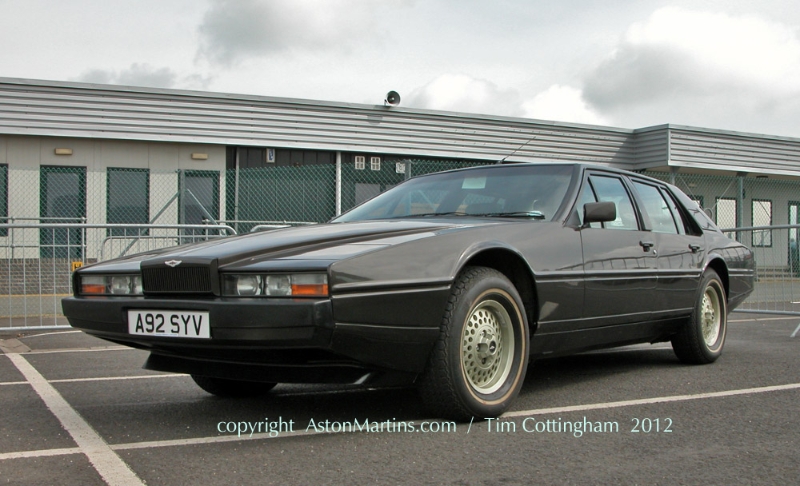
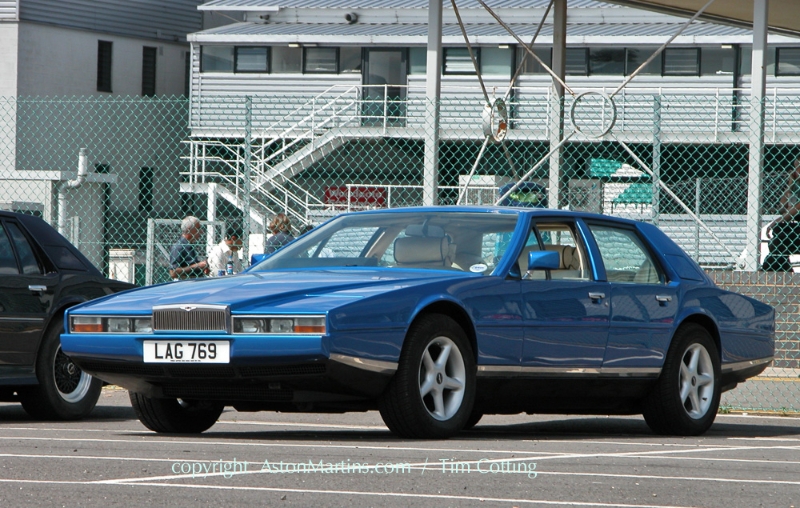
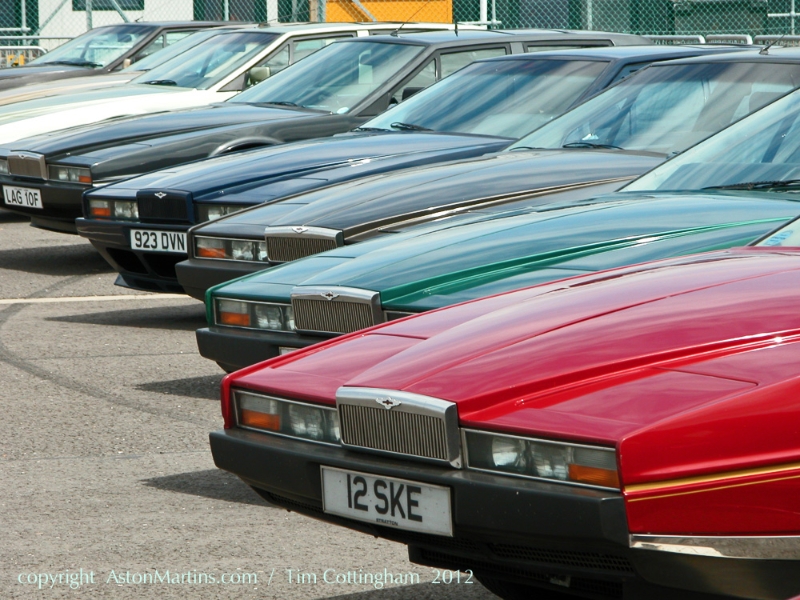
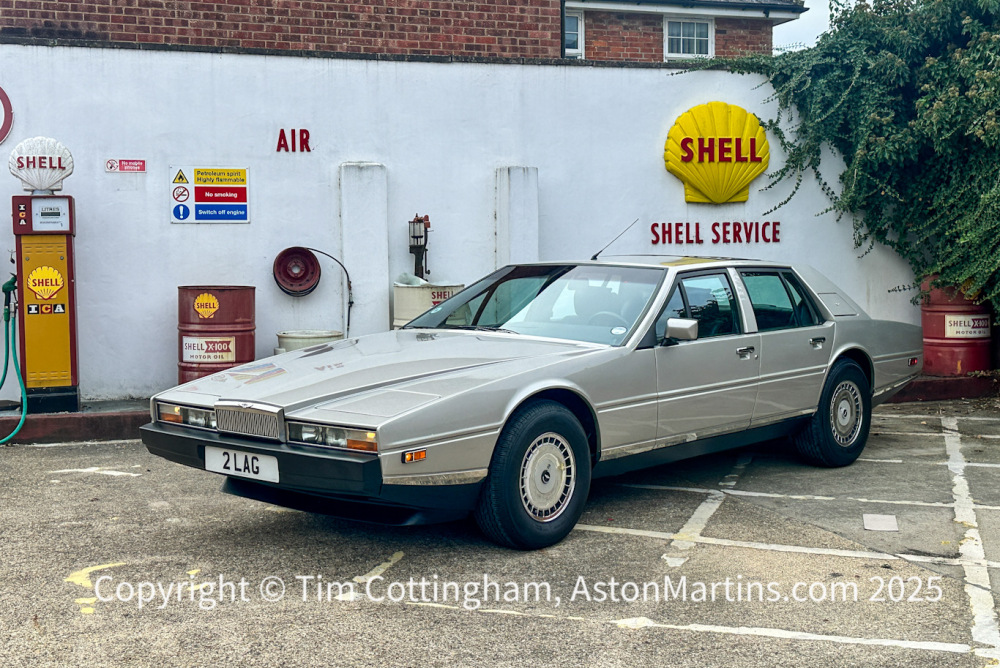
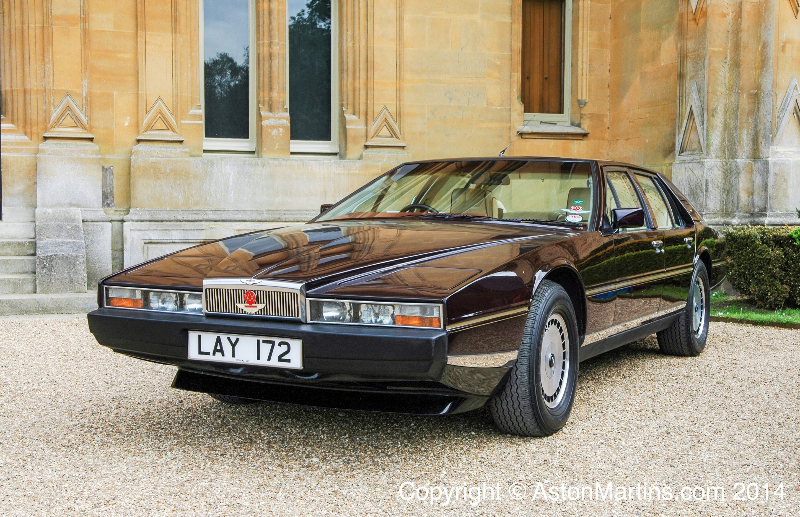
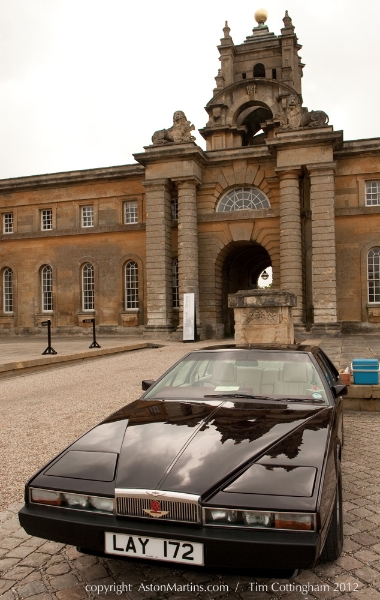
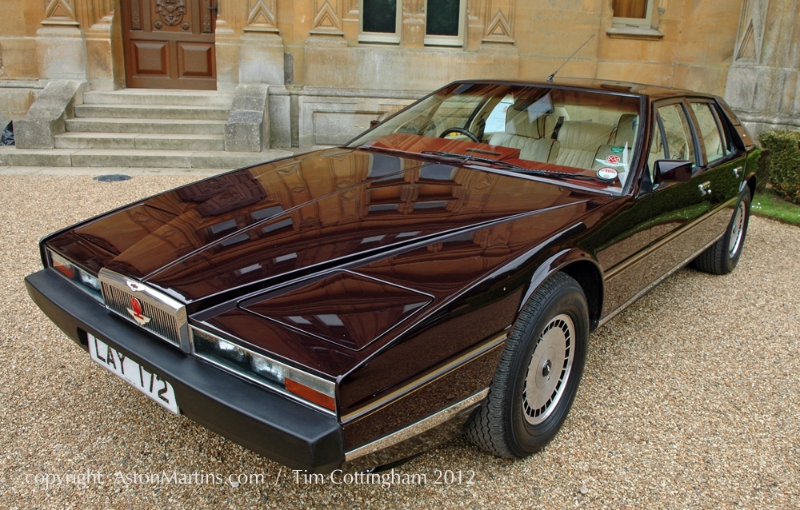
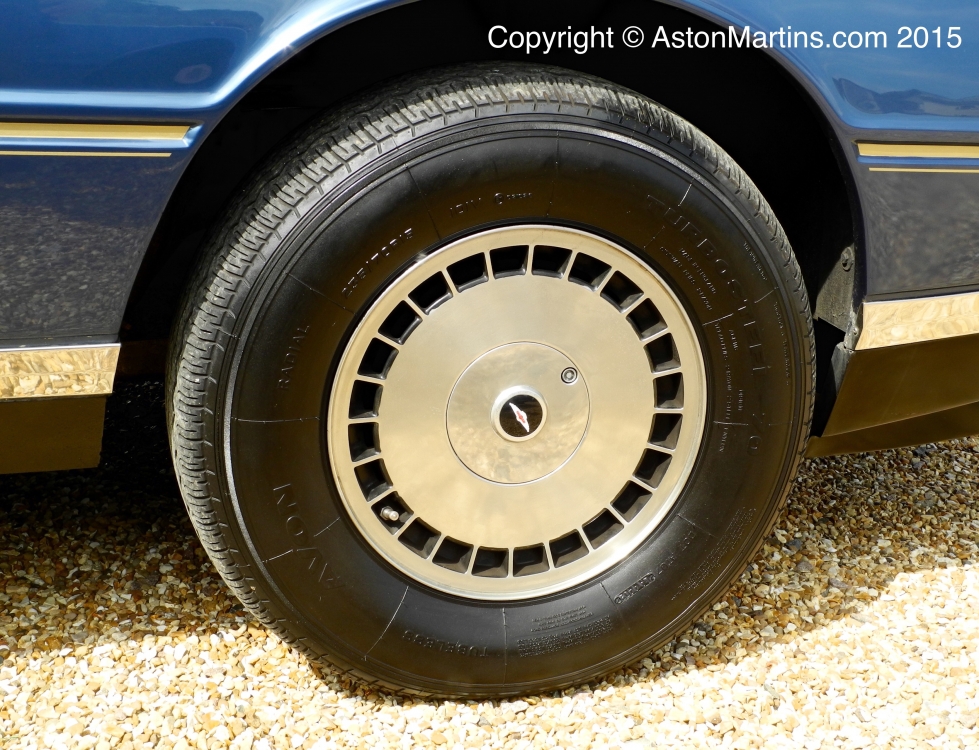
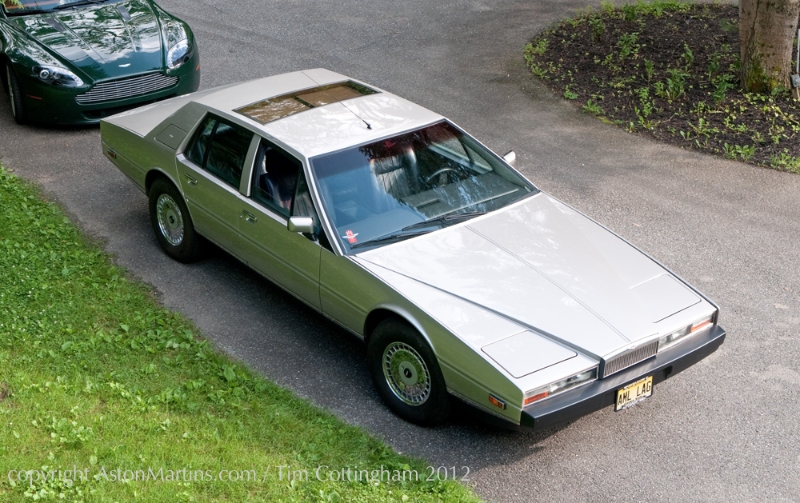
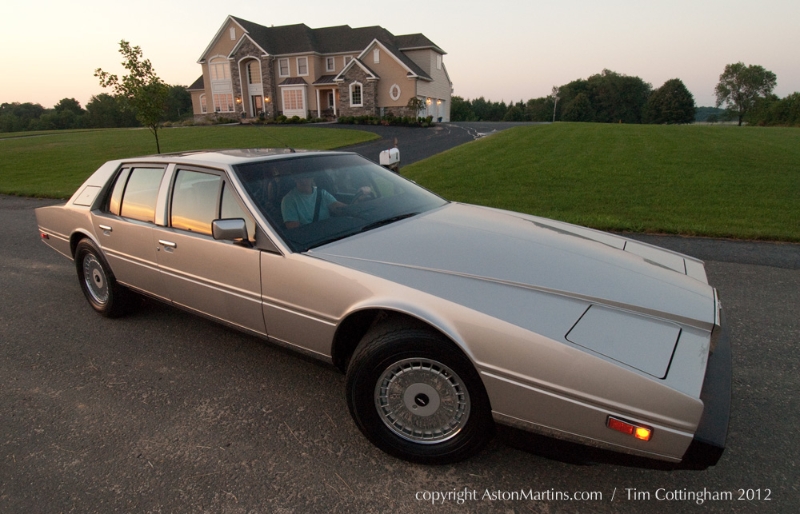
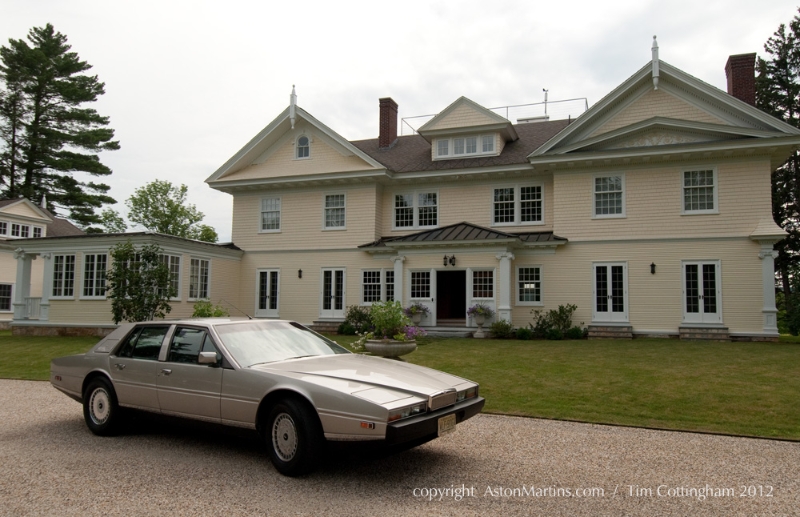
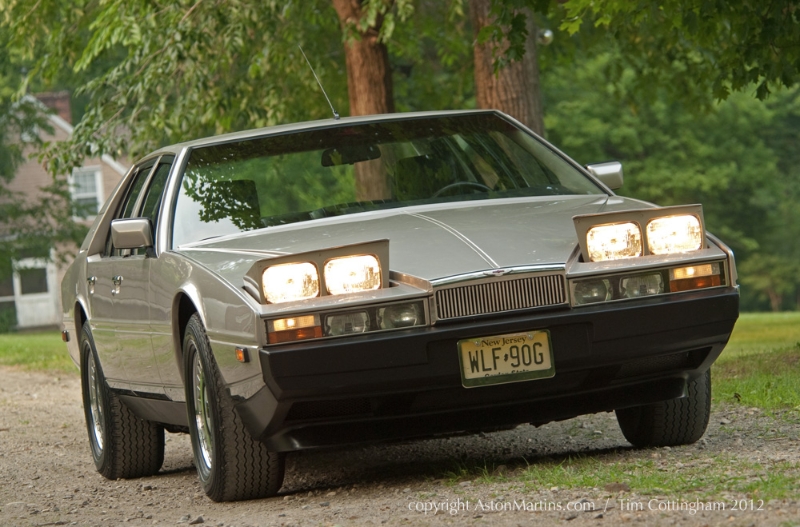
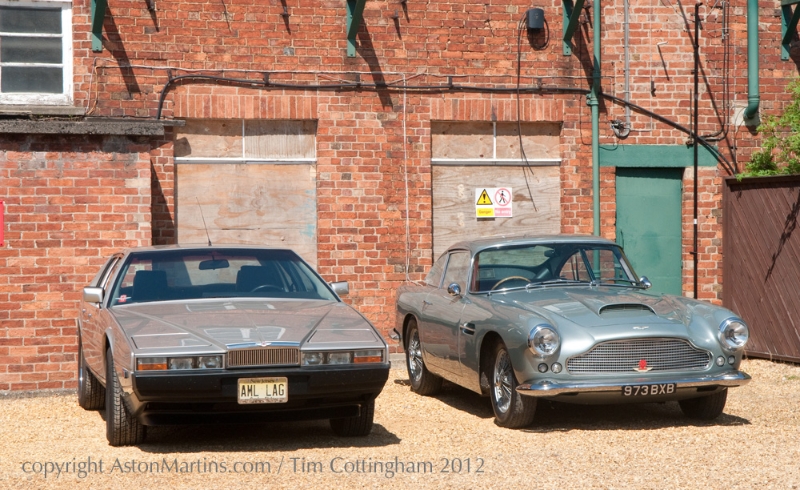
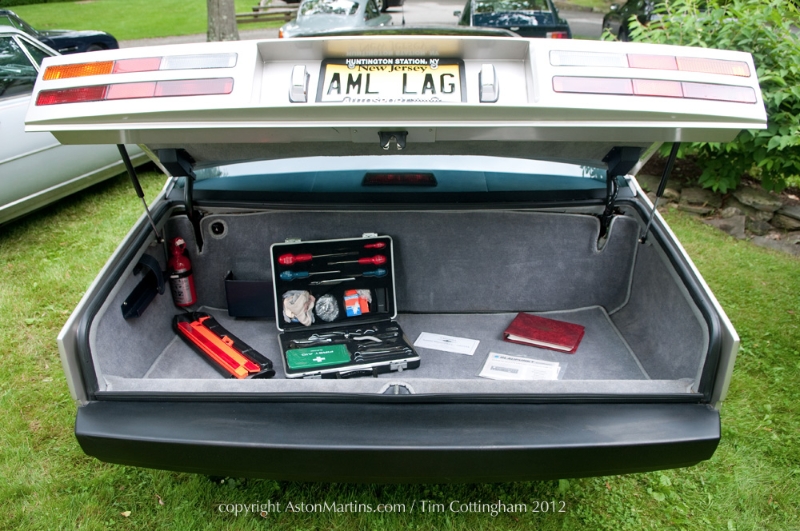
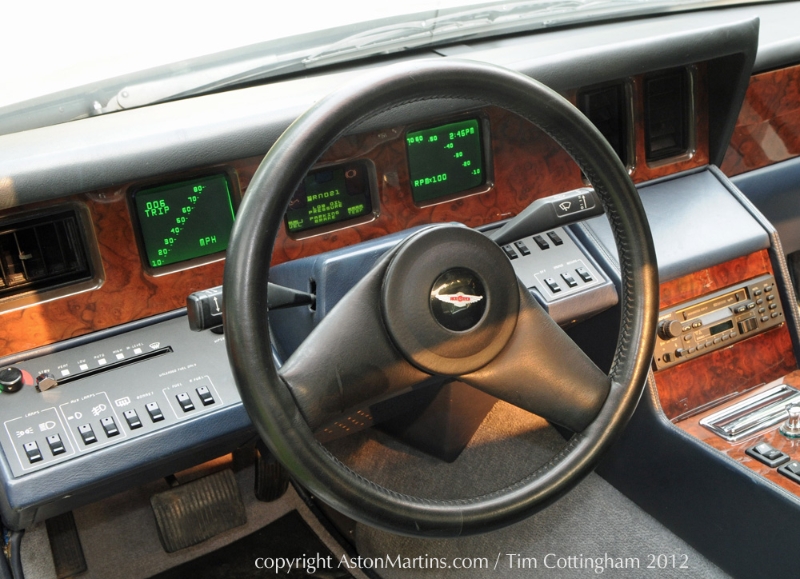
The wedge shaped design and pop-up headlights was pure 70’s. The Lagonda was from a time of cars like the Ferrari 308GT4 and Lotus Esprit, but more than any other car defined ‘edge’ design as these shots show. The design of the rear lights was carried through to the Bulldog, also the work of William Towns. Unusually they were also seen on the 1986 V8 Vangate Zagato. The above pictures show many early cars, characterised by their LED instrument displays, stainless steel wheel trims and in many cases, fixed rear window glass. At launch in 1977, the car was reckoned to sell at £25,000, (£165,000 in 2014 money) but by 1980, when production reached the promised one car per week, the price had already grown to £50,000; a very expensive car indeed for the time. Needless to say, they were well out of the reach of the man in the street but were popular with wealthy folk from the Middle East.
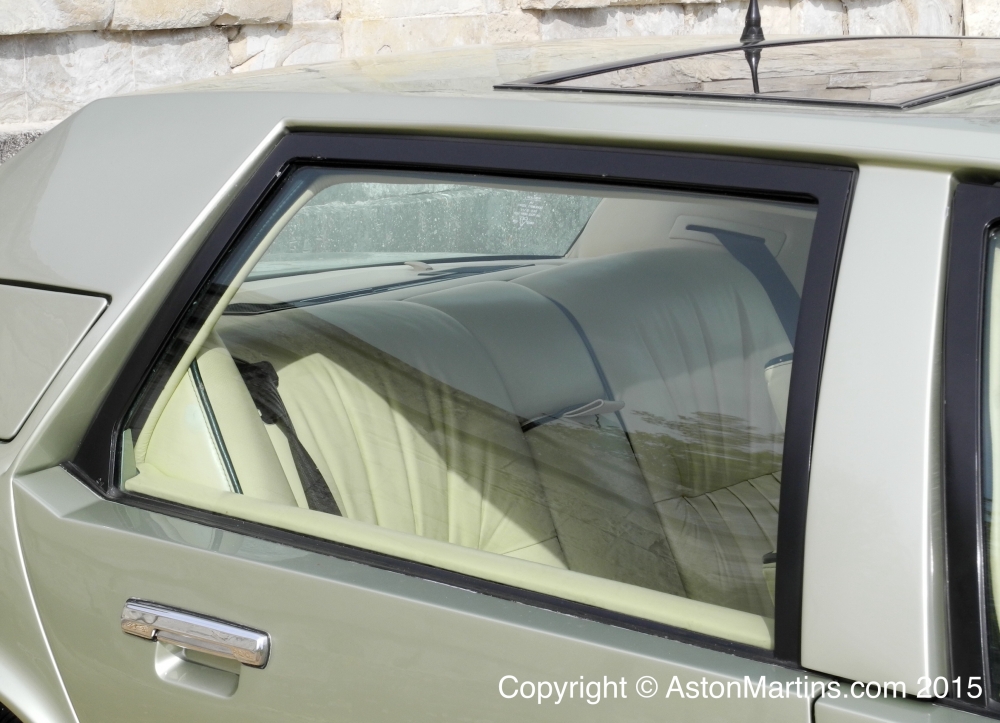
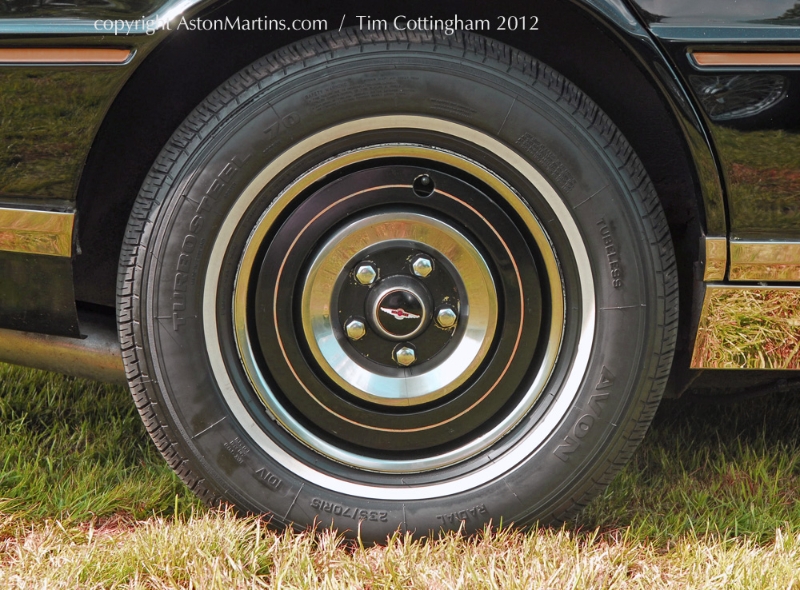
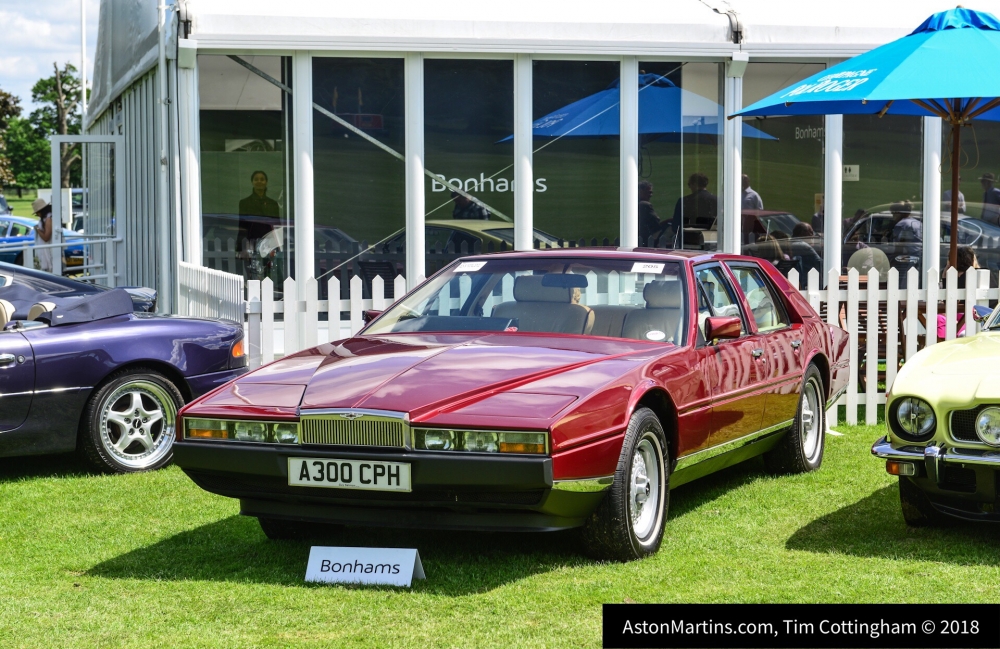
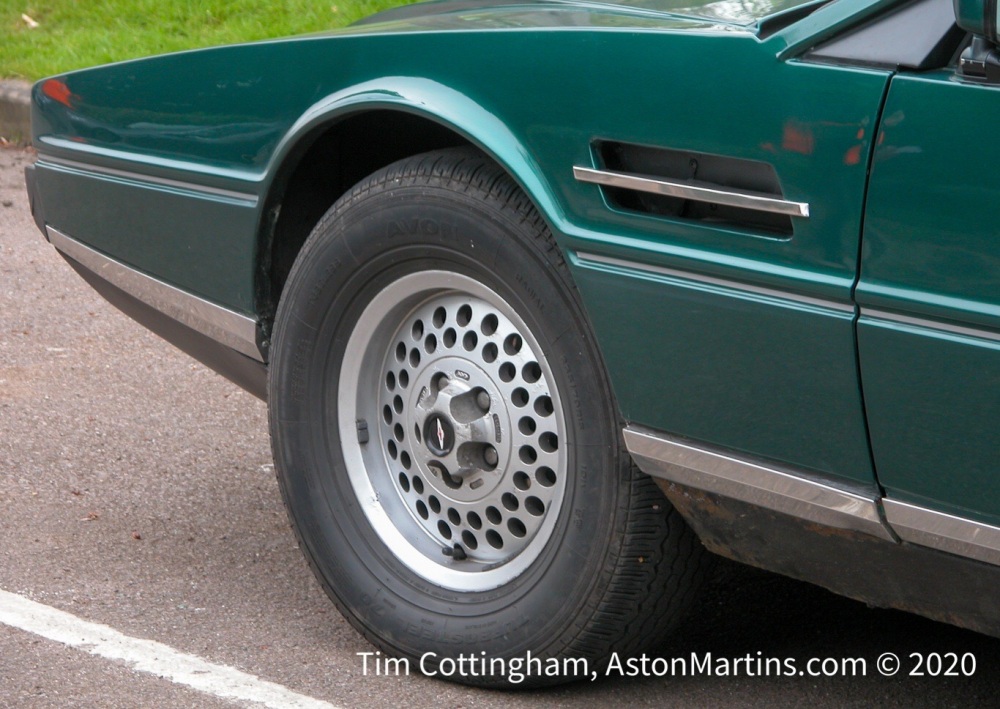
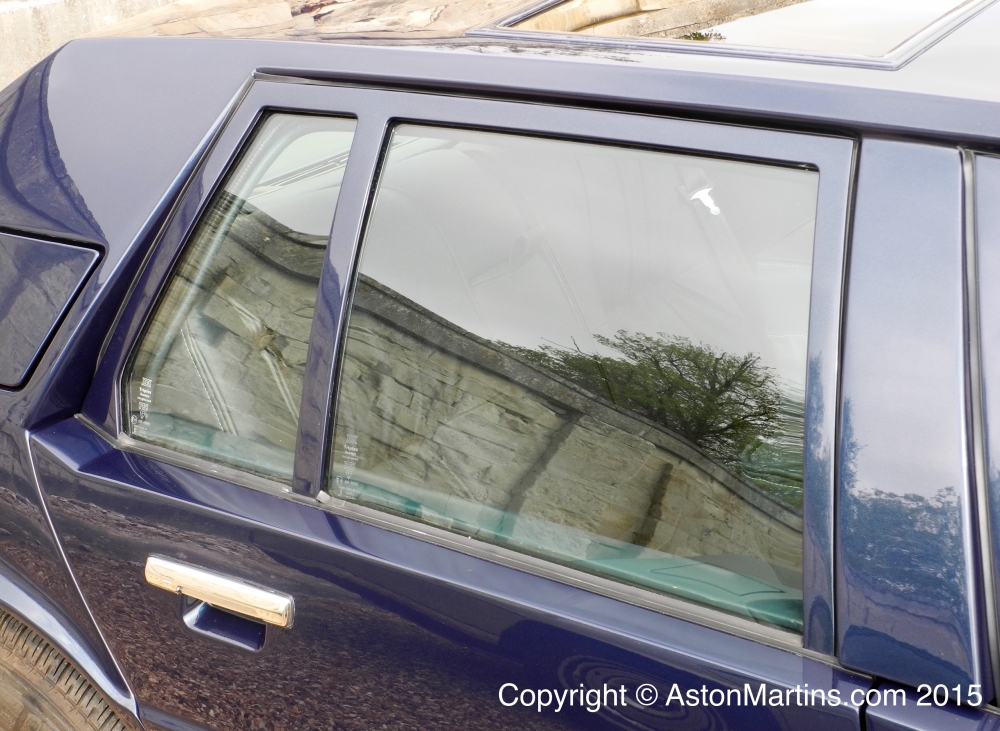
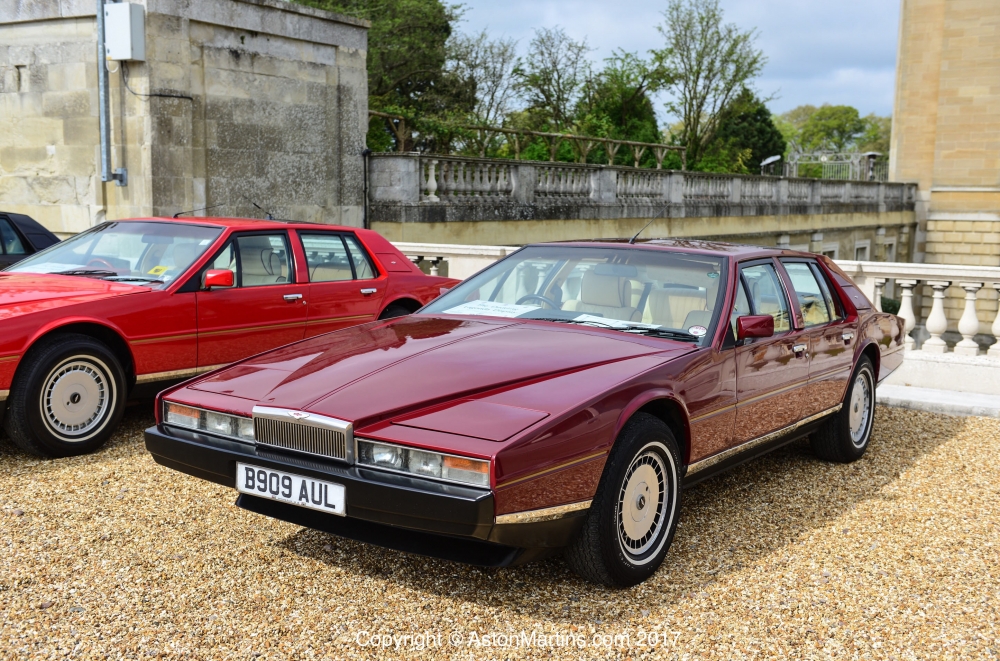
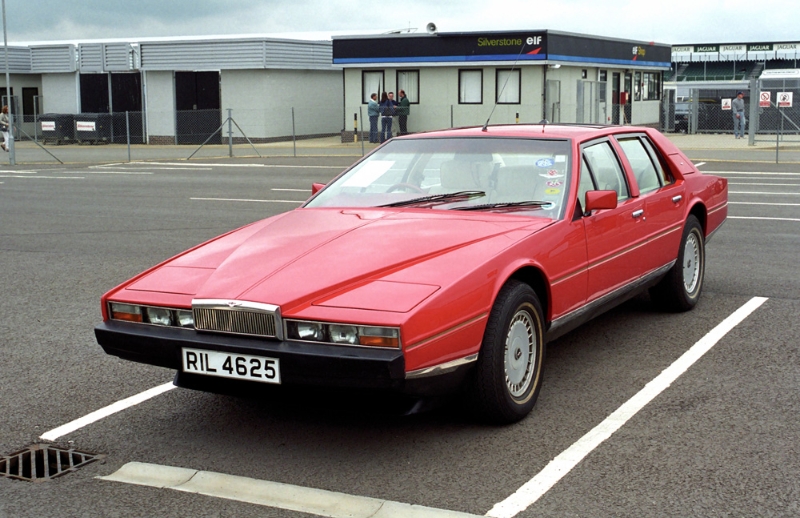
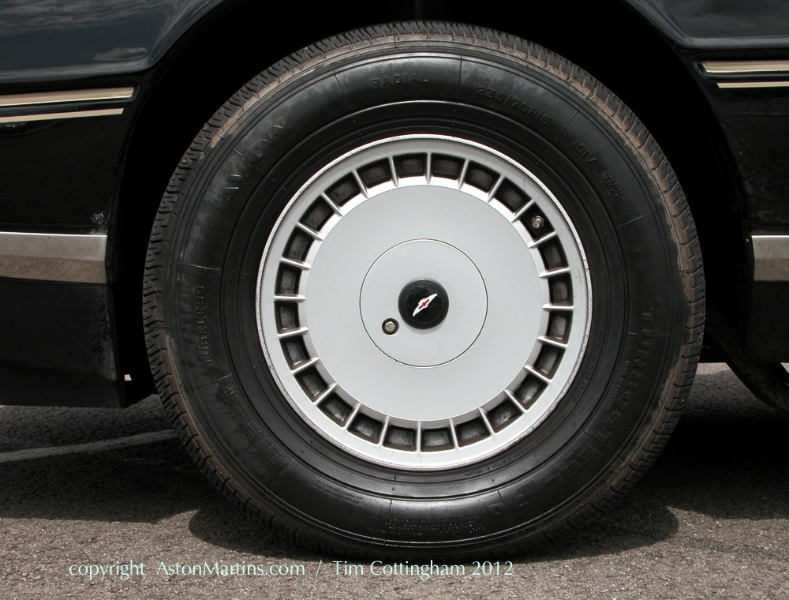
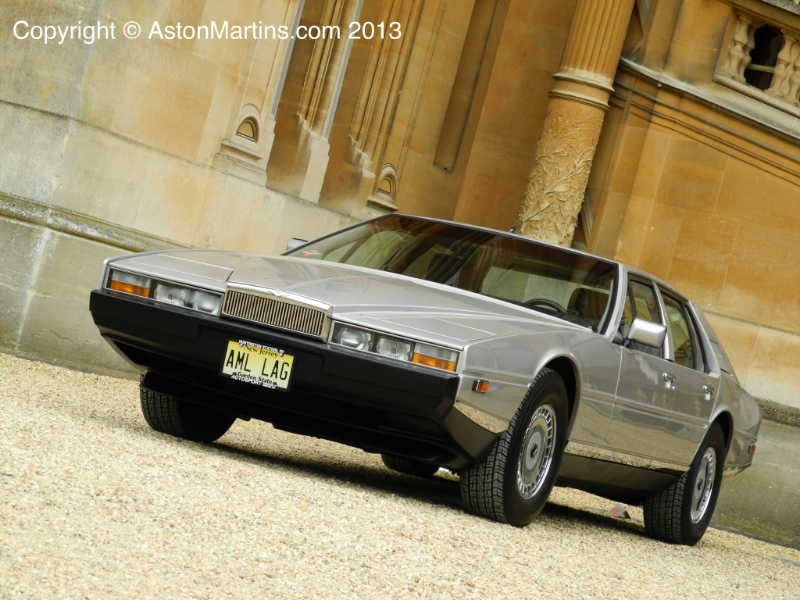
Above are some later examples from about 1983. These cars still had LED instruments but had distinctive pepperpot wheels (as used on the Jaguar XJ), deeper, US spec 5mph ‘safety’ bumpers, air dam and movable rear door glass. These cars are easily spotted as they have three quarter glass in the rear doors. Some cars here have been a little altered by their owners with additions such as body coloured bumpers or after market wheels.
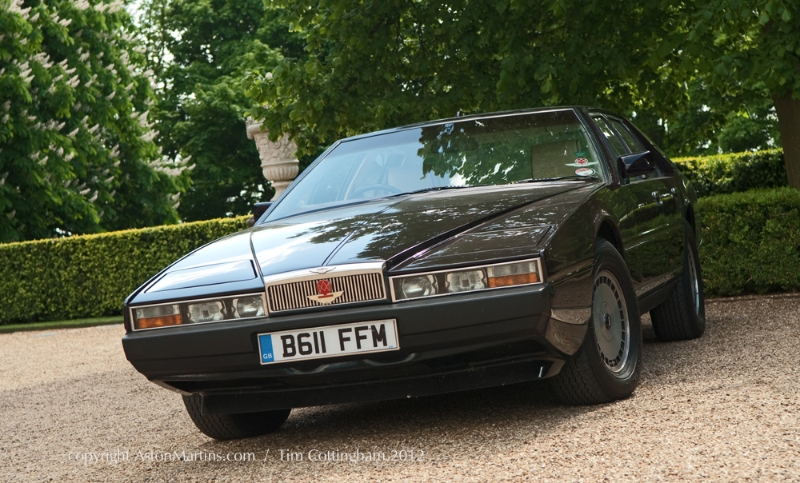
In 1984, the LED’s were replaced by stylish triple Cathode Ray Tube instruments designed by Javelina and supplied by Clinton Electronics, which had designed them for the F-15 Eagle tactical fighter program. The computer was also upgraded and a synthesised voice alerted the driver to problems with the car such as ‘low fuel’, ‘boot open’ and ‘battery charge’. At the same time, the style of wheel changed to a disc type alloy wheel by BBS.
The Lagonda was the saviour of AML during the first few years of the 1980’s. Strong demand, especially from the oil rich Middle East meant that AML even had to produce a brochure in Arabic which also starts at the back so to speak. At a board meeting shortly after Victor Gauntlett joined the company, some directors considered ditching the 2 door V8 altogether and concentrate on the Lagonda alone. Gauntlett was successful in securing the future of the AMV8; a decision which, as time would tell, also saved AML.
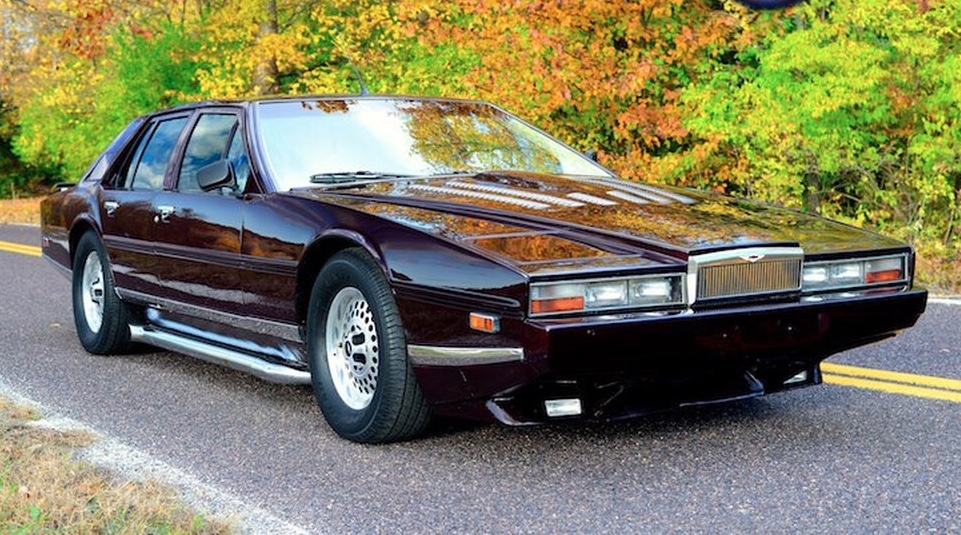
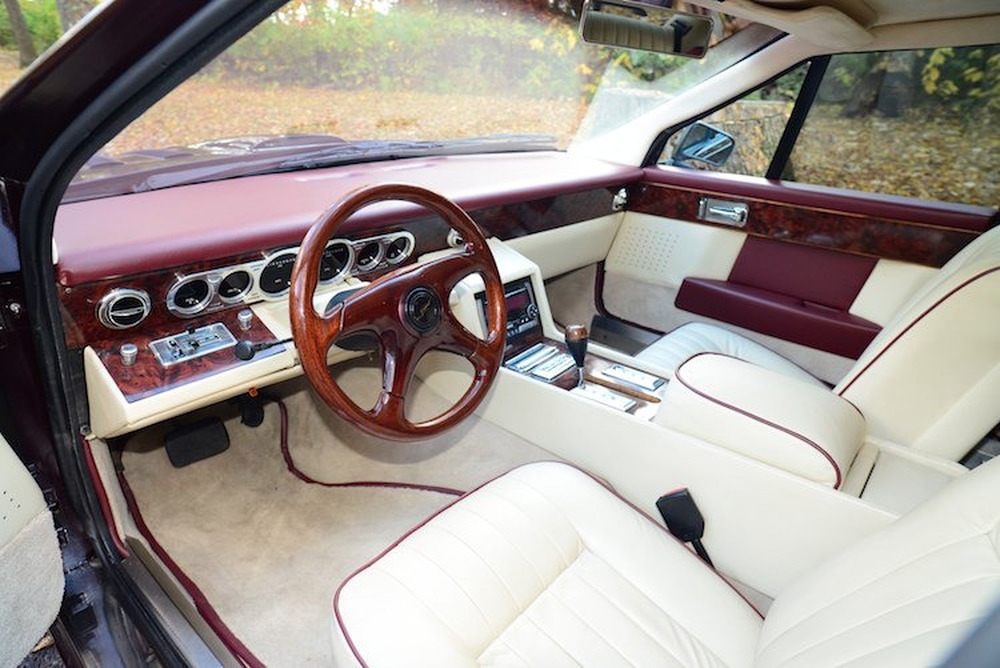
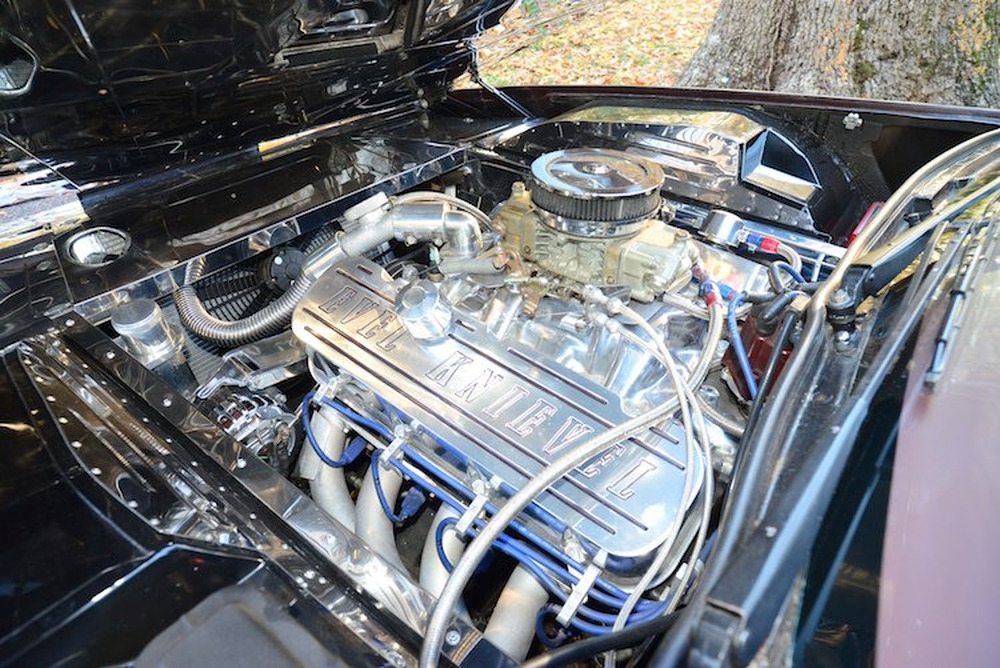
This example of the Lagonda (above) was the property of the motorcycle daredevil, the legendary Evel Knievel. He owned the car from about 1999 until his death in 2007. During that time, he put a big block 502 cu in Chevy engine, beefed up the transmission, added a conventional dash and new leather interior, among other things.
So, is the Lagonda an Aston Martin? Certainly when first shown in 1976, it was described as the Aston Martin Lagonda in press releases and brochures. Indeed, many series 2 cars have a Lagonda bonnet badge with the names ‘Aston’ and ‘Martin’ featured also. But sometime during the 1980’s the ‘Aston Martin’ description was quietly dropped.
For too many years, the Lagonda has been under-appreciated and whist examples have been very inexpensive to purchase they have not been so inexpensive to repair). Nowadays, there has been a significant growth in interest and the wedge Lagonda is considered the height of retro-futurist coolness.
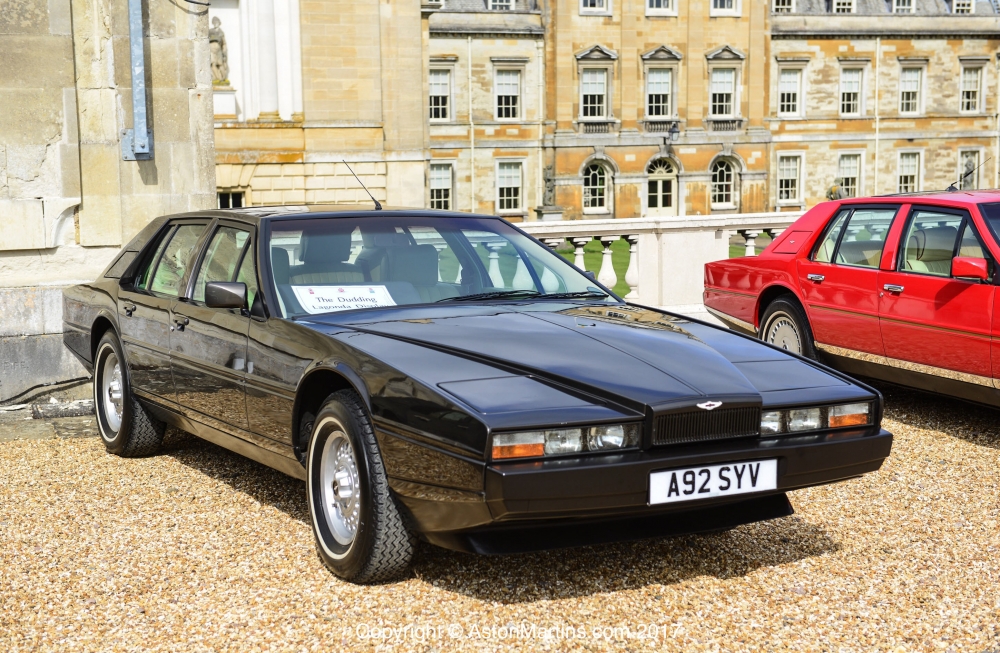
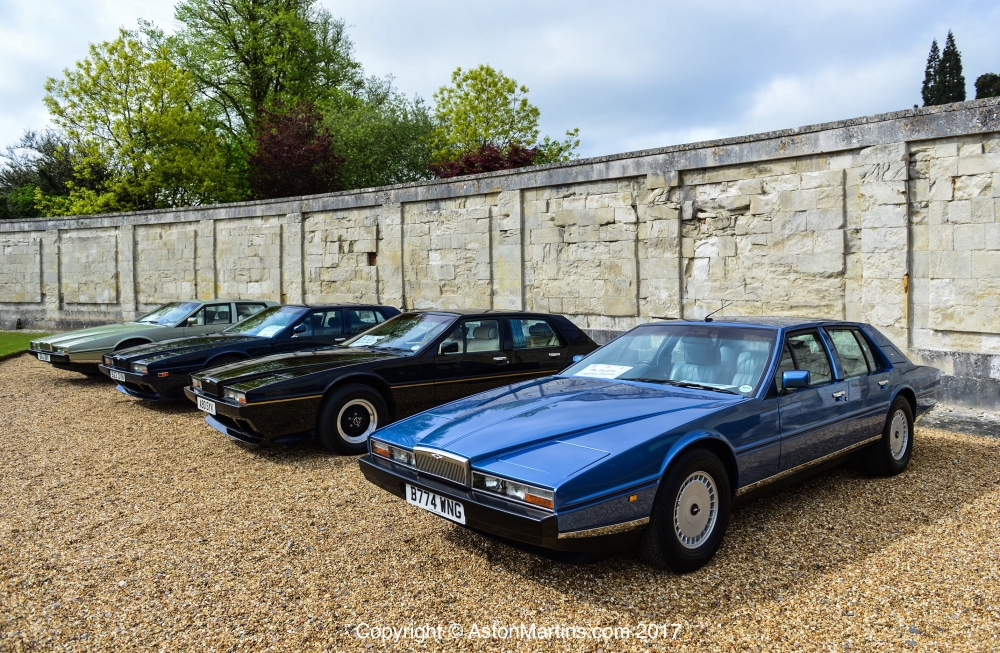
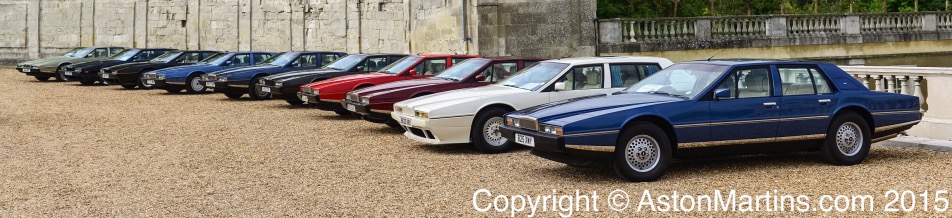
Aston Martin Lagondas from the Dudding collection at the 2015 AMOC Spring Concours
For more information and advice about Lagonda’s – please visit LagondaNet
The easiest way to identify subtle differences of this particular car is the longer door with standard door glass but an enlarged front quarter light. As can be seen by the interior photographs, the car has been converted to left hand drive specification.
The car had never been seen in public and rarely photographed until July 2013 when it was displayed at the Aston Martin Centenary Celebration at Kensington Palace in Fancy London.
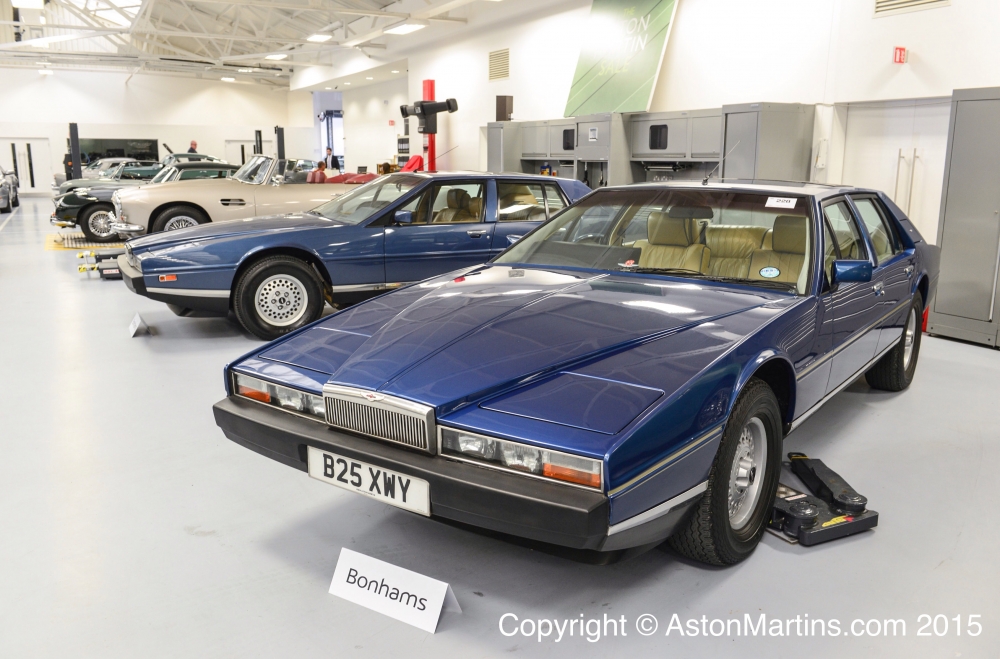
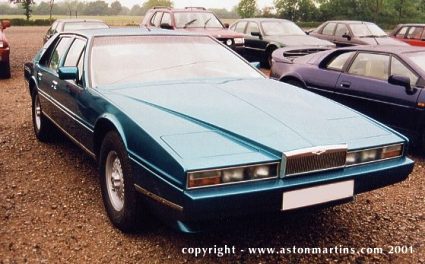
Externally, the series 3 cars are virtually identical to the later series 2 cars; the only difference that I can see is a side repeater flasher ahead of the front wheel. Earlier fuel injected cars have the Cathode Ray Tube (CRT) instruments, later cars have a Vacuum Florescent (VF) system similar to that used by some Vauxhalls and Opels. With a very short production run until the launch of the face lifted series 4 car, only 75 series 3 fuel injected cars were made – probably the most desirable example of the Lagonda in it’s original form.
The example below is a little unusual though not unique, as all the brightwork is gilded – the gold is certainly an acquired taste. This photograph also illustrates the solid disc design alloy wheel design seen on late series 2 and all series 3 or facelift Lagonda.
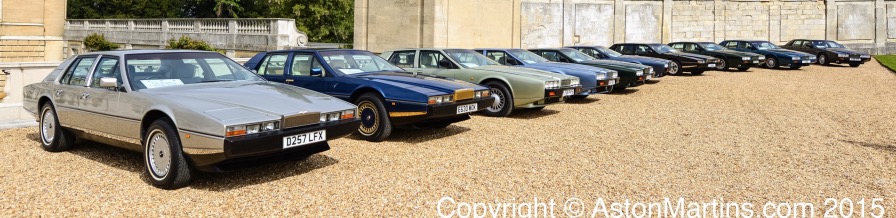
Aston Martin Lagondas from the Dudding Collection shown at the 2015 AMOC Spring Concours
For more information and advice about Lagonda’s – please visit LagondaNet
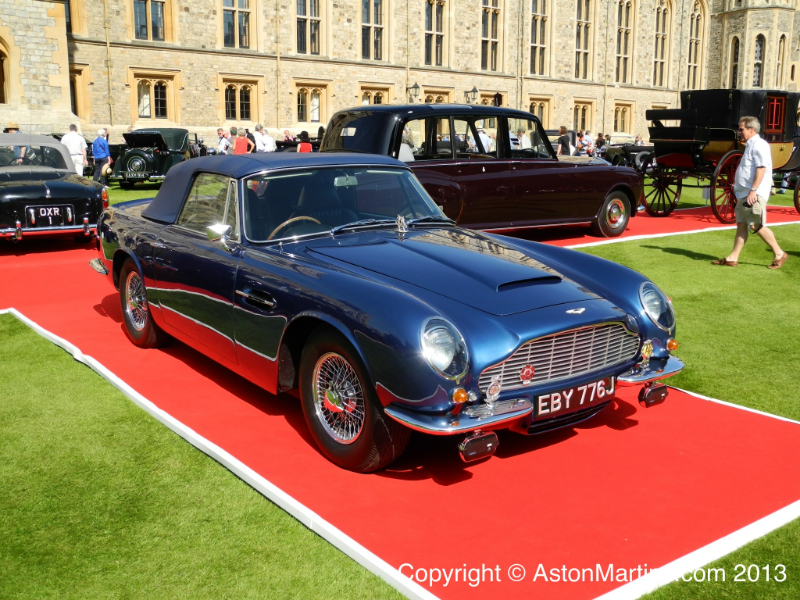
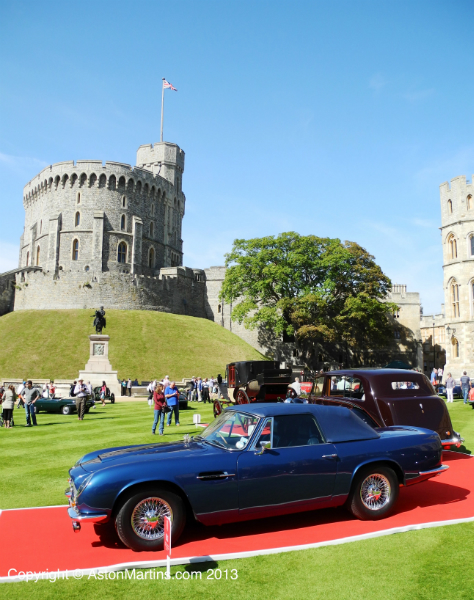
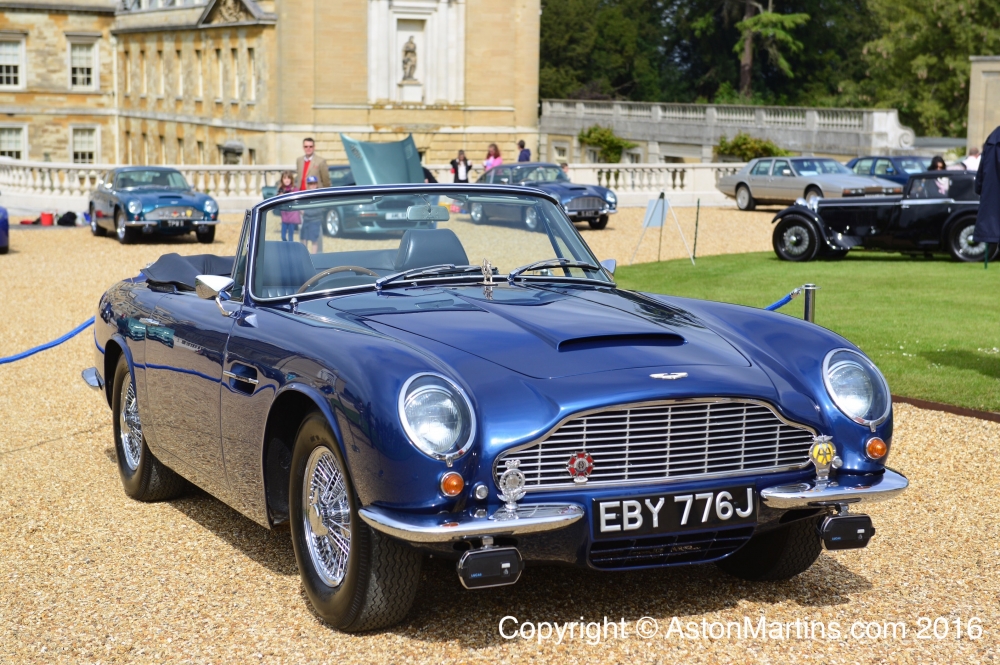
HRH The Prince of Wales was extremely fortunate to receive a Mark 2 Volante as a 21st Birthday present from his mother, Queen Elizabeth the Second; a car he still owns to this day. Then in 2011, the car became the most famous in the world having been used by the Duke and Duchess of Cambridge on the occasion of their wedding.
The last Volante was produced in late 1970 leaving something of a void as no other convertible car was available from Aston Martin. This unfortunate situation was brought about by the belief that safety concerns (mainly in the US) would legislate against open top cars. This fortunately proved unfounded, although it was to be another seven and a half years until the V8 Volante became available. Needless to say that demand for the open top DB4, 5 and 6 remained strong, nowadays all change hands for sums in well in excess of £500,000.
A very rare and highly sort after car, only 38 examples of the Mark 2 Volante were ever built during an especially short production run of a year or so. Whilst most examples had automatic transmission, 9 cars received the rare manual transmission with Vantage engine, making this one of the most desirable examples of all. As the US market for convertible cars was subdued in the very early 1970’s, no Mark 2 Volantes were sold there; only 3 left hand drive cars were actually built.