Latest News - 01/09/24

What's New @ AstonMartins.com?

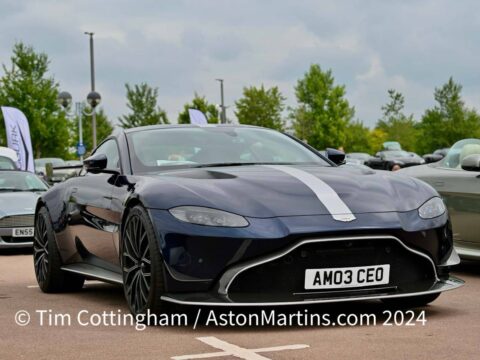
Vantage AM6 CEO by Q

Lagonda Series 3

Lagonda Series 3

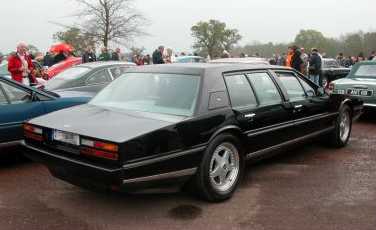
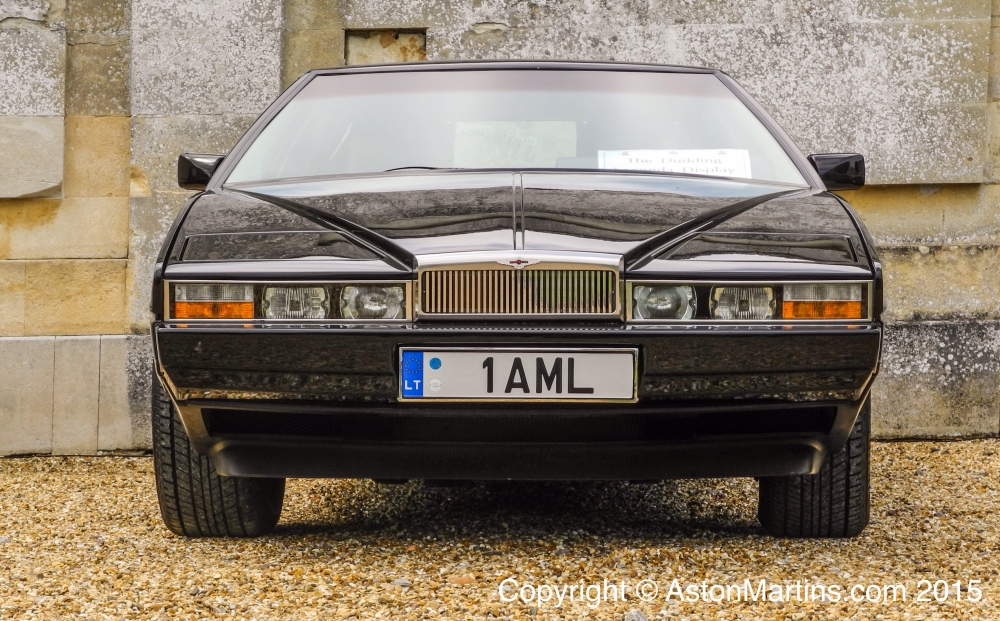
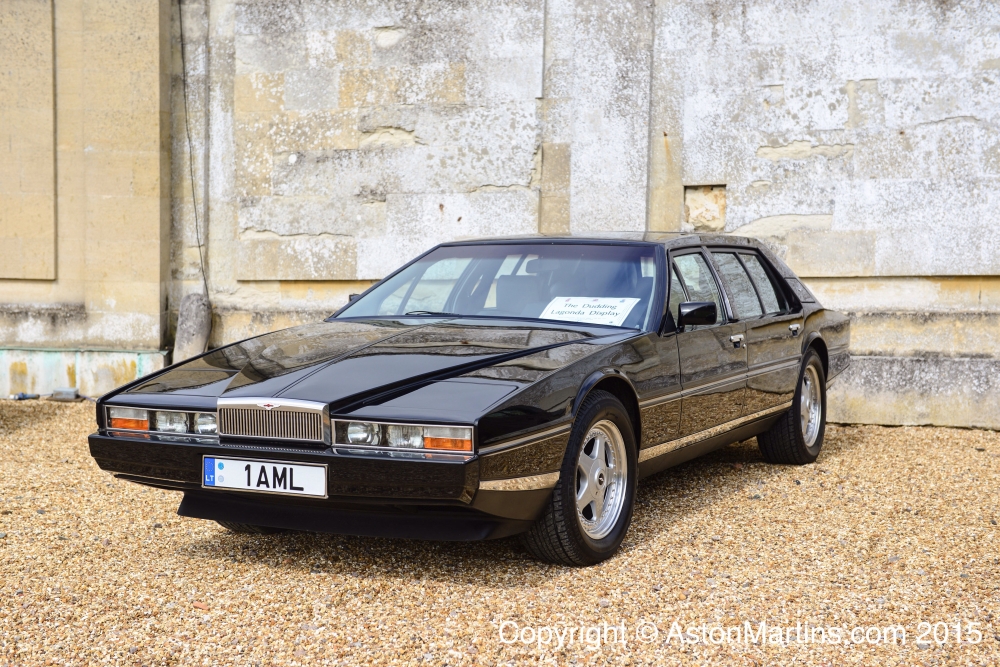
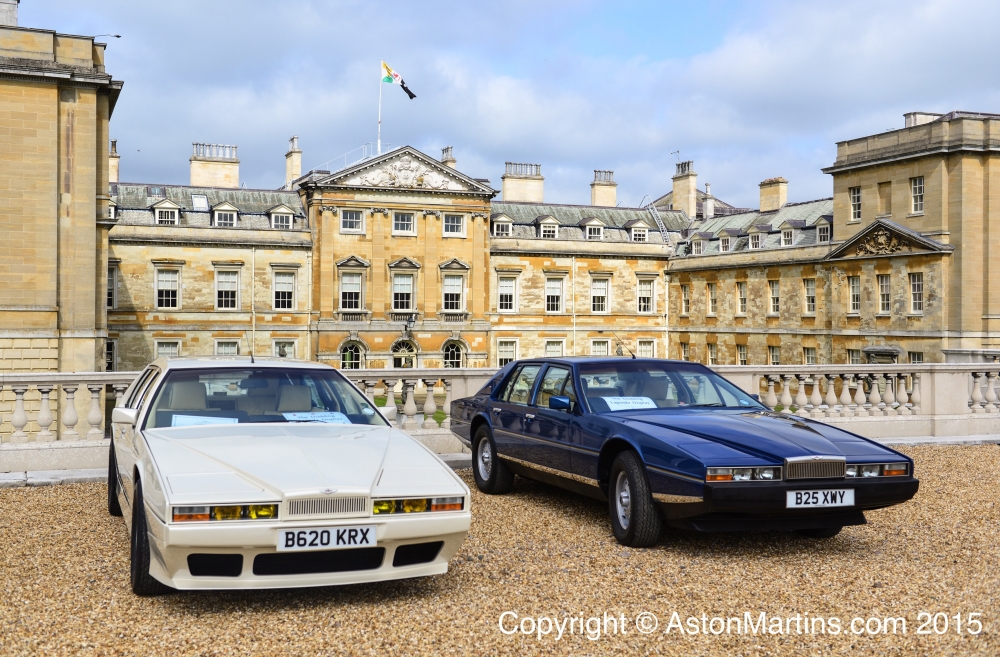
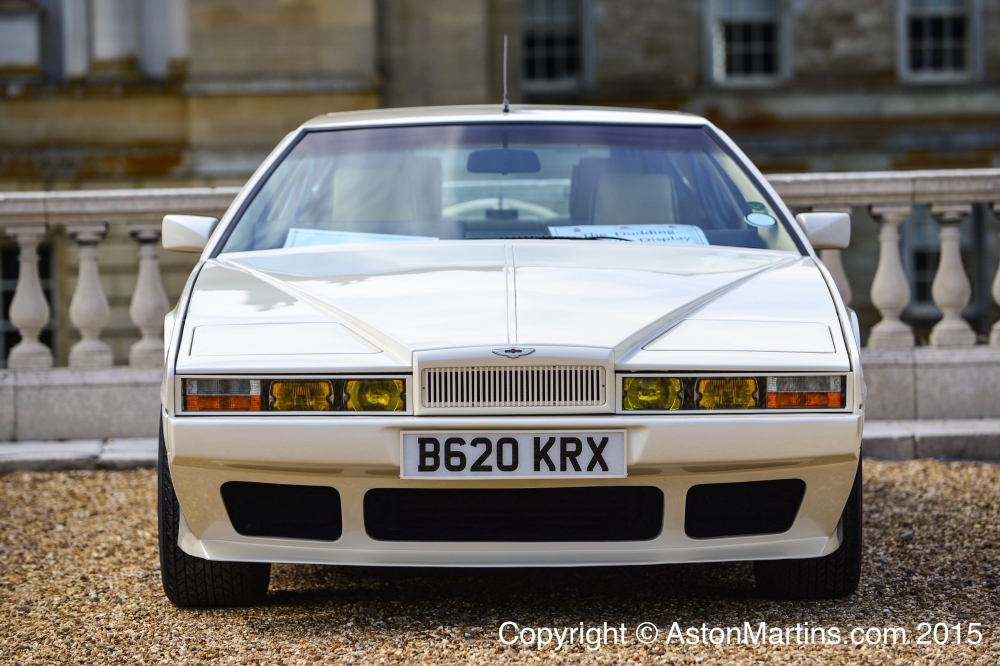
Externally, the series 3 cars are virtually identical to the later series 2 cars; the only difference that I can see is a side repeater flasher ahead of the front wheel. Earlier fuel injected cars have the Cathode Ray Tube (CRT) instruments, later cars have a Vacuum Florescent (VF) system similar to that used by some Vauxhalls and Opels. With a very short production run until the launch of the face lifted series 4 car, only 75 series 3 fuel injected cars were made – probably the most desirable example of the Lagonda in it’s original form.

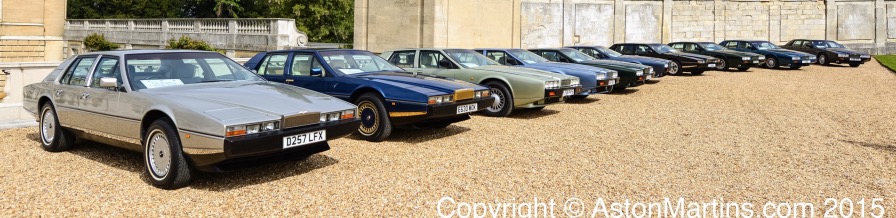
The example below is a little unusual though not unique, as all the brightwork is gilded –  the gold is certainly an acquired taste. This photograph also illustrates the solid disc design alloy wheel design seen on late series 2 and all series 3 or facelift Lagonda.

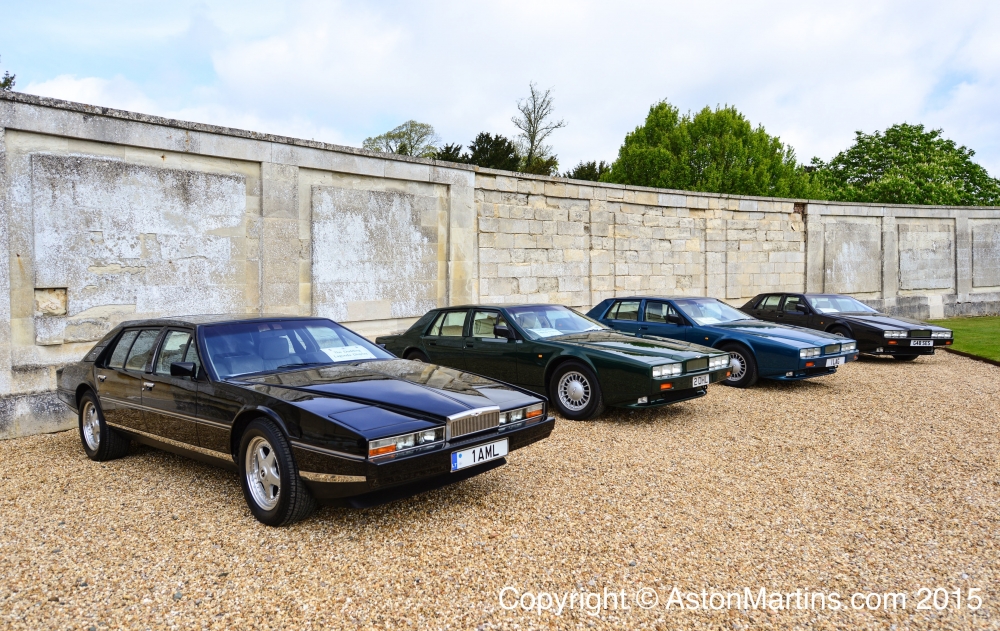
Aston Martin Lagondas from the Dudding Collection shown at the 2015 AMOC Spring Concours

Aston Martin Lagondas from the Dudding Collection shown at the 2015 AMOC Spring Concours

For more information and advice about Lagonda’s – please visit LagondaNet

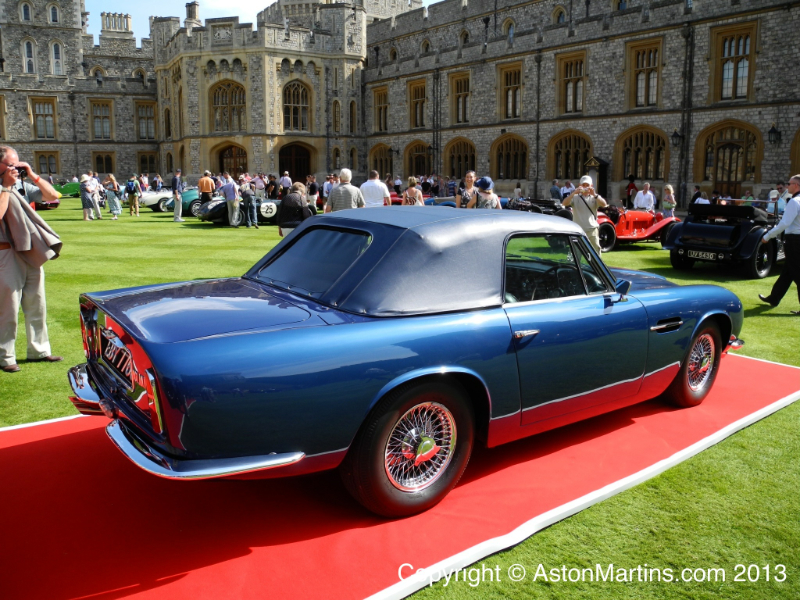
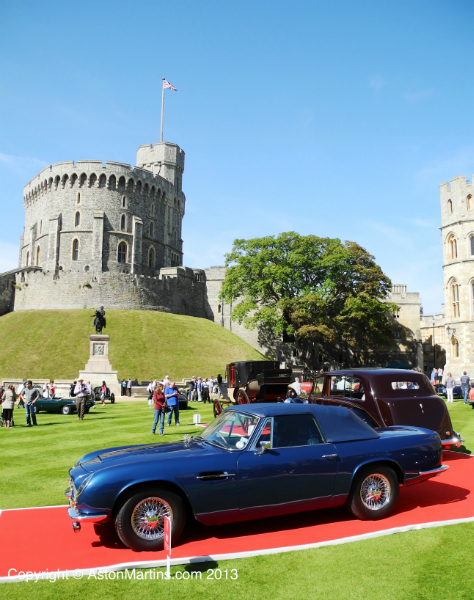
DB6 Mark 2 Volante

DB6 Mark 2 Volante

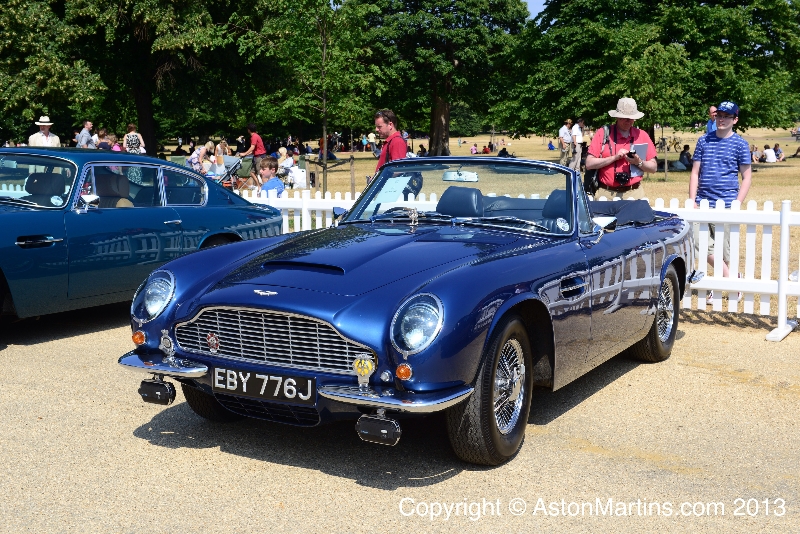
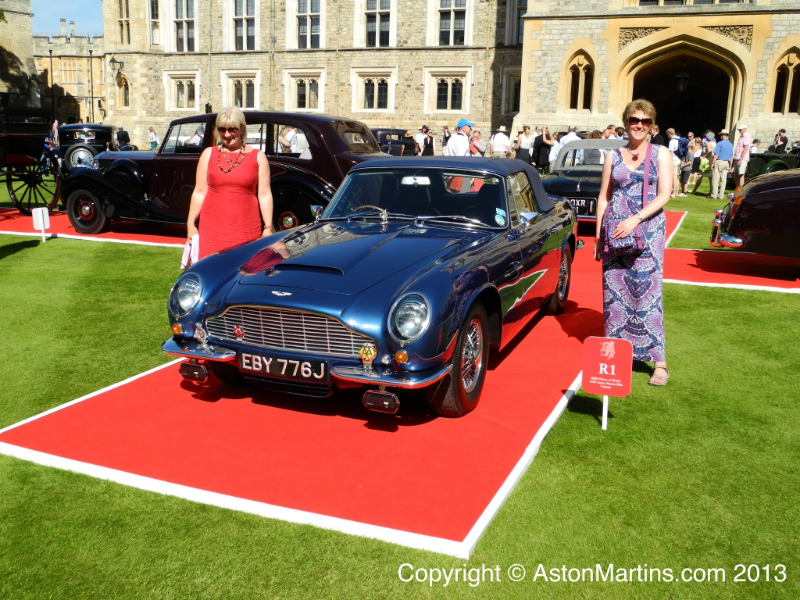
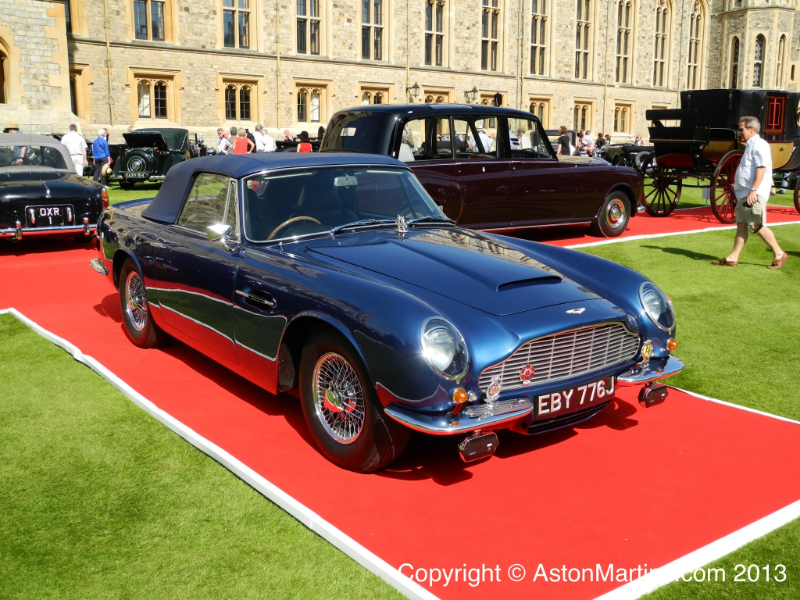
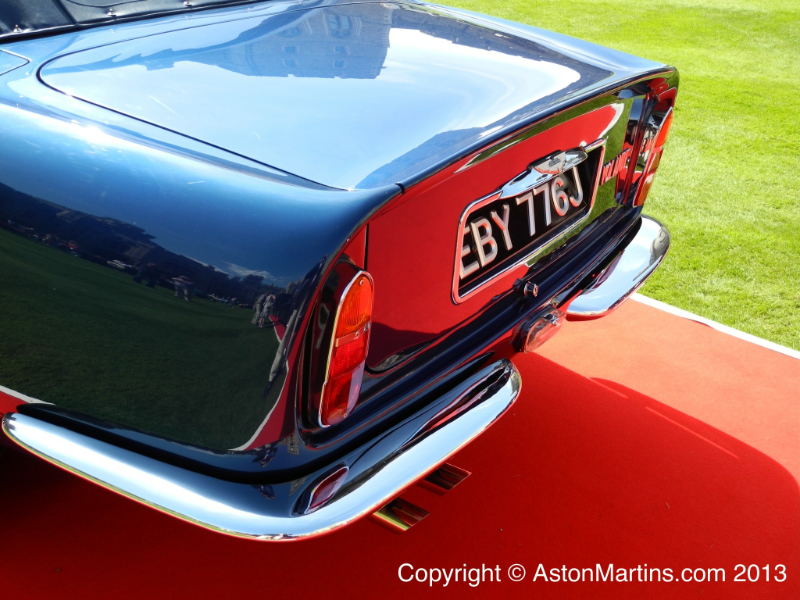
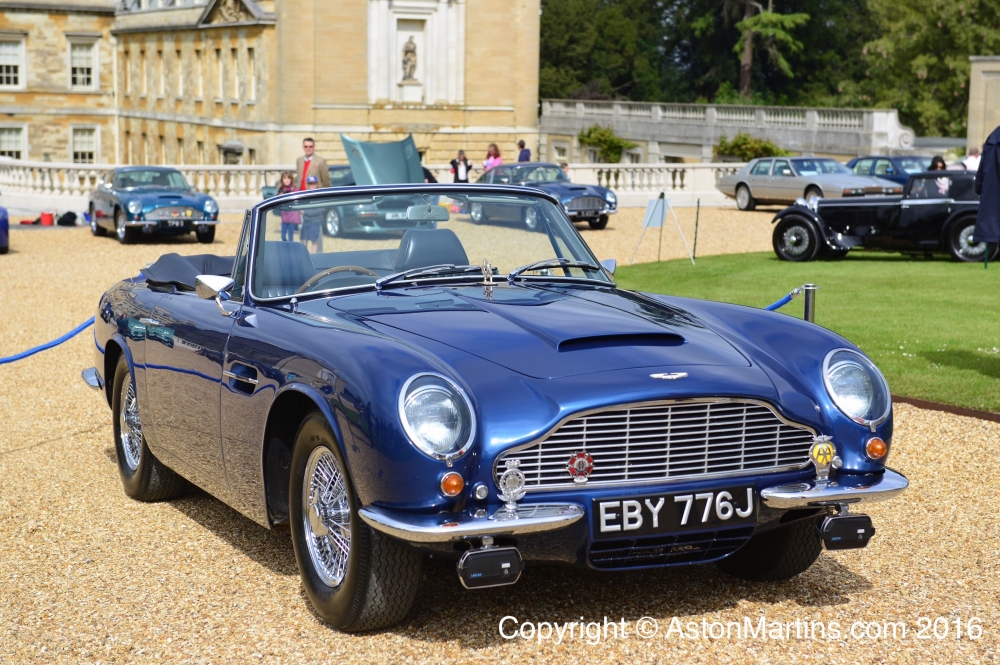
HRH The Prince of Wales was extremely fortunate to receive a Mark 2 Volante as a 21st Birthday present from his mother, Queen Elizabeth the Second; a car he still owns to this day. Then in 2011, the car became the most famous in the world having been used by the Duke and Duchess of Cambridge on the occasion of their wedding.

The last Volante was produced in late 1970 leaving something of a void as no other convertible car was available from Aston Martin. This unfortunate situation was brought about by the belief that safety concerns (mainly in the US) would legislate against open top cars. This fortunately proved unfounded, although it was to be another seven and a half years until the V8 Volante became available. Needless to say that demand for the open top DB4, 5 and 6 remained strong, nowadays all change hands for sums in well in excess of £500,000.

A very rare and highly sort after car, only 38 examples of the Mark 2 Volante were ever built during an especially short production run of a year or so. Whilst most examples had automatic transmission, 9 cars received the rare manual transmission with Vantage engine, making this one of the most desirable examples of all. As the US market for convertible cars was subdued in the very early 1970’s, no Mark 2 Volantes were sold there; only 3 left hand drive cars were actually built.

Lagonda Series 4

Lagonda Series 4

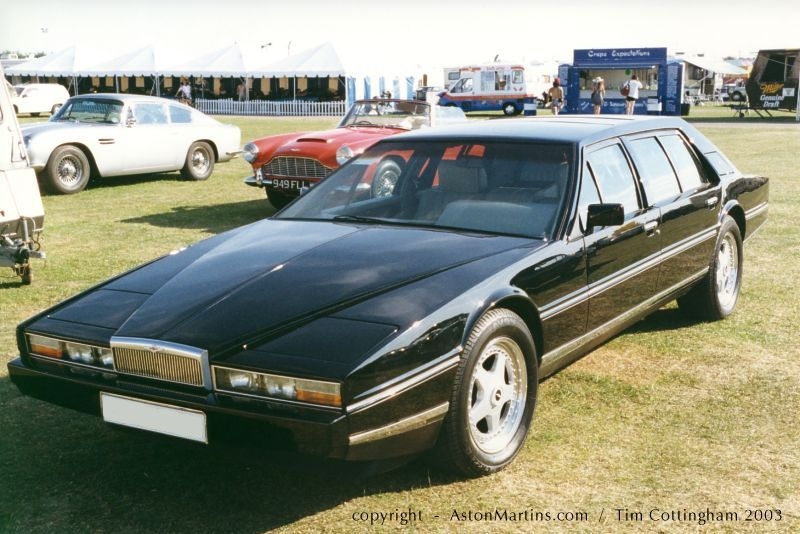
Lagonda’s are rare cars with a total of just 643 examples being built over 12 years. With perhaps 80 examples remaining in the UK, this photograph of both a series 4 and an early series 2 together is a great rarity. The basic lines are the same although the latter car has considerably more weight in the styling.

With production virtually stable at one car a week, production lasted for just 105 examples, ending in January 1990, with a global recession looming limiting demand for hyper expensive sports saloons.

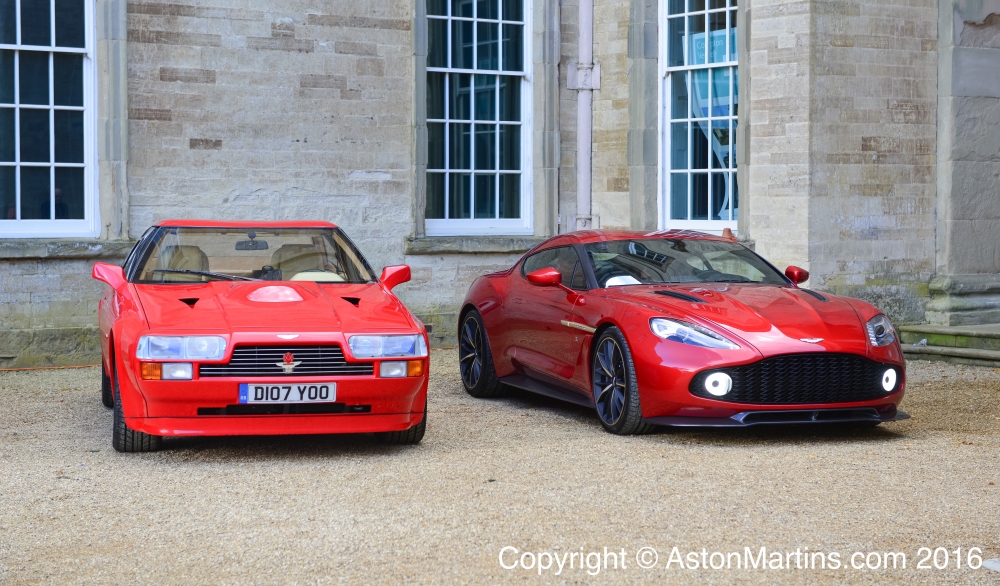
The Lagonda marque remained virtually dormant for 25 years. There were a small number of coach built specials and concepts such as the AML Works service made Virage based 4 and 5 door specials, and the exceptionally beautiful Ghia designed Lagonda Vignale concept car. The Gaydon era Lagondas had something of a false start with the Concept LUV in 2009 until AML announced the Lagonda Taraf, a car that owes its styling to the 1980’s wedge.

 For more information and advice about Lagonda’s – please visit LagondaNet

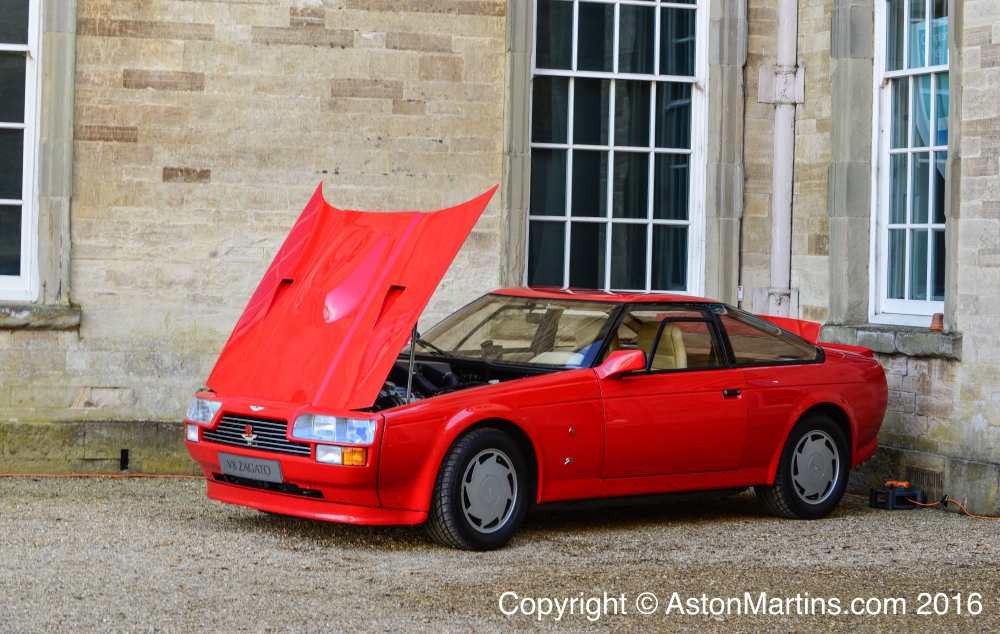
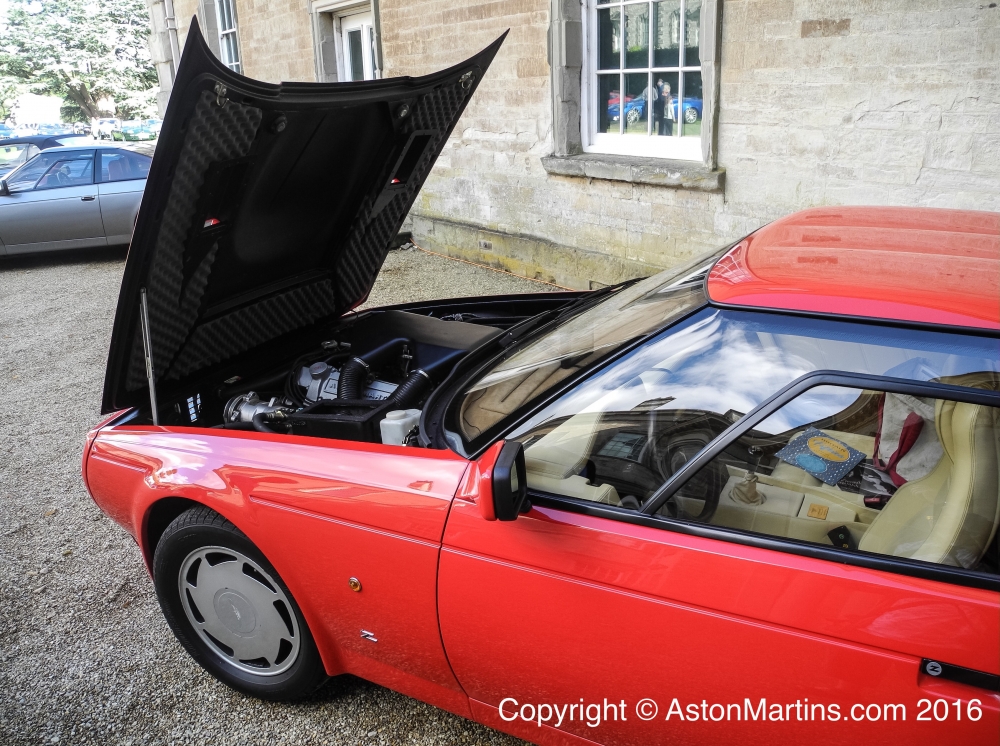
V8 Vantage, Zagato Mule

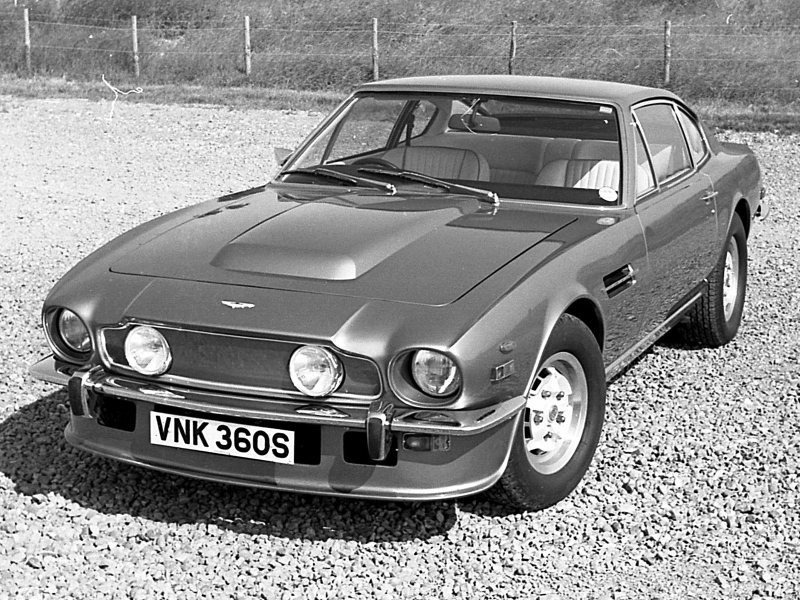
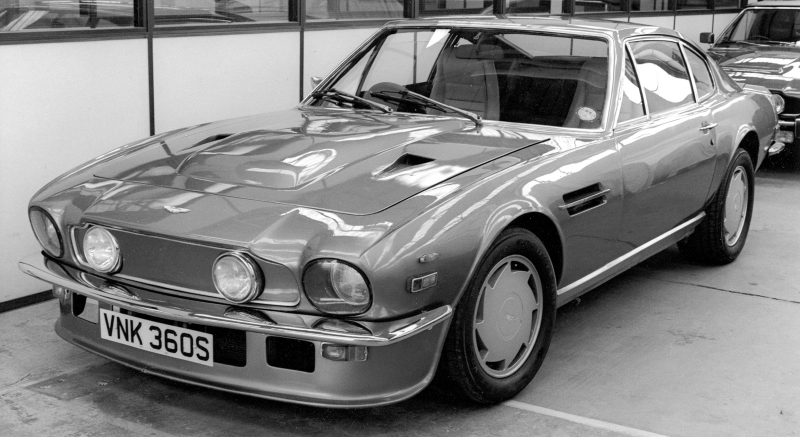
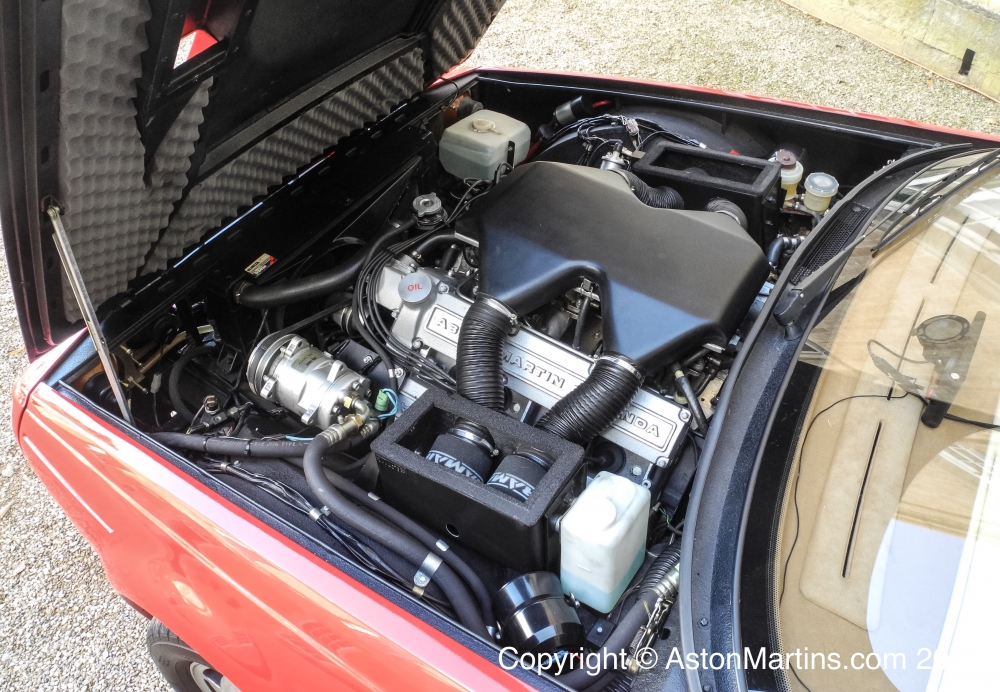
Although the exterior remained as standard, the interior of the car was stripped of excess weight. This involved the removal of most of the interior trim, the rear seats were ditched as was the spare wheel.  A smaller, lighter fuel tank was  fitted, heating and air-con removed and the side glass replied by lighter Perspex. All this with the intention of dropping the weight to about 1600kg, the same as the upcoming V8 Zagato. A special development engine, a forerunner to the upcoming X-pack V8 was fitted giving peak power of 437 bhp at 6,250 rpm, together with a low ratio differential allowed the dash from 0 to 60 mph without the need to change gear out of 1st gear. The mule was as quick as a V8 Zagato and was and still is probably the fastest standard bodied V8 Vantage ever.

The Zagato Mule was initially photographed whilst on display at the 1999 40th Anniversary meeting at Donington Park and then racing during a similar meeting at the same venue in 2000. The only visible external changes to this unique car are the Zagato style Speedline wheels and the NACA cooling ducts on the bonnet.

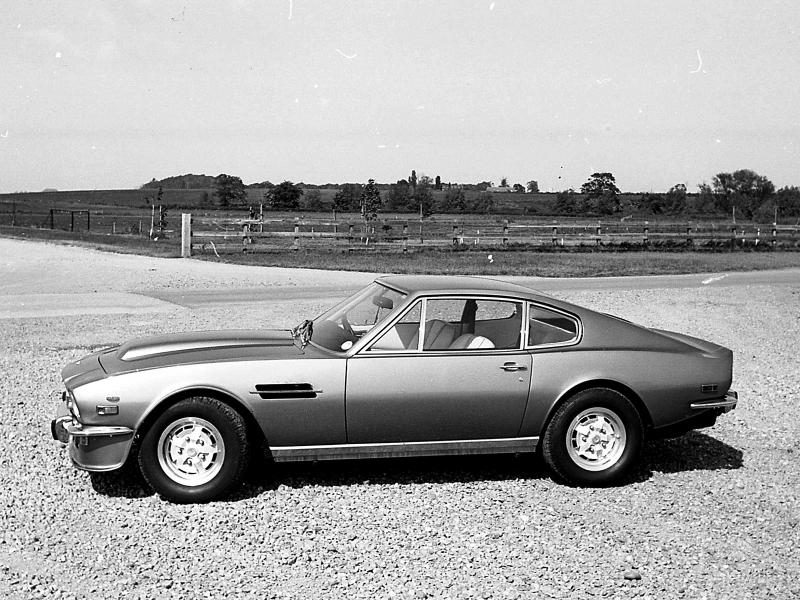
A former owner of the Zagato mule has written an interesting article on his web site, V8Vantage.com. V8Vantage.com have also kindly provided the black and white period images from 1987 taken by Roger Stowers, AML historian and photographer.

Tickford Lagonda

Tickford Lagonda

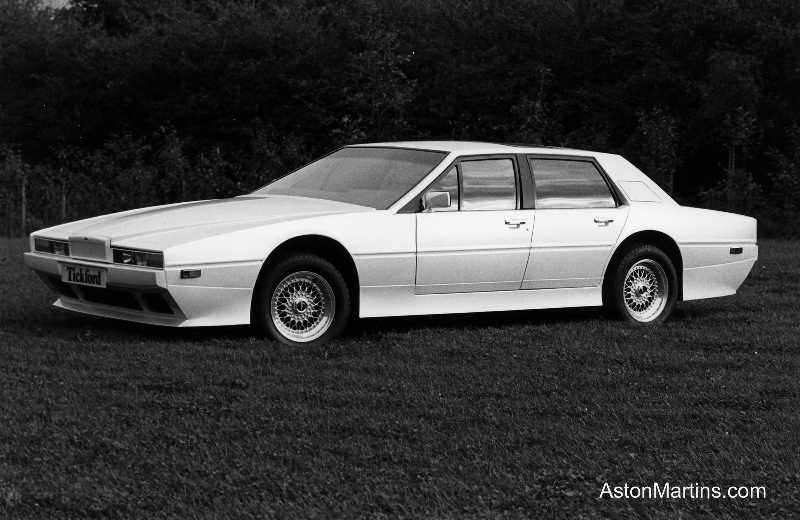
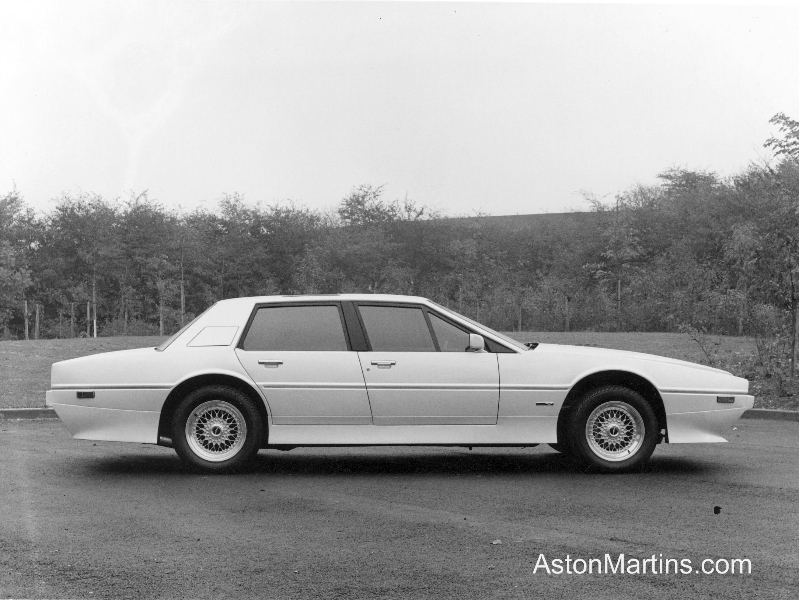
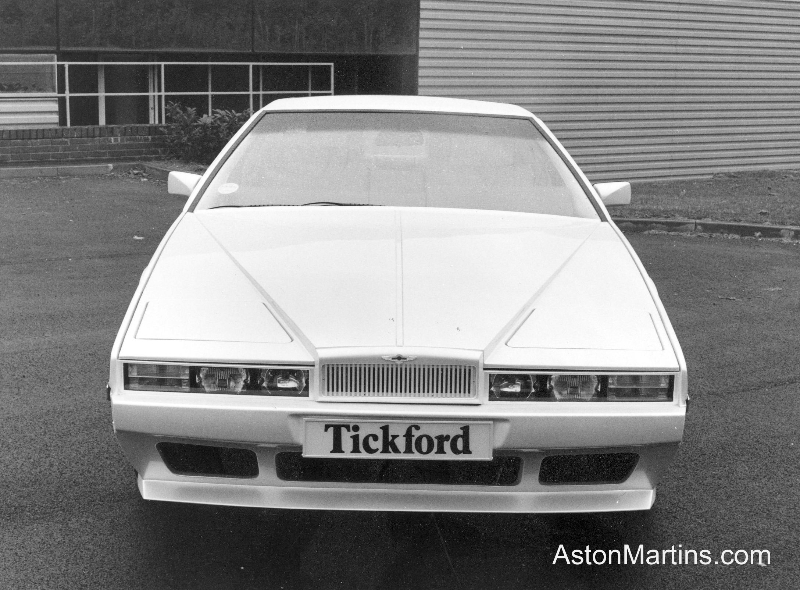
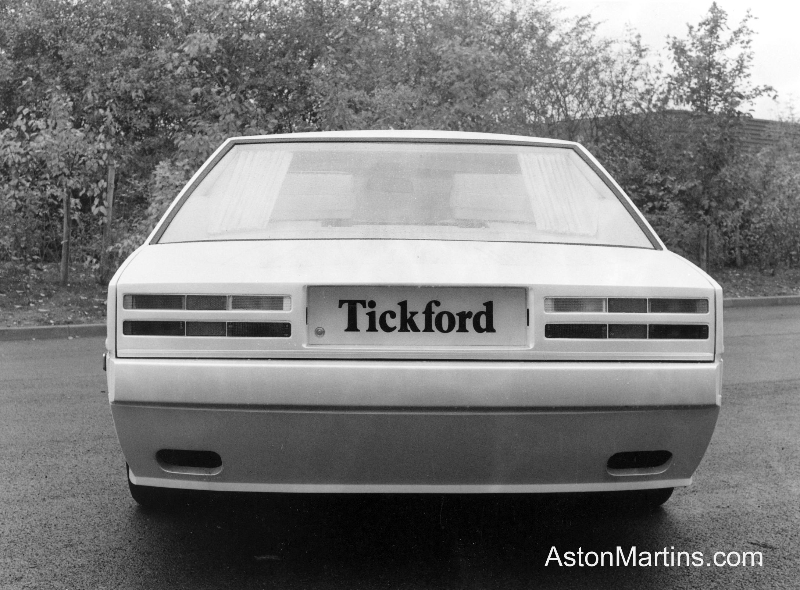
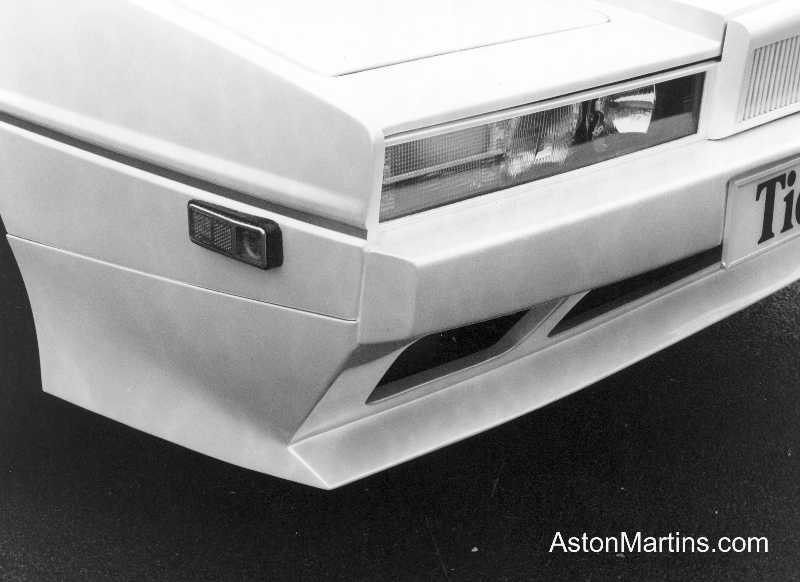
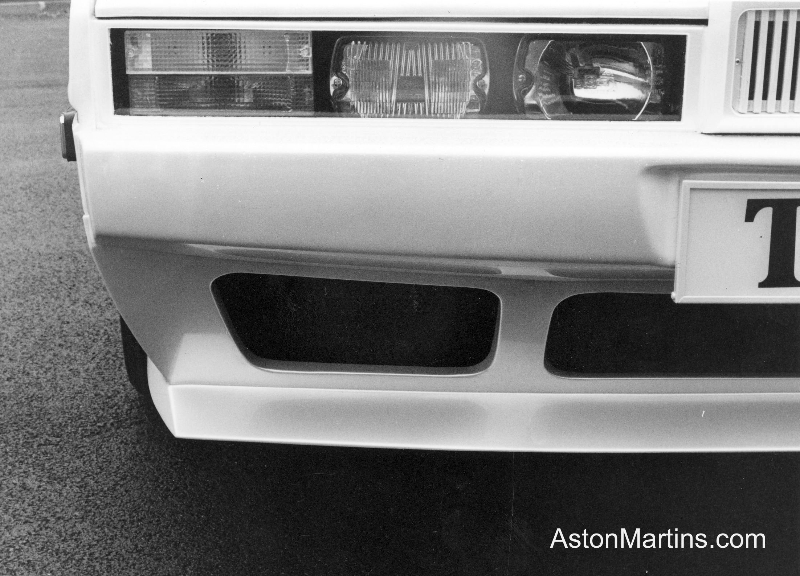
The styling enhancements to the car were classic early 1980’s with colour coded aluminium side skirts, large front air dam and a deep rear valance; all the work of Simon Saunders who also styled the equally exclusive Tickford Metro and Tickford Capri. Most of the Tickford cars were fitted with 15 inch colour coded BBS cross spoke wheels with fashionably wide 255/60 Pirelli P7 tyres.

Below are press images of the 1983 MotorFair car, a left hand drive example finished in fashionable white, a colour still gaining popularity 30 years on.

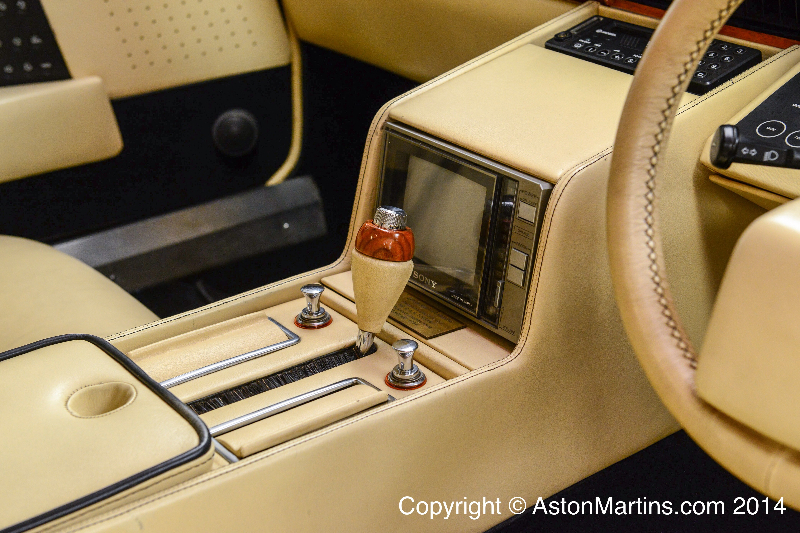
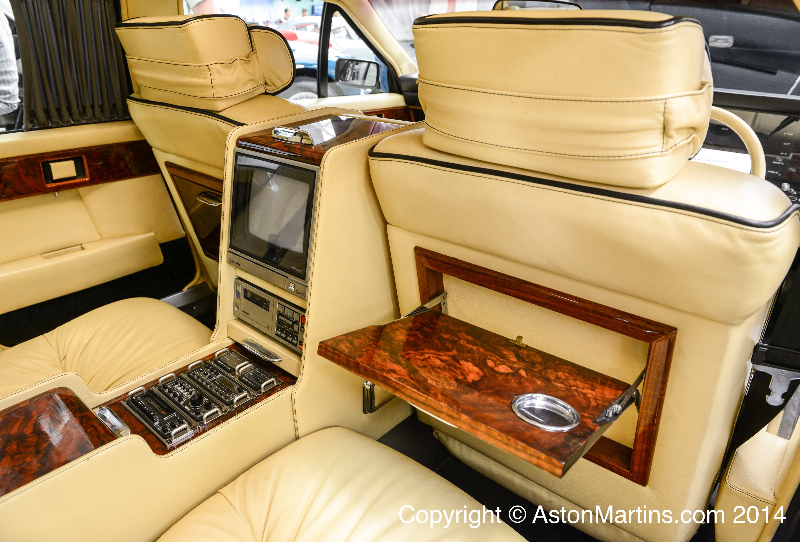
The interior of the Tickford was also fully kitted out with front and rear TV screens, expensive Hi-Fi video recorder, picnic tables and a drinks cabinet containing engraved crystal decanters and glasses with the Tickford logo. A radio telephone could also be fitted, in the days before mobile phone, at an eye watering price approaching £4,000.

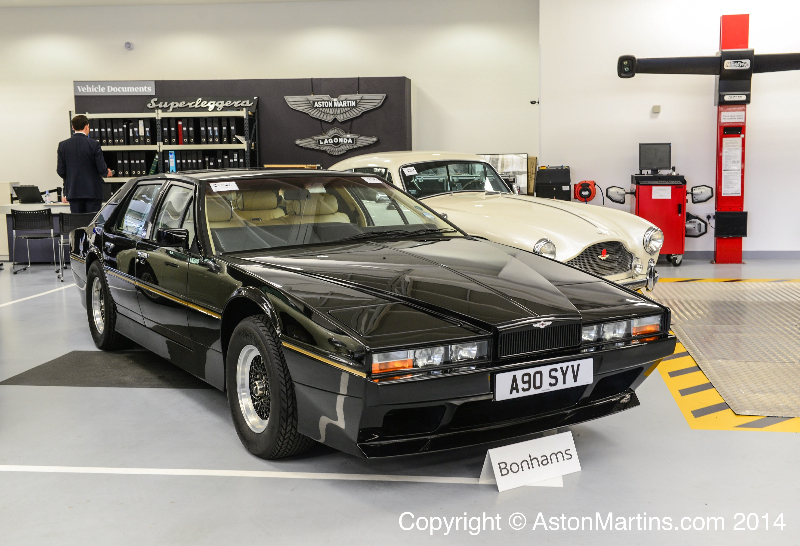
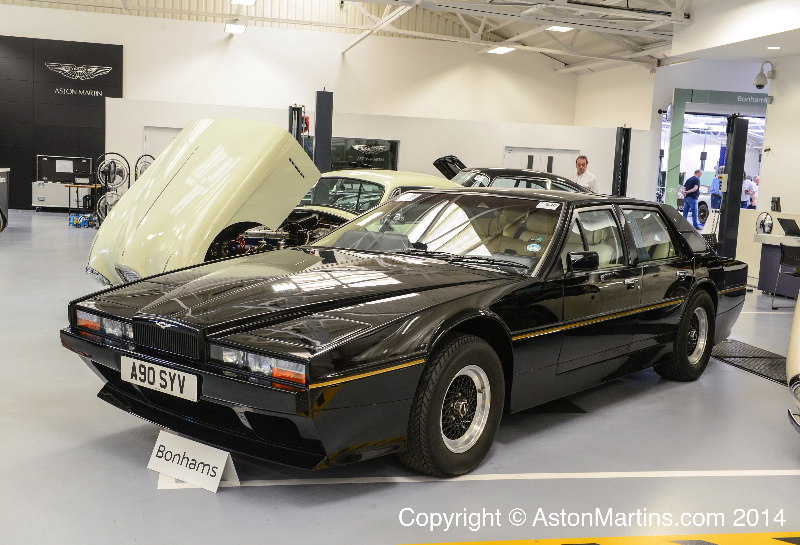
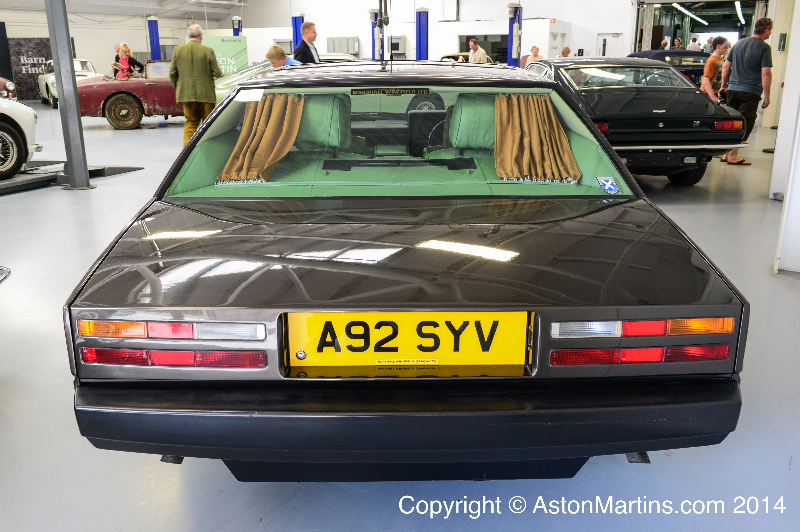
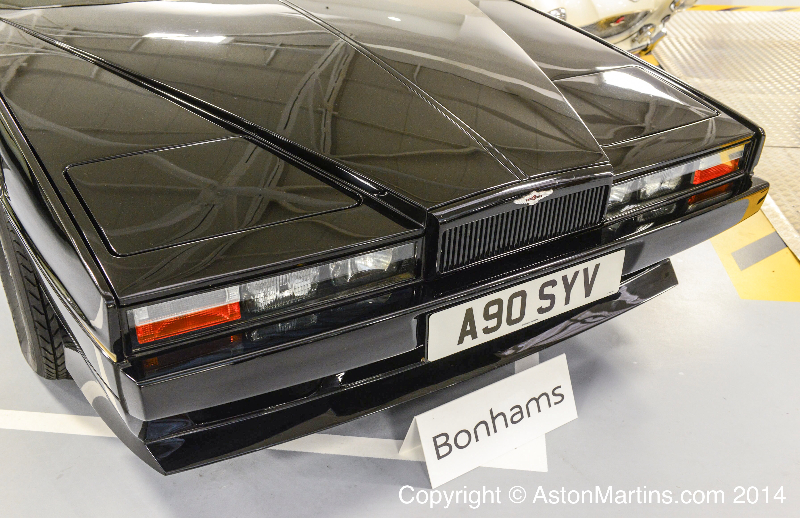
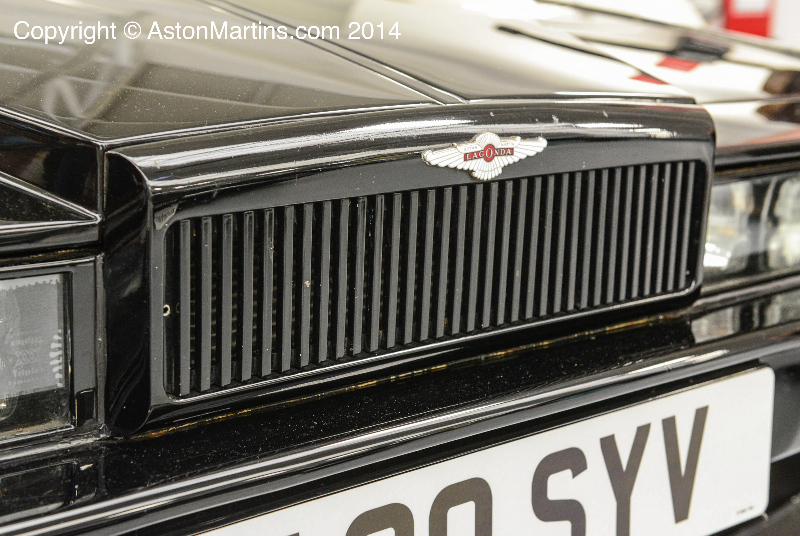
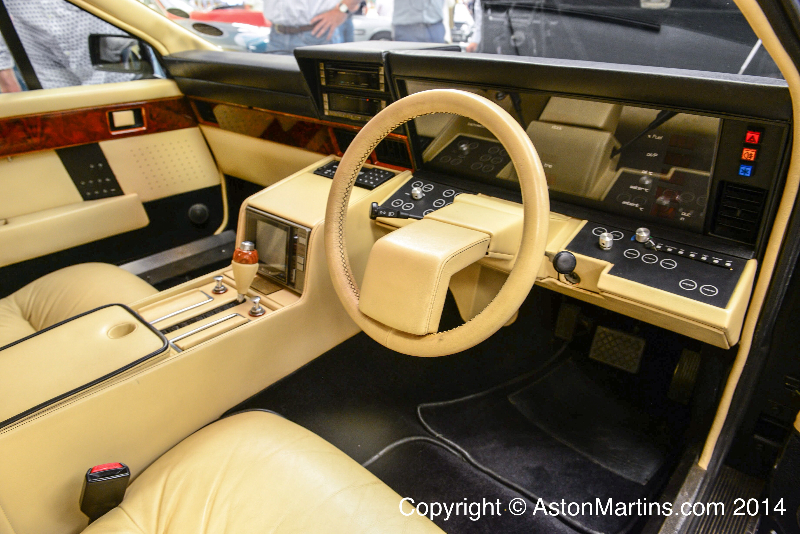
The images below show a Tickford Lagonda hat was offered at the 2014 Bonhams Aston Martin auction. Finished in Cannock Black with Magnolia hide, the car had only covered 5,000 miles during 30 years of existence.

With such a high purchase price, it will not surprise you that only 5 cars were built and sold in period. Although more recently, a few other Lagondas have also had the Tickford refinements retro-fitted so it is difficult to tell the original and later cars apart.

Tickford also went on to offer the even more exclusive and expensive Lagonda Limousine. For more information on the William Towns styled Lagonda, please visit AstonMartinLagonda.net

V8 Vantage Zagato

V8 Vantage Zagato

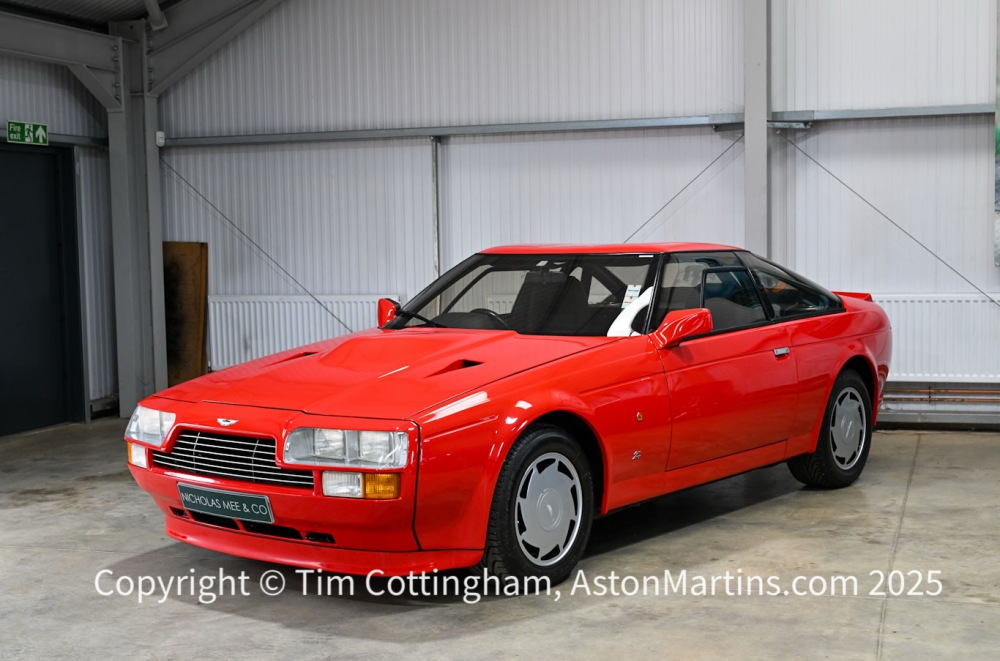
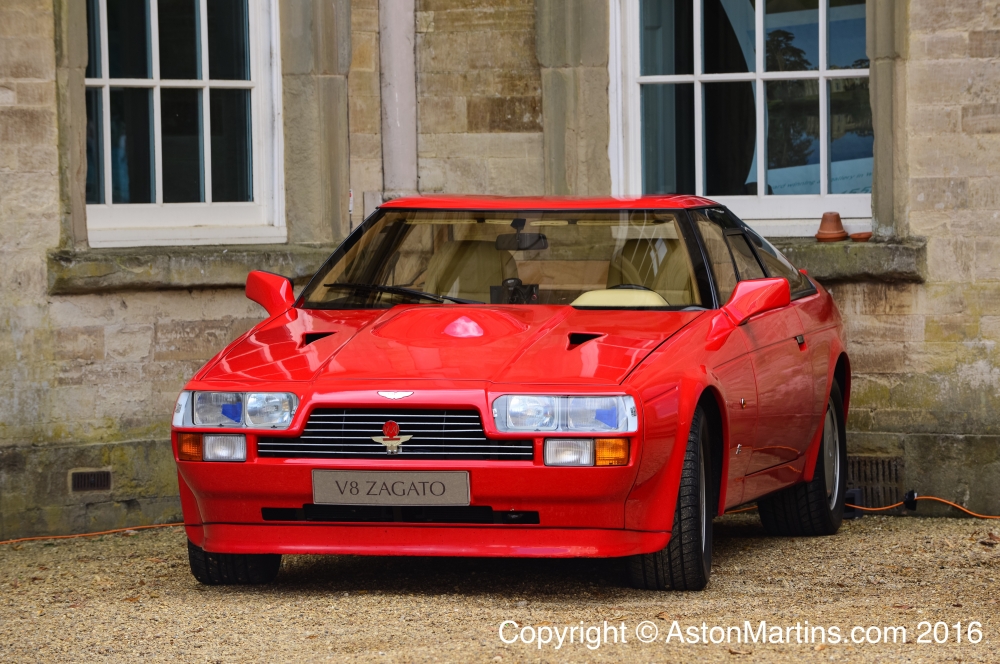
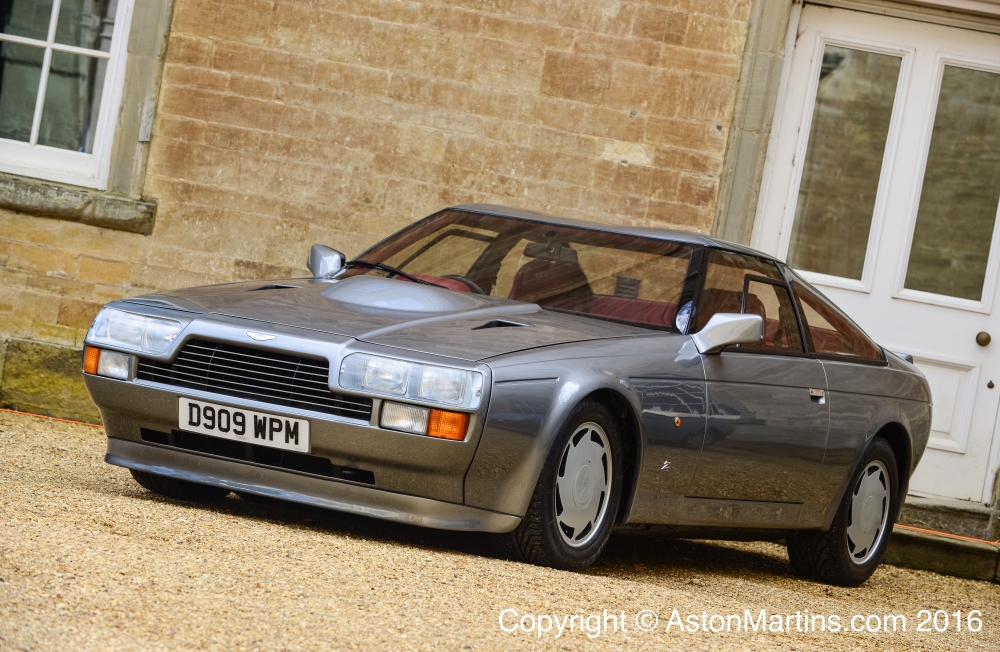
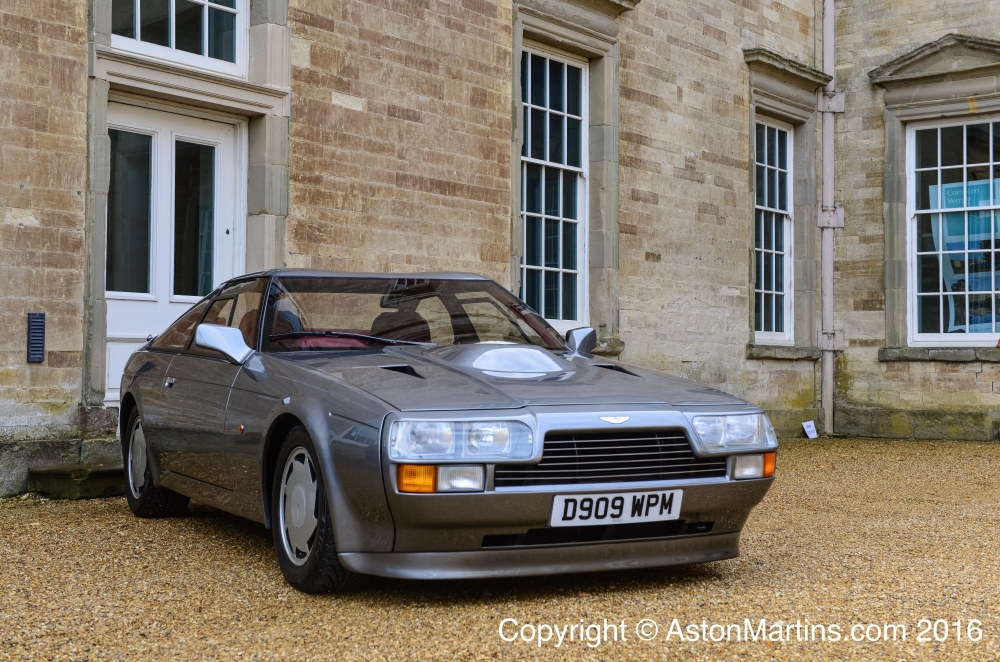
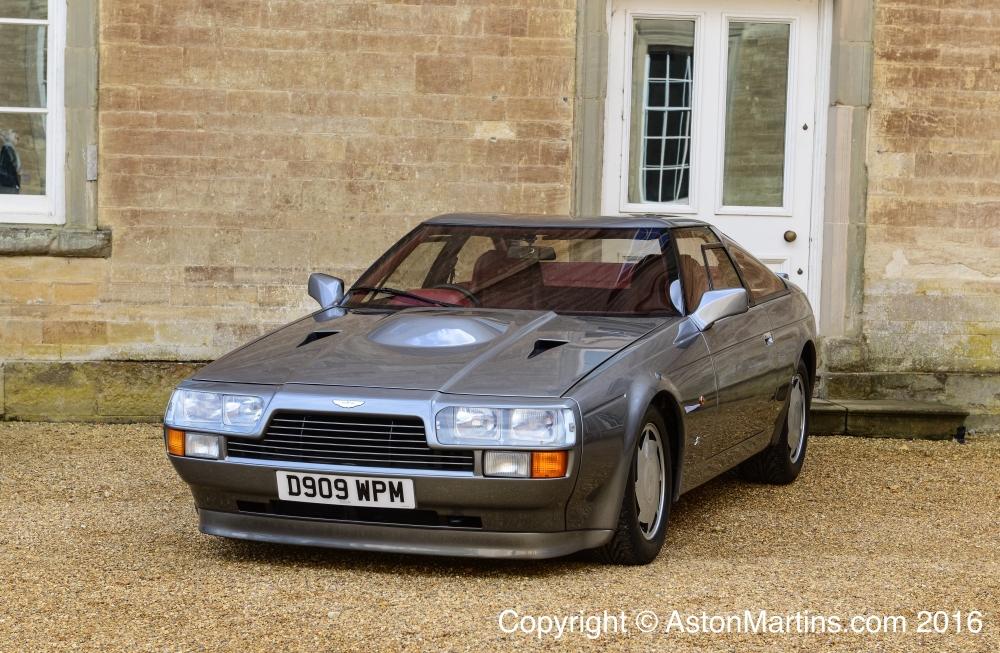
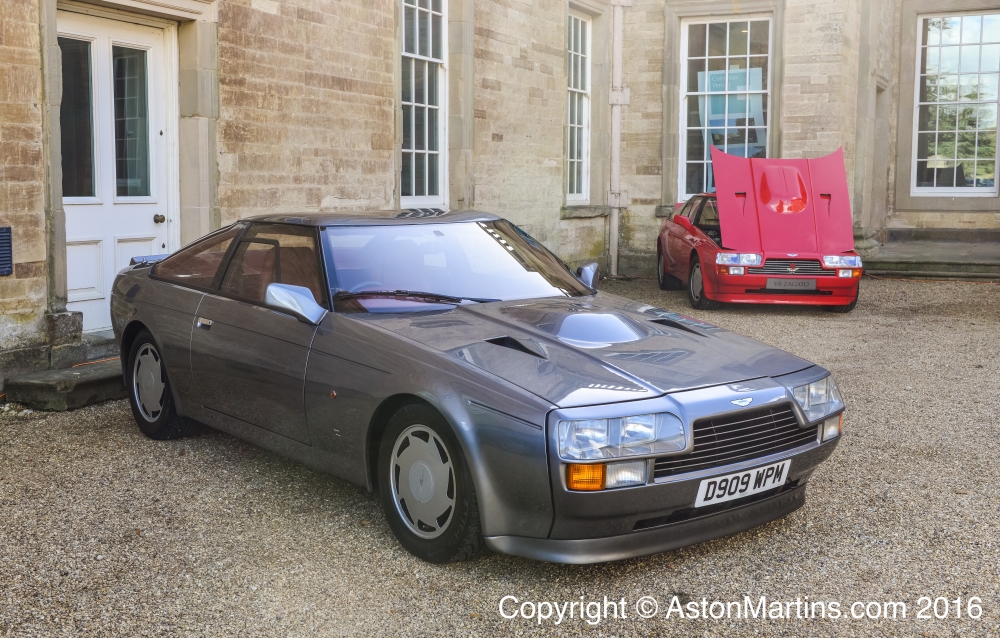
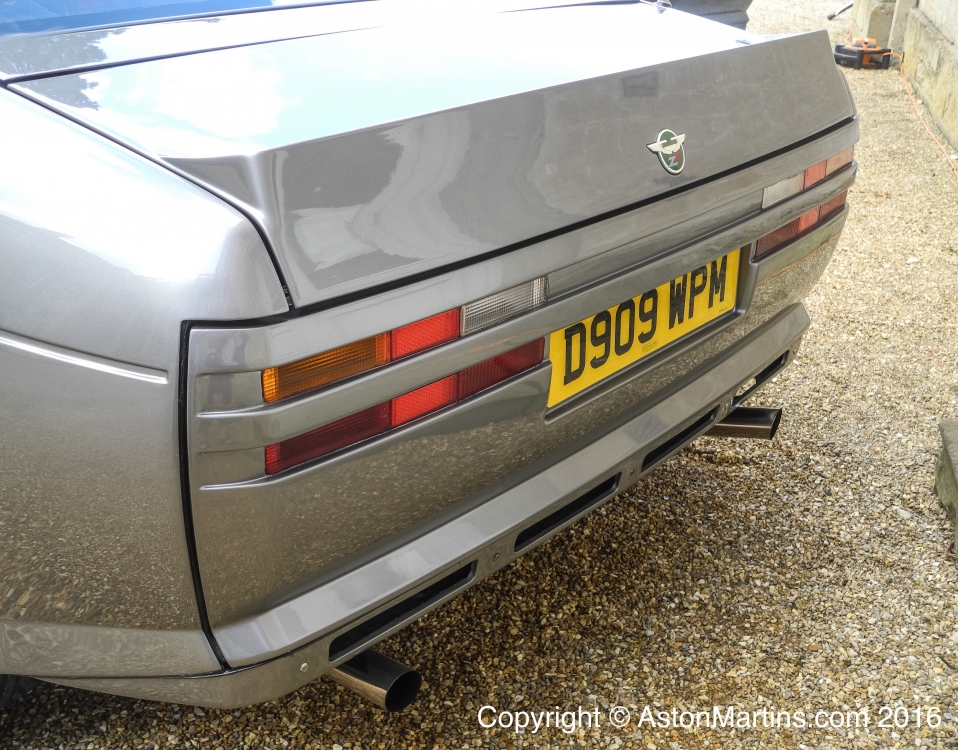
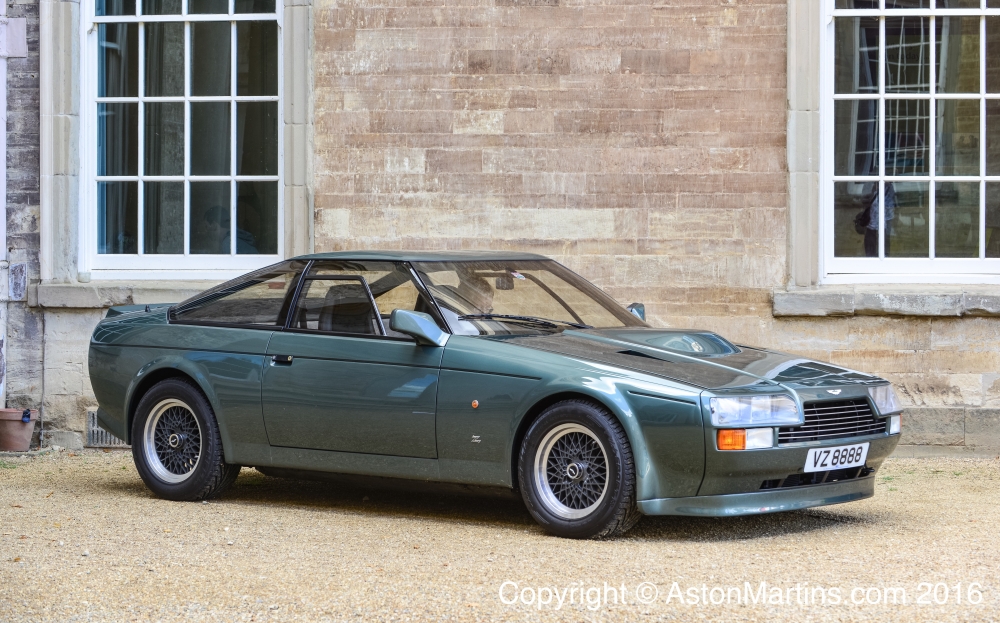
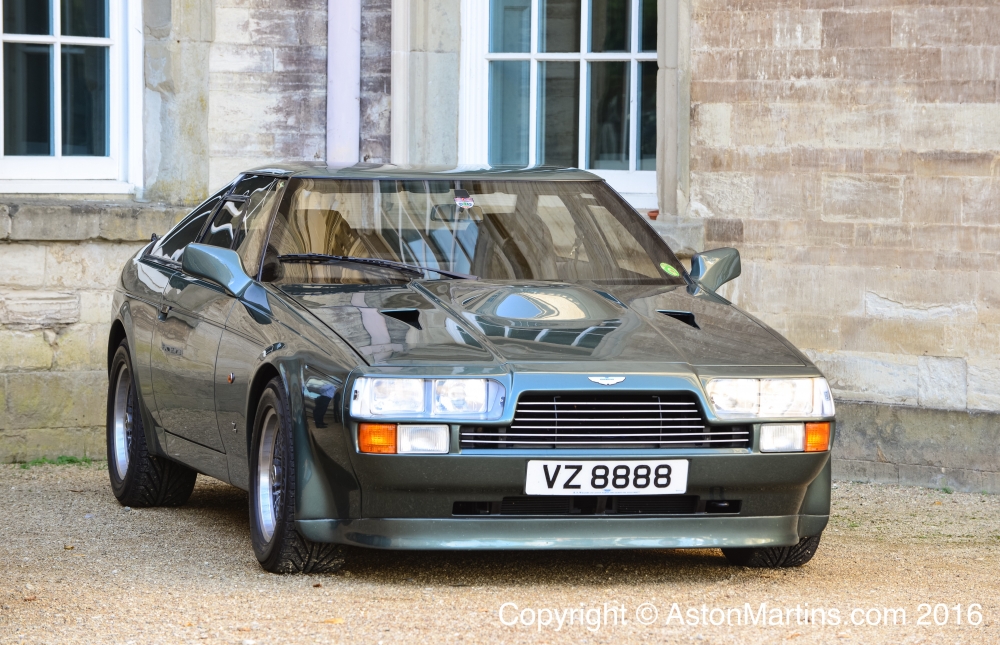
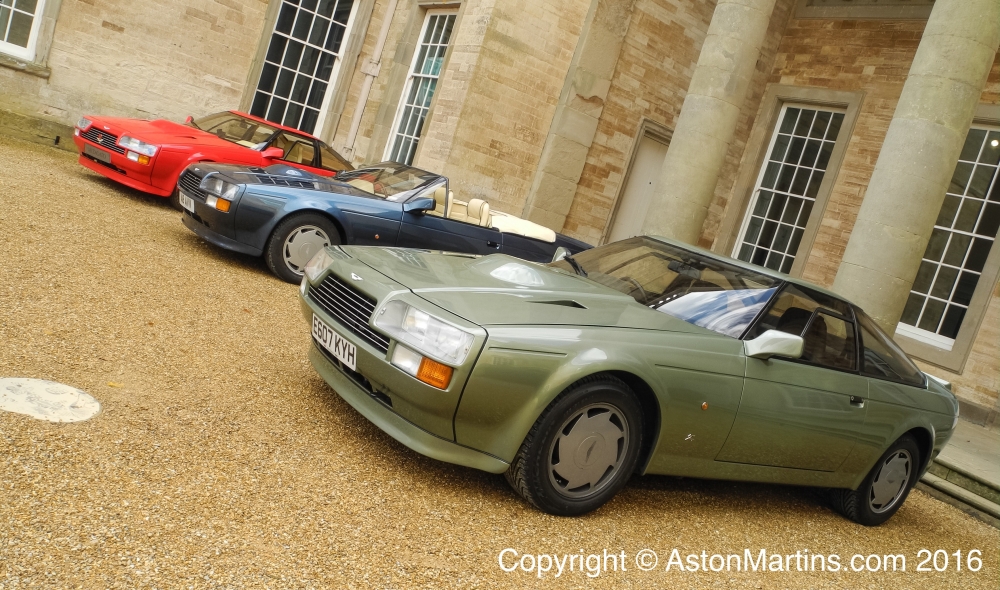
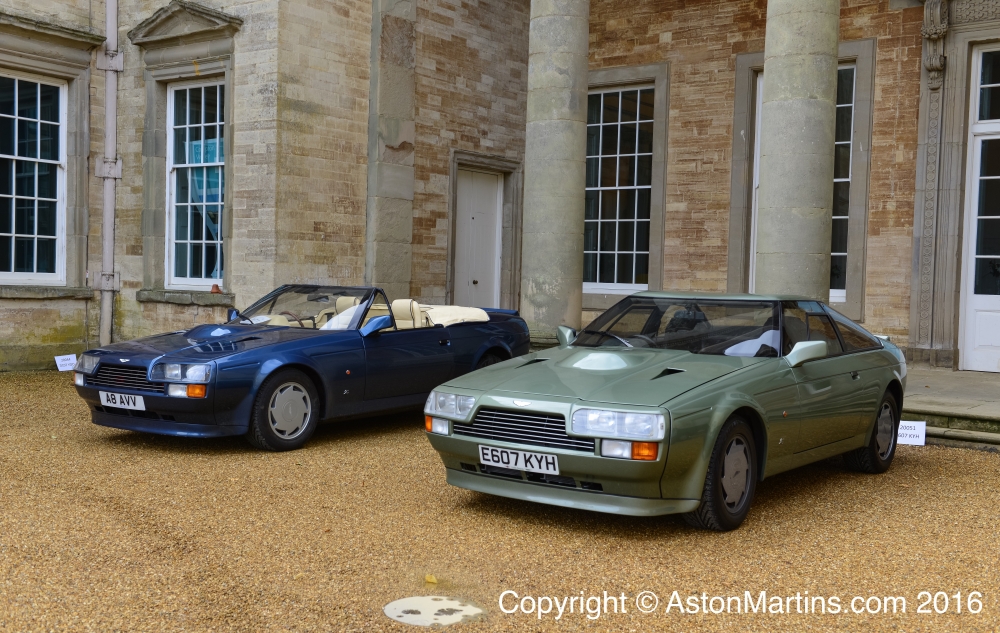
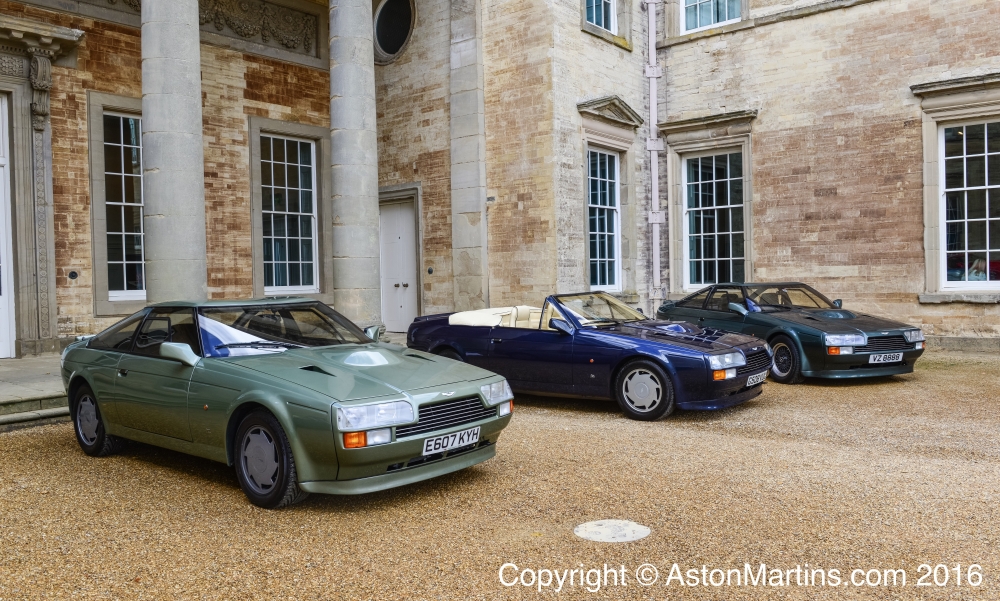
The standard V8 Vantage was at the time one of, if not the fastest cars in the world; by reducing the wheelbase, loosing the rear seats, tweaking the engine and fitting a new slippery body with flush fitting glass, the Zagato became the ultimate Aston.

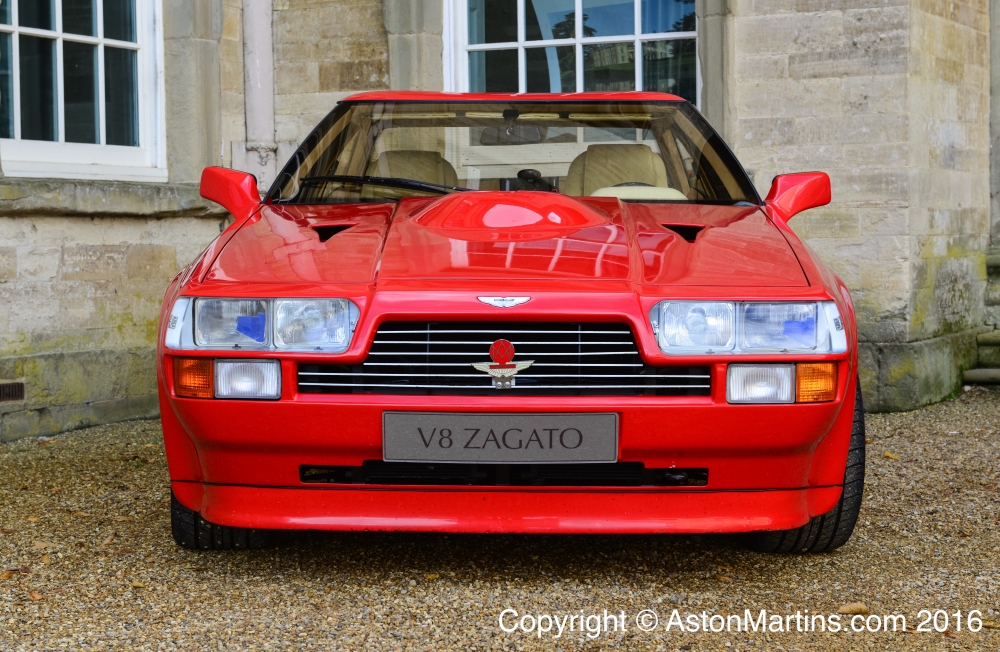
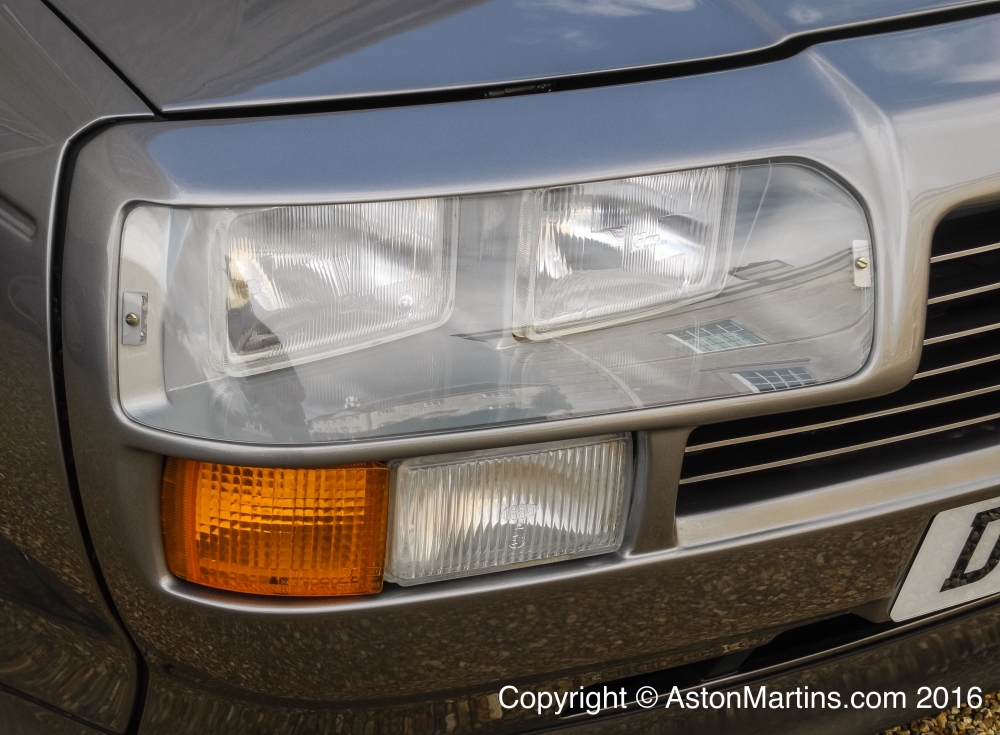
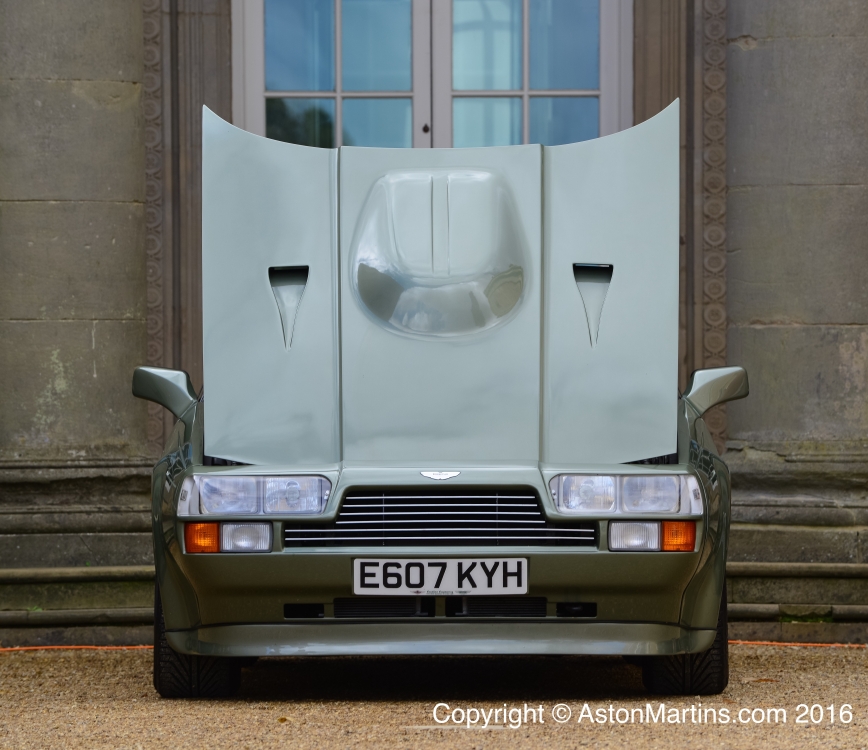
Unfortunately, many were not overly impressed by the final styling of the new Zagato. One of the most controversial aspects of the design was the ‘power bulge’ which was so necessary to house the airbox for the massive Weber 48 IDA carbs bored out to 50mm. Although a flat bonnet was originally intended with a fuel injection system underneath, this would probably not have produced sufficient power to achieve the promised 300 kph top speed.

The V8 Vantage Zagato was displayed at the 1986 Geneva Motor Show where three examples were shown; one on the AML stand, one on the Zagato stand, and on top of a lakeside hotel.

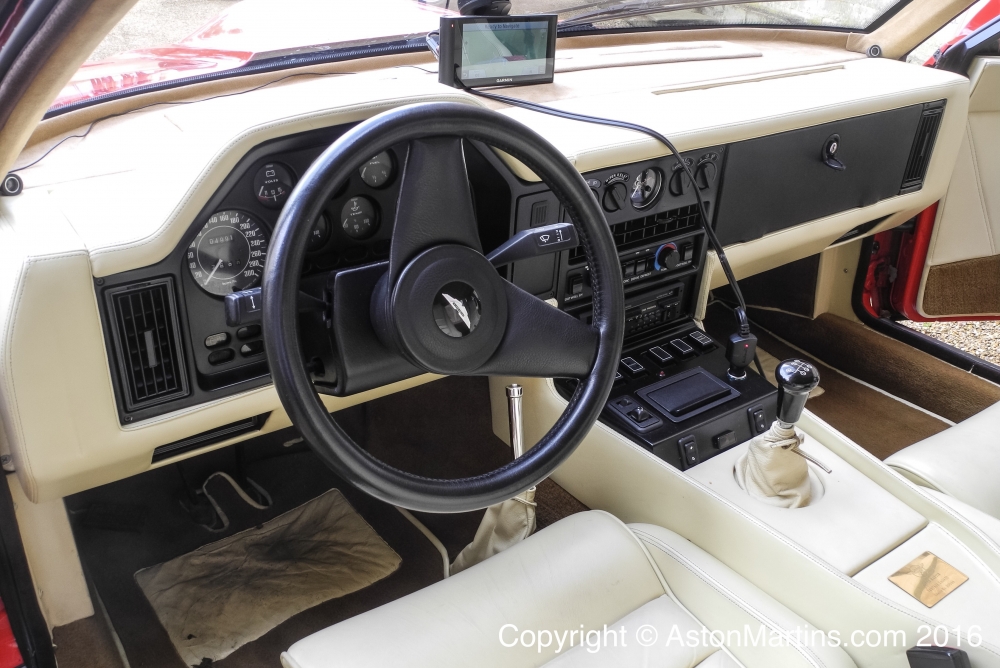
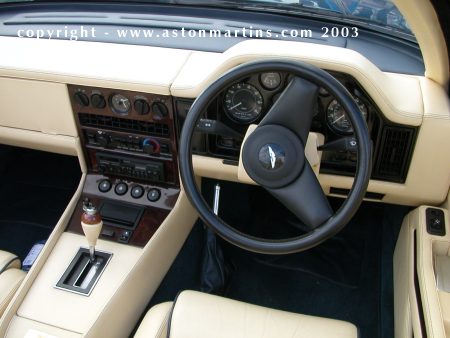
The interior of the Zagato was simple and modern when compared to the standard Vantage. Some of the later cars received walnut veneers to the dashboard and other cars had a 3 spoke Nardi steering wheel in place of the two spoke leather item shown here.

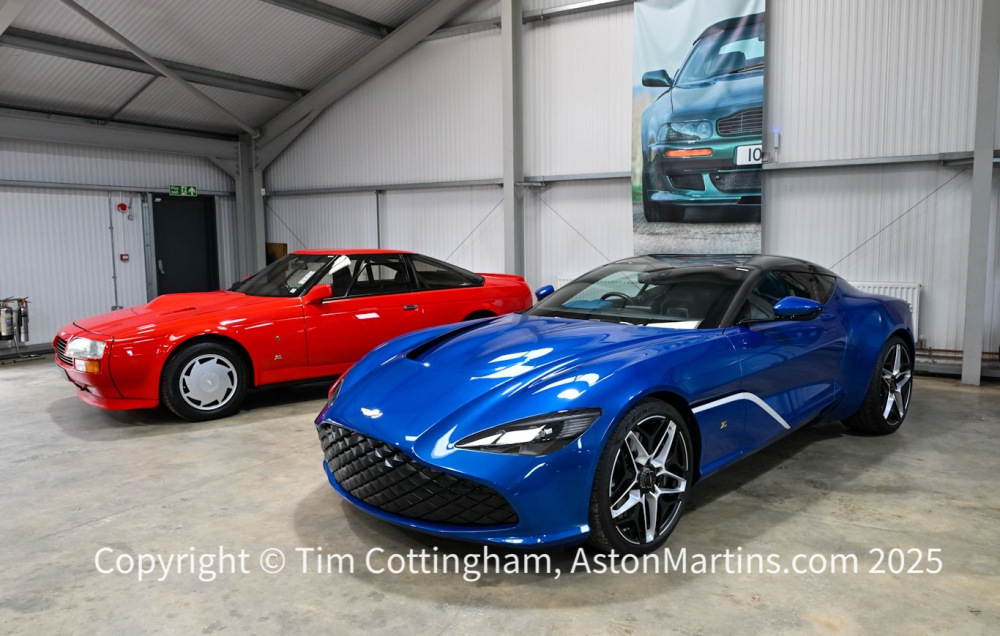
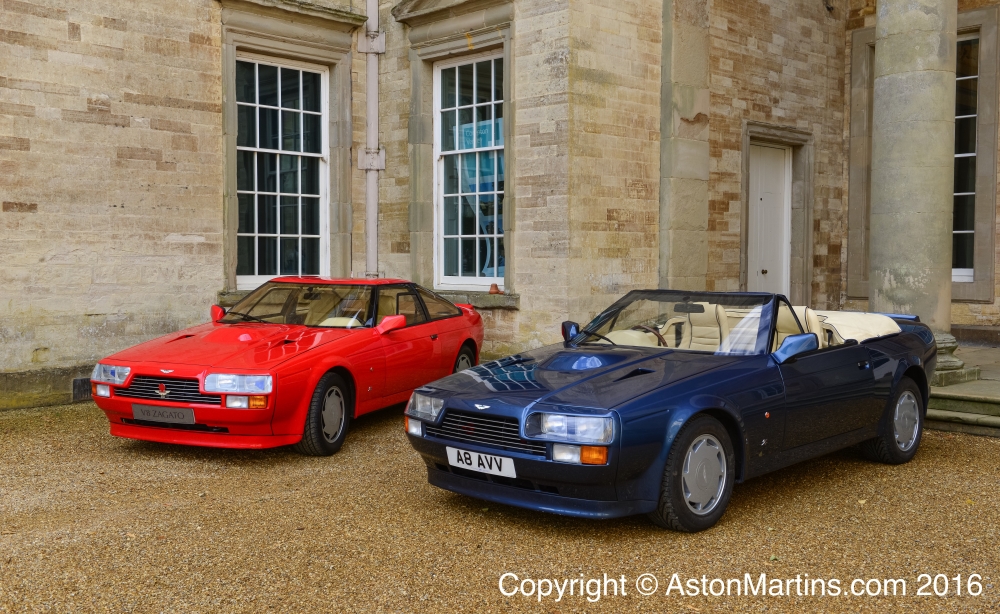
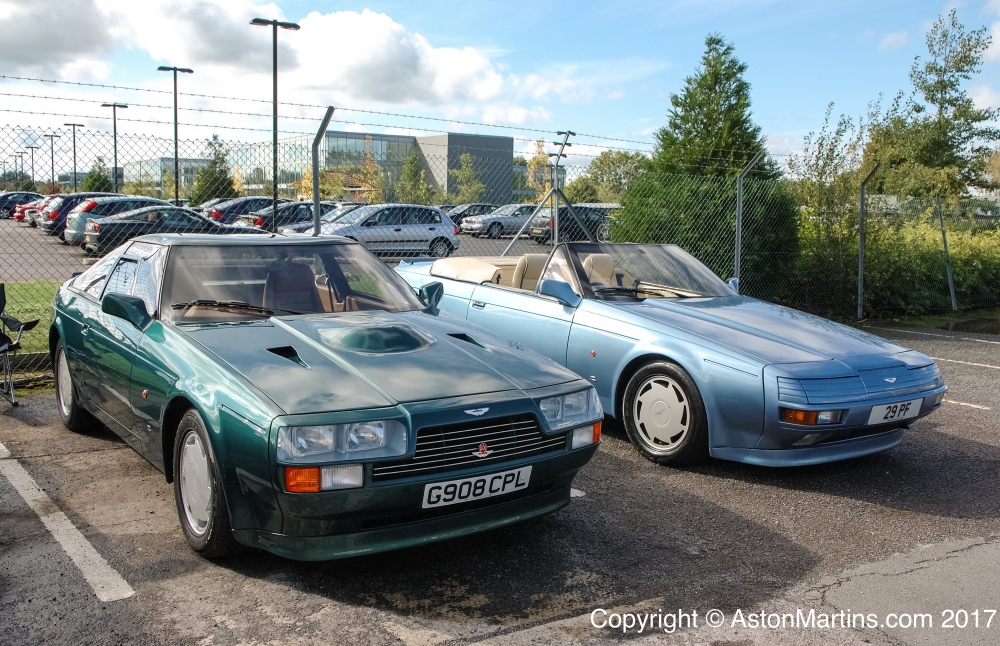
The dark blue metallic Zagato to the right is the same car, but 13 years later. The car now has a 7 litre R.S.Williams engine and has been converted to left hand drive.

The Vantage Zagato was never designed with racing in mind (unlike its contemporary, the Ferrari 288GTO). Only in more recent times during AMOC events have Zagatos actively competed. An here is one such car which has been extensively modified for the race track including a 7.0 litre R.S Williams fuel injected engine. The first photograph shows the car in road going form. The second picture, taken in the paddock during a 1999 AMOC meeting, shows the Zagato still in it’s original metallic blue finish with minor racing modifications. The third photograph, taken during the 2000 season shows many changes including stripped out interior, enhanced brakes with V600 style wheels, a modified air intake in the power bulge and a change of colour to Aston Racing Green. For the 2001 season, the bonnet air intake was ditched.

Performance from the 432 bhp engine fitted to the prototype car was phenomenal and even now is just about the fastest production Aston of all time. The true maximum speed of 185.8mph was achieved by the French magazine Sport Auto on an empty piece of motorway whilst the French Police were at lunch, just short of the planned 300kph. The 0 to 60mph time came up in just 4.8 seconds. Power output of the remaining production cars was pegged at around 408 bhp with the addition of power sapping emission equipment. But the factory service department could uprate them for the owners.

Lagonda Limousine

Lagonda Limousine

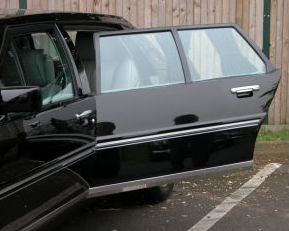
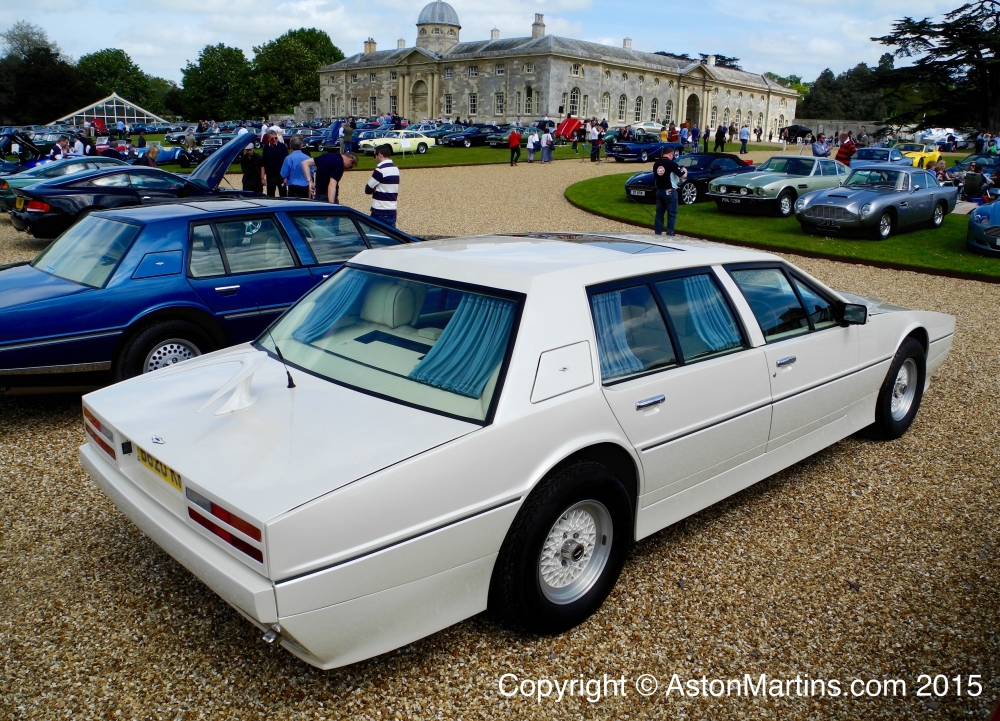
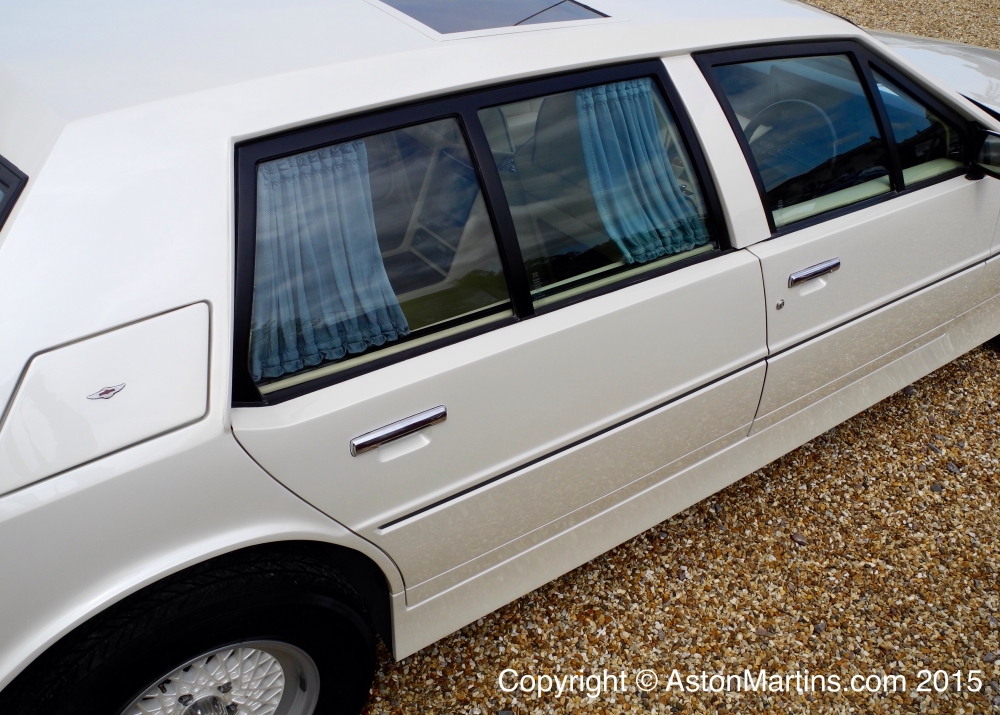
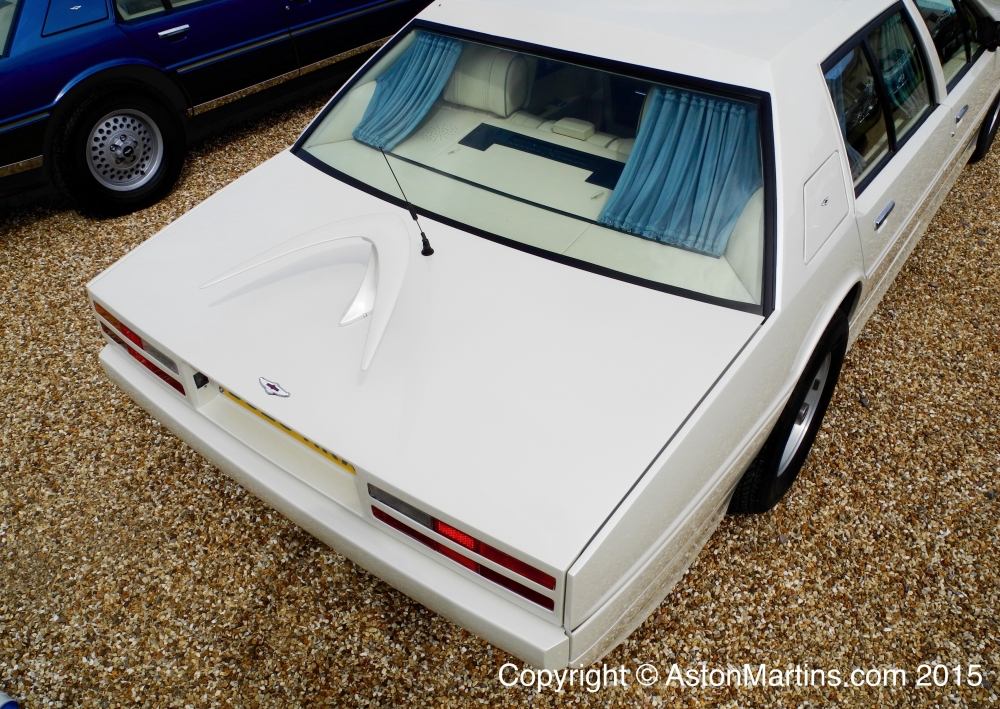
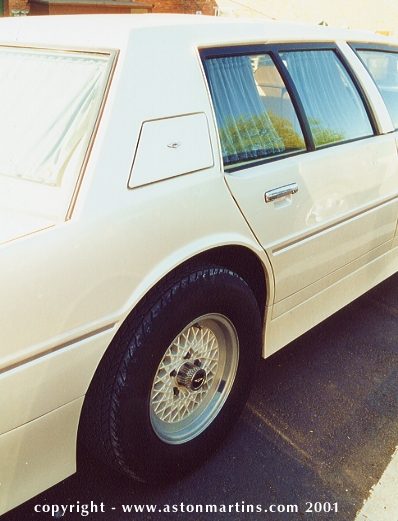
I first saw this example in 1996 when it was German registered. I caught up with it again in 2005 when it had been re-registered in Latvia. The rear view shows that the limousine must have increased rear headroom over the standard car.

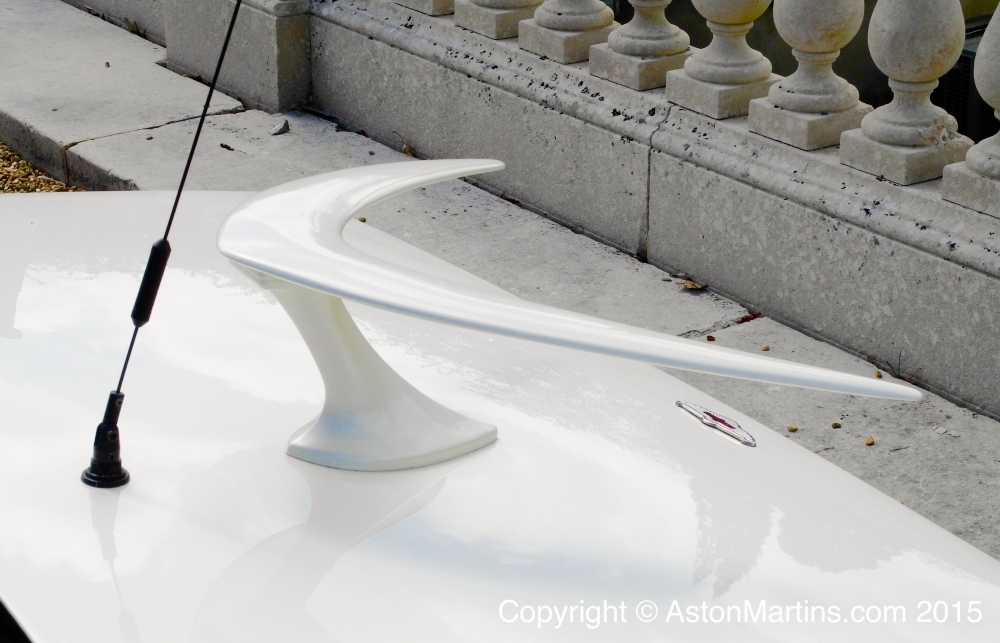
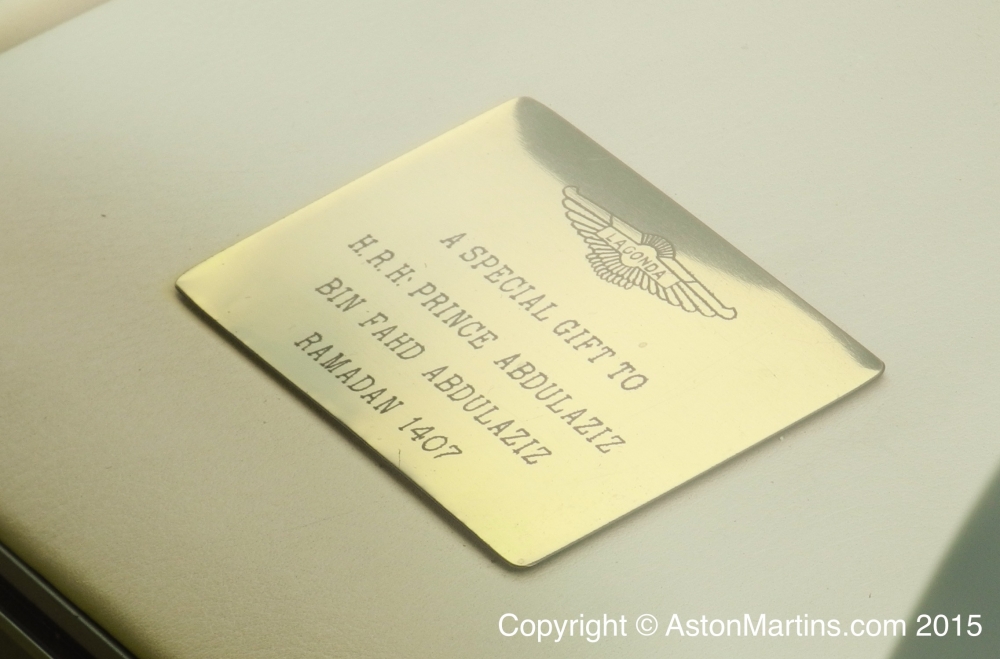
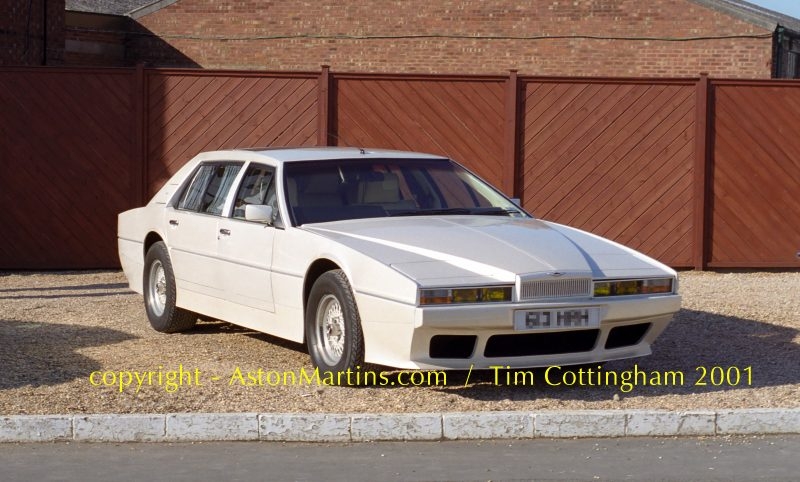
This single example of a RHD limousine was built for HRH Prince Abdulaziz Bin Fahd Abdulaziz. Finished in pearlescent white and featuring the full Tickford bodykit, this is a unique and extremely eye catching car with real road presence.

For more Lagonda’s – please visit astonmartinlagonda.net>

V8 Vantage Zagato Volante Prototype

Following the show, the car was sold to a Middle Eastern collector and was not seen for some time until it returned to the UK after 20 or so years away. Many of the photographs here show the car when it was offered for sale by Bonhams auctioneers at Works Service in 2012.

Zagato Lagonda Rapide DP2051

Purported to be powered by an Aston Martin V8 engine although there was no reason for an engine to be fitted as the car was only a rolling shell. It was rather a benign design except for an awkward downward kink in the window line just behind the ‘A’ pillar. This gave it a somewhat broken back appearance which may have halted any possible production plans.
The car still survives in a private collection.
V8 Volante Zagato

V8 Volante Zagato

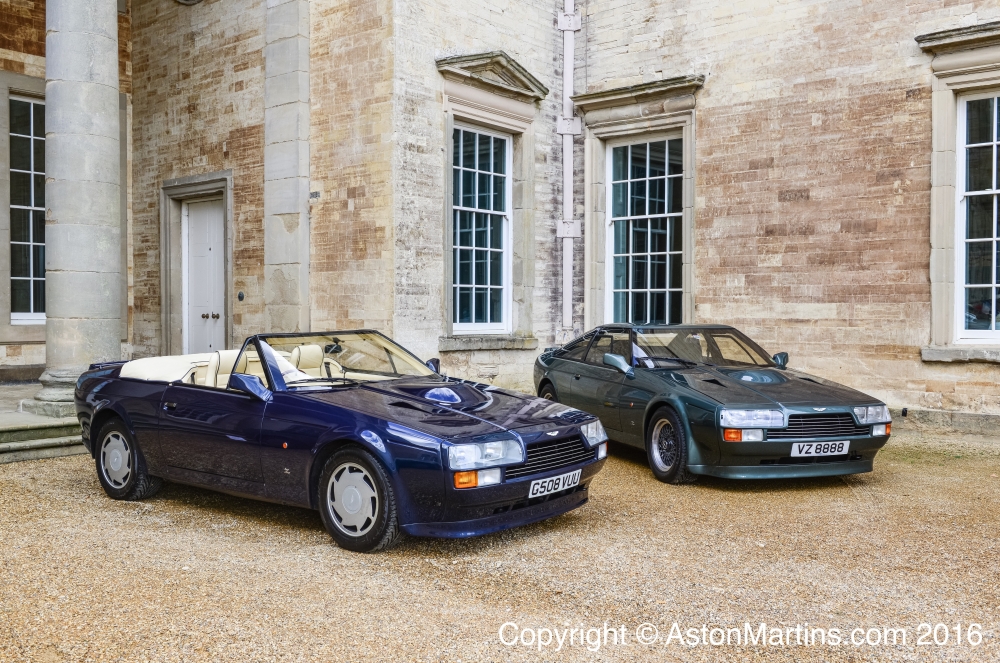
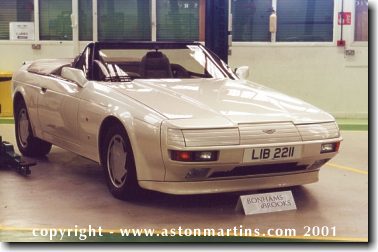
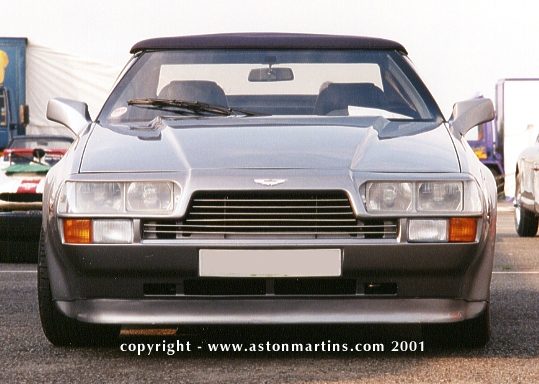
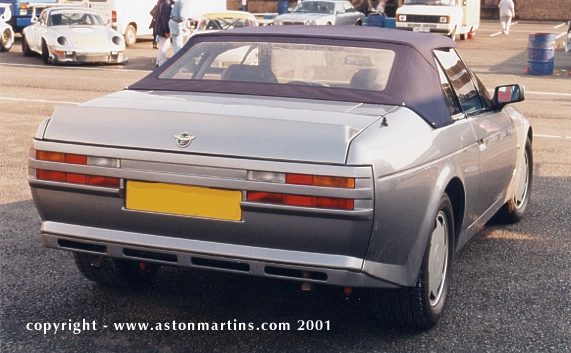
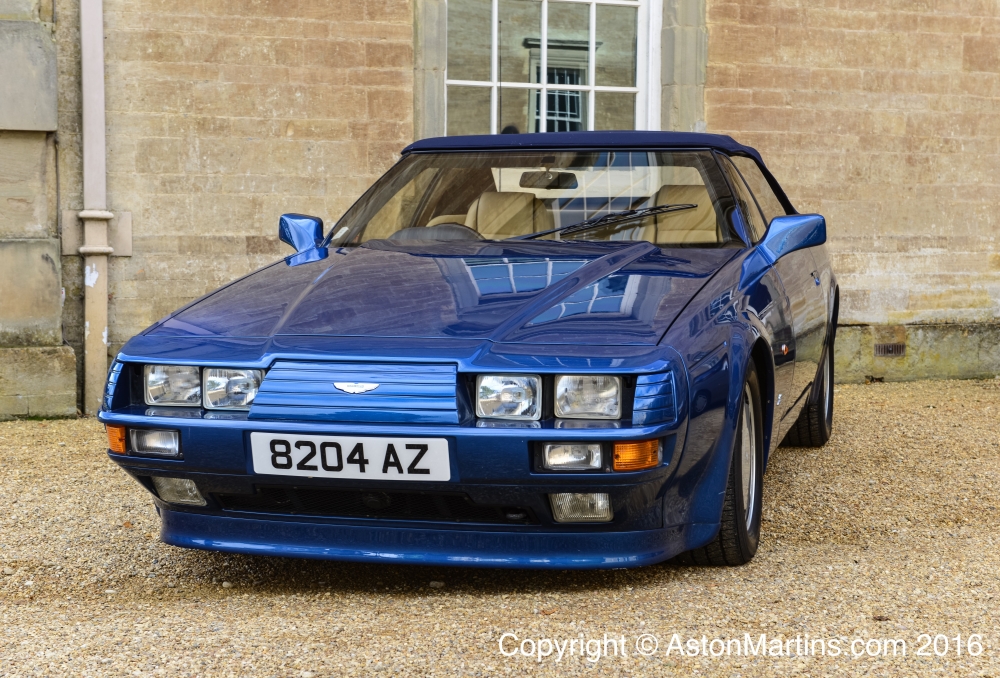
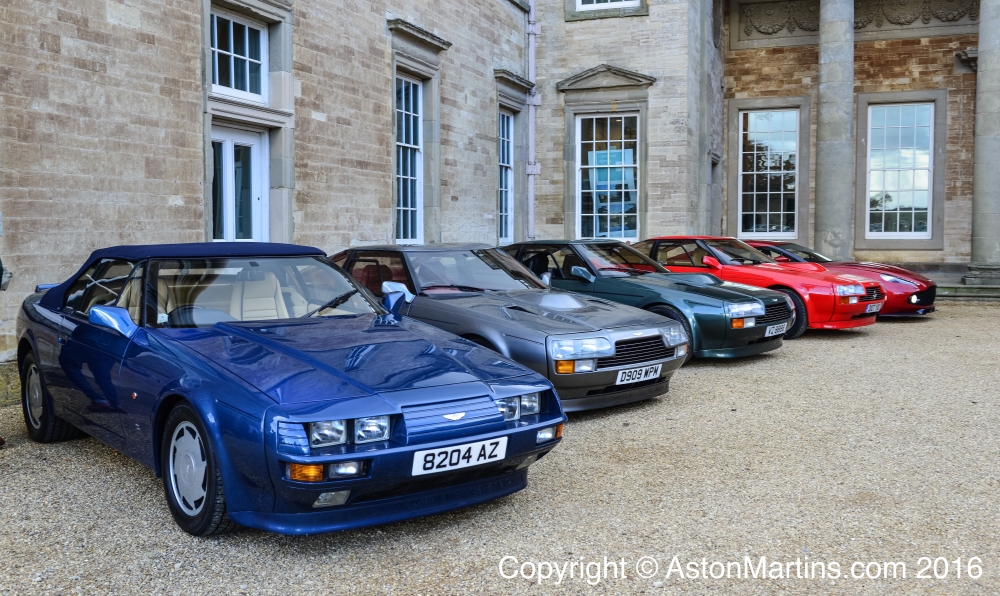
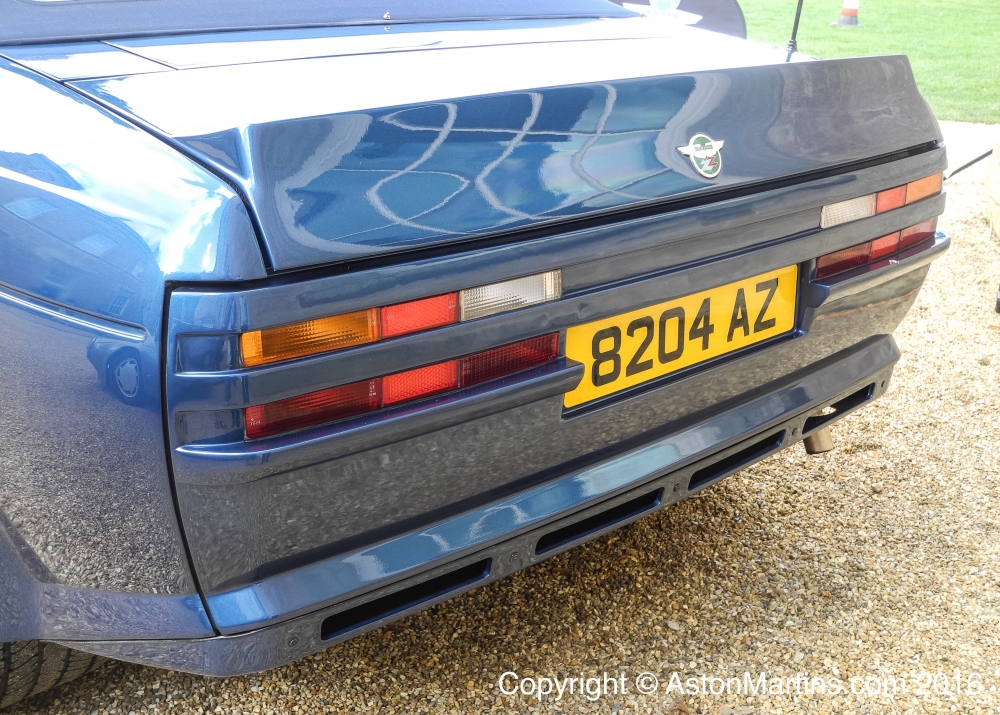
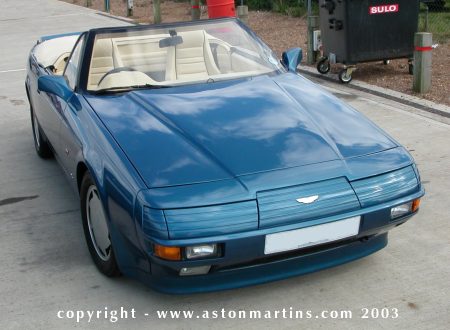
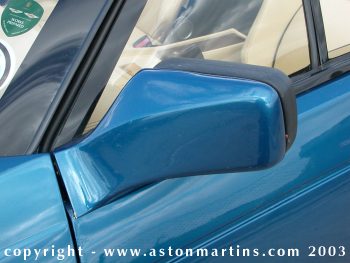
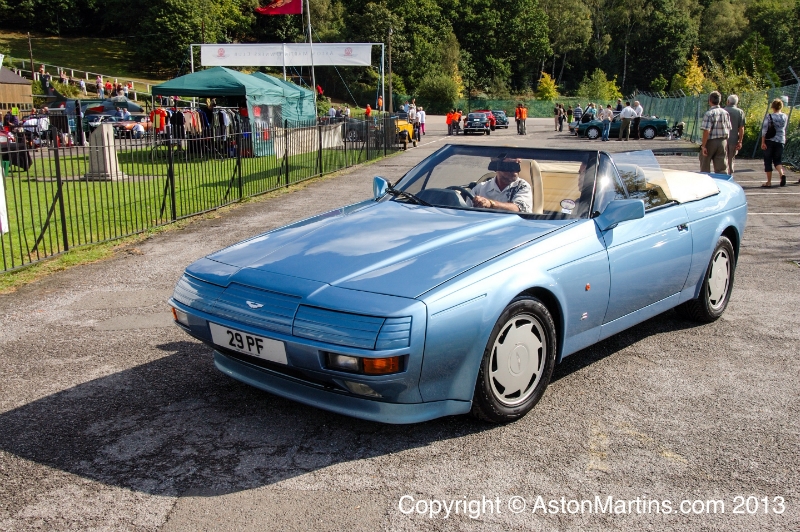
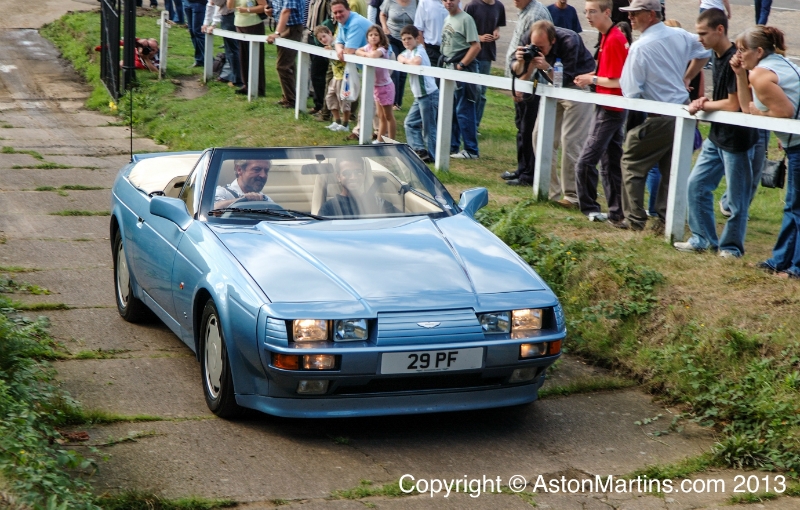
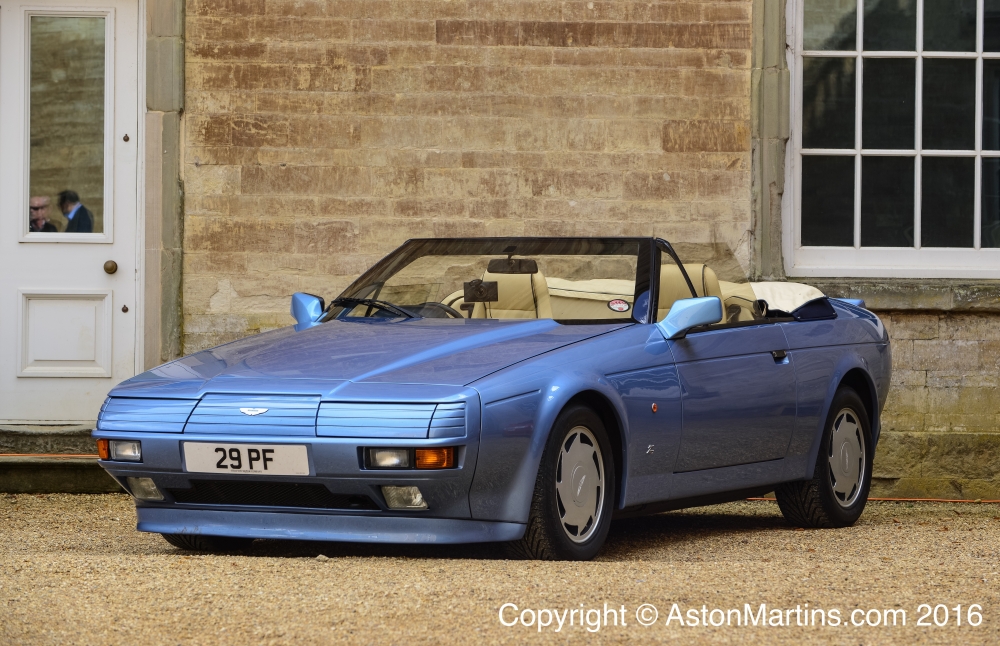
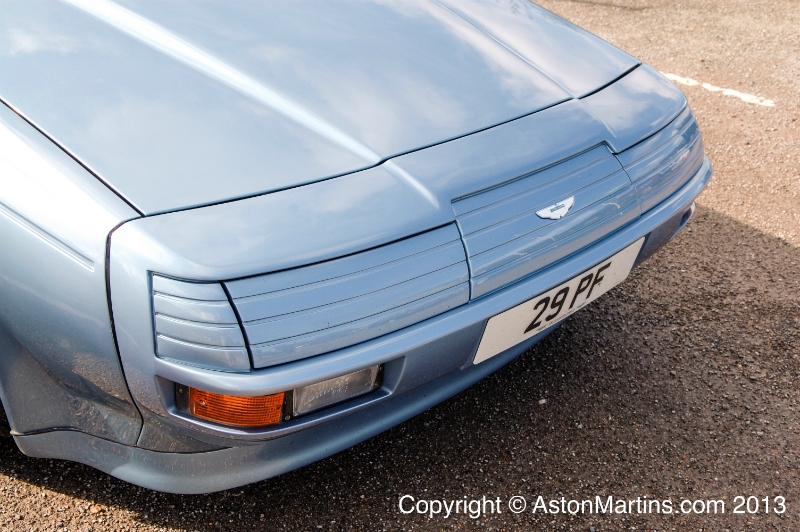
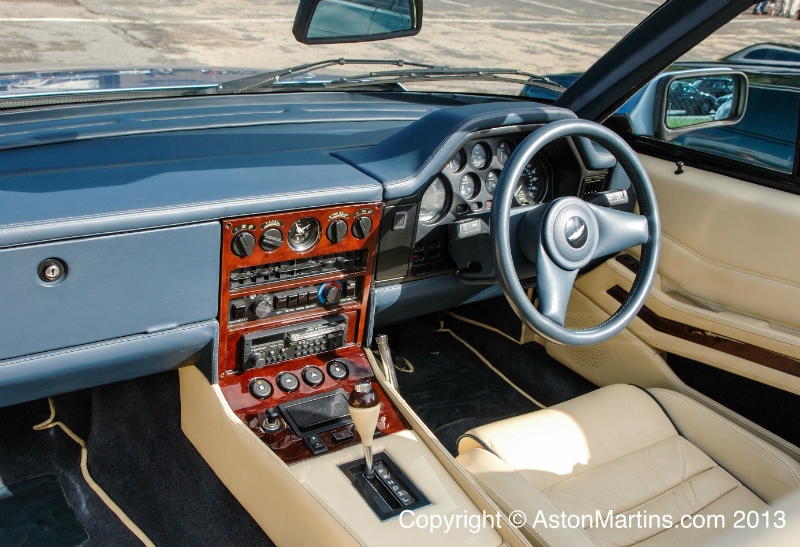
Apart from the lack of a fixed roof, the major external change from the coupe was a new dummy radiator grill and pivoted ‘eyelids’ to cover the head lamps when they are not in use. Extra strengthening added 35kg in weight and together with the efi engine with at least 100 less brake horse power, performance only slightly ahead of the V8 Volante, with a claimed top speed of 160mph and 0 to 60 mph in 6.0 seconds.

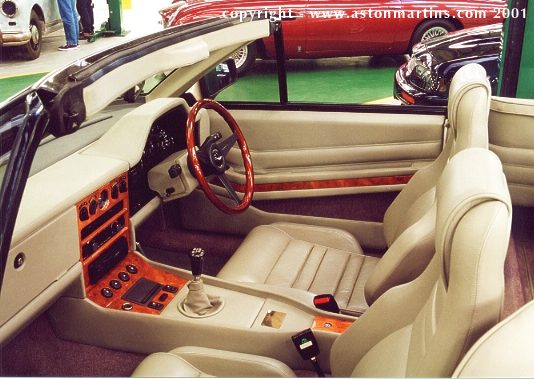
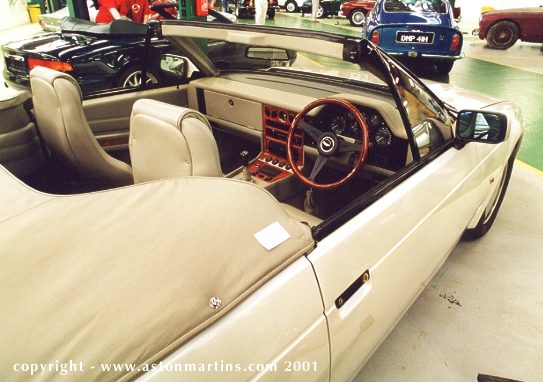
The car above, finished in Porsche White with contrasting grey interior and matching hood, was on sale at the Bonhams/Brooks sale at AML Works Service in May 2001. It is chassis number 10, the first car delivered to a private customer and is unusual in having the 5 speed manual gearbox – most other examples were automatic.

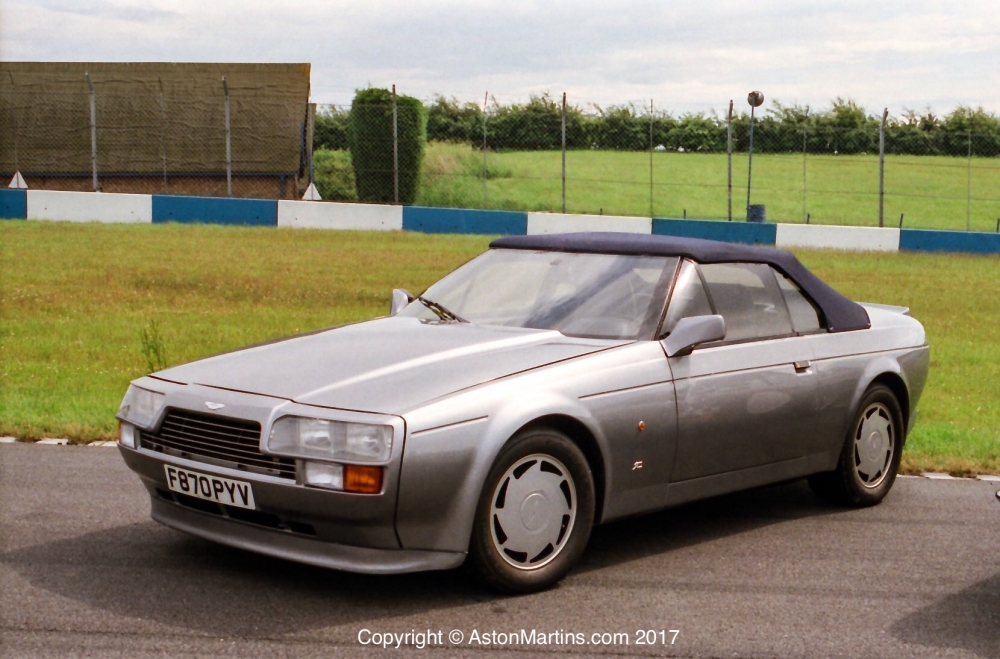
This unusual Volante Zagato (above) features the cleaner front grille and light arrangements of the coupe. Possibly two cars were built in this way, one was later converted to Vantage specification which probably makes this car unique. It was photographed at the 1999 AMOC Le Mans 40th anniversary meeting at Donnington Park.

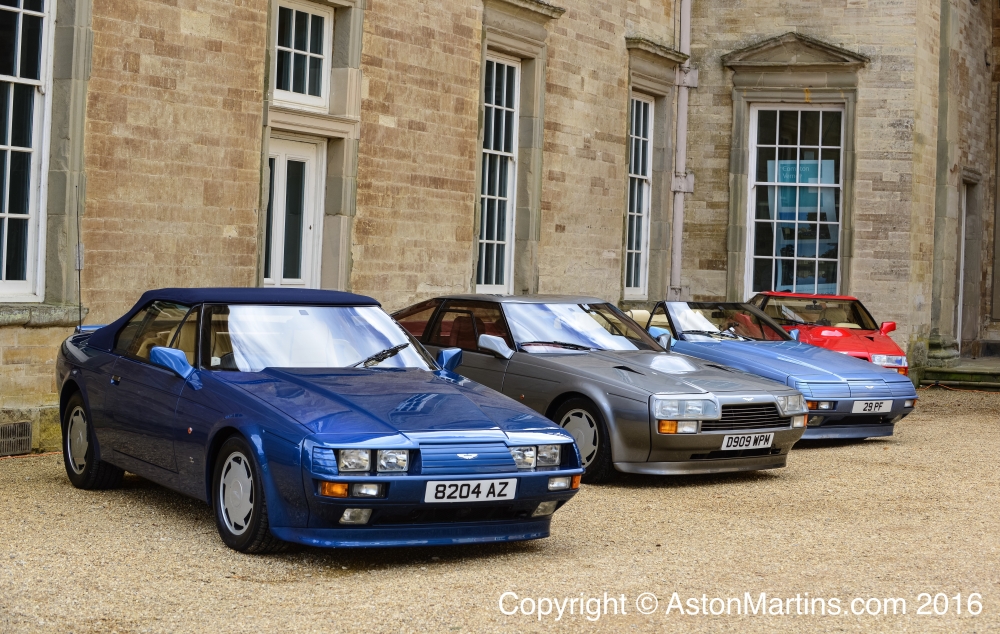
Although initially AML intended to build just 25 Volante Zagatos, by the time that production ended in 1989, 37 production cars had been completed. Although most stayed true to the original V585 specification, some were later converted to Vantage specification or 6.3 litre spec by the Customer Services Division (now called Aston Martin Works) and others were uprated to 7.0 litre by RS Williams.

« Newer PostsOlder Posts »