Latest News - 01/09/24

What's New @ AstonMartins.com?

Vantage AM6 CEO by Q

The Atom

The Atom

Although stylistically unlike both previous or future Aston Martins, the chassis and method of construction was very much the basis for the post war Feltham cars starting with the 2 litre sports (DB1) right up to the DB Mark III in 1957. It might look a bit awkward to our eyes today but this was due mostly to the lack of availability of materials during wartime. To the people of the time, Atom would have looked very modern indeed.

Initially the Atom was fitted with a 4 cylinder 1950cc Single overhead cam engine with  Zenith carburettors from the 15/98 but by the end of the war, this had been replaced by a 4 cylinder 1970cc Claude Hill designed pushrod engine with twin SU carburettors. The engine was attached to a 4 speed Cotal self-changing semi-automatic gearbox with a pair of electromagnetic clutches, quite advanced for the time.

The Atom had a very active life of development during the war years clocking up over 100,000 miles, so that as soon as peace came, the company had a new product to sell to it’s customers. The problem was that although Aston Martin was, just for once, on sound financial footings and profitable, a considerable sum would be needed to develop the sort of car demanded by post-war, mostly overseas consumers. Thus AM owner, Gordon Sutherland put the company up for sale through a classified advert in The Times newspaper in 1946. David Brown, the Yorkshire based businessman and head of the engineering firm, the David Brown Corporation showed interest and Sutherland drove the Atom to his HQ in Meltham for his approval. DB drove the car and must have been sufficiently impressed as he went on to purchase Aston Martin, a company that he owned for the best part of the next 25 years. The Atom disappeared from view for quite sometime before turning up in France of all places during the 1970’s.

After being exhibited in French motor museums, including the famous ACO museum at the Le Mans circuit, it was returned to the UK in 1985, reappearing at many AMOC and prestigious international events. The 10 year restoration involved conserving as many original parts as possible rather than simple replacement . The grille on the Atom, if one can call it that, may, perhaps, be interpreted as the earliest expression of the distinctive Aston Martin shape we know so well today. To be honest, I’m not so sure, but the shape has a passing similarity.
Aston Martin Atom website

Cygnet City Car

Cygnet City Car

The pictures that appeared on the internet in late June 2009 were somewhat confusing. The full sized clay model did look like a convincing Aston city car but surly this was one of those many internet spoofs or wanabee AM designs that crop up with regularity. But it did look convincing, like someone with skill had gone to real effort to take all the Aston styling cues and make them work on a small city car. Yet this was no joke, it did appear to be a real factory effort, a sensible pint sized urban car but with the allure of an Aston. The Cygnet had broken cover and all hell broke loose.

The AMOC web forum went ballistic, post after post, page after page – no thread progressed and grew like this. The idea of an Aston just for the city, dare I say, a sensible Aston, exclusively suited to the cut and thrust of the urban environment had challenged many members and owners. Was AML selling out or adapting to the future demands of the market place, legislation and the environment? Was 95 years of performance centred motoring being dumped for a fast buck? The downturn that began with the ‘Credit Crunch’ in 2008 damaged sales of high end motor cars greatly and no manufacturer in the sector was immune; AML was quick off the mark with the Cygnet, perhaps it could fill the gap in demand until people desired and could afford sportscars in greater numbers again. Everyone had an opinion and they have all been expressed most strongly but development of the project continued  at Gaydon regardless. It has to be said that the Cygnet is not a totally brand new fresh design but is strongly based on the Toyota iQ, an ultra-compact city car of similar proportions to the Smart ForTwo.

First view of the finished Cygnet concept was at the 2010 Geneva Motor Show where the single car drew much attention. By October 2010, the factory announced that production would indeed go ahead at the Gaydon factory beginning in late 2010. The production version was subsequently unveiled at the 2011 Geneva Motor show with production cars available for customers in the UK and Europe simultaneously. New Cygnet owners were buzzing around the city by late Spring 2011. Customers outside of Europe were able to buy the Cygnet sometime later that year, although plans to market in the US were dropped..

The buzz created by the Cygnet won’t be dying down any time soon.

Aston-Martin16 valve twin cam race cars

The car pictured on this page is one of two Grand Prix Team cars (TT1 and TT2) built for Count Zborowski to compete in the 1922 Isle of Man TT (although they were not ready in time) and subsequently, the  French GP in Strasbourg. It is the oldest surviving racing Aston Martin and thankfully is still actively used on the track to this day.  Originally featuring a engine with twin camshafts and 16 valves, the car is now fitted with the Benson Twin Cam engine. This was designed by The Hon. John Benson as a new power unit for the cars just before Bamford and Martin called in the receivers in 1925.

This famous car has for many years now been affectionately known as Green Pea. It has a very interesting history which is best understood by reading the AMOC register.

This above set of photographs above show the very last team car built under Lionel Martin; a two seater with a 16 valve twin can engine, built for Humphrey Cook for the 200 mile JCC race at Brooklands in 1925. Sadly it crashed on the first lap although it races regularly now.

15/98 2 litre to Speed Model specification
Aston-Martin 1.5 litre Side Valve (3 seater)

A vast majority of the 54 production Bamford and Martin cars were built with a 1.5 litre side valve engine. The engine, designed by H.V.Robb had the head cast integral with the block. This particular example, chassis 1941, is a long chassis tourer with 3 seater cloverleaf bodywork from 1924 and was photographed whilst on display at the Brooklands Museum. It has a very interesting history as it has been rescued from scrap yards three times in it’s life. The current attractive body, whilst not the original, is correct for the car. The engine is capable of delivering 38 bhp, enough for B&M to advertise its top speed as 72 mph. Sports models had an improved output of 45 bhp but in general, the side valve engine was not powerful enough to compete with more modern engines and AM went on to develop the 16 valve.

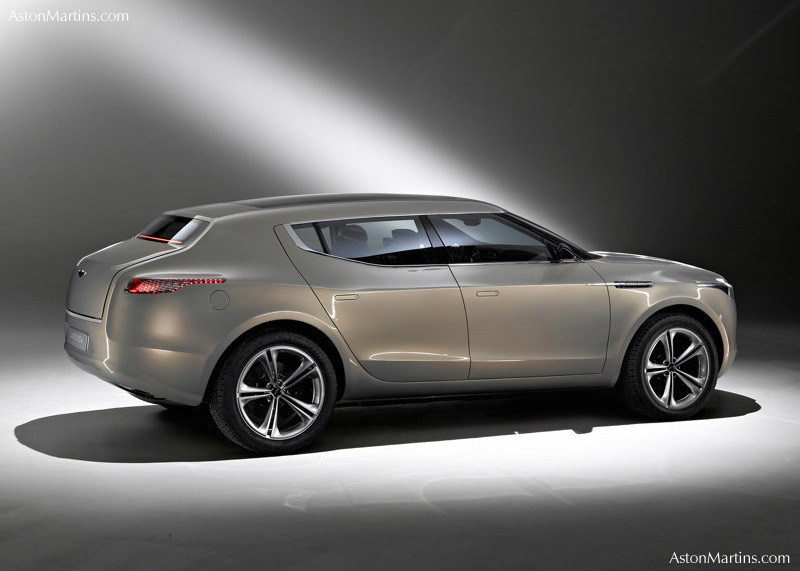
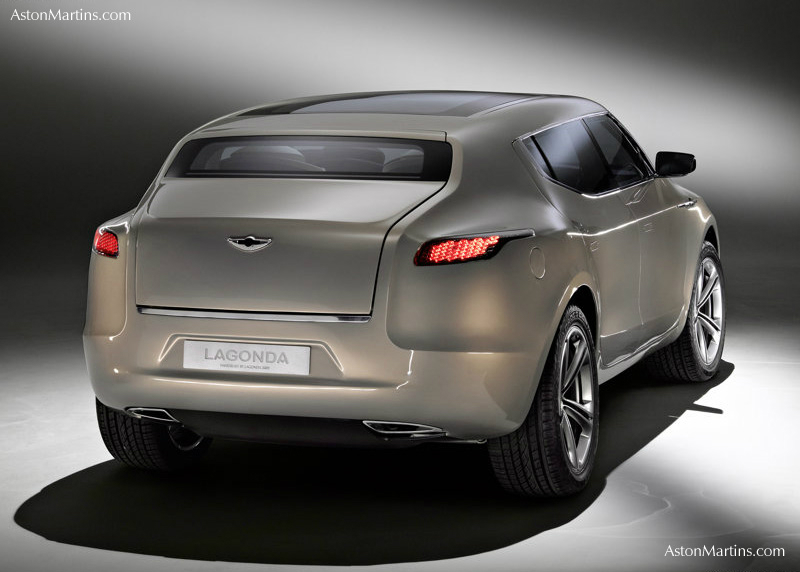
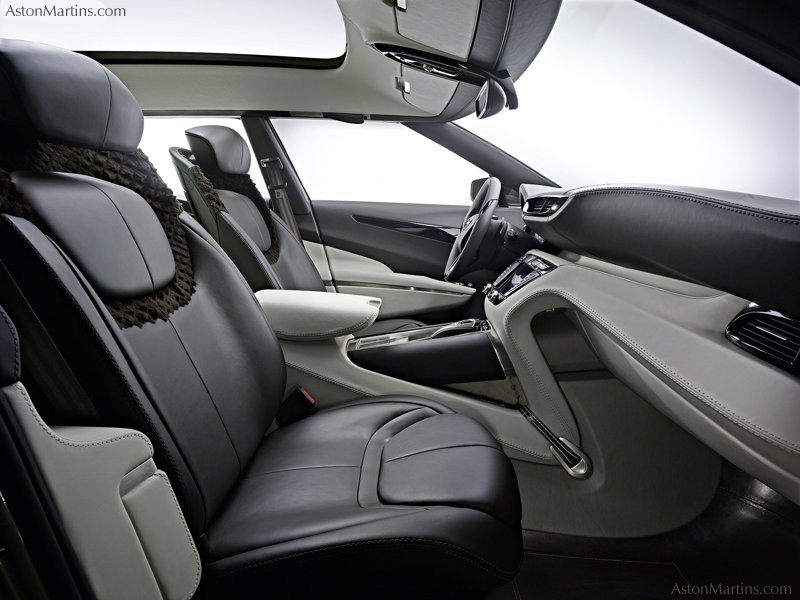
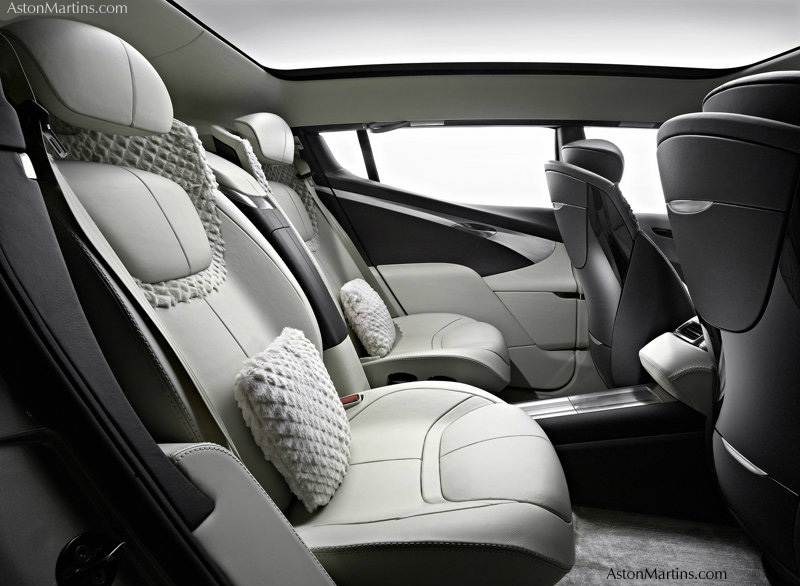
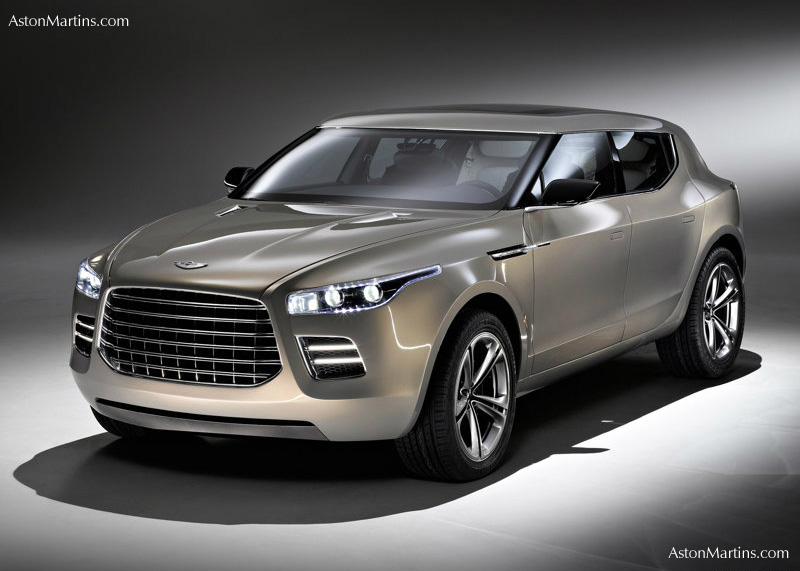
Lagonda Concept LUV

Lagonda Concept LUV

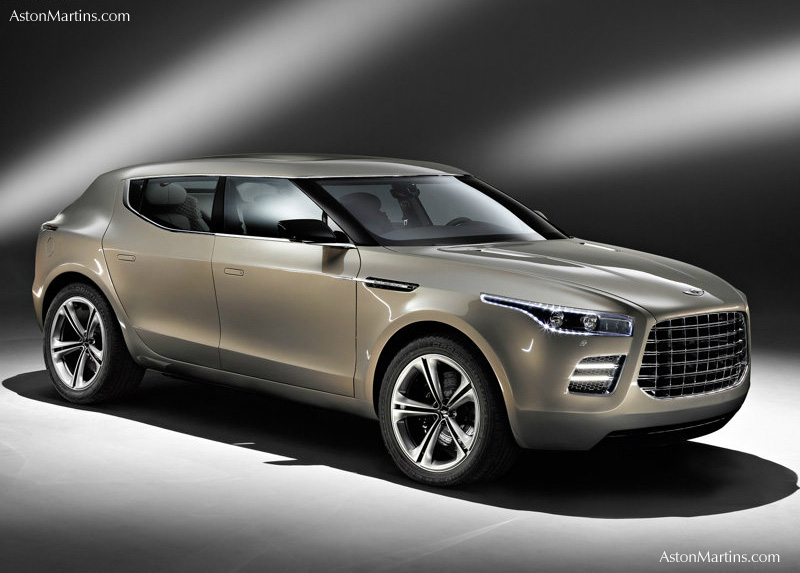
At the time, very little was really known about the detailed specification of the 2009 Lagonda Concept, except that it was based on Mercedes GL running gear and supposedly powered by an Aston Martin V12 (it was!). The idea behind the concept was to bring performance luxury into emerging markets and territories around the world, especially emerging markets in Russia, the Middle East, South America, India, and China. Calling the concept a full off-roader isn’t correct since it was designed as a luxury performance vehicle with 4 wheel drive and additional ground clearance for roads of potentially poor quality.

The press release at the time proudly announced the return of the iconic marque and I’m sure that the intention to go into production was a strong possibility. Yet, the car only lasted on the main turntable of the stand for a single day, being replaced initially by a One-77 rolling chassis and then by a One-77 1:1 modelDBX Concept first seen at Geneva in 2015.

Eventually after 10 years hidden away, the controversial Lagonda received its first public viewing at the 2019 AMOC Spring Concours by special arrangement with the AMHT and the car’s owner. Buy 2023, the car was offered for sale by auction on the online marketplace, Collecting Cars.
.

Of course, the next car to carry the Lagonda badge did not turn out to be a 4×4 at all but the fabulous Lagonda Taraf.

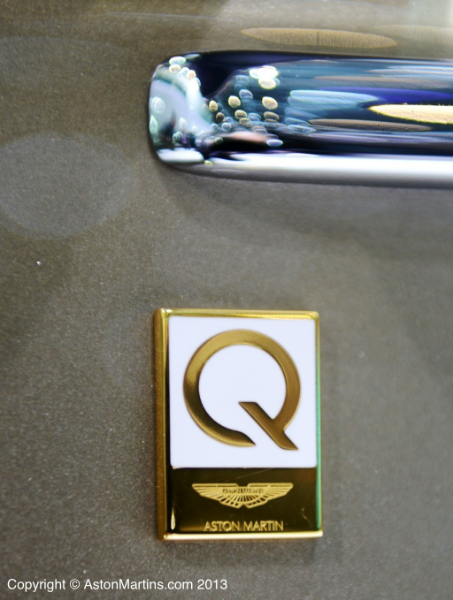
Cygnet ‘Q by Aston Martin’

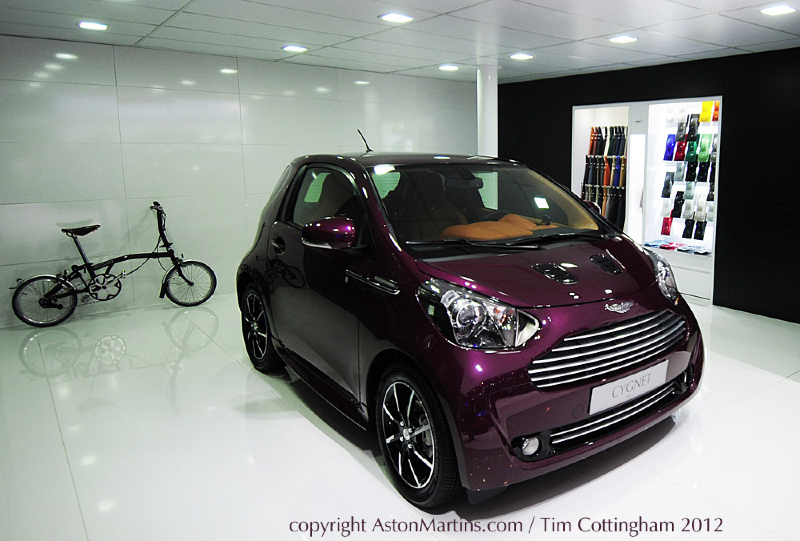
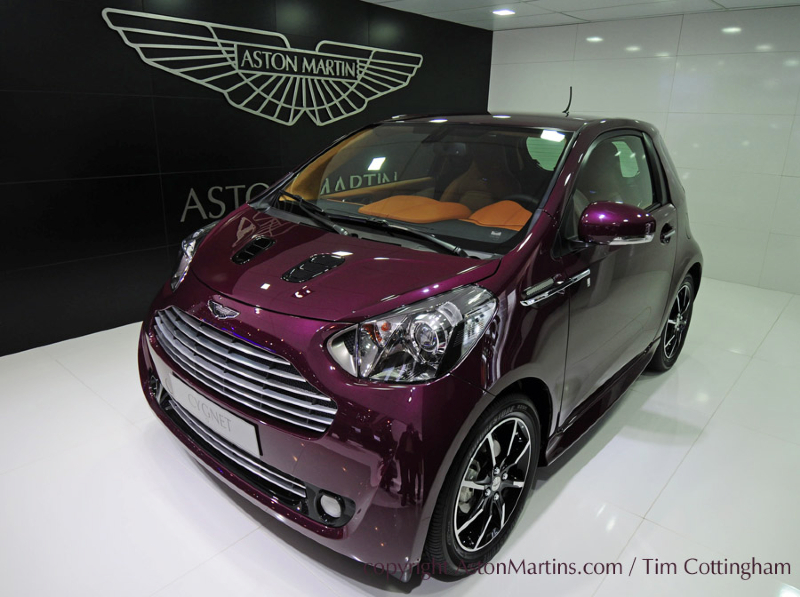
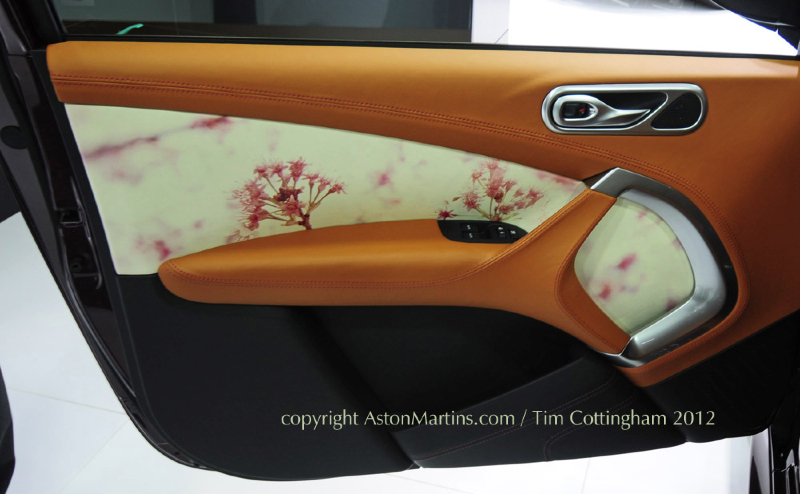
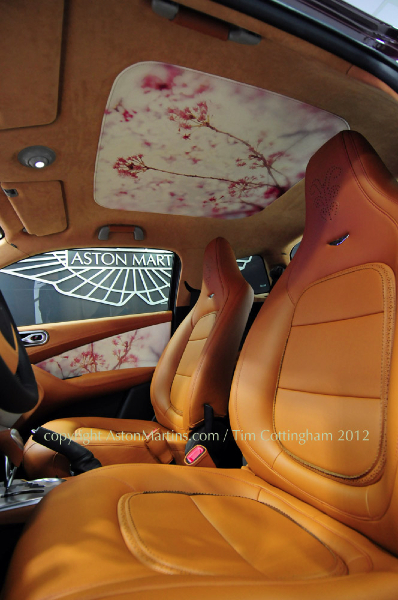
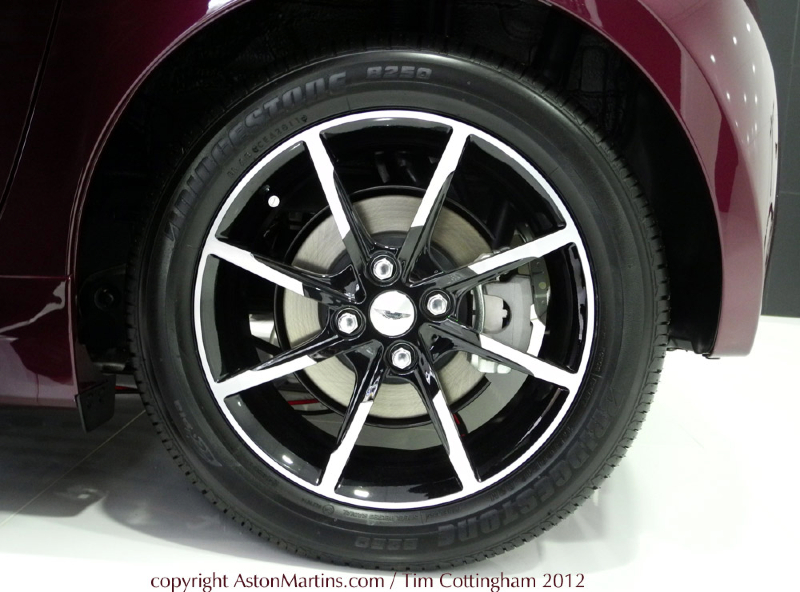
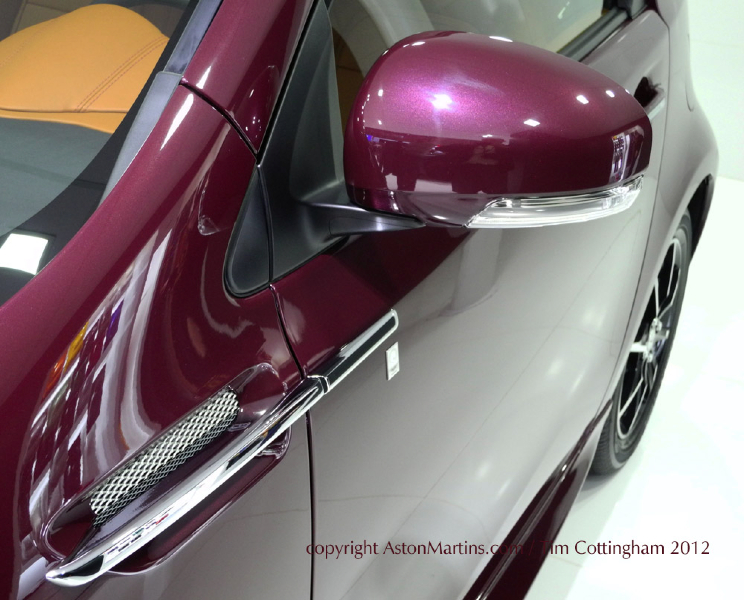
The Cygnet on display in 2012 featured Cherry Tree Raspberry paint which had been colour matched to the same hue as intense cherry blossom. The interior featured luxurious Deep Soft Kestrel Tan leather with both bespoke photograph based headlining and door inserts. In addition, this particular Cygnet Q came with a three piece colour matched luggage set and folding Brompton bicycle. Even the wheels were custom made for this particular car.

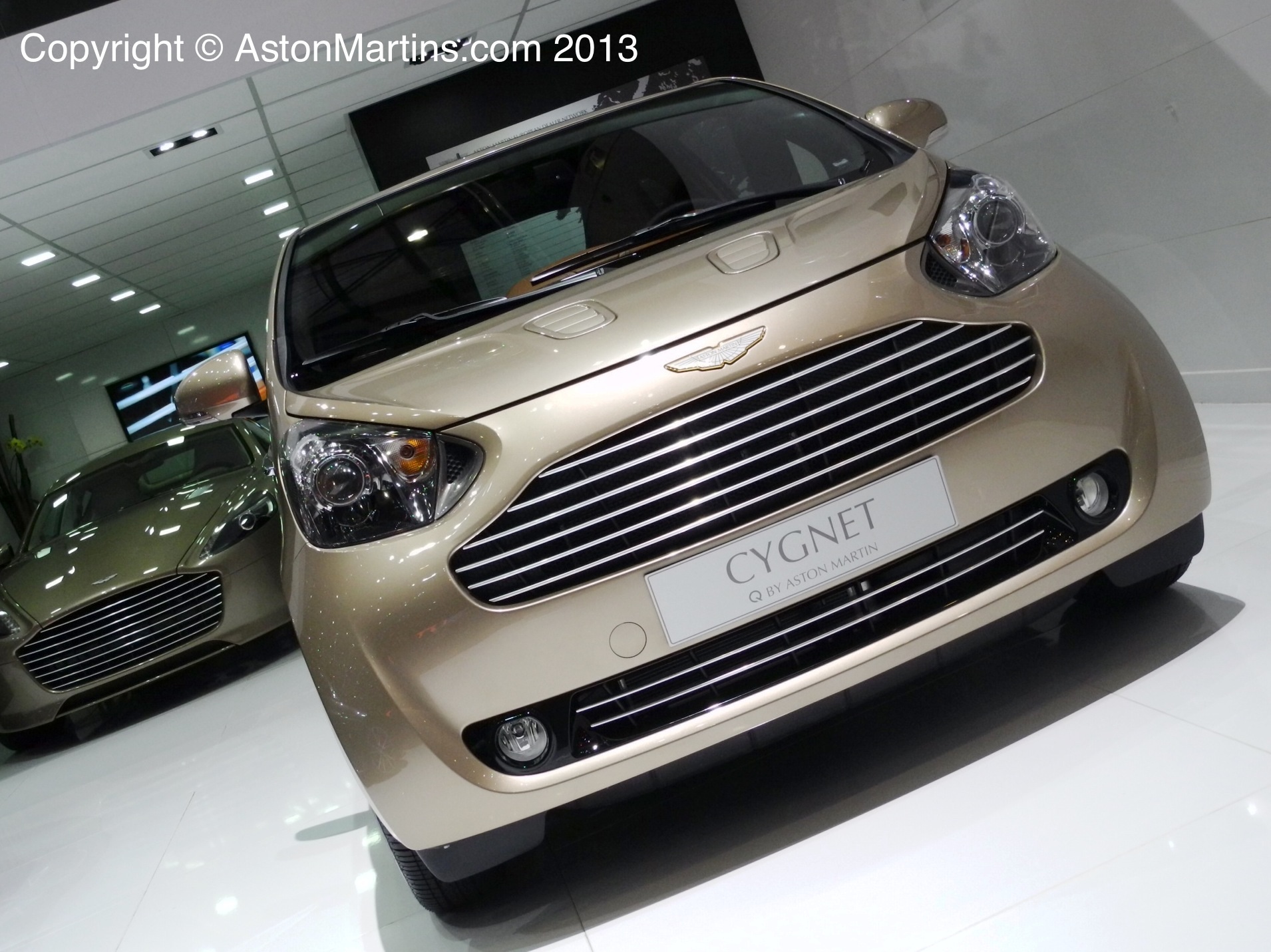
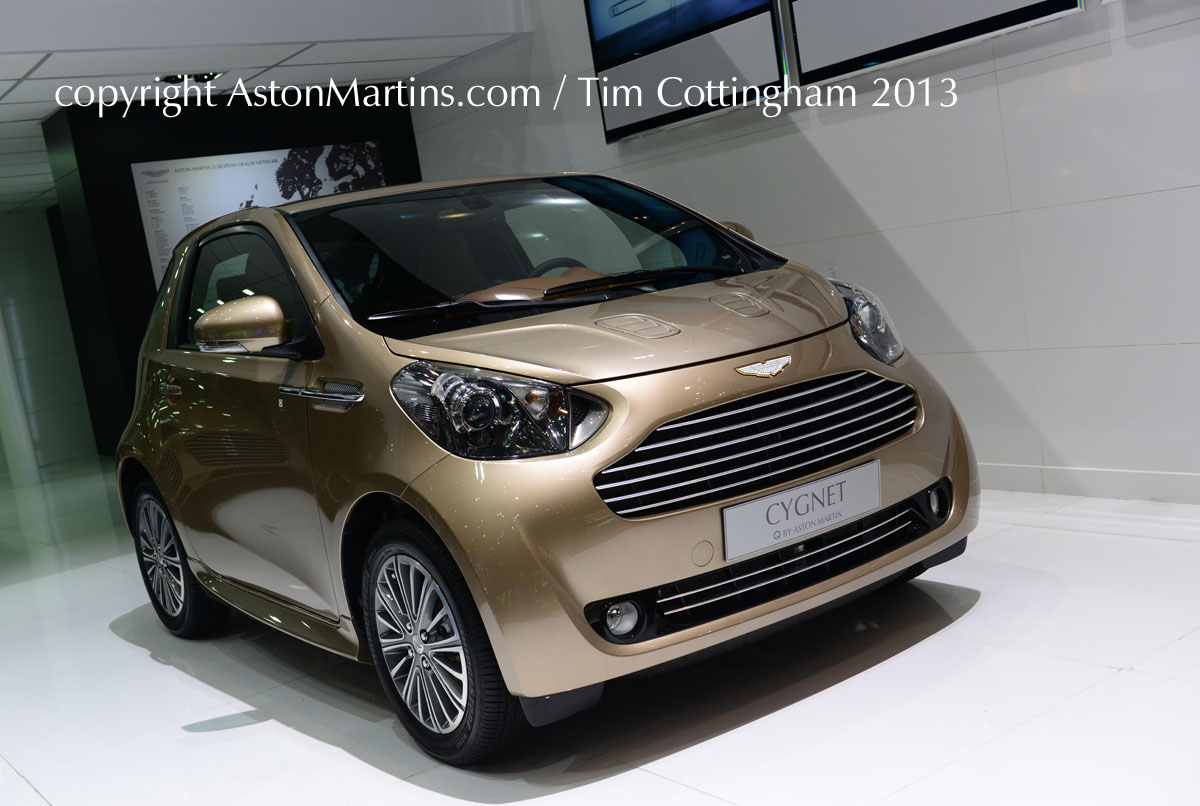
At the Geneva Motor Show in 2013, the Cygnet on display was also a product of the ‘Q by Aston Martin’ people at Gaydon. This cars was finished in Selene Bronze exterior paint with Chestnut Tan Leather interior and Cirrus Grey Alcantara headlining.

DB5 by Ogle Design

DB5 by Ogle Design

Clearly visible is the completely redesigned dashboard and instrument cluster, glove compartment and centre console. This was then covered in hide as opposed to the vynide material that covered the dashboards in the regular production cars. Also fitted was a centre arm rest with a hinged lid and chrome-plated ash tray. The door panels were somewhat simplified with a completely new interior door handle and the parcel shelf was also updated. The seats were also redesigned with a clear ‘V’ shape stitched pattern instead of the more usual pleats. This ‘V’ shape was adopted for the seats that were used on the DB6 later in the year.

The car was stored for many years in mainland Europe but it underwent a substantial restoration in the 2000’s involving the upgrade of the engine to 4.2 litre ‘Vantage’ spec with triple Weber carburettors.

The only other time that Ogle had an input into Aston Martin was with the DBSV8 based Sotheby Special.

Thunderbolt

Thunderbolt

The Thunderbolt’s powerful exterior profile is the result of hand-laid, coach-built carbon fiber bodywork that incorporates Henrik Fisker’s characteristic design cues such as a clean body side with no creases and deeply sculpted air ducting.

The bonnet on this one-off design study is dominated by a large power bulge with long triangular sculpted air intakes and also incorporates fitment of unique head lamps; thin protruding, blade-like, tail lamps; a wraparound rear window and panoramic dark tinted glass roof; as well as updated exterior detailing including aluminum grille and assorted bright work. Performance upgrades include lowering the standard ride height of the car by 15 millimeters and fitment of 21-inch alloy wheels with performance tyres.

Inside, the changes are no less dramatic. While maintaining a traditional elegance, Thunderbolt’s concept interior features class-leading connectivity and user interfaces. Among its range of new appointments, the Thunderbolt concept features the world’s first application of Panasonic’s 11.6-inch Curved Control Screen in a car, as a result of a research partnership between Panasonic and Henrik Fisker. Designed to reduce reflections and glare, the screen’s extraordinary resolution is complimented by the fact that it is adjustable in height according to driver preference.

Another outcome of a longstanding partnership between renowned Swiss watch maker Maurice Lacroix and Henrik Fisker, is a Skeleton chronograph integrated into the dash, as well as specially trimmed leather surfaces from Italian furniture manufacturer, Natuzzi. Thunderbolt also includes a unique champagne/wine bottle holder – the first of its kind in a two-seat sports coupe – for securely transporting a bottle or two, to dinner parties as a gift.

It should be noted the Thunderbolt is in no way affiliated with, sponsored or endorsed by Aston Martin. Developed purely as a design study, the prototype unveiled at Amelia Island is a design study only, and Henrik Fisker’s personal view. Although there were no plans to offer the prototype exhibited at Amelia for sale, based on initial response however, an extremely limited number of additional cars could be made on a special order basis. These would be available exclusively through Galpin Aston Martin, the AM dealer in LA, ensuring that the vehicle remains a true collectible and rare sight. These secondary coach-built Thunderbolt’s would feature a revised front end as shown on the red rendering, a new unique grill and a revised infotainment system without the curved Panasonic screen – as this feature is a prototype. All body modifications, would be performed through a program using renowned concept car builder GFMI Metalcrafters Inc., of Fountain Valley, Calif., to handle all the carbon fiber coach work. Additional performance and interior upgrades would be executed through Galpin Auto Sports.

Following his time at Aston Martin, Henrik Fisker went on to create Fisker Coachbuild, producing tailor made luxury cars based on production platforms and the ill fated Fisker Automotive, who built the revolutionary Karma, the worlds first production plug-in hybrid electric car.

Barely a week after the Thunderbolt was unveiled, Aston Martin Lagonda  issued a lawsuit against both Fisker and Galpin Auto Sports over trademark infringement and other related issues they were not happy with.

RAC TT, FIA GT, Silverstone 2008
« Newer PostsOlder Posts »