Latest News - 01/09/24

What's New @ AstonMartins.com?

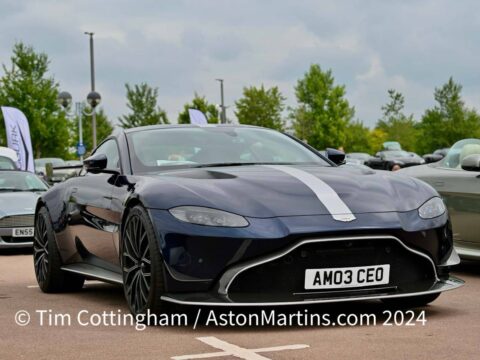
Vantage AM6 CEO by Q

V8 Vantage GTE

V8 Vantage GTE

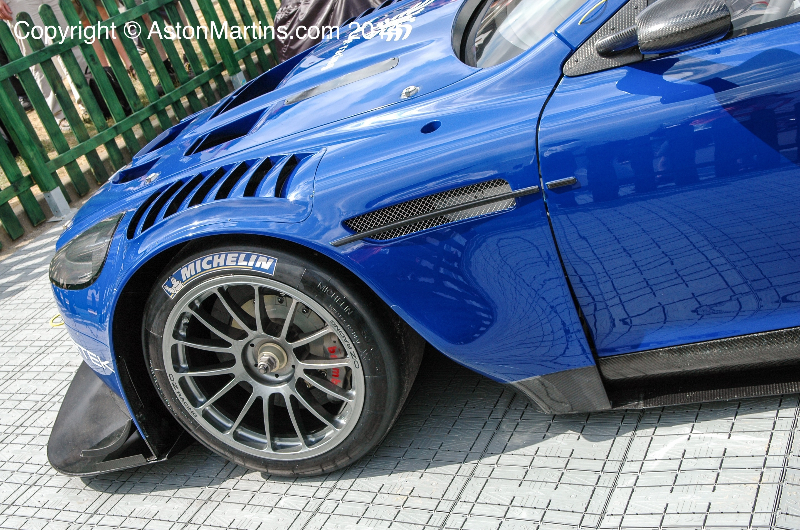
The key evolution of the V8 Vantage GTE from the previous GT2 was to make the process of servicing both quicker and easier. As an example, the process of changing the engine in the GT2 could take four hours. In the GTE, the engine can be pulled straight from the car without disturbing the suspension in around an hour.  Other improvements included reduced weight, revised front apron, wide revised rear with and better cooling for the driver.

In it’s first year, 2012, the Vantage GTE took second place in the world endurance series, securing six podium finishes, including a third place at Le Mans and its debut win at the final round of the WEC at Shanghai. It also proved it was the fastest of the GTE cars by qualifying on pole three times and setting numerous fastest laps.

While visually similar, the 2013 Vantage GTE featured significant enhancements with development focussed in three key areas: reducing the centre of gravity; improving rear stability; and increasing torsional rigidity. Both the front and rear suspension have been revised and the geometry optimised. New purpose-designed uprights and wishbones have replaced the original parts carried over from the V8 Vantage road car, while the upper damper pick-up points have been relocated to increase the installation stiffness. The changes have also saved 8kg per corner.

Further weight has been saved by the removal of the torque tube surrounding the propshaft. The engine now mounts directly to the chassis, while the clutch and starter motor have been integrated to the rear mounted gearbox, improving weight distribution and reducing the driveline inertia, making it more responsive. This design has the added benefit of reducing yet further the time it takes to replace the engine and gearbox. Visually, the only changes to the car are the openings in the front wings to allow air to escape from under the wheel arches reducing lift, and the noticeable wider ventilated sills, allowing the exhaust to be fully insulated and moved away from the car to reduce cockpit temperatures.

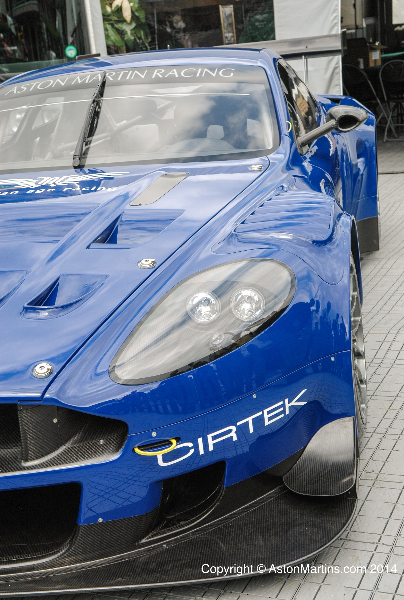
The cars shown here are a 2012 spec works car, displayed at AM Works, Newport Pagnell in 2013 and the prototype GT2, chassis /X2 wearing the 2012 spec GTE bodywork.

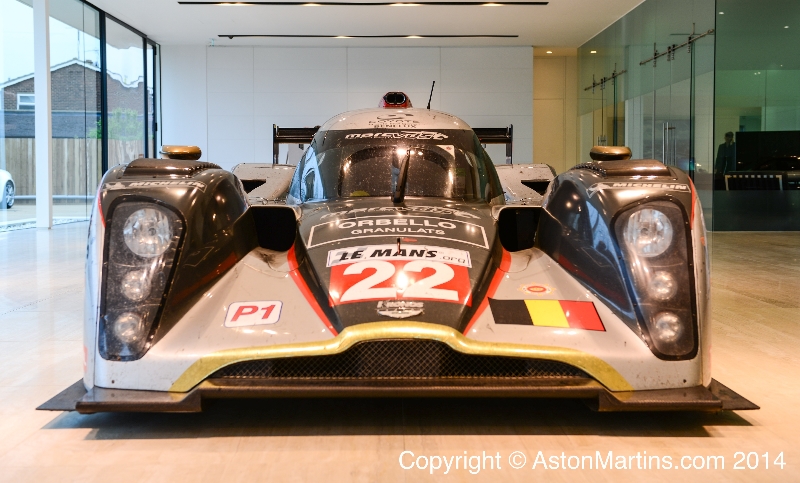
Lola Aston Martin LMP1 DBR1-2 (B09/60 & B10/60)

The Le Mans prototypes are purpose built race cars and have little in common with road cars at all. Most are open cars with spyder coachwork although closed coupes are also allowed; all have token luggage space and at least the provision of a small passenger seat. They are at least as powerful as GT1 cars, often more so, have a lower minimum weight limit, larger brakes, wider wheels and more aerodynamic downforce. From 2006, diesel powered cars had begun to dominate the LMP1 class due to favorable regulations with the cars from both Audi and Peugeot are the ones to beat.

In 2008, the ACO regulations for Le Mans changed to allow for the use of a GT1 engine within a prototype chassis. Thus Aston Martin Racing took advantage of rule change and provided engines for the Charouz Racing Systems LMP1 entry at that years Le Mans 24 Hours and in the Le Mans Series (LMS) races. Since the V12 is based on a production car engine and is a little heavier, taller and longer than custom-built prototype racing engines, larger air restrictors were allowed which gave a useful increase in power of 50 bhp over that produced when fitted to the DBR9.

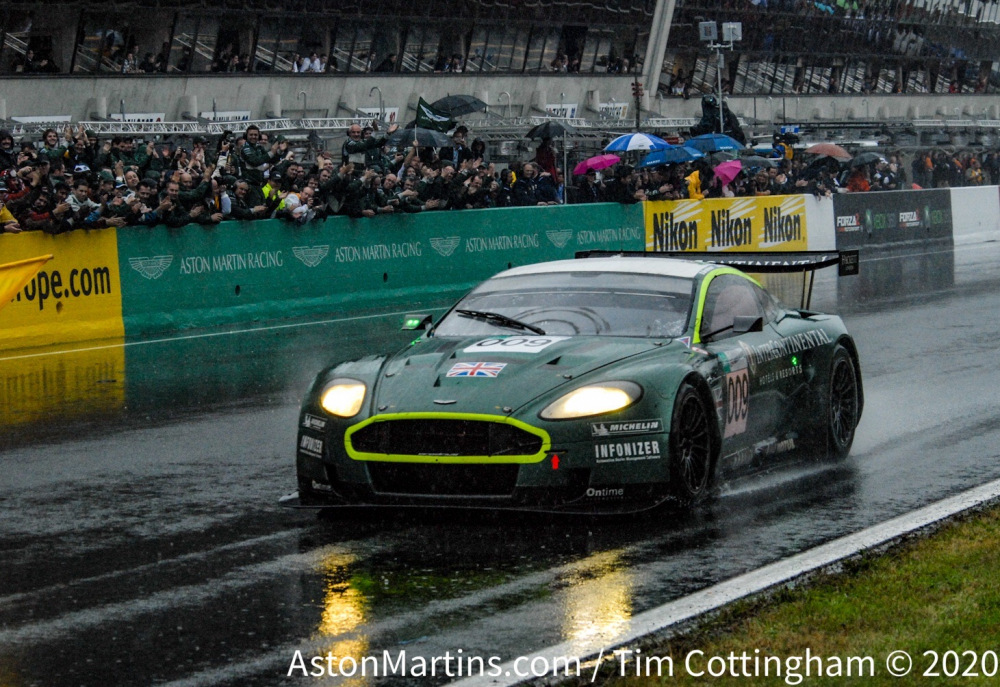
Following initial success in 2008 with the Lola B60/08 and Aston Martin V12, AMR made the decision to move fully into the top flight LMP1 class and challenge for an overall win at Le Mans. The car to do this was the Lola-Aston Martin B09/60 (Aston Martin LMP1 for short), an evolution of the previous B08/60 and known internally as the DBR1-2. It was still built by Lola and co-developed by AMR/Prodrive and also involved the parts suppliers Michelin, Koni and BBS. AMR continued to receive sponsorship from Gulf Oil and the car carried the famous blue and orange livery. As in the 2008 car, the Lola-Aston Martin used the same V12 from the DBR9 GT1 car, but the standard Lola gearbox was replaced by a more compact Xtrac 6-speed with paddle-shift. An unusual feature to the car was the rearward brake cooling, which fed air to the brakes through two fans, and eliminates brake ducts on the body. The styling of the Aston Martin LMP1 was not only the product of the wind tunnel but Director of Design, Marek Reichman gave the car the look of an Aston. Two B09/60s (007 and 009) competed in the full LMS season in including the 24 hour race where they were joined by a third car, 008 entered under the AMR Eastern Europe banner for Charouz Racing Systems. The number 007 car won the Le Mans Series overall, and the number 009 finished fourth. At Le Mans, 008 of Jan Charouz, Tomáš Enge and Stefan Mücke finished fourth behind the factory entries of Peugeot and Audi, as well as being the highest finishing petrol-fuelled car.

In 2010, AMR competed at the 2010 12 Hours of Sebring the first appearance of the LMP1 car in the US finishing the race in 3rd position, 3 laps behind the 2 winning Peugeots. Three cars were again entered in the 2010 24 Hours of Le Mans, 007 and 009 by AMR and 008 by the French team Signature-Plus. Both the 008 and 009 cars suffered from problems retired, leaving only the 007 to finish 6th overall after 365 laps, less than it did in 2009. It was the third highest petrol finisher.

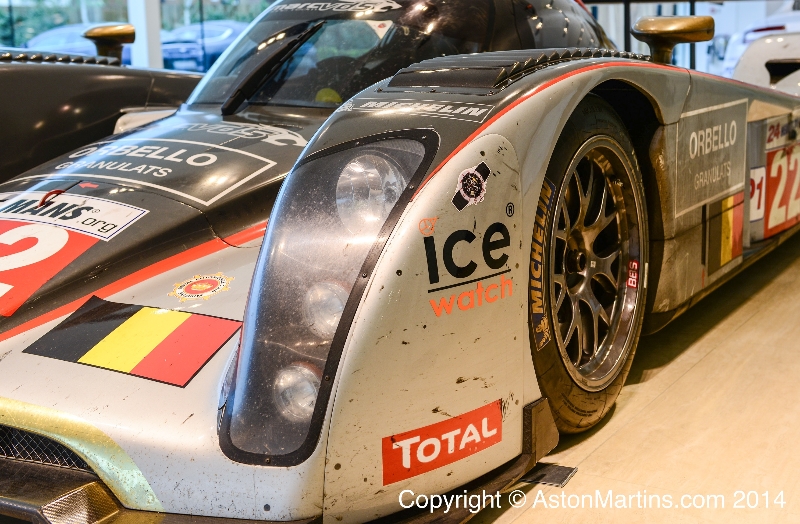
Above is DBR1/2-3, a 2010 car and the only example that was only run by private teams, Signature Plus and Kronos Racing. With seven race outings including twice in the Le Mans 24 hours race, the car finished six races. Perhaps the most outstanding result being 7th overall at Le Mans in 2011 in the hands of the Belgian drivers Vanina Ickx, Maxime Martin and Bas Leinders. Here it is displayed in the Aston Martin Works showroom in 2013, still carrying the dirt of it’s final race.

Just to cause some confusion, the DBR1-2 has two chassis numbers. The AMR number is DBR1-2/* whereas the Lola tub has a different number B09/60-* or B10/60-*. As if to cause more confusion, many of the cars have used two different Lola tubs but retained their AMR chassis number. If we only consider the AMR chassis numbering system, there were a total of four cars built, although these four have utilised quite a few more numbered tubs.

24 Heures du Mans 2007
DBRS9 – Hexis Racing

www.hexisracing.com

DBRS9 – Autosport Designs

Chassis 7 was sold and returned to Europe. It was raced extensively and is now part of a private collection. It was photographed at the 2015 AMOC Autumn Concours at Alnwick Castle.

DBRS9 – BMS Scuderia Italia

http://www.scuderiaitalia.it/GT3

DBR9 – Aston Martin Racing

For the first, and I believe still only outing on UK soil, the cars achieved a remarkable 1st and 2nd finish in the RAC Tourist Trophy Race at Silverstone in May 2005 (DBR9/02 1st, 01 2nd). The 2005 season continued with races at Le Mans, Spa, Road Atlanta and Laguna Seca.

For 2006, AMR concentrated their efforts in the American Le Mans Series (ALMS) and Le Mans since full works teams were not permitted in the FIA GT races. Best results for the team were 4th overall in both Sebring and Houston and 1st/2nd in class (8th and 9th overall) in the Petit Le Mans. Overall in the 2006 championship, Stephanie Sarrazin was 3rd Thomas Enge was 4th in the GT1 class. We also saw the works team running a new chassis, DBR9/3 at Le Mans with race number 007.

For 2007, AMR concentrated their efforts on the 24 hours of Le Mans in the middle weekend in June winning the GT1 class

For 2008 again the only scheduled works entry is for the 24 hours of Le Mans where the cars will be raced in the famous Gulf racing colours

FIA GT, RAC TT, Silverstone, 2007
DBR9 – Capuava Racing (DBR9/102)

The specification for the car was unique and featured an apparently more powerful ‘D spec’ race engine (+75bhp over the 2005 spec engine) with generous 34mm air restrictors. The standard DBR9 gearbox was combined with a pneumatically-operated semi-automatic paddle-shift gear change system with a ‘throttle blipper’ to assist speedy down-changes. As delivered, #102 had a particularly high downforce aerodynamic package with an extended high-downforce front splitter balanced by a full-width high-downforce rear wing.

The car plus a generous spares package has, for most of 2007, been offered for sale by Oakfields in Hampshire for a half a million pounds (plus VAT) and was also entered into the 2007 AM/Bonhams auction in Works Service where it failed to reach it’s reserve. Problem in selling the car has been, that with all these unique features, 102 was in need of much remidial work before if could be eligible to race in either FIA or ACO sanctioned events.

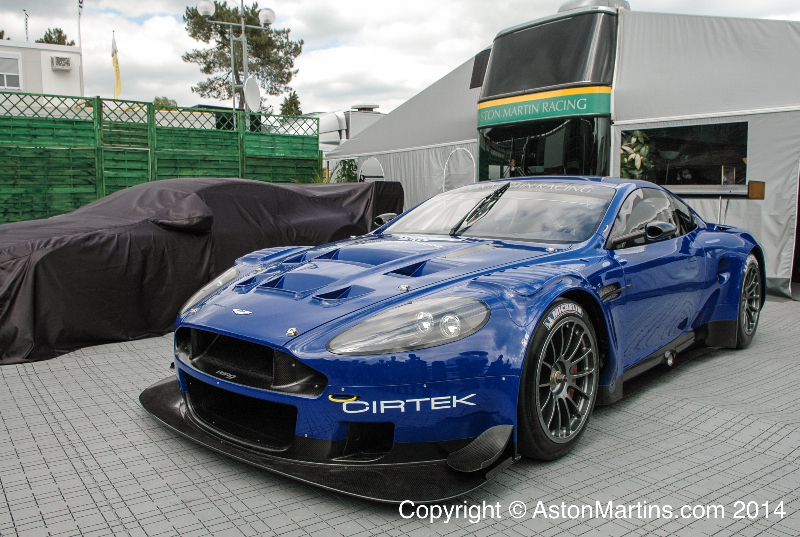
DBR9 – Team Modena (DBR9/101)

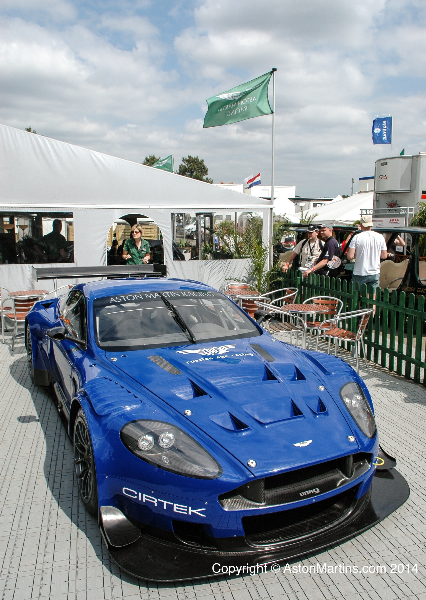
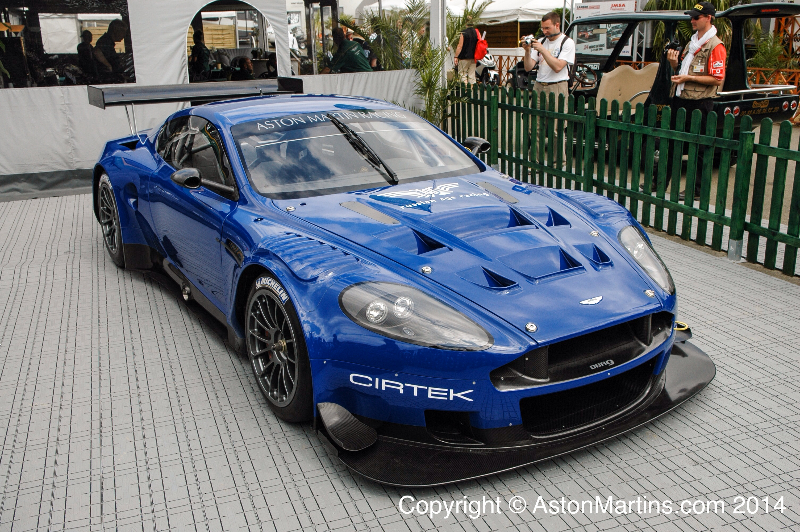
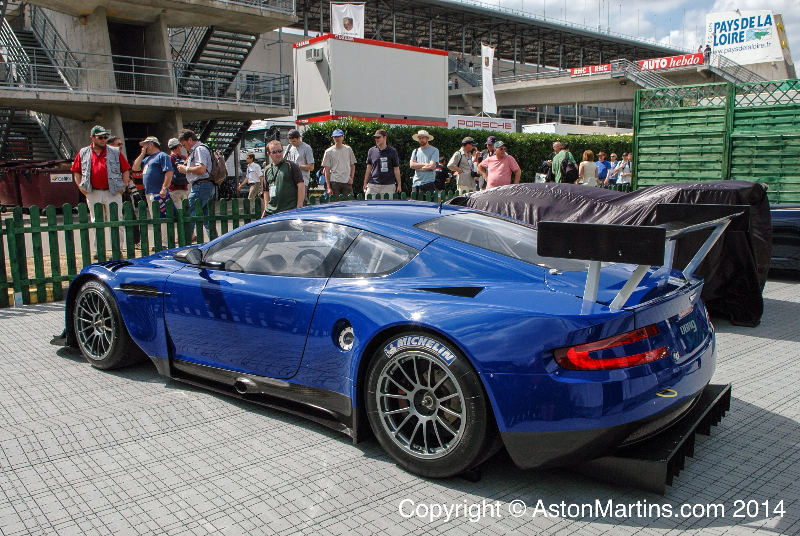
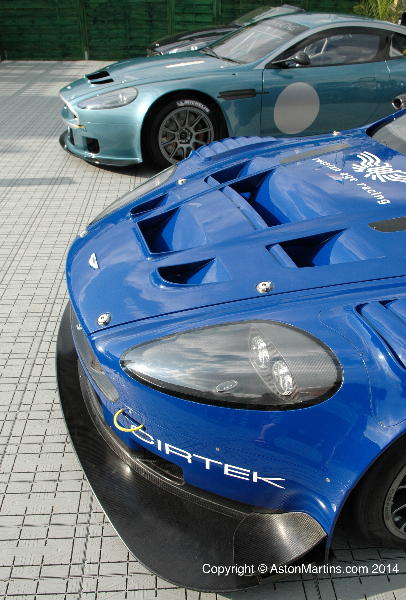
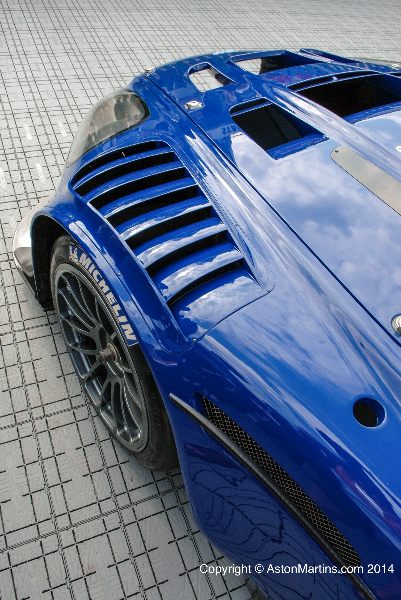
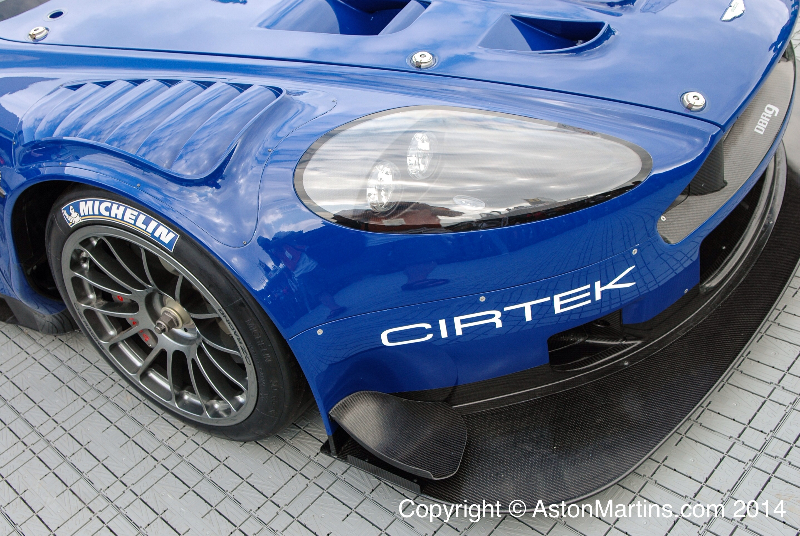
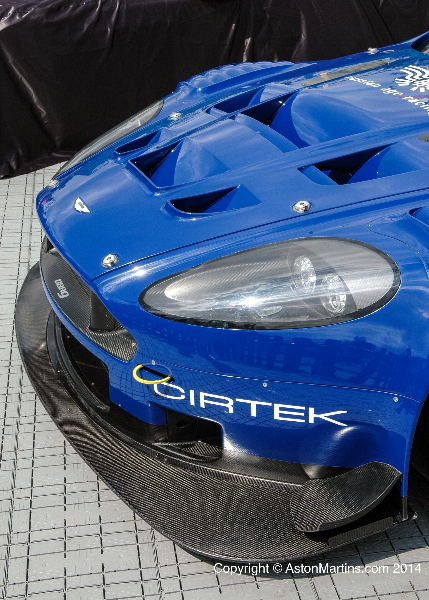
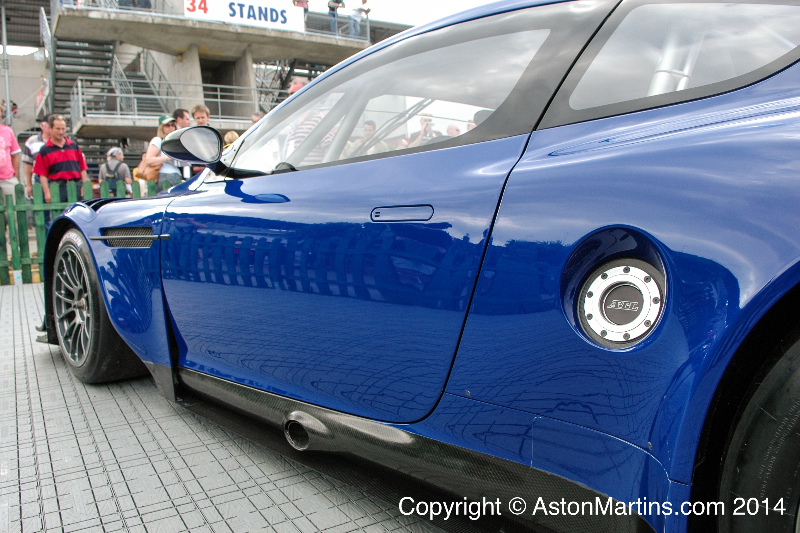
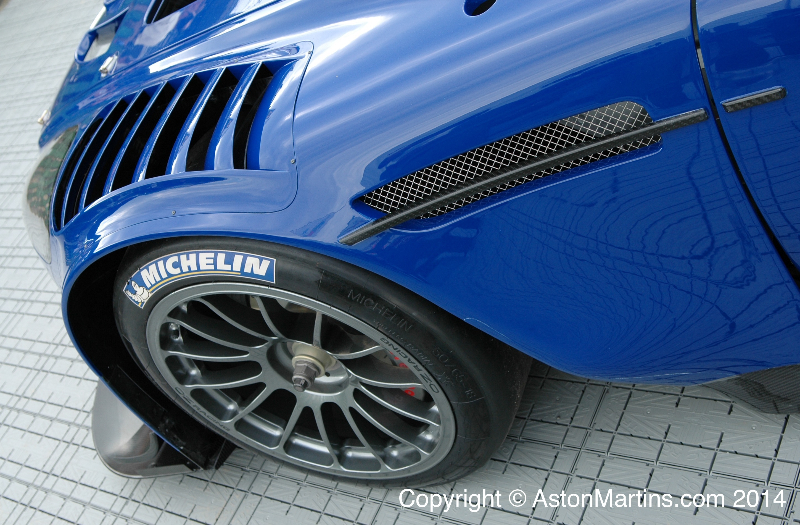
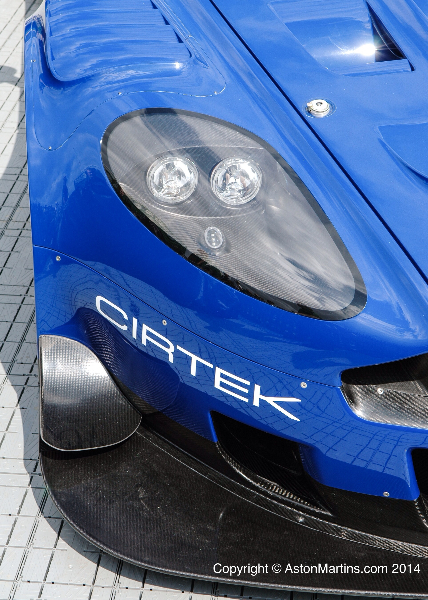
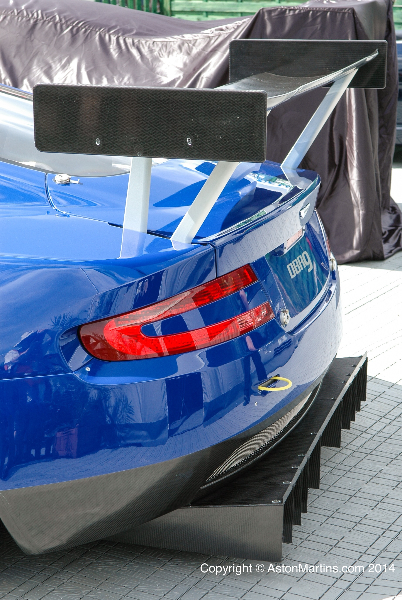
Whilst the car was initially prepared by Cirtek Motorsport in the UK, it carried the logos of ‘Russian Age Racing’ and was finished vivid Royal Blue. Previously the team had competed with the Ferrari 550 Maranello in the FIA GT1 class. First time out in a competitive race was at a rain soaked 1000 km of Silverstone where the car finished 15th overall and 4th in class. In the very next race of the Le Mans Series at the Nurburgring, the car came in first in class and 9th overall. The team then switched to the FIA GT series and at Zhuhai, the DBR9 failed to finish but then achieved 15th in Dubai and then gained a victory in the last race of the season, the 11th round of the FIA GT series in Bahrain in the hands of Christophe Bouchut and Antonio Garcia. In all three races entered in the FIA GT series, the car started from pole position.

For the 2006 season, the car was again entered by Cirtek but carried the Team Modena logos, a company run by Graham Schultz and based in High Wycombe. First outing of the season was at the Silverstone round of the FIA GT championship for the RAC Tourist Trophy where, in the hands of David Brabham, Christophe Bouchut, the car came home 4th.

During the Le Mans 24 hour race in 2006, the team had a brilliant result narrowly missing a podium with 4th in class and 9th overall being driven by David Brabham, Nelson Piquet Jnr. and Antonio Garcia

Following Le Mans, the team switched to running in selected races in the European Le Mans Series with two cars at Spa and Istanbul (chassis number of the second car unknown). Best result was 1st in class and 4th overall at Donington park in the hands of Antonio Garcia and Peter Hardman.

For the 2007 season, as well as Le Mans in June, the team appears to be concentrating on the Le Mans European Series (LMES). In March 2007, 101 also took 3rd in class at the Sebring 12 hours, a round of the American Le Mans Series. For Le Mans 2007, #101 achieved 18th overall and 10th in class.

In the last season that #101 raced, 2008, the car was run in four race in the European Le Mans Series achieving three firsts and a third but missed out on championship victory by a single point. Also the car ran for a remarkable third time in the Le Mans 24 hour race where it finished 8th in class. DBR9/101 is now considered the most successful DBR9 and the most successful privately-owned Aston Martin racing car in the marque’s history. After retirement from the track, it has been returned to 2006 spec and has been displayed the British Motor Heritage Museum in Gaydon, the Aston Martin Heritage Trust and during the Centenary Celebrations of the marque at Kensington Palace during July 2013.

Team Modena

« Newer PostsOlder Posts »