Latest News - 01/09/24

What's New @ AstonMartins.com?

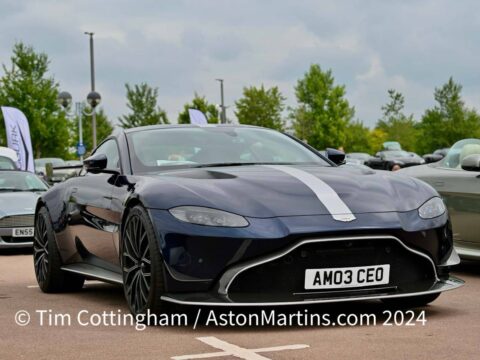
Vantage AM6 CEO by Q

DB7 i6 Coupe

DB7 i6 Coupe

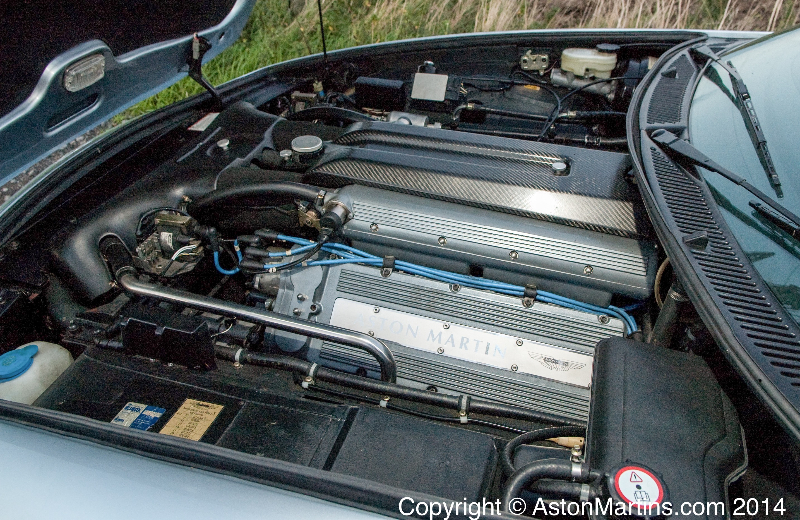
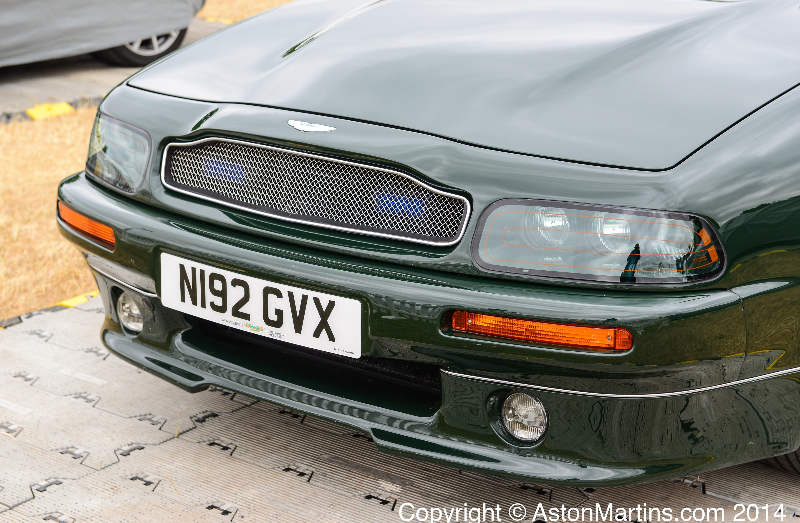
Whilst many small modifications have been made to the DB7 during the five years of production, the main changes were made with the introduction of a revised model in July 1996 (air-bagged – ‘Series 2’ perhaps). The later cars are relatively easily spotted as they have twin air bags plus new switchgear, seats, steering, brakes and softer ‘Volante’‘ suspension. A steel bonnet also replaced the composite original. Yet externally, the car appeared virtually identical to the motor show prototype.

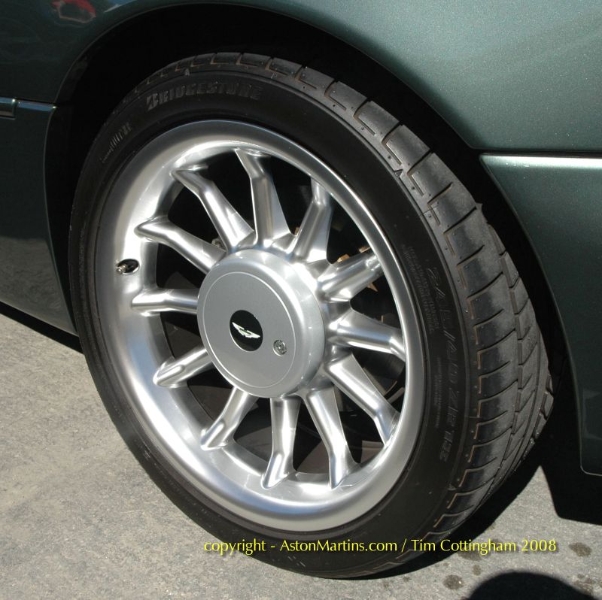
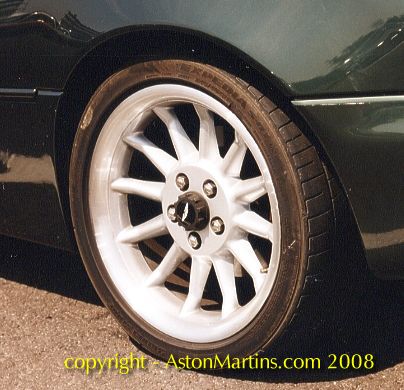
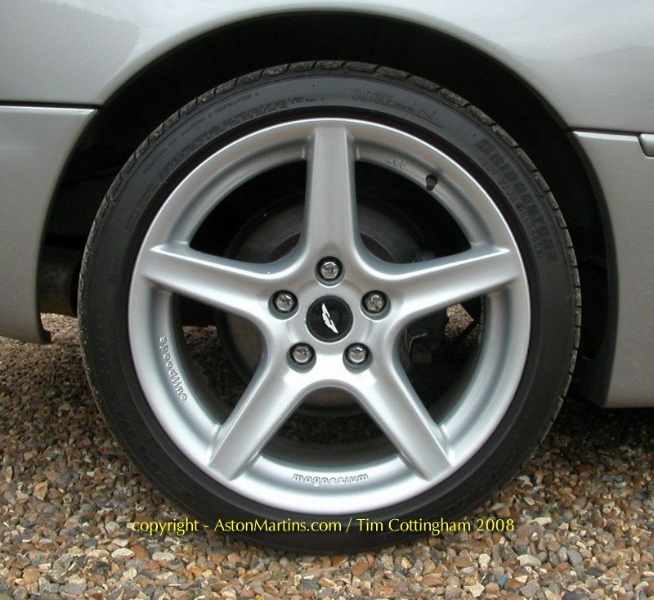
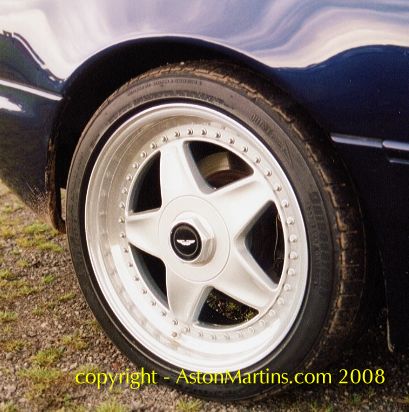
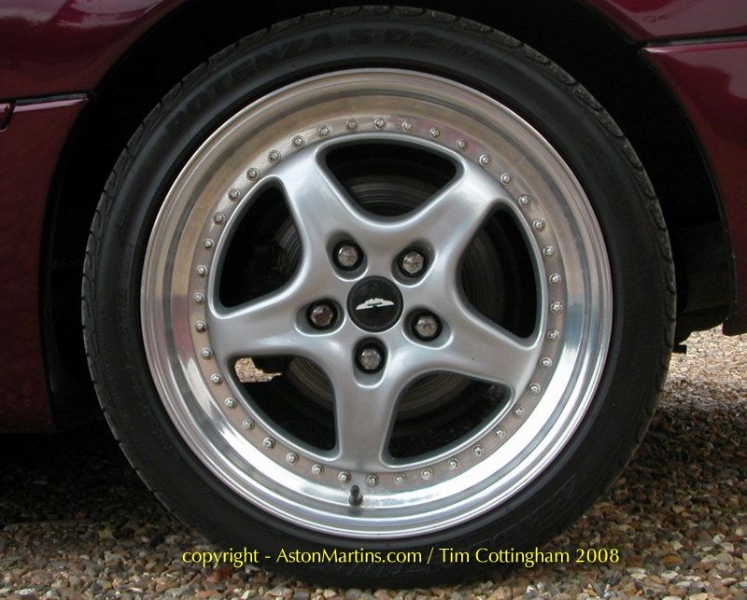
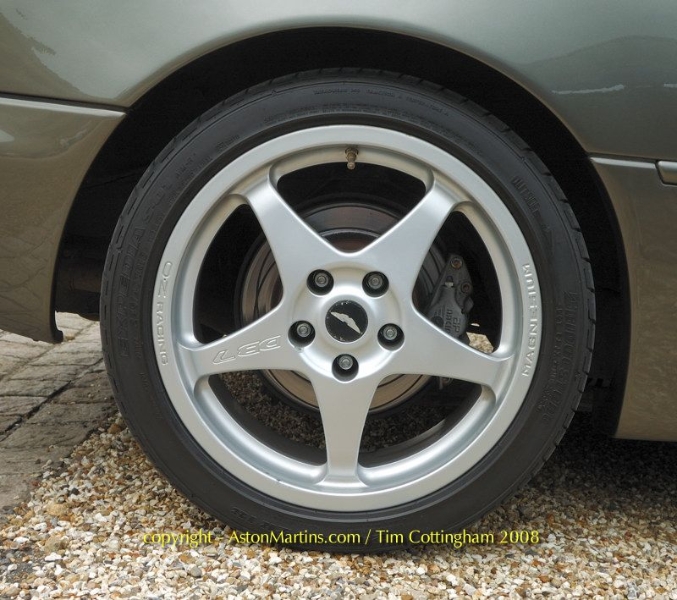
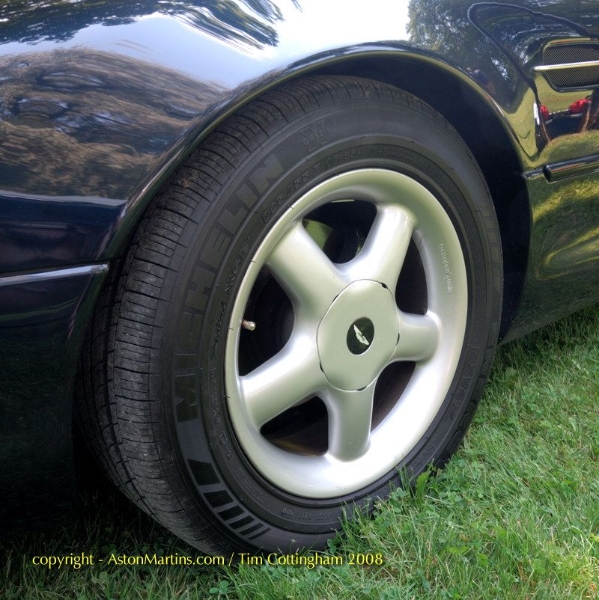
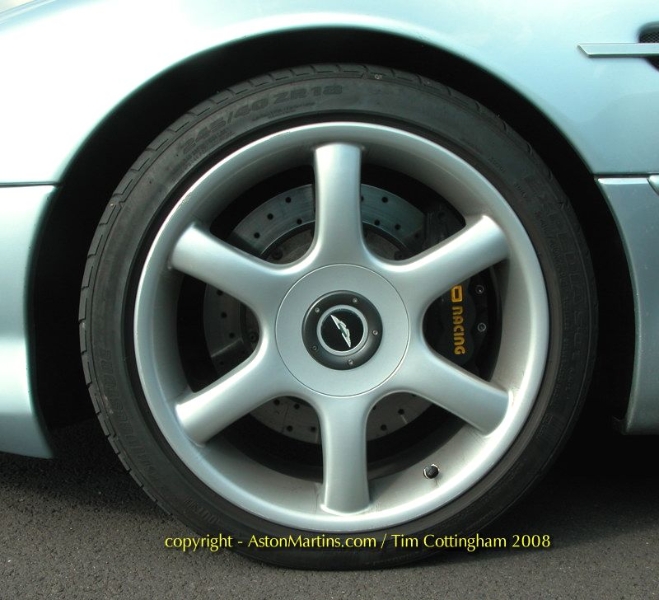
DB7’s are seen with a wide variety of wheel options. Here are a few examples that I have seen including a few very rare styles. The DB7 i6 has the widest variety of factory standard and optional wheel styles ever available on an Aston Martin at the time.
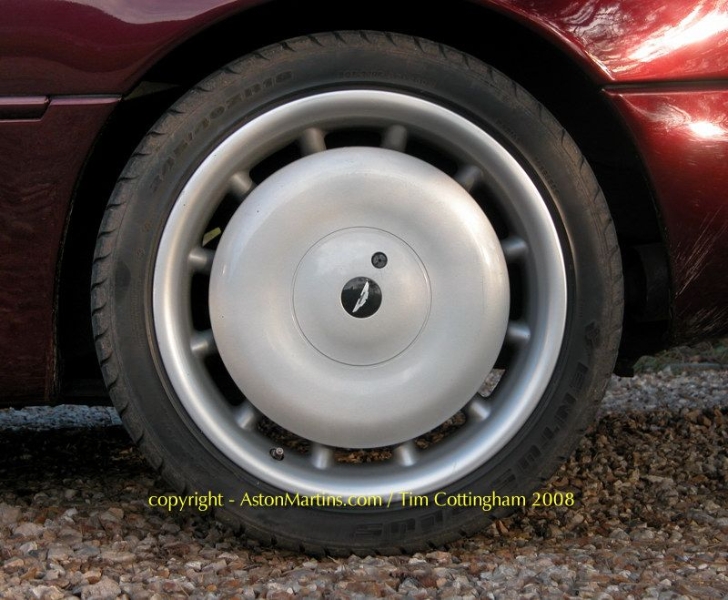
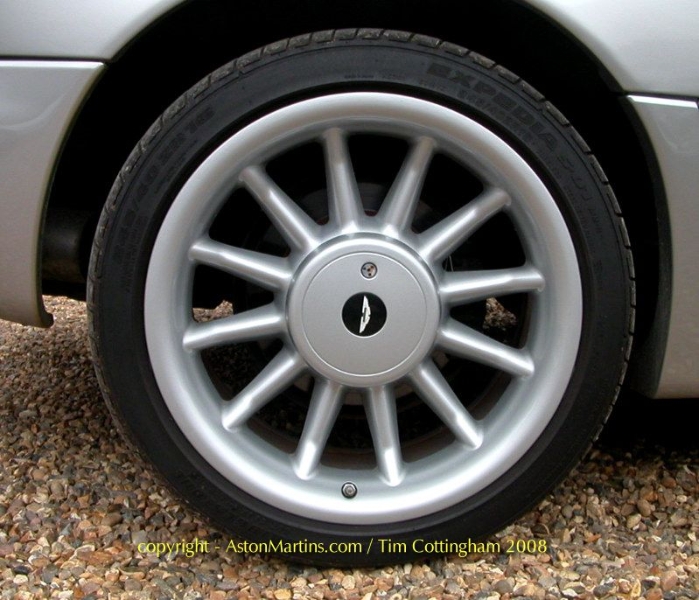
During 1999 the V12 Vantage was introduced at a price of just £92,500, a tiny £7550 premium over the straight six. Whilst the supercharged 6 cylinder car oddly remained in the price list throughout 2000, production had quietly ceased during May 1999 and the DB7 Vantage came on-line. By this time, production of the i6 coupe and Volante combined had reached 2473 cars. Of this number, 1578 were coupes and of these coupes, less than half, 529 had the desirable 5 speed manual transmission. At the time, the i6 production run had exceeded that of any other Aston Martin model although when considered against the numbers built from 2004, the DB7 i6 is in actual fact, quite a rare car.
DB7 i6 GT Compitition Prototype

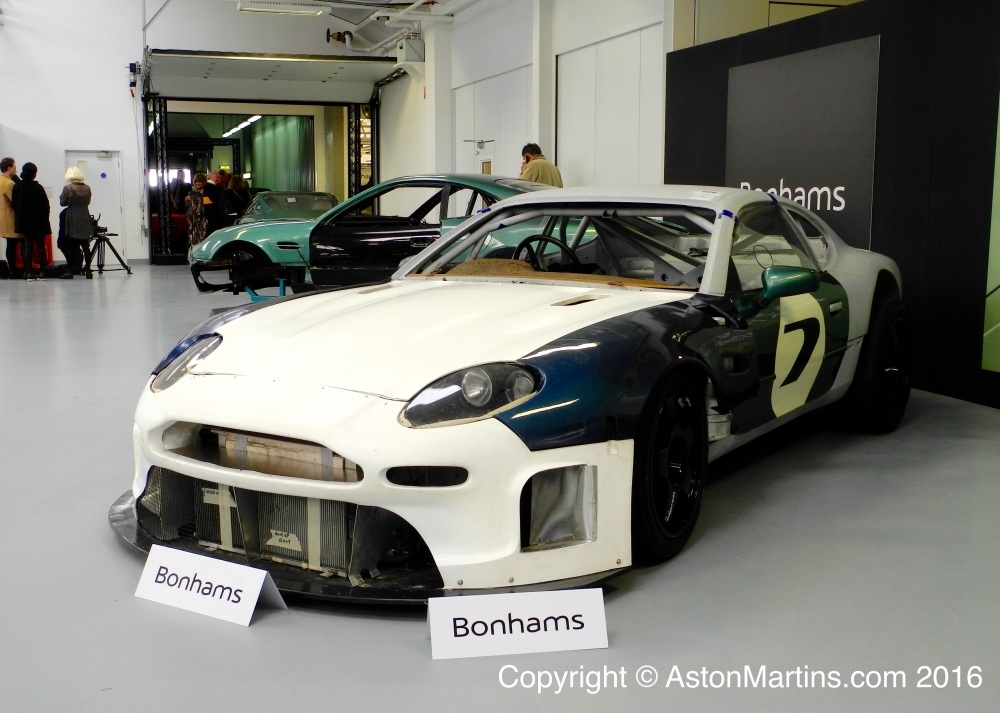
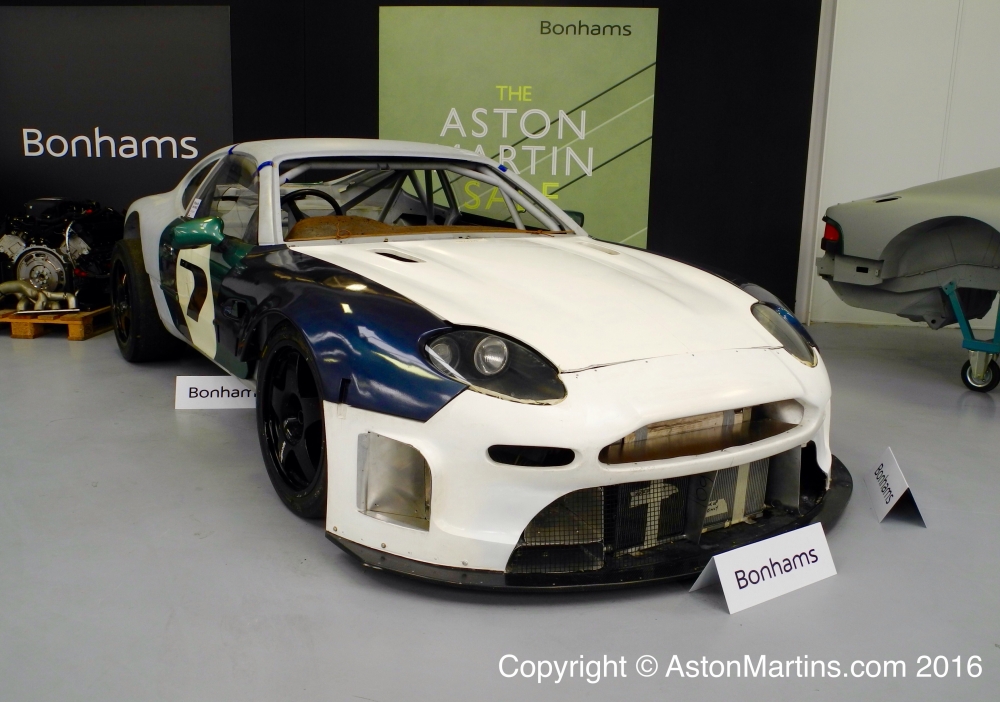
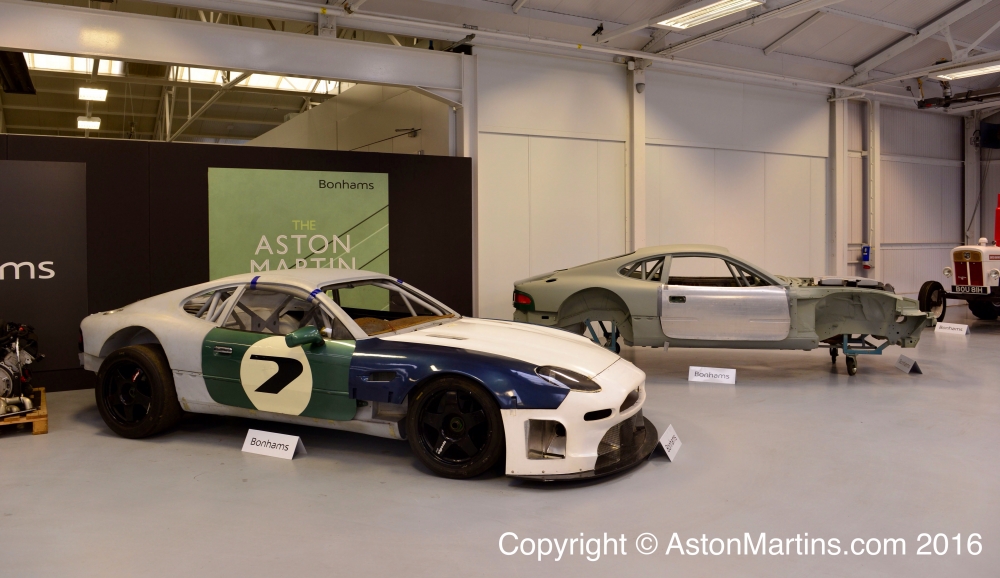
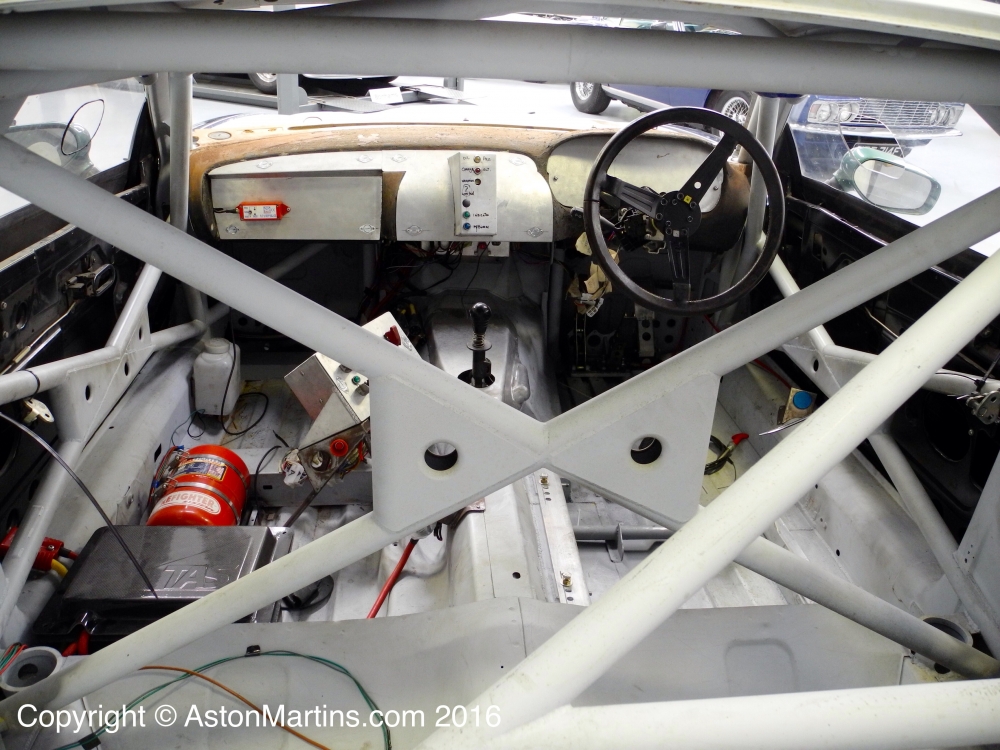
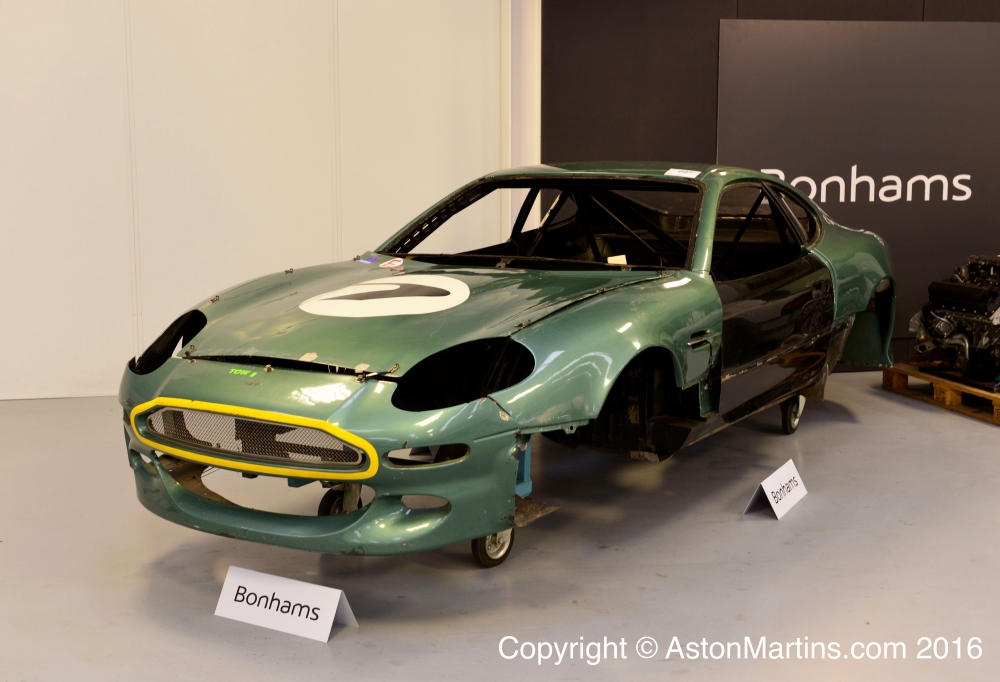
Following the Prodrive built car, the AML Customer Service Division (now Works Service) took one to the early press demonstrator DB7’s, chassis 100006, and fully rebuilt the car with the following specification

  • Safety devices roll cage with removable side bars
  • Two full race Reccaro competition seats, in black hide, to match black interior in Alcantara and quilted vinyl
  • New aluminium bonnet, boot lid and front wings to replace the composite originals
  • Safety cut off switch in drivers side front wing
  • New style door mirrors mounted on cheator panels
  • Perspex side windows
  • Fuel cell
  • TWR enhanced 3.2 litre, 6 cylinder engine
  • Competition clutch and shot-peened 5 speed manual transmission
  • Prodrive designed uprated front and rear suspension, plus oil-cooled rear axle. Penske gas shock absorbers, adjustable from the cockpit
  • Special competition brakes with balance adjustable from the cockpit
  • Special tuned exhaust with centre catalyst

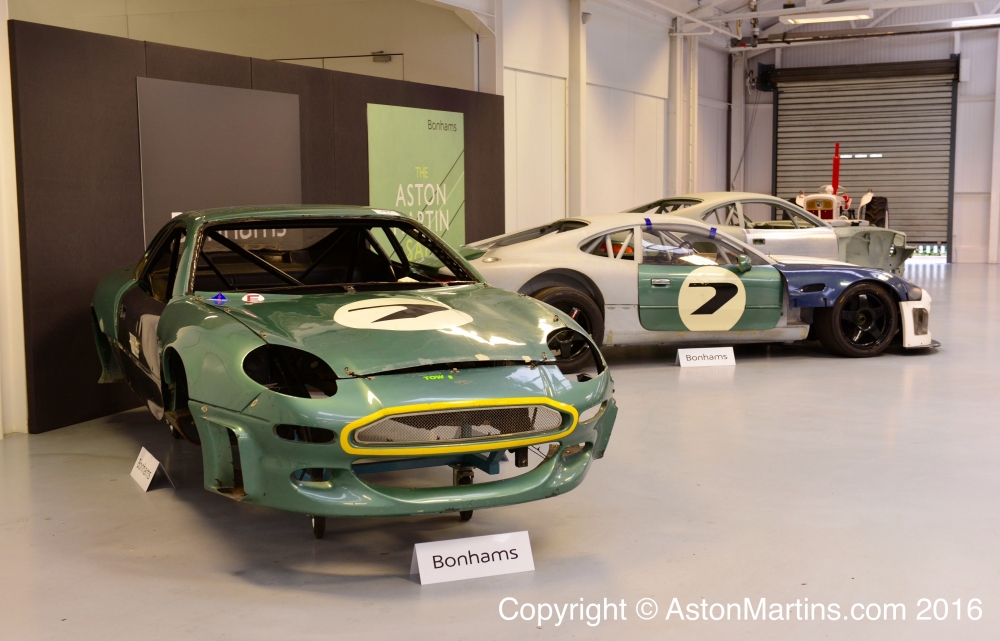
The car was then also painted in Almond Green metallic with white roundels and a neat contrasting yellow band around the grille, reminiscent of the 1950’s DB3S’s and DBR2. After extensive testing, the cars were demonstrated to potential customers, but sadly the project was not proceeded with and and the race series abandoned too. Both cars were subsequently sold off by AML in 1996. Despite the ending of the project, the GT was successful as a mobile test bed to prove the benefits of it’s race components and systems and to enhance the DB7 road car, in particular, the factory fitted Driving Dynamics package.

The AML built car, 100006, appeared in the 2004 AM/Bonhams auction where it was sold to a marque enthusiast. The prototype car, 100001 is also now in private ownership.

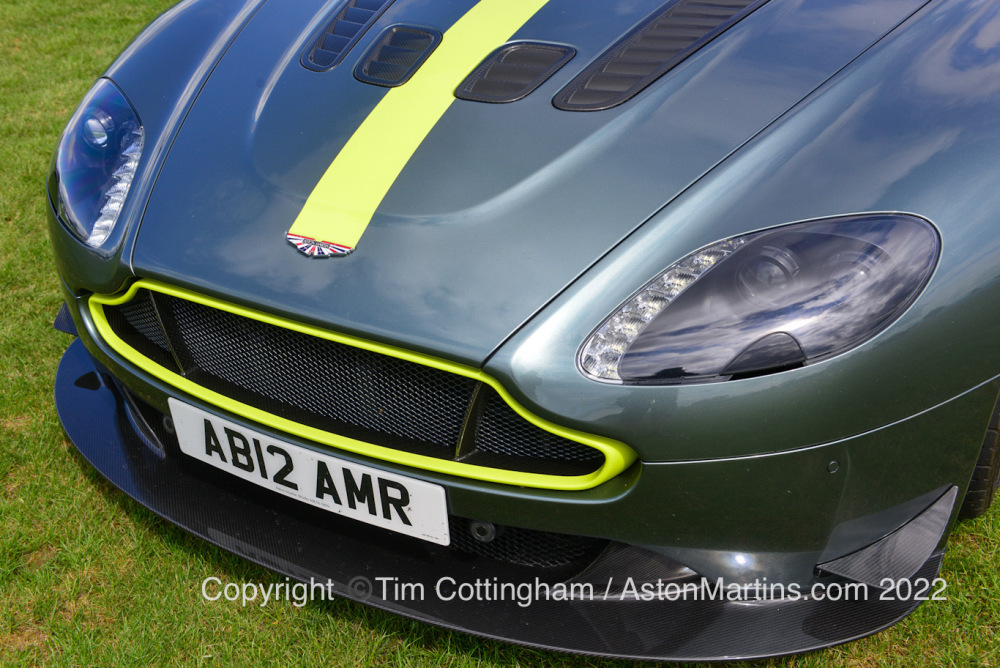
V12 Vantage AMR

V12 Vantage AMR

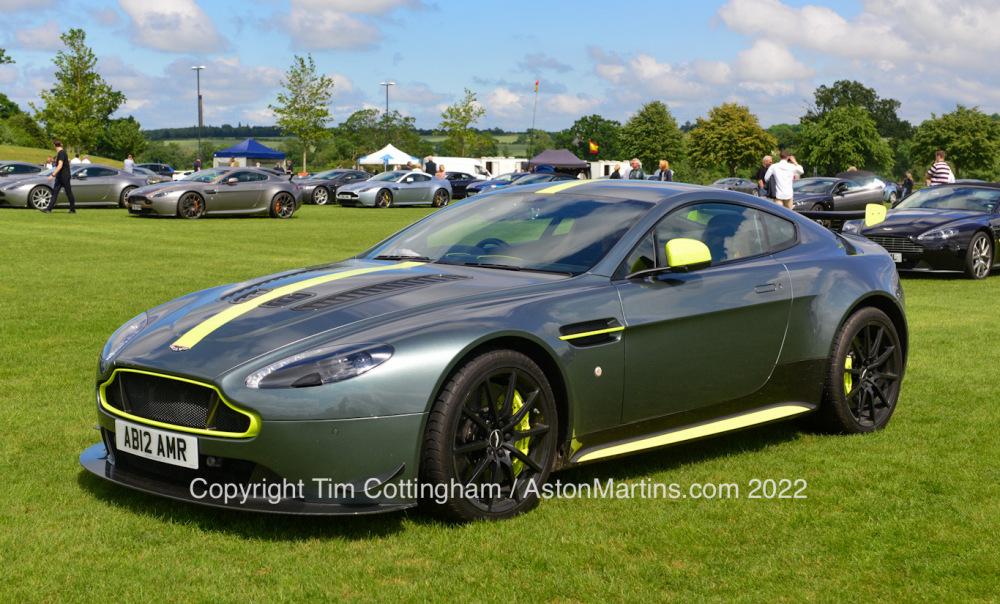
The AMR sub-brand was introduced with two distinct tiers. Series production limited edition models such as the V8 & V12 Vantage AMR sit at its entry point, while extreme and extensively modified AMR Pro models created by Q by Aston Martin Advanced Operations sit at the pinnacle of the range, including the exclusive Vantage AMR Pro announced at the 2017 Geneva Motor Show.

The V12 engined AMR was fitted as standard with the Prodrive designed Sportshift III automated sequential manual paddle-shift transmissions but the seven speed manual gearbox was also available as an option.

The Vantage AMR was available in five distinctive AMR exterior schemes: the AMR ‘Halo Pack’ was taken from the Aston Martin Racing’s 2016 World Endurance Championship-winning #95 Vantage GTE, with a combination of Stirling Green paint and vivid Lime Green print to back stripe and other accents to dramatic effect. Also available was Stratus White with an Orange graphic; Ultramarine Black with Blue graphic; Zaffre Blue with Red graphic and Scintilla Silver with Grey graphic. As a finishing touch, a special Union Jack-enameled AML wings badge, previously featured on last year’s GTE racer, was available as a no-cost option.

Each of the exterior schemes is matched to a different interior scheme with a combination of leather and Alcantara for the coupe to compliment the exterior colours. In keeping with its exterior the Halo Pack features boldly contrasting colours, including Lime Green welts and accents.

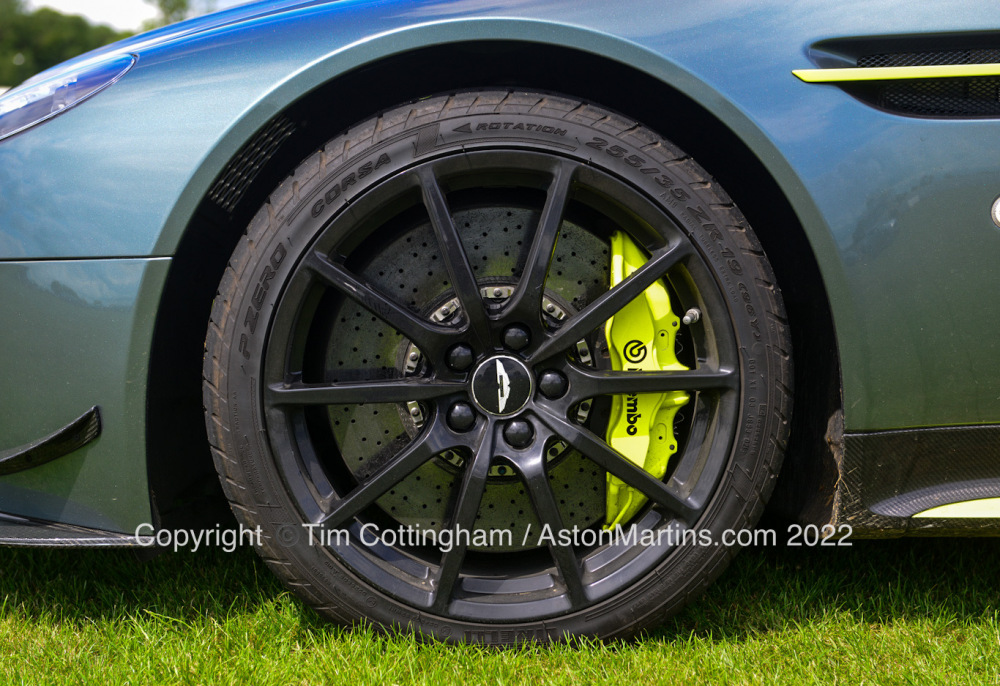
Lightweight carbon fibre seats were standard fit on the AMR and the car had many other carbon fibre features, including a lightweight front grille, side strakes, lamp infills and mirror caps on the outside, instrument surround, door tops and door grabs on the inside. The V8 Vantage AMR came with 10-spoke alloy wheels with a choice of three different finishes.

Alongside the introduction of the AMR cars, AML also introduced a range of AMR accessories, many of which can be also fitted to earlier cars. Suitable for the V12 Vantage range were the Aero-kit, lightweight mesh grille, titanium exhaust, and a multispoke AMR wheel.

Whereas the V8 AMR was mechanically unchanged, the V12 Vantage AMR was fitted with the final spec V12 with 595 bhp, an increase of 30 bhp over the V12 Vantage S. The V12 engine Performance Pack could also be retrofitted to the earlier V12 Vantage S

Total production of the V12 Vantage AMR coupe and Roadster began in the final quarter of 2017 and was limited to just 100 examples. The AMR was only available in the UK, Europe, Asia Pacific and China but not the USA. 

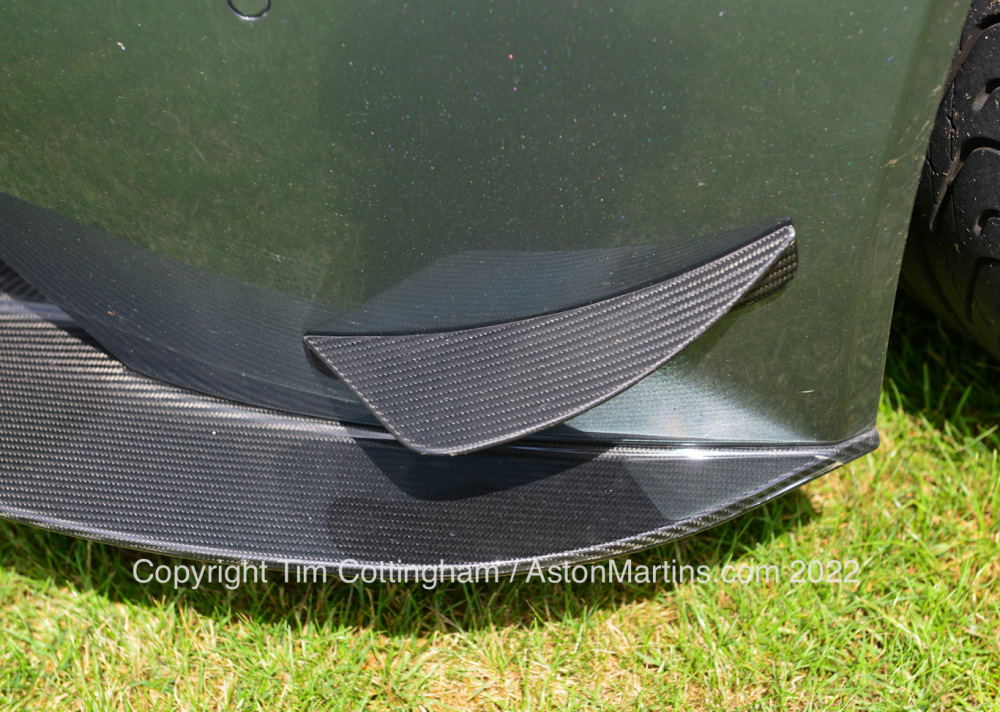
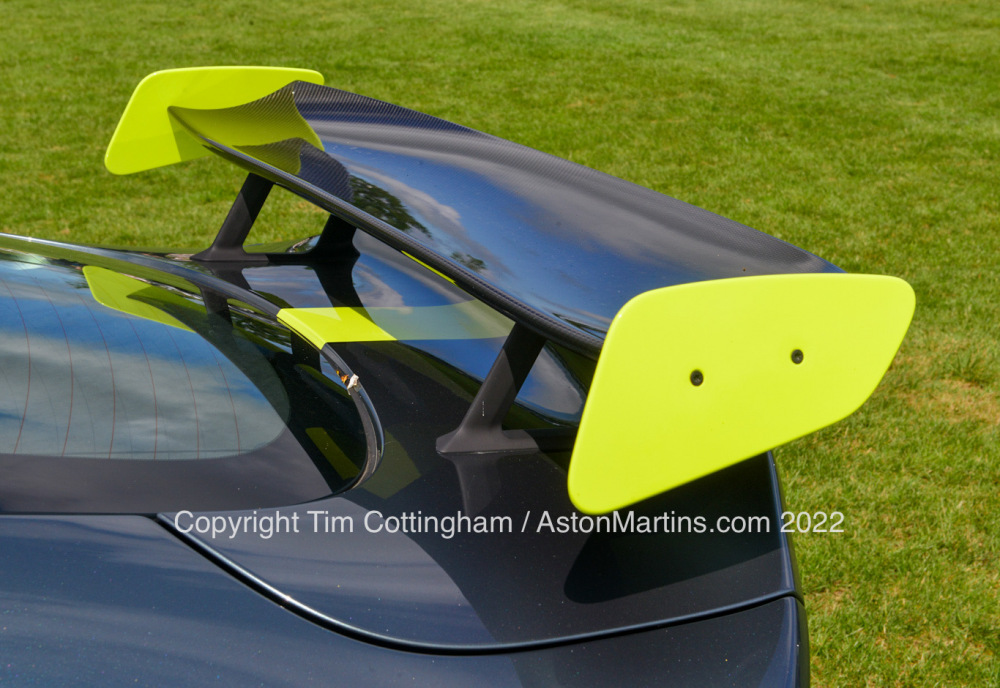
    AMR Aero-kit

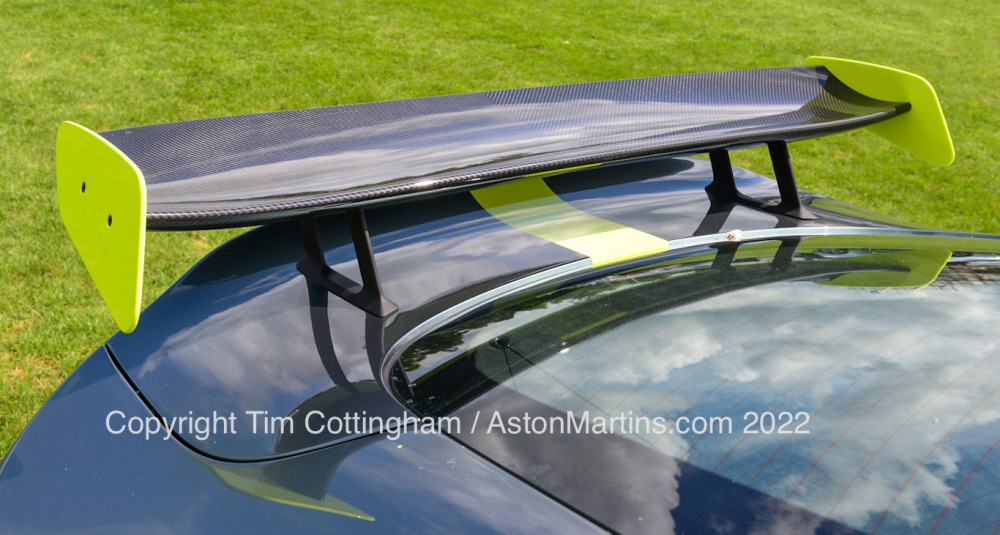
    Above is one of the V12 Vantage AMR with the optional AMR Aero-kit This was available from 2017 for all V8 and V12 Vantage models post 2012.25MY and new AMR cars. The full kit was made up a series of carbon fibre parts such as larger front splitter, side sills, dive planes and a dramatic rear spoiler.

V12 Vantage AMR Roadster
V8 Volante Long Wheelbase (LWB)

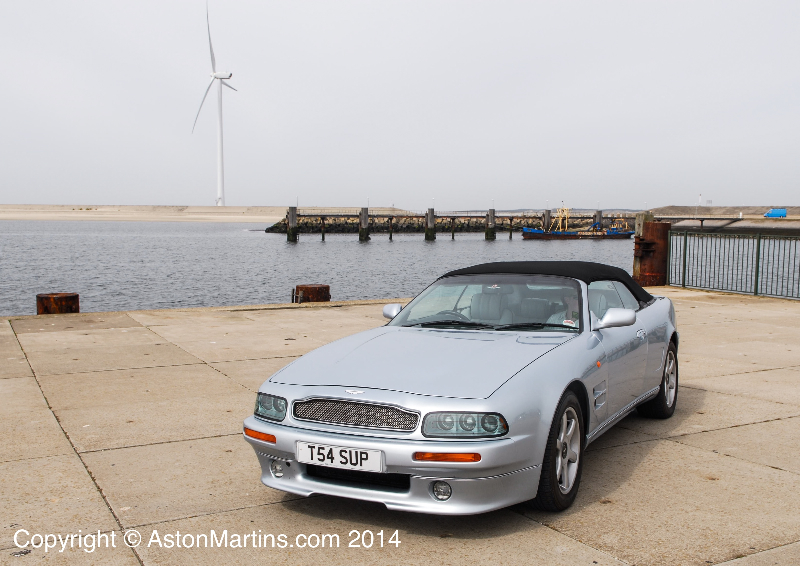
Although a heavy car, tipping the scales at 2050kg empty, the car is capable of a maximum speed in excess of 150mph, with 60mph coming from rest in 6.5 seconds. Power is provided by a 354 bhp V8 engine, still displacing 5340cc and virtually identical to that used in the V8 Coupe. It was only ever available with automatic transmission, a four speed version of the classic Chrysler Torqueflite with a lock-up torque converter and switchable sport mode.

The elegant LWB Volante is far roomier for rear seat passengers with an additional 200mm of leg room over the Virage Volante 2+2. This makes it an ideal Aston for families as average sized people can be very comfortable in the back. The extra leg room and additional luggage capacity has been achieved by increasing the wheelbase by 200mm. The interior of this most elegant of coachbuilt Astons, as ever, is a symphony of Connolly leather, walnut veneer, wall to wall Wilton and cold chrome details. Thinking about it, the long chassis is the last Aston ever to feature masses of polished walnut veneer. The shape of the instrument panel became more rounded over the centre console; it was similar to the in overall shape, but with the incidental dials arraigned in a 2 + 2 fashion. Also two DIN slots were provided for a tape player linked to a CD multi-changer hidden in the dashboard and also an optional sat-nav system with flip out screen.

The double lined roof was of course fully electric and operated completely automatically with no levers or catches to unfasten. When folded, it stands quite proud of the boot lid and can be covered by a leather tonneau cover.

Below is the LWB V8 Volante that has been owned from new by HRH, Prince Andrew, Duke of York. It was one of two Royal Aston Martins shown at the 2013 Centenary Celebration ay Kensington Palace.

A long chassis version of the Volante had been considered at the factory as far back as 1992. On a visit to the Aston Martin Heritage Trust archive, I discovered a drawing of a long chassis Virage Volante that was considered but never produced.

The UK list price without extras but including VAT was a huge £169,500 without extras. With such a high price it’s not surprising that a mere 63 examples were constructed, most were sold outside of the UK even though the car was never marketed in North America. With more passenger space and a substantial boot, the LWB has a reputation as a genuinely practical continental touring car.

Cars such as the long chassis Volante will never be built again by Aston Martin. A very rare and desirable car which is gaining in popularity by collectors and enthusiasts.

DB7 i6 Volante prototype

The Aston Martin register believes that 6 complete Fully Engineered Vehicles (FEV) Volantes were built, but for some reason, not all were destroyed and they were retained within Tom Walkinshaw Racing (TWR) for internal use.  TWR of course were responsible for engineering both the coupe and Volante versions of the DB7 i6.

The images on this page show the final prototype Volante, FEV06 and were provided by the owner. The car, originally owned by TWR was sold off in 2001, perhaps in an attempt to raise cash, before TWR eventually went bankrupt in 2002. It is of course highly unusual for a prototype car to have survived and enter private ownership as they are almost always destroyed after they have fulfilled their useful lives. Also I have it on good authority that the other earlier Volante FEV’s were sold off by TWR and these are easily distinguished by their pre-air bagged steering wheels and ‘tombstone’ seat backs; as yet these have not been tracked down.

The car featured here is now in a wonderful collection of unusual Aston Martins in the Netherlands that I hope to visit sometime soon.

V12 Vantage AMR Roadster ‘Good things’ edition
DB7 i6 ex Prototype to Race Spec

One such early factory development vehicle was a unique sight at AMOC race meetings during the early 2000’s; raced by Ronnie Farmer and modified and prepared by Aston Engineering of Derby. Whilst it runs in the mildly modified class, the aggressive front aerofoil is anything but mild. In addition to the factory developed DB7 GT, this is the only other DB7 that I have ever seen actively on the race track.

This impressive car secured it’s first outright victory at the AMOC Mallory Park meeting during 2001.

A second car has been owned by Geoffrey Marsh, well known in AMOC Racing circles, the car has never been fully developed due to owning a similar DB7 V12 race car. It has a much strengthened RML bodyshell, roll cage, improved suspension and a 6 cylinder engine developed by Aston Engineering of Derby. The car was offered with an un-numbered i6 body shell at the 2015 Bonhams Aston Matin Works auction.


DB7 i6 Volante

DB7 i6 Volante

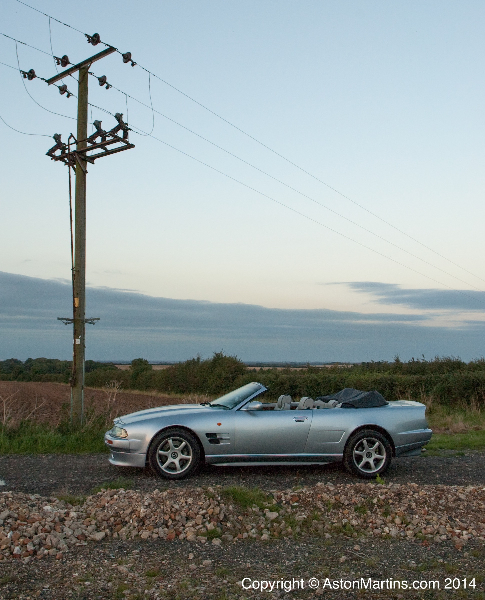
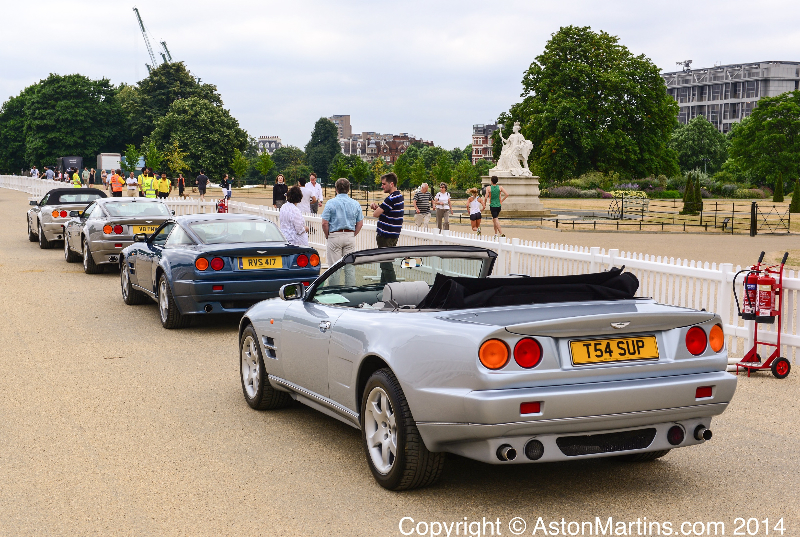
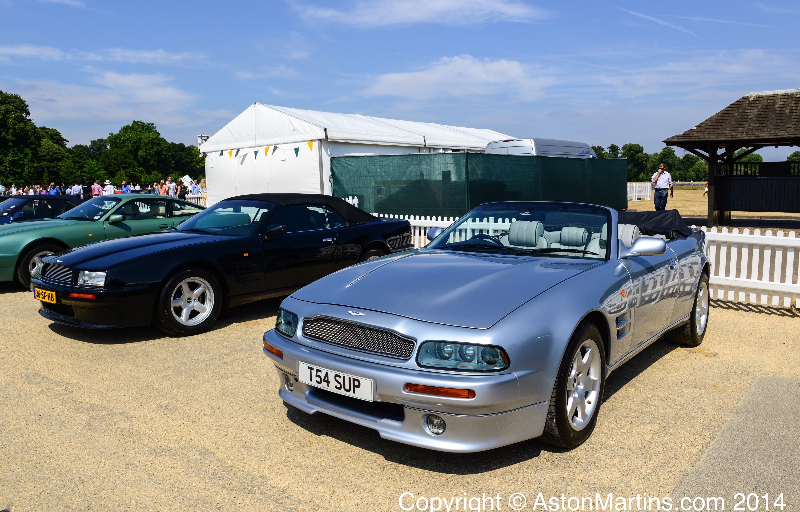
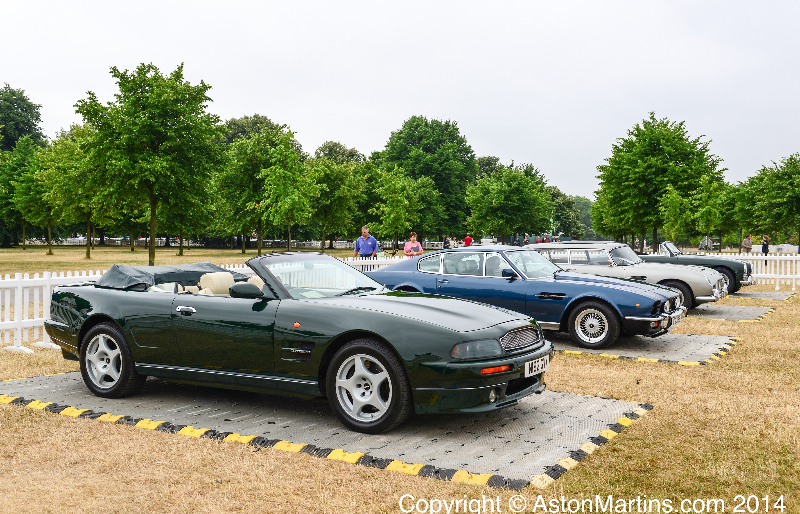
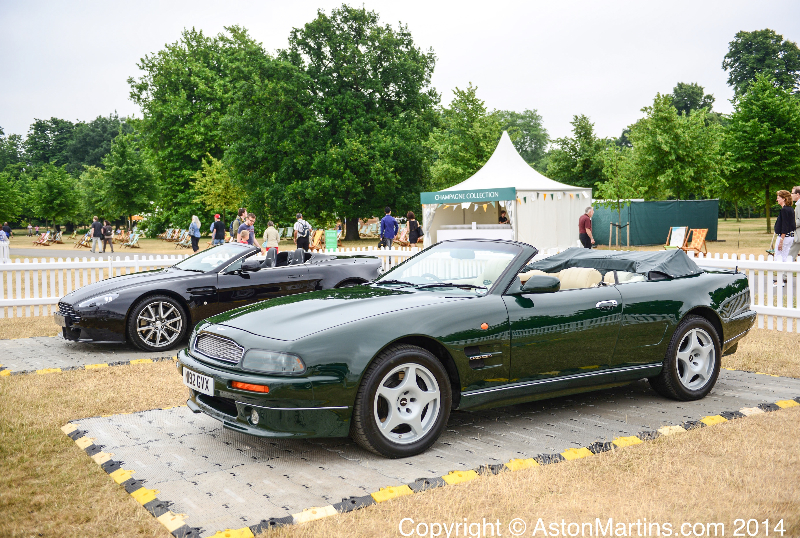
Designed by Ian Callum at the same time as he designed the coupe, the Volante looks elegant both hood up or down, much like the earlier Aston Martin drop head cars. Underneath the sleek and perfectly proportioned thoroughbred, lies additional strengthening to offset the lack of the roof, especially around the windscreen, to provide a degree of rollover protection. Another invisible change to the Volante was softer suspension settings, more suited to to the touring image but also to compensate for the reduction in rigidity over the coupe. Less well known was that the series 2 coupe also adopted the softer Volante suspension. Thus, to some driving enthusiasts, the later non-air bagged coupes are thought to be the most desirable of the six cylinder DB7’s.

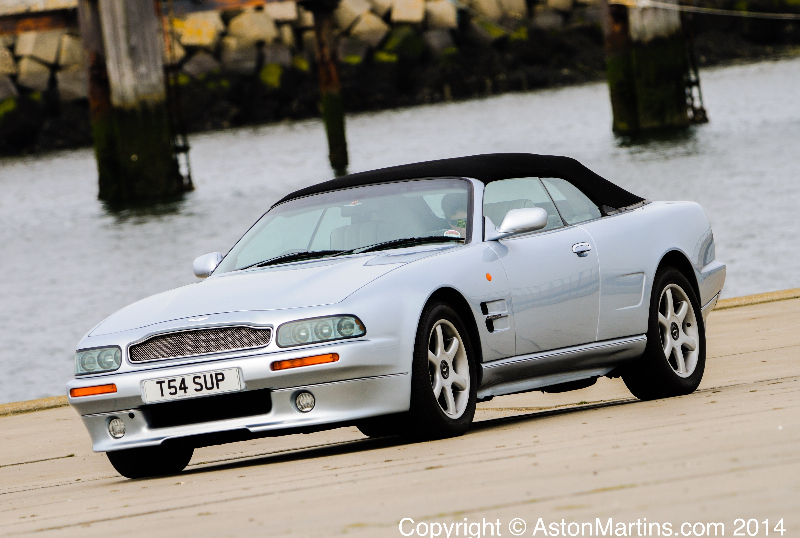
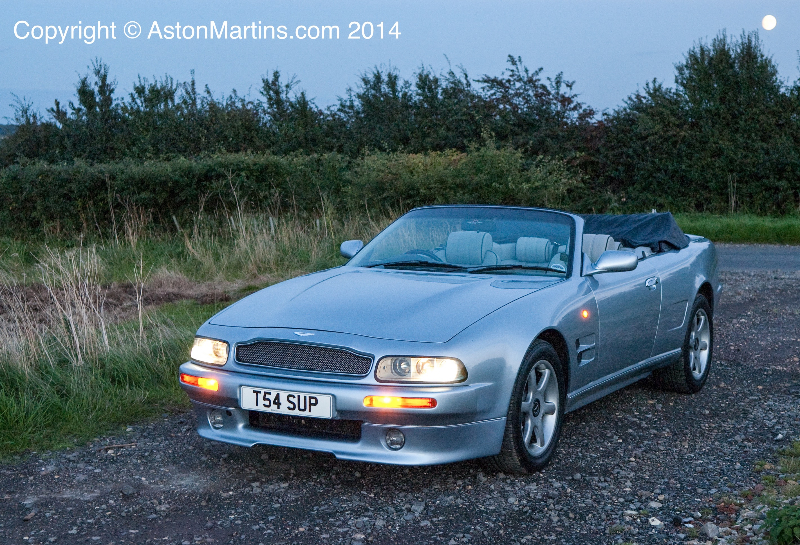
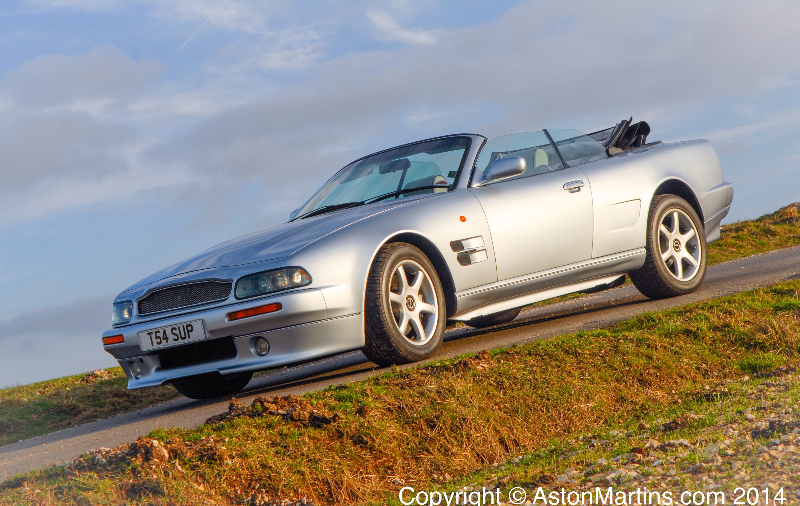
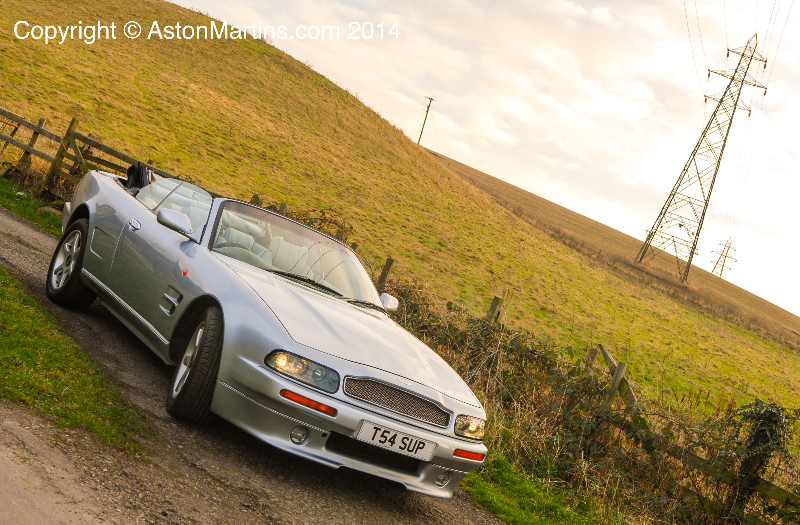
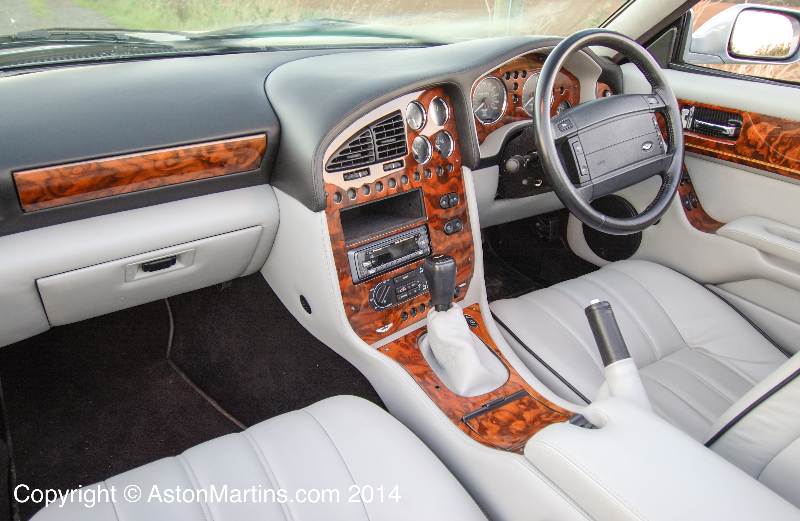
As one might expect, the roof is fully tailored and electrically operated but sadly it sits rather proud of the boot. The typically English ambience is achieved by sumptuous Connolly hide, restrained amounts of burr walnut veneer (oak, elm and maple were also available) and deep pile Wilton carpets. This interior shot below illustrates the airbag equipped steering wheel fitted to all 1996MY and after Coupes and Volantes. Total DB7 i6 Volante production only reached 879 before the model was replaced by the DB7 V12 Vantage Volante.

DB7 i6 GTS Coupe

DB7 i6 GTS Coupe

  • Air louvers set into twin ‘Zagato style’ bonnet bulges
  • Window quarters and scuttle panel painted body colour
  • Black ‘Le Mans’ style mesh grille with bright surround
  • Speedline Aliseo split rim wheels with body coloured centres (also Mistral available)
  • Yellow nose cone and fine coachline
  • Sports exhaust system
  • White instrument dials with GTS logo and a wood rimmed steering wheel (half wood on airbag wheels)
  • Yellow edged overmats
  • Additional wood veneers around the instruments plus a Garrard Swiss analogue clock

The GTS was superseded by the revised GTS II in 1998. By 2016, over 50 DB7’s, both i6 and V12 have been modified to either GTS or GTS II spec according to the Chiltern Aston website.

Interestingly, the colour combination often seen in GTS cars was replicated on the works team DBR9, the N430 and has now become the signature colour scheme for the AMR cars.

« Newer PostsOlder Posts »