Latest News - 01/09/24

What's New @ AstonMartins.com?

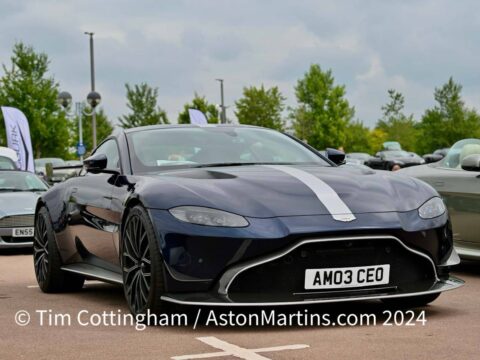
Vantage AM6 CEO by Q

Limited Edition Coupe

All the examples that I have seen also have the 6.3 air-dam fitted. The interior was trimmed with saddle brown Connolly hide matched to beige and green leather for the roof lining and interior door trims. Instead of burr walnut, there was extensive use of burr elm on the instrument and and fascia panels. A brass plate, affixed to the fascia panel contained the chassis number and name of the first owner.

The engine was based on the standard 48 valve V8 Virage unit but with a more efficient design of the 32 valve cylinder heads (sometimes described as ‘Vantage cylinder heads’) and new electronic engine management system, designed to give an extra 20bhp (a total of 349bhp) together with a reduction in emissions. The Limited Edition Coupe was available with either a 5 speed manual or 4 speed automatic transmission at a cost of £137,500. In all, a total of nine cars were built, all with consecutive M*AML number plates. Although the official name Limited Edition Coupe did not use the Virage moniker or have Virage badging, it’s easier to describe these cars as Virage Limited Edition Coupe.

One particular Limited Edition Coupe was upgraded to RSW 7 litre turbo spec with a reputed 720 bhp.

V12 Vantage S Red Bull Edition

Taking inspiration from Red Bull Racing’s distinctive race livery, the special edition is finished in  deep Mariana Blue paint finish as standard although optionally, the car can also be finished in gloss Tungsten Silver or satin Mariana Blue too.

Also fitted as standard are a carbon fibre splitter, diffuser, grille and side strakes. Red infills on the carbon fibre grille and yellow calipers complete the iconic Red Bull colour scheme.

Inside are further sporting features, including Red Bull Racing headrest embroidery, carbon fibre trim inlays, and a colour-coded leather steering wheel complete with 12 o’clock accent stripe. Customers may opt for their sill and final inspection plaques to be signed by either of the two 2017 Red Bull team drivers, Daniel Ricciardo or Max Verstappen.

Deliveries of the Bed Bull Racing Vantage began during the second quarter of 2017.

V8 Coupe

V8 Coupe

With the absence of the large width Vantage wheel aches, the V8 Coupe is both subtle and elegant. The end result of the work was a better looking, better performing update of the Virage. Some even  say, that the V8 Coupe is the car that the Virage should have been. The 32 valve engine, still with a capacity of 5340 cc is a non-supercharged version of the Vantage unit producing 349 bhp and 369 lbft of torque give the car a claimed maximum speed of ‘over’ 155mph and a zero to 60 time of a mere 5.9 seconds. A four speed automatic transmission was fitted as standard; no car was built with a manual gearbox what-so-ever although some cars have had one retrofitted.

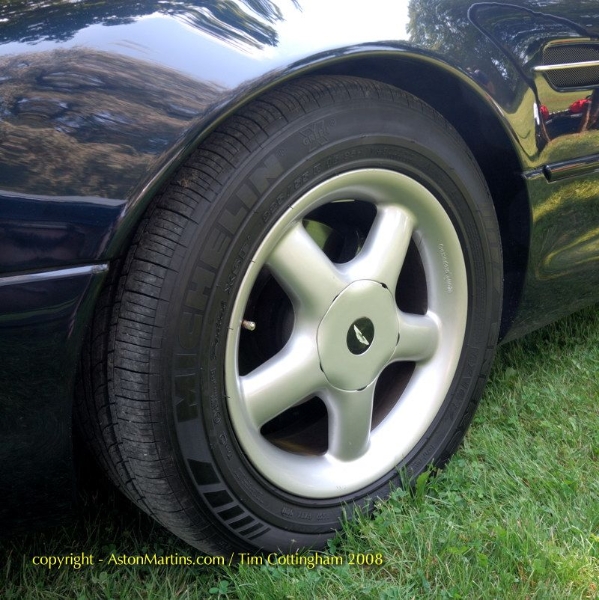
The six spoke OZ Saturn alloy wheels have slimmer spokes than that of the Vantage and are shod with Pirelli P Zero 255/50 tyres although it is possible to see V8 Coupes with the Vantage OZ 6 spoke wheels or indeed the fancy hollow spoke Dymag wheels. It is also quite possible to see Vantage matte black grilles fitted on V8 Coupes too.

Very few changes were made during the production of the 101 cars. From chassis 79045, the door mirrors were changed from those sourced from the Citroen CX to one from Jaguar. From chassis 79080 (and including 74) the door handles changed to the flush Ford Mondeo type with integral keyhole and also the seats had electrical controls mounted on the squab.

The V8 Coupe is well sort after by collectors and enthusiasts looking for a true coach built Aston Martin. With out the complication of superchargers, servicing and fuel costs are less and a very limited production run fuels demand.

V12 Vantage S Roadster Red Bull Edition

The only theory that I have with this car is that it was especially built for the use of AML partner, Red Bull Formula 1 and was so well received, that Aston Martin decided to offer it as a special edition model.

AMOC Diamond Jubilee Volante

With beautiful silver coachwork, all black Connolly upholstery and black hood, the Volante was offered for sale together with a matched set of Cartier diamond, ruby and emerald jewellery, which itself was valued at almost $1.0 million. The car featured 6.3 cosmetic coachwork, standard 5.3 litre V8 engine and automatic transmission.

The car was photographed at the 2022 AMHT Festival held at the Brooklands Museum.

DB7 i6 Prototype, Project NPX

What was sure was the Newport Pagnell site was too small to be developed and a new factory was needed. It wasn’t until the sad departure of Victor Gauntlett from AML in October 1991 and with Walter Hayes at the helm, the car that was eventually to become the DB7 began development. Initially the car was known internally as Project NPX (Newport Pagnell eXperimental) but gained the DB7 moniker following the agreement of Sir David Brown. The TWR (Tom Walkinshaw Racing) Group was given the  responsibility for design, engineering, development, certification and homologation of Project NPX. TWR already had with a long history with the Jaguar marque, especially the XJ-S, a car very closely related to the DB7.

The completed DB7 was finally displayed to the eager public at the Geneva Salon in March 1993, although deliveries didn’t start until September 1994. Initially at least, the press tried to focus on it’s Jaguar XJ-S origins (although it owes as much to the dead F-type XJ41 and 42 project), but now no one can be in any doubt that the DB7 is all Aston Martin. The DB7 will always be greater than the sum of it’s parts, and it has in time, become a quintessential Aston Martin.

The Jaguar derived and TWR developed 3239cc six cylinder powerplant was augmented with an Eaton supercharger, sufficient to produce 335bhp. This allowed the DB7 a claimed 161mph top speed with acceleration to 60mph in just 5.7 seconds. To many, the Ian Callum designed DB7 is the most beautiful car in the world. In an business sense, it is the car that saved AML and became was the most successful Aston Martin by the time production ended in 2003.

The first images are of the important pre-production prototype DB7 taken outside the AMOC marquee at Coys Historic Festival, Silverstone, 1993, soon after it’s appearance on the AML stand at the Geneva Salon. The interior of Oxblood and Parchment leather perfectly complements the BMW metallic grey paintwork. For a while, the car was on display at the Museum of Road Transport in Coventry before it was transferred into the care of the Aston Martin Heritage Trust. The car actually has no working engine or gearbox.

Also below there are some pictures that were taken of the DB7 i6 prototypes that were used during crash testing. These were in store at the back of the Newport Pagnell factory up until around 2005 when they were removed for destruction. I took these pictures when visiting the Bonhams auctions in the early years of the new millenium.

Virage Coupe Works Rebuilt

Cosmetically, the Virage coupe coachwork remained as standard, the extensive rebuild concentrated on a major mechanical update as well as an enhanced interior, with an arraignment quite unique to the model.

The following are believed to be the key changes 

  • /89 spec engine rebuilt to /95 spec
  • New Weber/Marelli Alpha Plus engine management system
  • Increase of peak power to 349 bhp
  • Three speed gearbox replaced by the 4 speed Torqueflite
  • V8 Coupe OZ ‘Saturn’ wheels
  • Pirelli P Zero 255/50 ZR18 tyres
  • Late specification Virage interior with air bag steering wheel
  • Deletion of the VIC computer
  • Unique LED gearbox marker lights in the dash
  • Unique centre console layout
DB7 i6 Coupe

DB7 i6 Coupe

Whilst many small modifications have been made to the DB7 during the five years of production, the main changes were made with the introduction of a revised model in July 1996 (air-bagged – ‘Series 2’ perhaps). The later cars are relatively easily spotted as they have twin air bags plus new switchgear, seats, steering, brakes and softer ‘Volante’‘ suspension. A steel bonnet also replaced the composite original. Yet externally, the car appeared virtually identical to the motor show prototype.

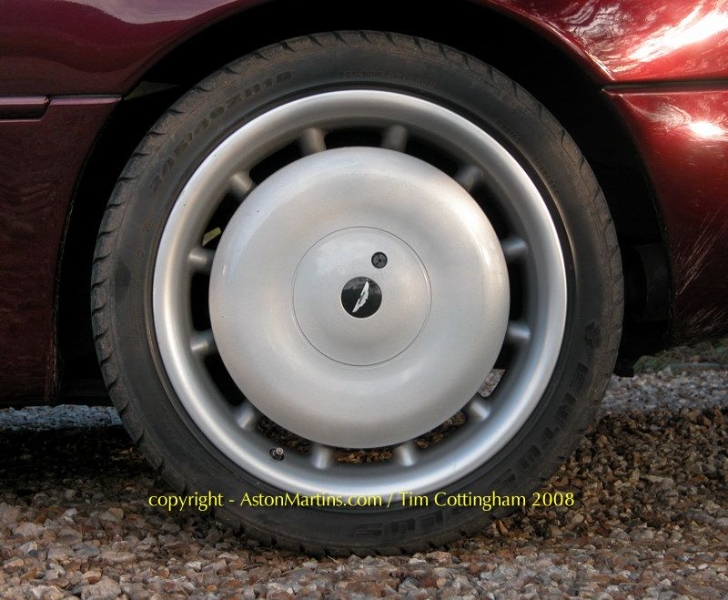
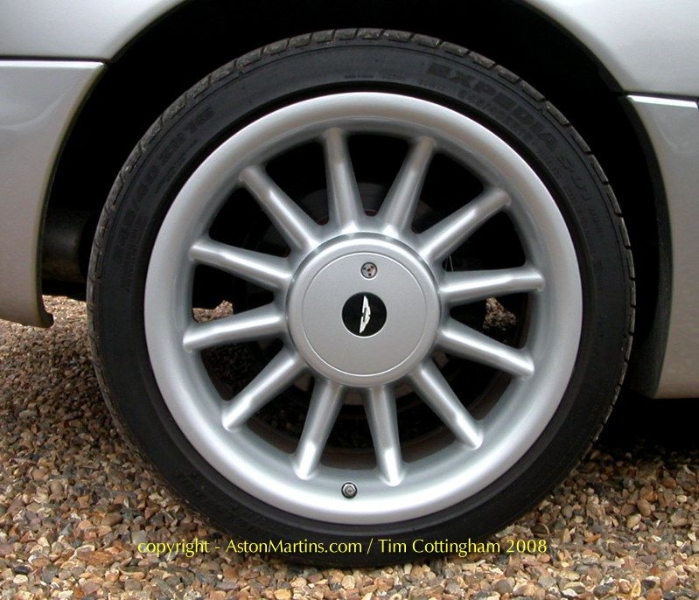
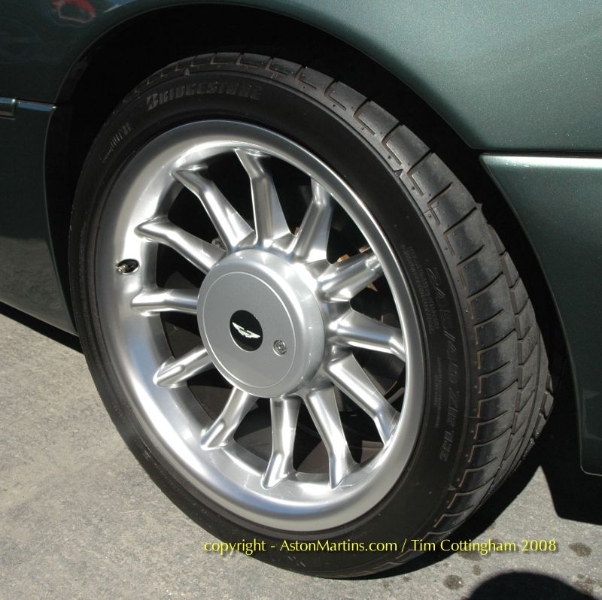
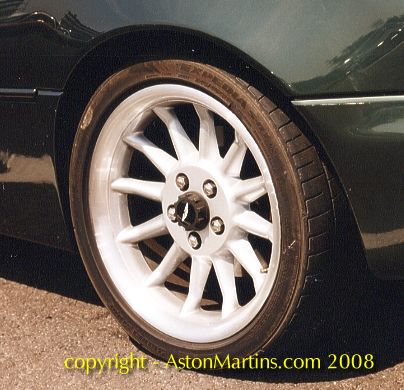
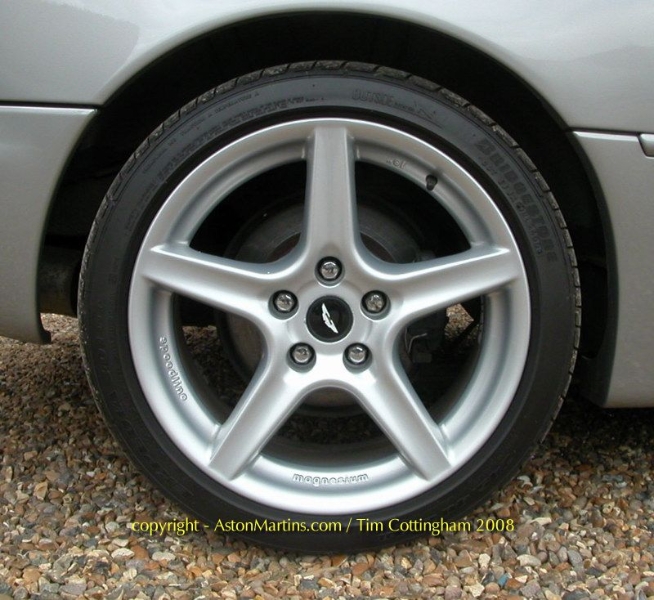
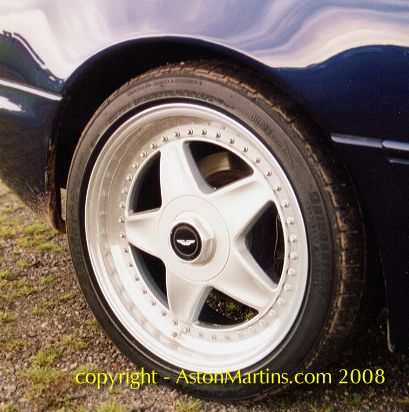
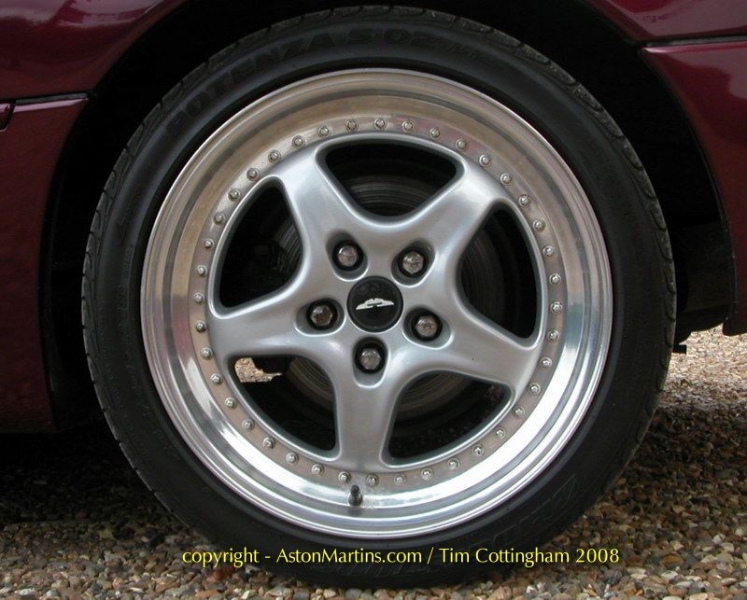
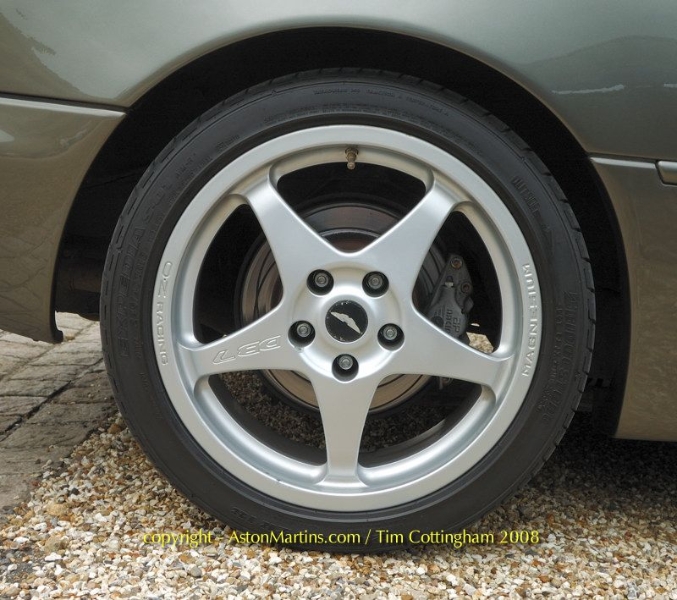
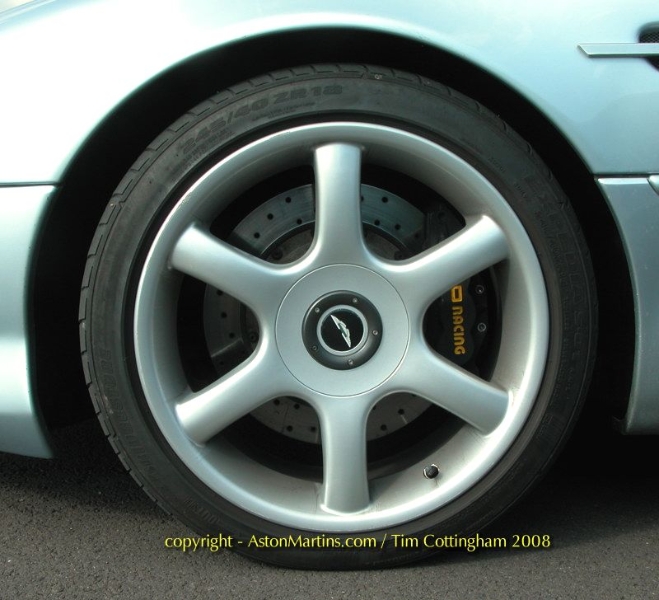
DB7’s are seen with a wide variety of wheel options. Here are a few examples that I have seen including a few very rare styles. The DB7 i6 has the widest variety of factory standard and optional wheel styles ever available on an Aston Martin at the time.

During 1999 the V12 Vantage was introduced at a price of just £92,500, a tiny £7550 premium over the straight six. Whilst the supercharged 6 cylinder car oddly remained in the price list throughout 2000, production had quietly ceased during May 1999 and the DB7 Vantage came on-line. By this time, production of the i6 coupe and Volante combined had reached 2473 cars. Of this number, 1578 were coupes and of these coupes, less than half, 529 had the desirable 5 speed manual transmission. At the time, the i6 production run had exceeded that of any other Aston Martin model although when considered against the numbers built from 2004, the DB7 i6 is in actual fact, quite a rare car.

DB7 i6 GT Compitition Prototype

Following the Prodrive built car, the AML Customer Service Division (now Works Service) took one to the early press demonstrator DB7’s, chassis 100006, and fully rebuilt the car with the following specification

  • Safety devices roll cage with removable side bars
  • Two full race Reccaro competition seats, in black hide, to match black interior in Alcantara and quilted vinyl
  • New aluminium bonnet, boot lid and front wings to replace the composite originals
  • Safety cut off switch in drivers side front wing
  • New style door mirrors mounted on cheator panels
  • Perspex side windows
  • Fuel cell
  • TWR enhanced 3.2 litre, 6 cylinder engine
  • Competition clutch and shot-peened 5 speed manual transmission
  • Prodrive designed uprated front and rear suspension, plus oil-cooled rear axle. Penske gas shock absorbers, adjustable from the cockpit
  • Special competition brakes with balance adjustable from the cockpit
  • Special tuned exhaust with centre catalyst

The car was then also painted in Almond Green metallic with white roundels and a neat contrasting yellow band around the grille, reminiscent of the 1950’s DB3S’s and DBR2. After extensive testing, the cars were demonstrated to potential customers, but sadly the project was not proceeded with and and the race series abandoned too. Both cars were subsequently sold off by AML in 1996. Despite the ending of the project, the GT was successful as a mobile test bed to prove the benefits of it’s race components and systems and to enhance the DB7 road car, in particular, the factory fitted Driving Dynamics package.

The AML built car, 100006, appeared in the 2004 AM/Bonhams auction where it was sold to a marque enthusiast. The prototype car, 100001 is also now in private ownership.

V12 Vantage AMR

V12 Vantage AMR

The AMR sub-brand was introduced with two distinct tiers. Series production limited edition models such as the V8 & V12 Vantage AMR sit at its entry point, while extreme and extensively modified AMR Pro models created by Q by Aston Martin Advanced Operations sit at the pinnacle of the range, including the exclusive Vantage AMR Pro announced at the 2017 Geneva Motor Show.

The V12 engined AMR was fitted as standard with the Prodrive designed Sportshift III automated sequential manual paddle-shift transmissions but the seven speed manual gearbox was also available as an option.

The Vantage AMR was available in five distinctive AMR exterior schemes: the AMR ‘Halo Pack’ was taken from the Aston Martin Racing’s 2016 World Endurance Championship-winning #95 Vantage GTE, with a combination of Stirling Green paint and vivid Lime Green print to back stripe and other accents to dramatic effect. Also available was Stratus White with an Orange graphic; Ultramarine Black with Blue graphic; Zaffre Blue with Red graphic and Scintilla Silver with Grey graphic. As a finishing touch, a special Union Jack-enameled AML wings badge, previously featured on last year’s GTE racer, was available as a no-cost option.

Each of the exterior schemes is matched to a different interior scheme with a combination of leather and Alcantara for the coupe to compliment the exterior colours. In keeping with its exterior the Halo Pack features boldly contrasting colours, including Lime Green welts and accents.

Lightweight carbon fibre seats were standard fit on the AMR and the car had many other carbon fibre features, including a lightweight front grille, side strakes, lamp infills and mirror caps on the outside, instrument surround, door tops and door grabs on the inside. The V8 Vantage AMR came with 10-spoke alloy wheels with a choice of three different finishes.

Alongside the introduction of the AMR cars, AML also introduced a range of AMR accessories, many of which can be also fitted to earlier cars. Suitable for the V12 Vantage range were the Aero-kit, lightweight mesh grille, titanium exhaust, and a multispoke AMR wheel.

Whereas the V8 AMR was mechanically unchanged, the V12 Vantage AMR was fitted with the final spec V12 with 595 bhp, an increase of 30 bhp over the V12 Vantage S. The V12 engine Performance Pack could also be retrofitted to the earlier V12 Vantage S

Total production of the V12 Vantage AMR coupe and Roadster began in the final quarter of 2017 and was limited to just 100 examples. The AMR was only available in the UK, Europe, Asia Pacific and China but not the USA. 

    AMR Aero-kit

    Above is one of the V12 Vantage AMR with the optional AMR Aero-kit This was available from 2017 for all V8 and V12 Vantage models post 2012.25MY and new AMR cars. The full kit was made up a series of carbon fibre parts such as larger front splitter, side sills, dive planes and a dramatic rear spoiler.

« Newer PostsOlder Posts »