Latest News - 01/09/24

What's New @ AstonMartins.com?

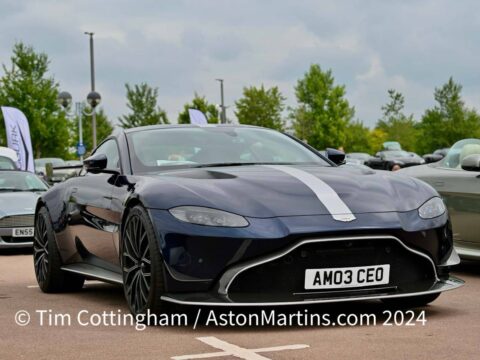
Vantage AM6 CEO by Q

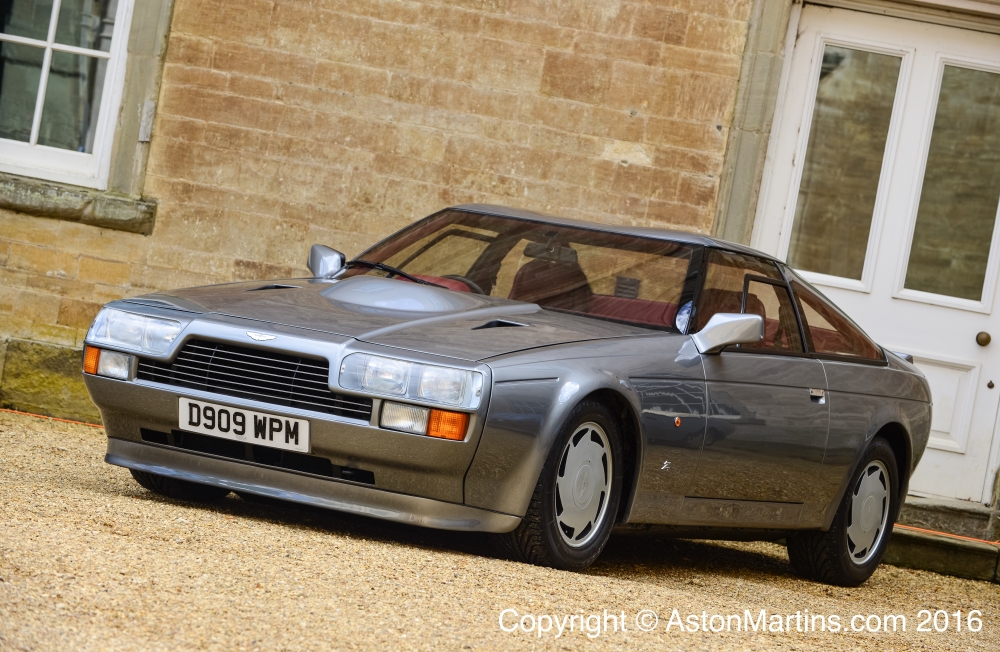
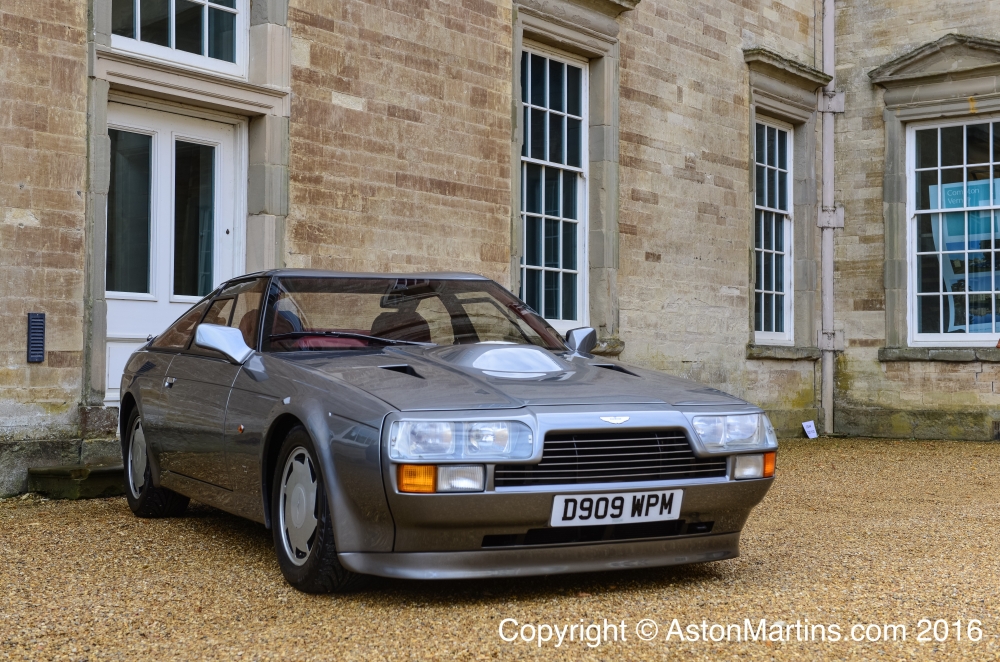
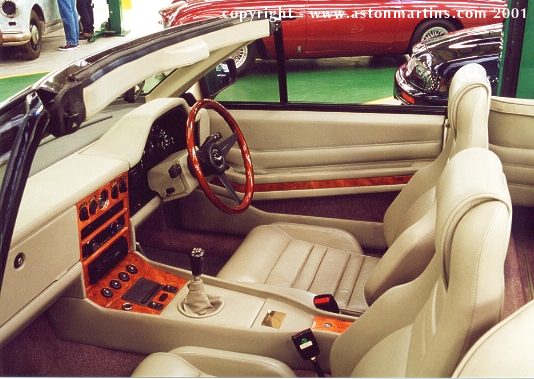
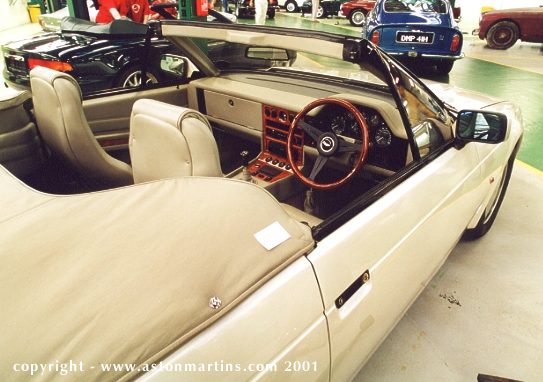
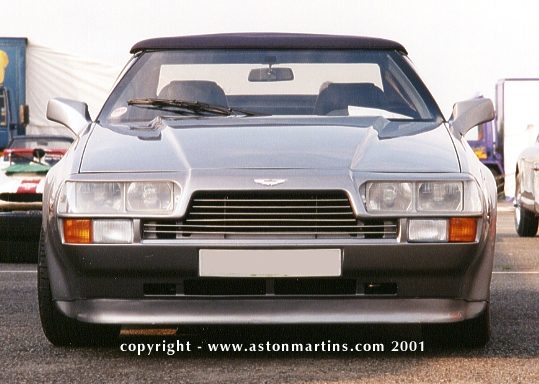
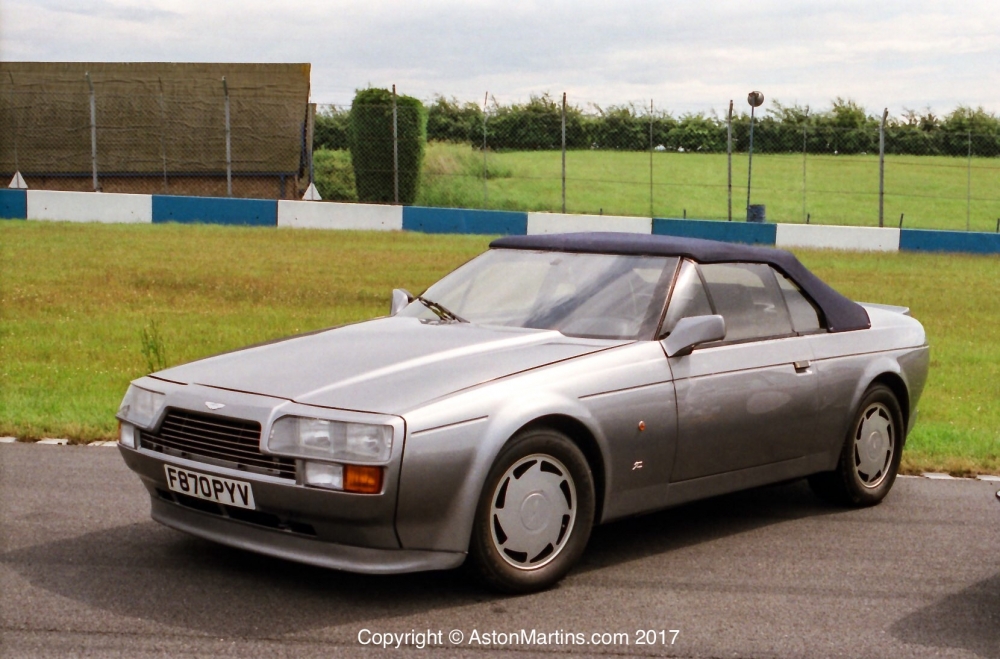
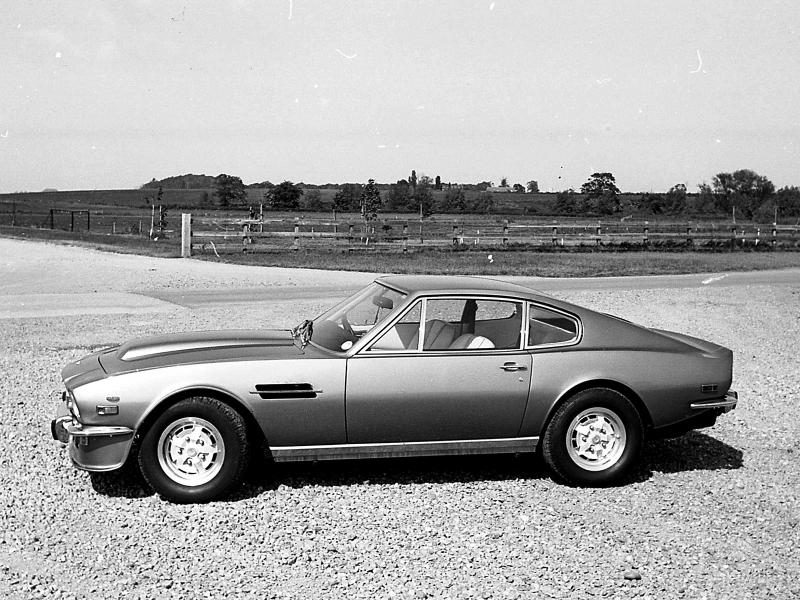
V8 Vantage, Zagato Mule

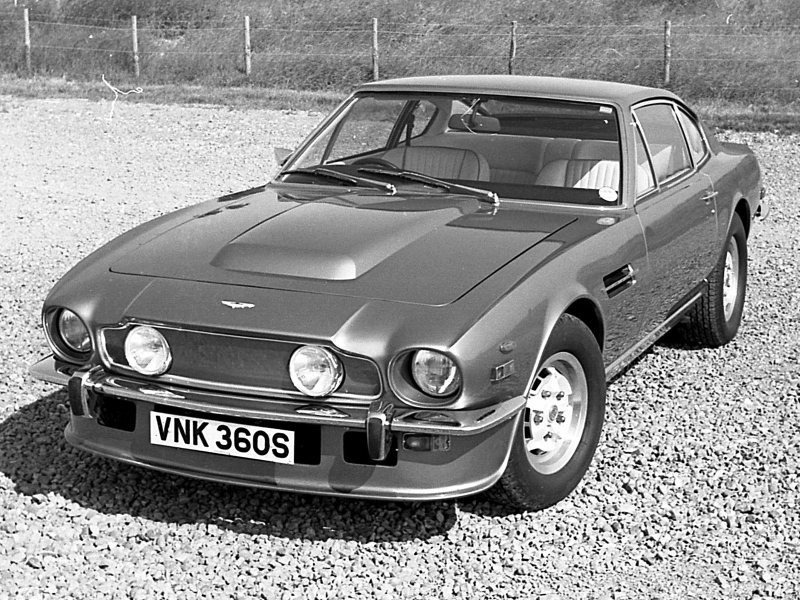
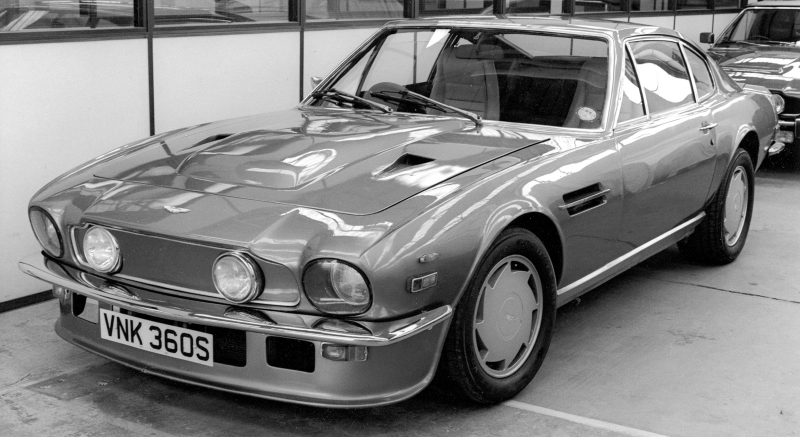
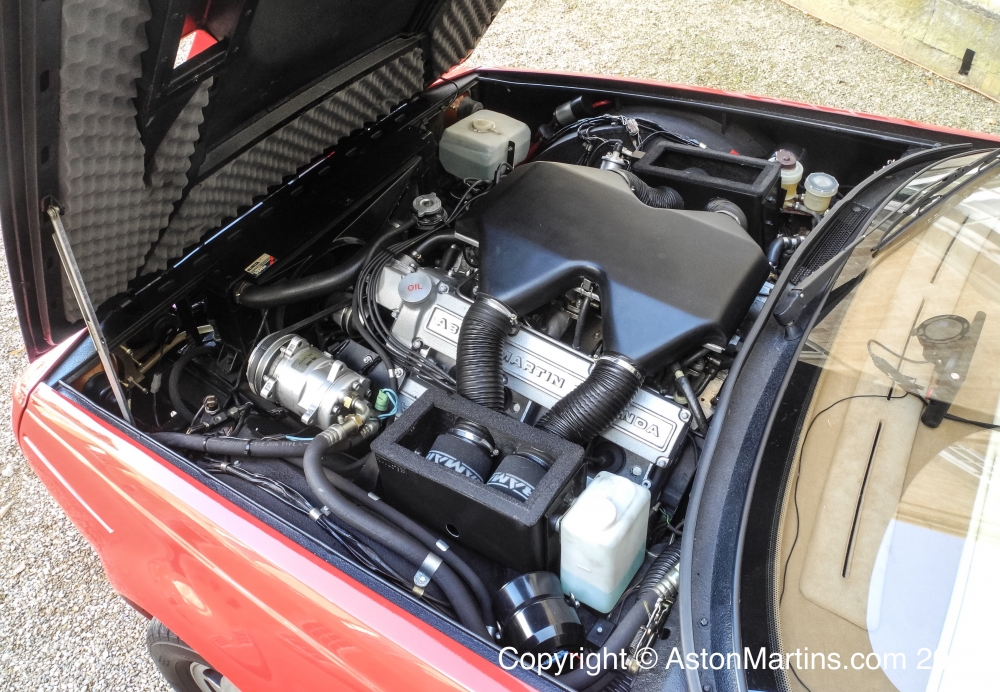
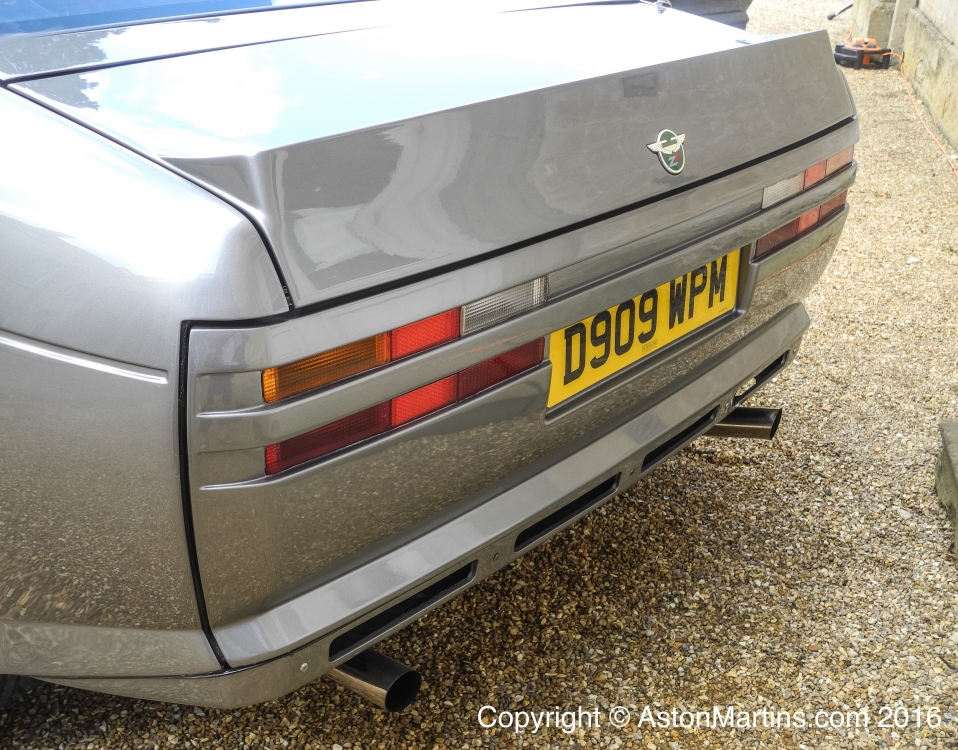
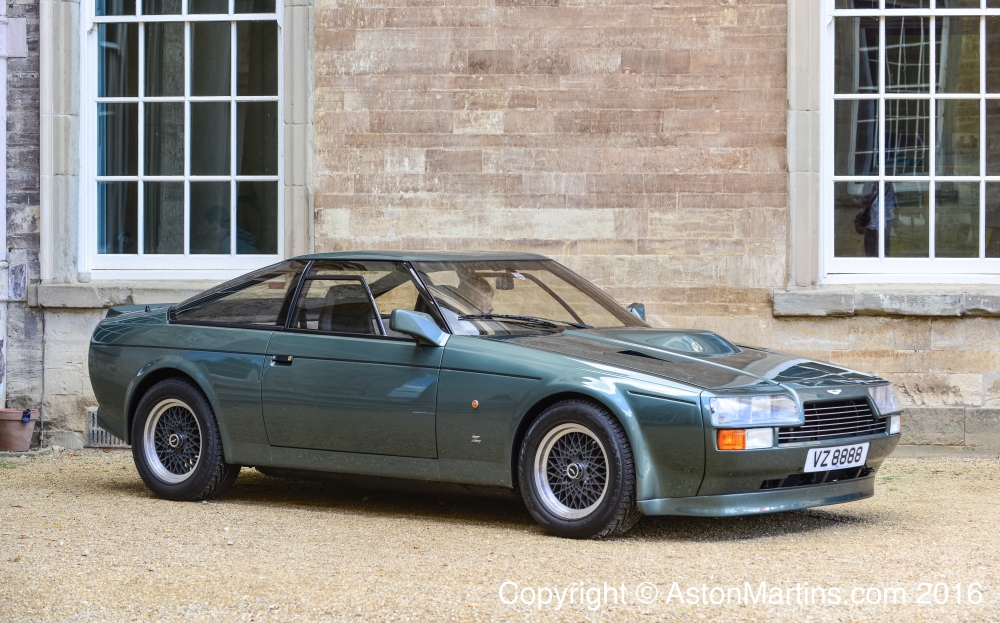
Although the exterior remained as standard, the interior of the car was stripped of excess weight. This involved the removal of most of the interior trim, the rear seats were ditched as was the spare wheel.  A smaller, lighter fuel tank was  fitted, heating and air-con removed and the side glass replied by lighter Perspex. All this with the intention of dropping the weight to about 1600kg, the same as the upcoming V8 Zagato. A special development engine, a forerunner to the upcoming X-pack V8 was fitted giving peak power of 437 bhp at 6,250 rpm, together with a low ratio differential allowed the dash from 0 to 60 mph without the need to change gear out of 1st gear. The mule was as quick as a V8 Zagato and was and still is probably the fastest standard bodied V8 Vantage ever.

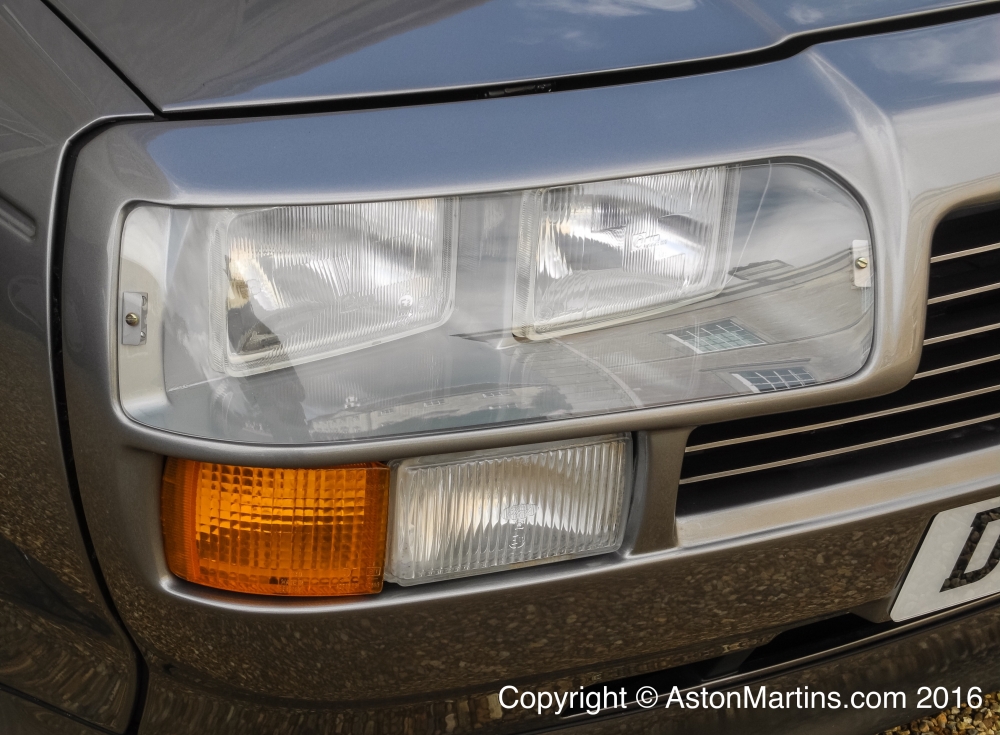
The Zagato Mule was initially photographed whilst on display at the 1999 40th Anniversary meeting at Donington Park and then racing during a similar meeting at the same venue in 2000. The only visible external changes to this unique car are the Zagato style Speedline wheels and the NACA cooling ducts on the bonnet.

A former owner of the Zagato mule has written an interesting article on his web site, V8Vantage.com. V8Vantage.com have also kindly provided the black and white period images from 1987 taken by Roger Stowers, AML historian and photographer.

Tickford Lagonda

Tickford Lagonda

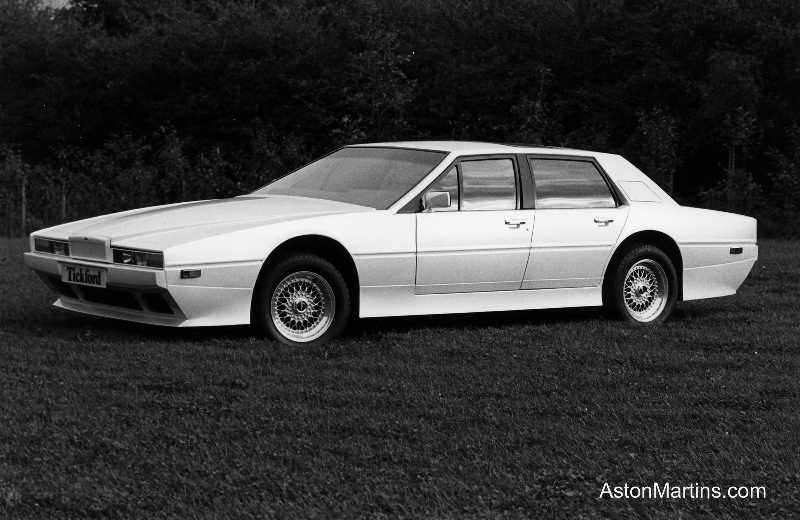
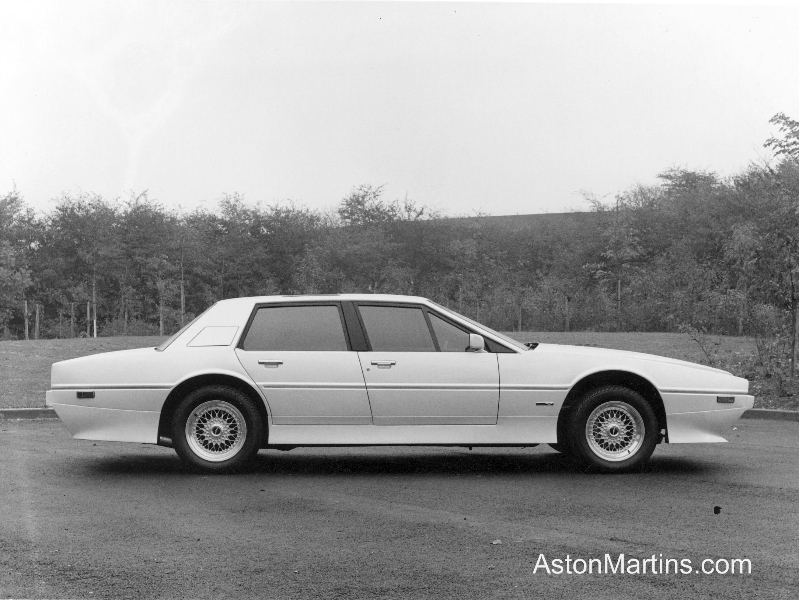
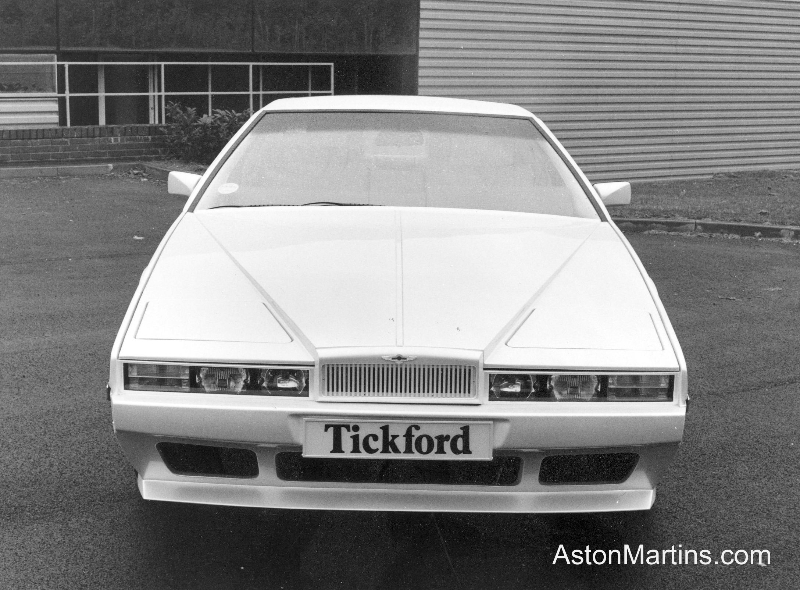
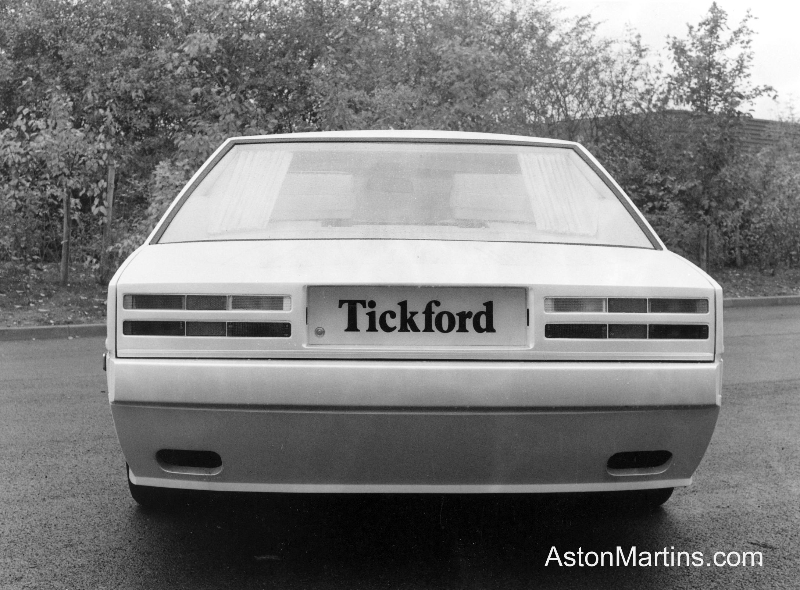
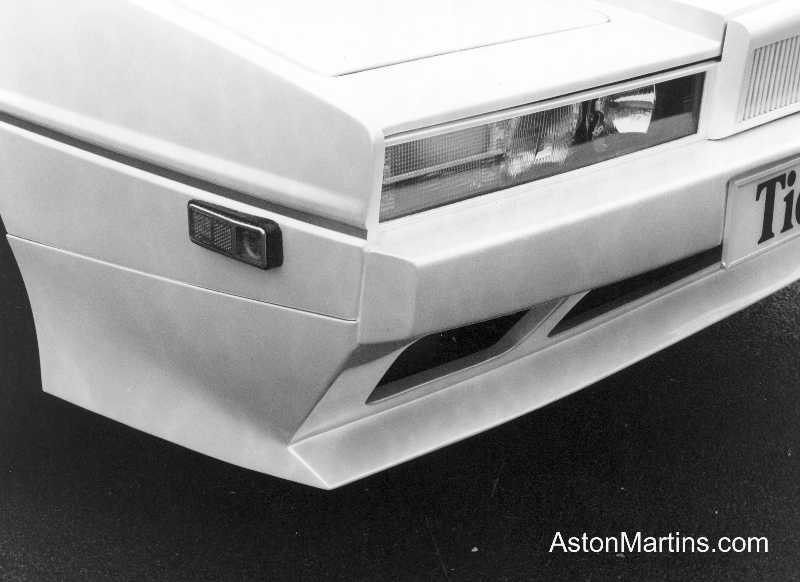
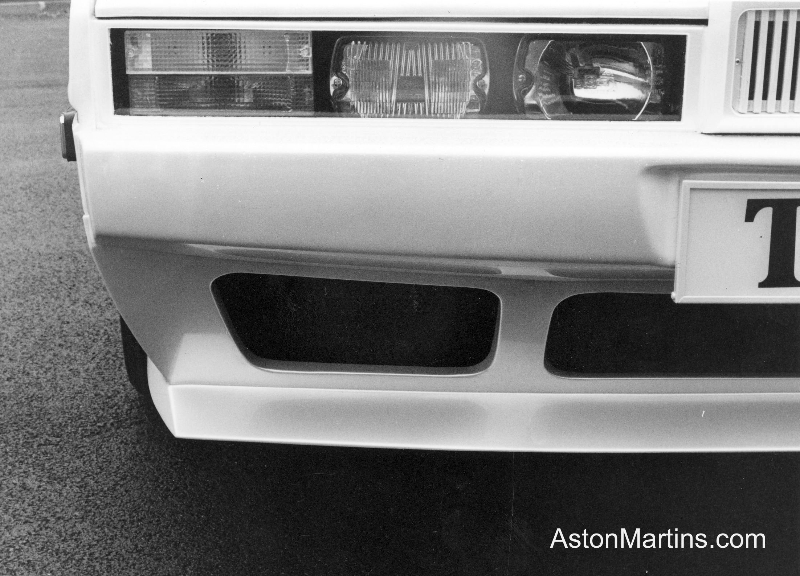
The styling enhancements to the car were classic early 1980’s with colour coded aluminium side skirts, large front air dam and a deep rear valance; all the work of Simon Saunders who also styled the equally exclusive Tickford Metro and Tickford Capri. Most of the Tickford cars were fitted with 15 inch colour coded BBS cross spoke wheels with fashionably wide 255/60 Pirelli P7 tyres.

Below are press images of the 1983 MotorFair car, a left hand drive example finished in fashionable white, a colour still gaining popularity 30 years on.

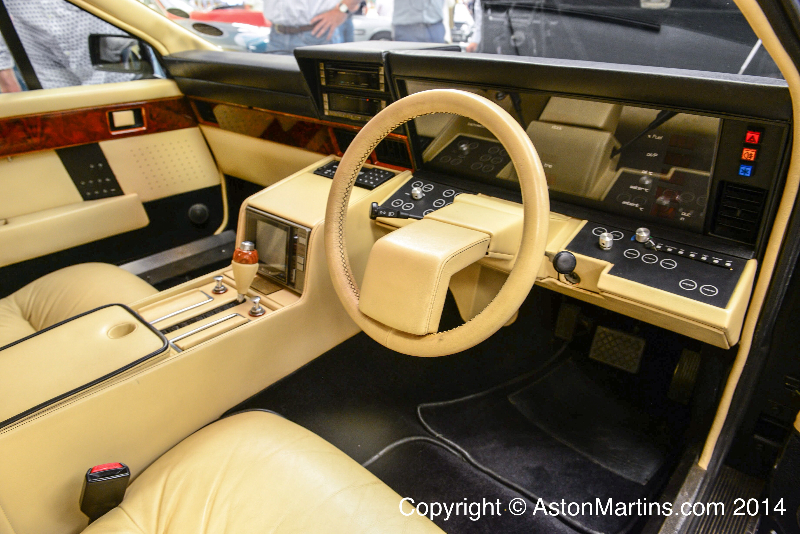
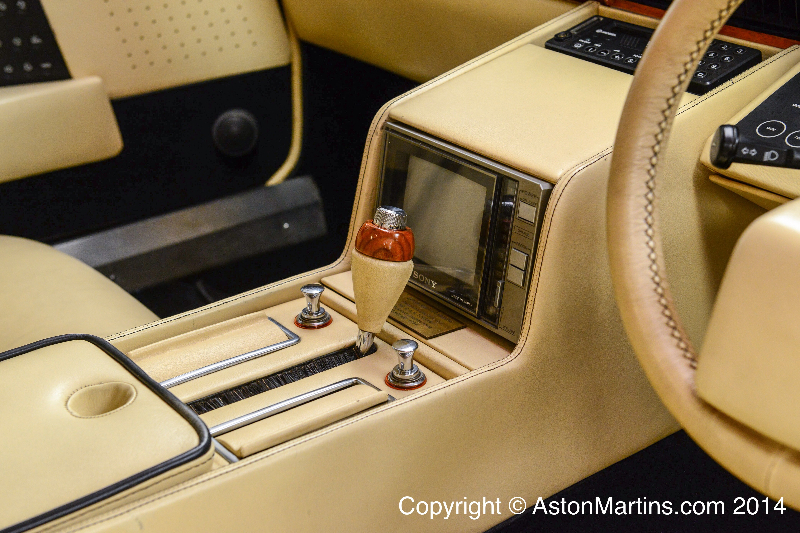
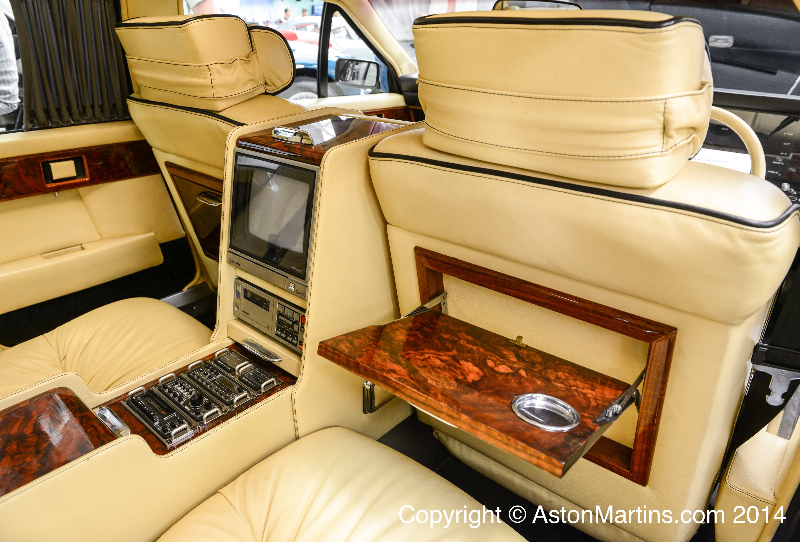
The interior of the Tickford was also fully kitted out with front and rear TV screens, expensive Hi-Fi video recorder, picnic tables and a drinks cabinet containing engraved crystal decanters and glasses with the Tickford logo. A radio telephone could also be fitted, in the days before mobile phone, at an eye watering price approaching £4,000.

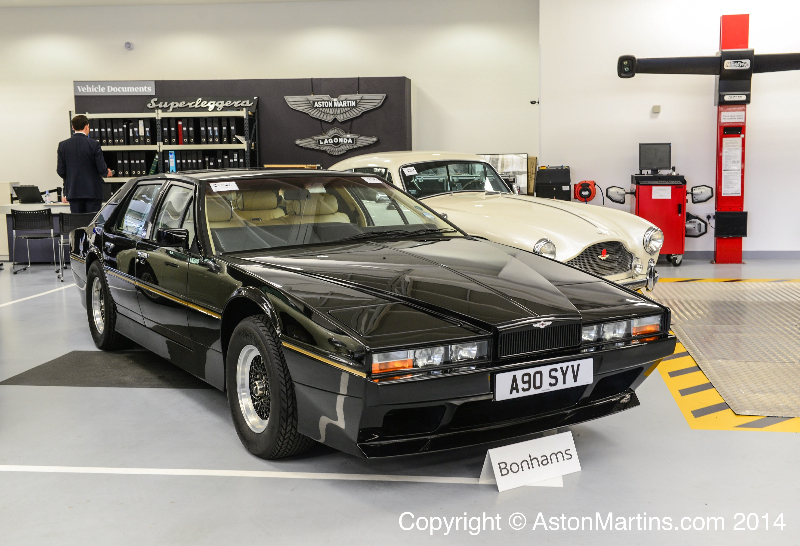
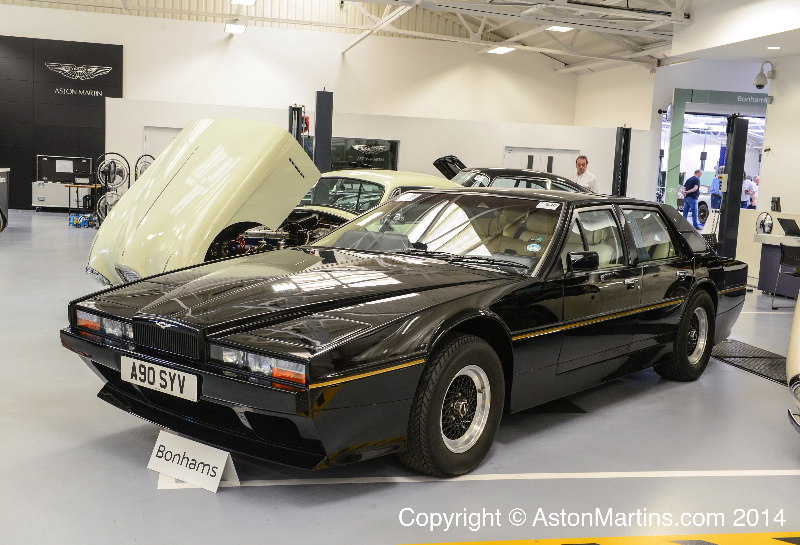
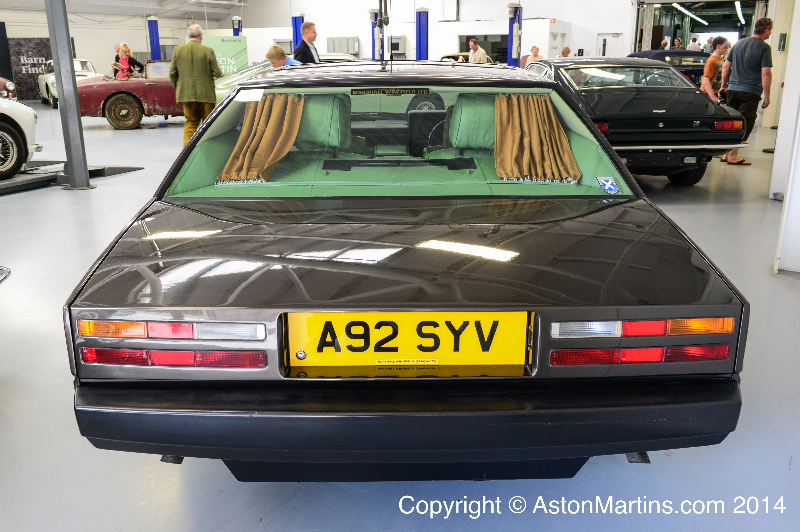
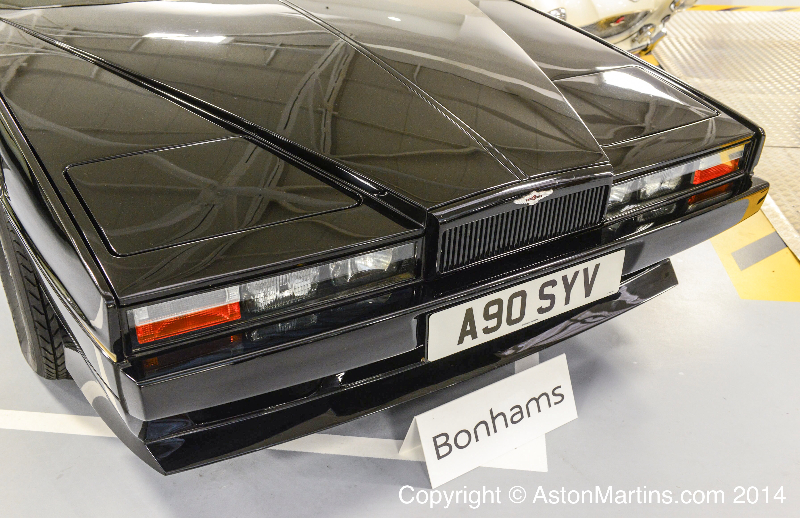
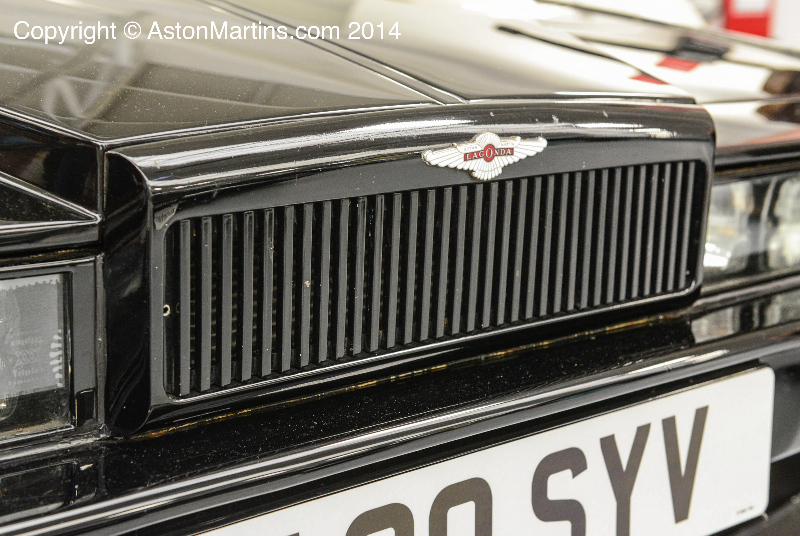
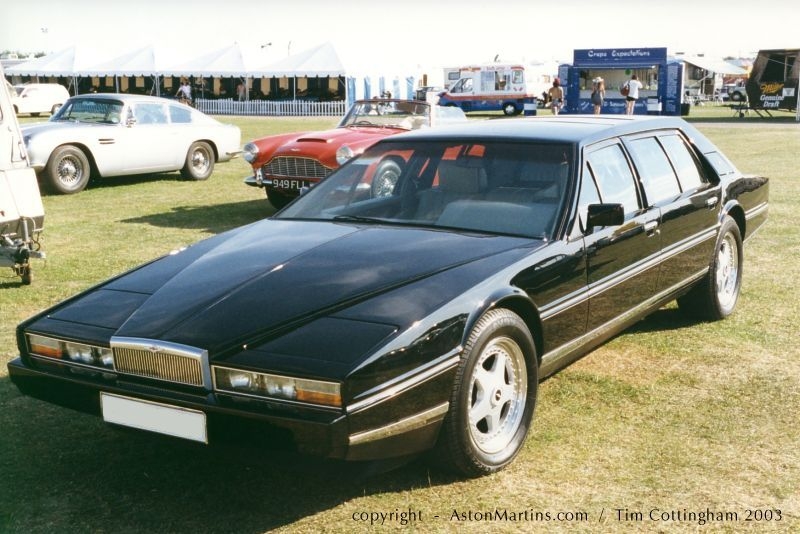
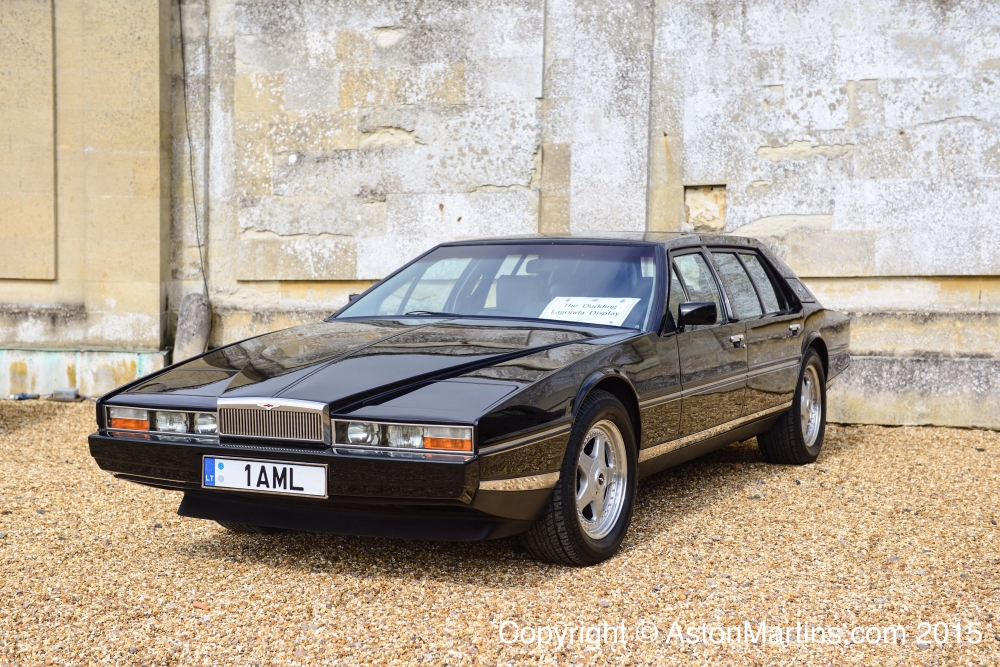
The images below show a Tickford Lagonda hat was offered at the 2014 Bonhams Aston Martin auction. Finished in Cannock Black with Magnolia hide, the car had only covered 5,000 miles during 30 years of existence.

With such a high purchase price, it will not surprise you that only 5 cars were built and sold in period. Although more recently, a few other Lagondas have also had the Tickford refinements retro-fitted so it is difficult to tell the original and later cars apart.

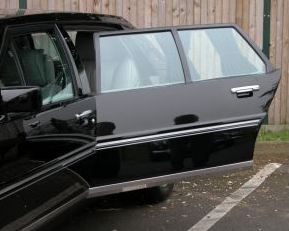
Tickford also went on to offer the even more exclusive and expensive Lagonda Limousine. For more information on the William Towns styled Lagonda, please visit AstonMartinLagonda.net

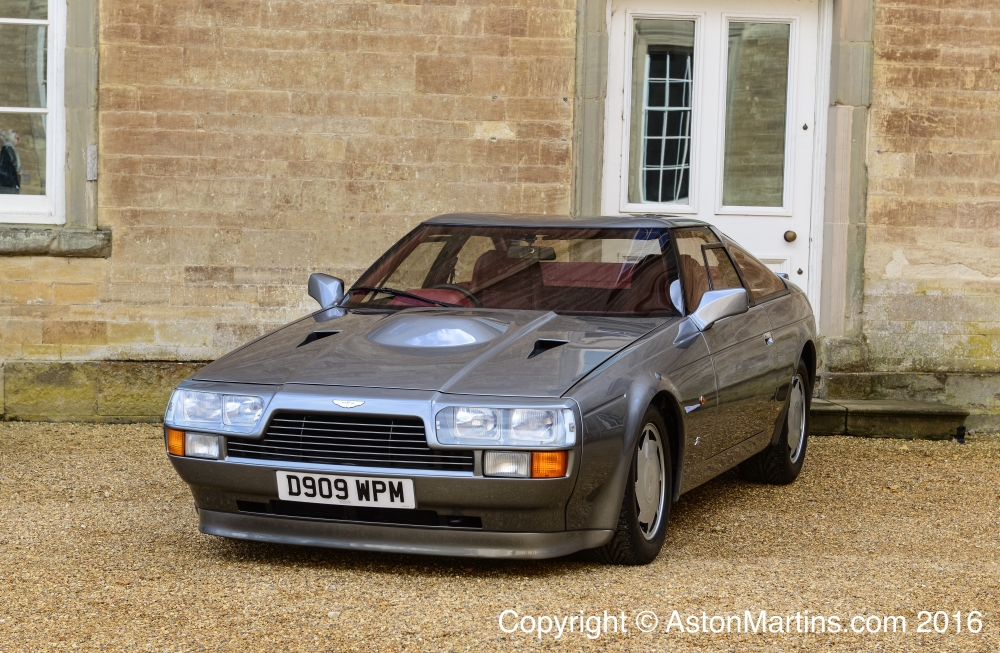
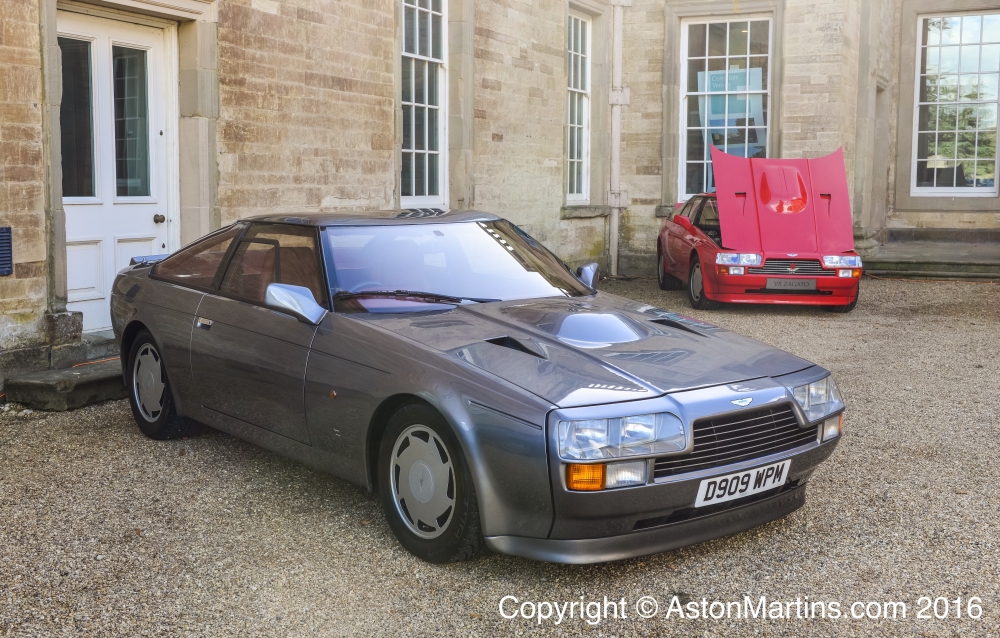
V8 Vantage Zagato

V8 Vantage Zagato

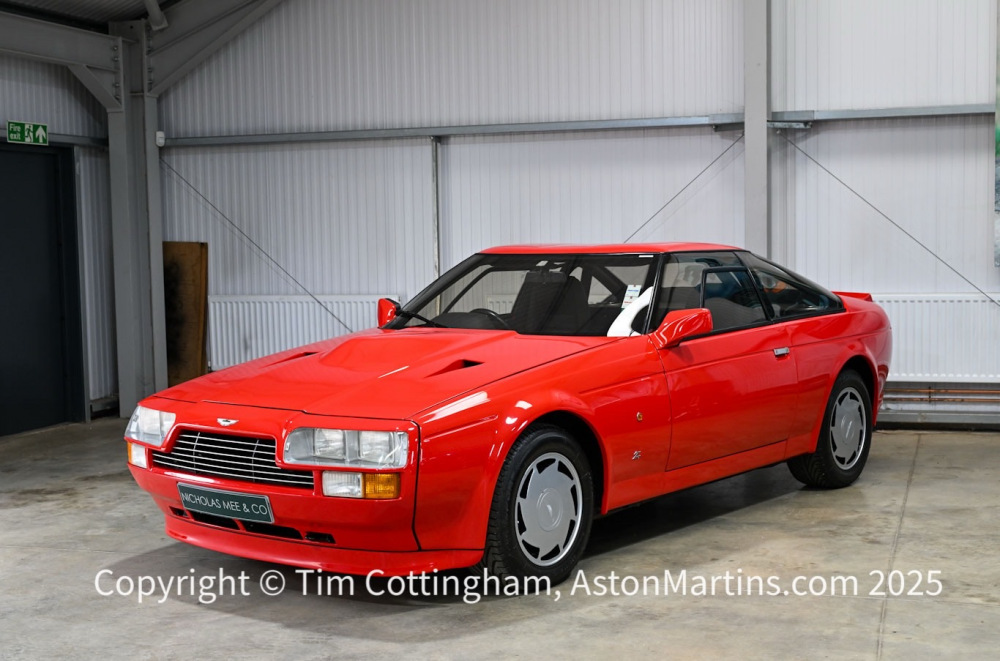
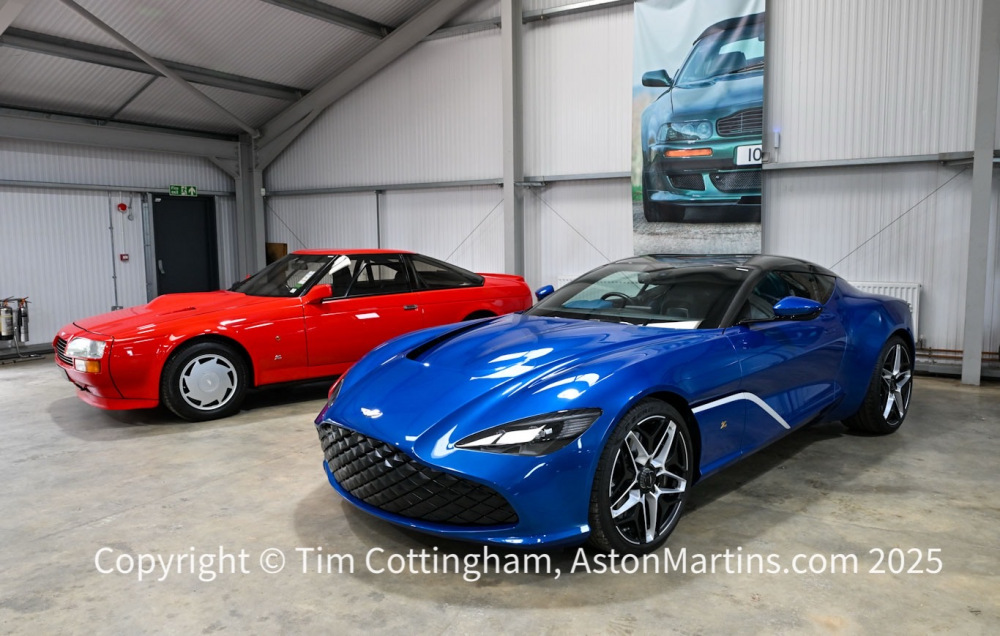
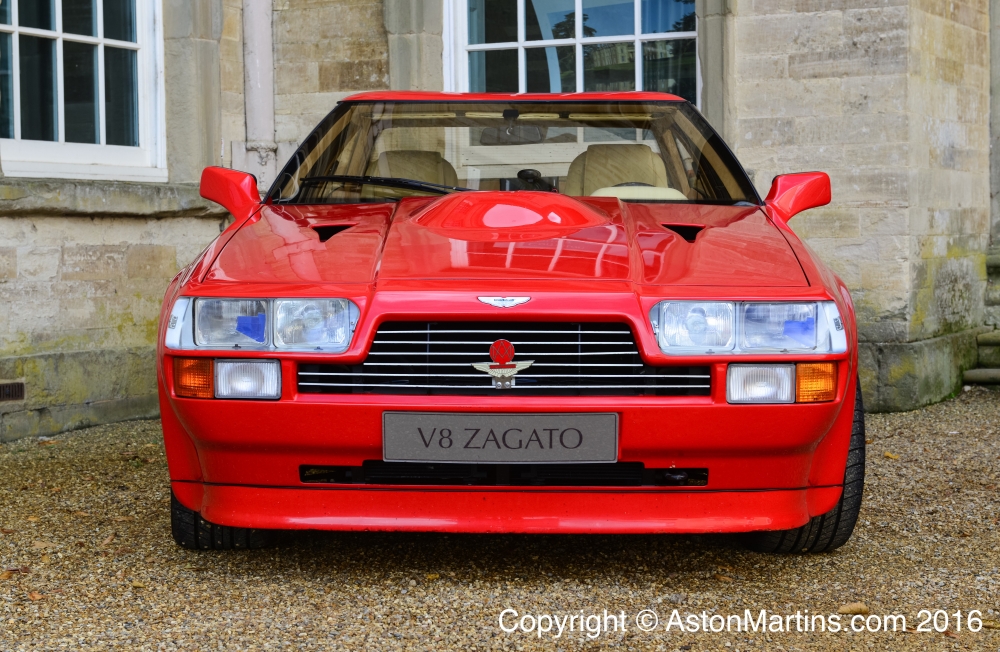
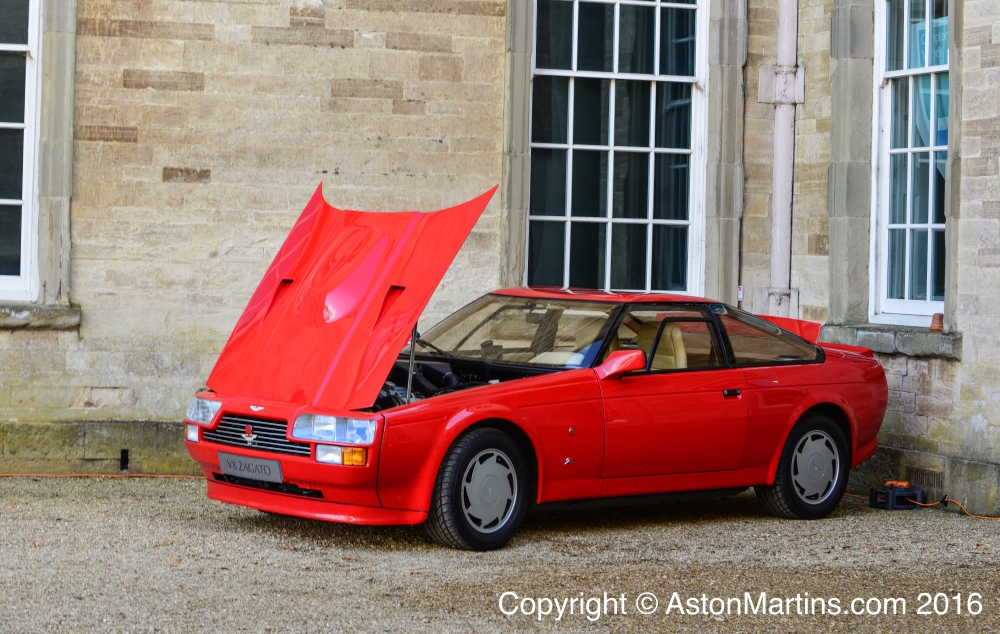
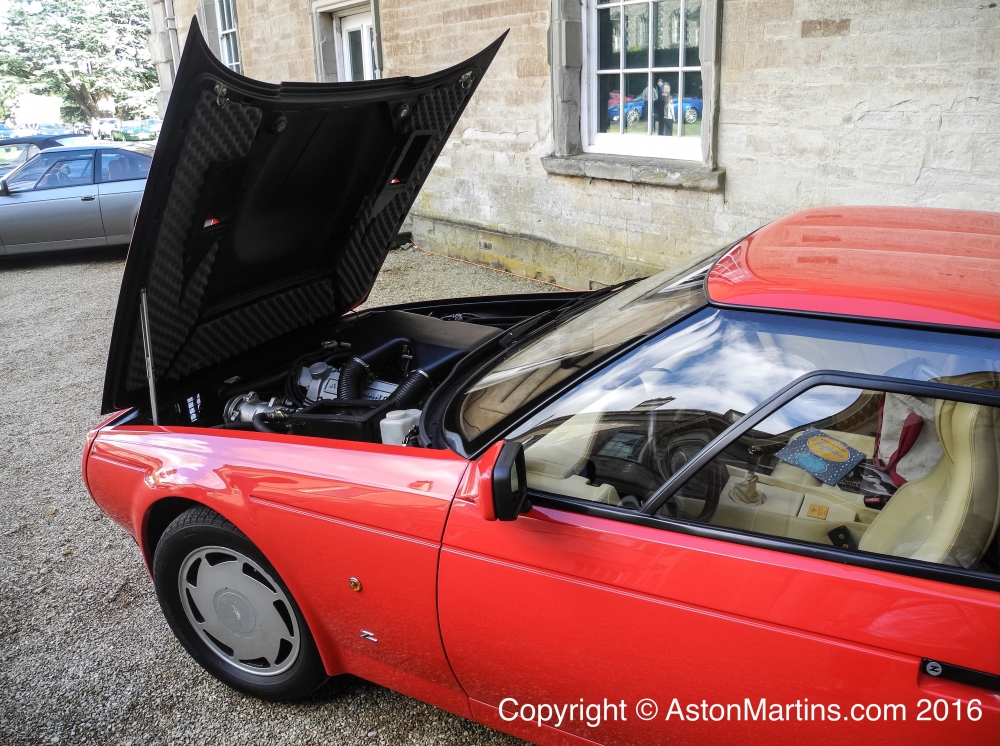
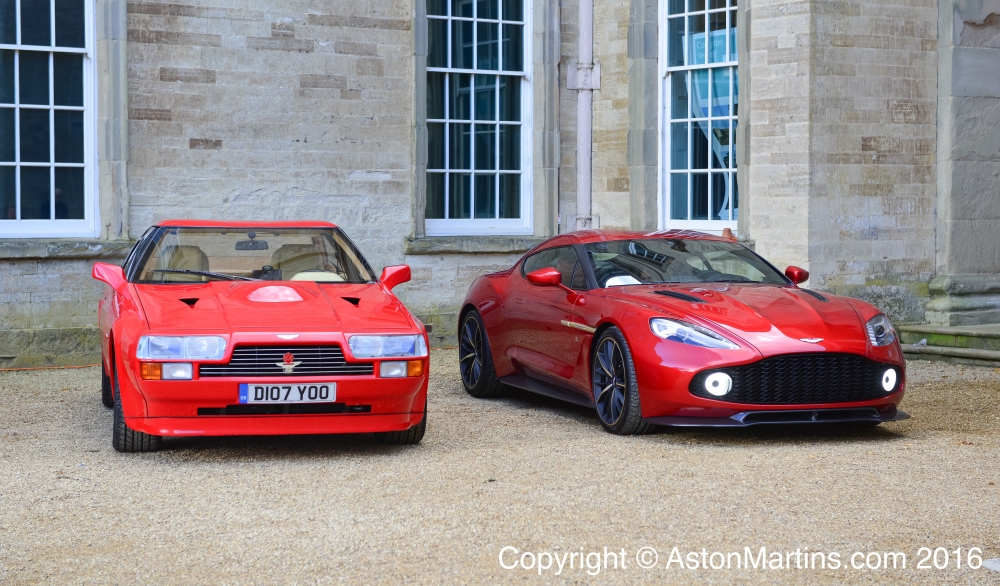
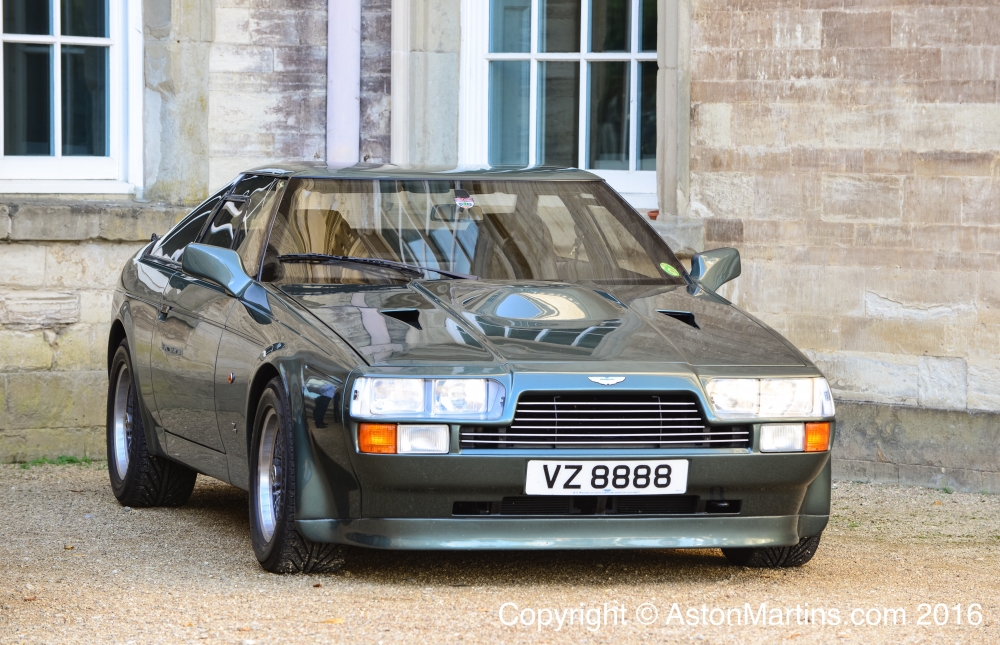
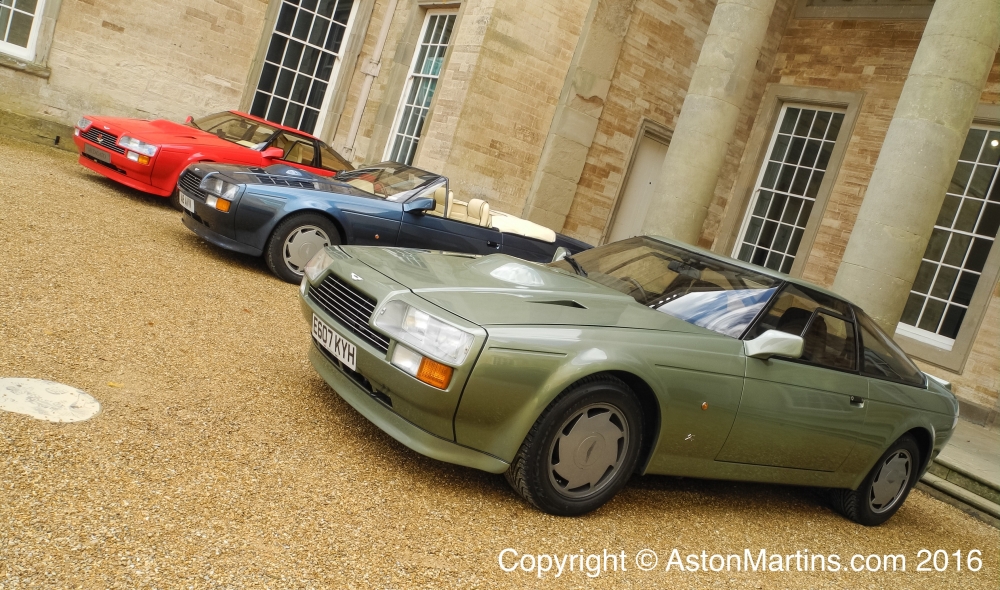
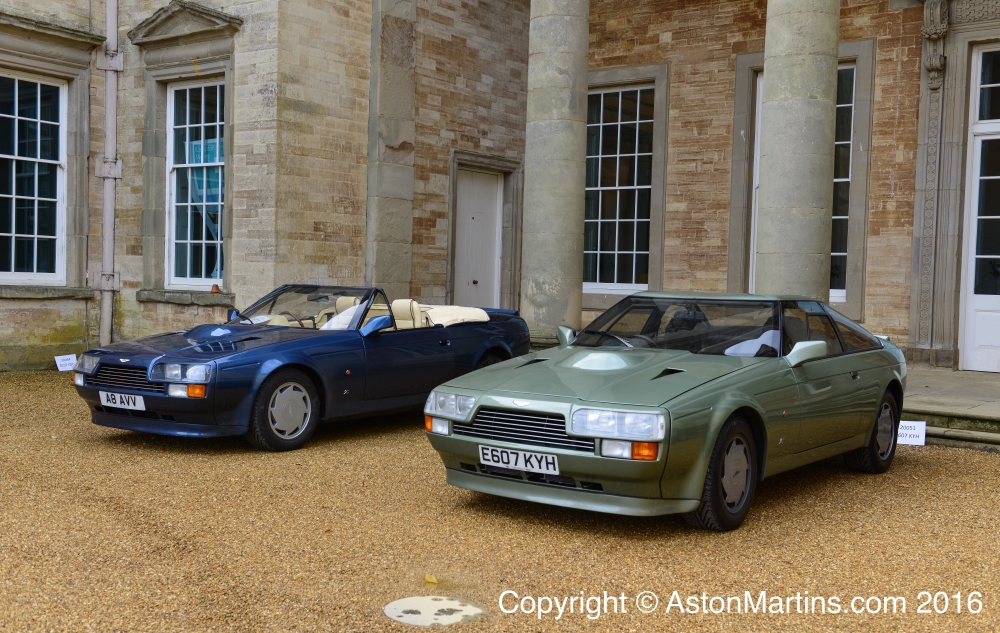
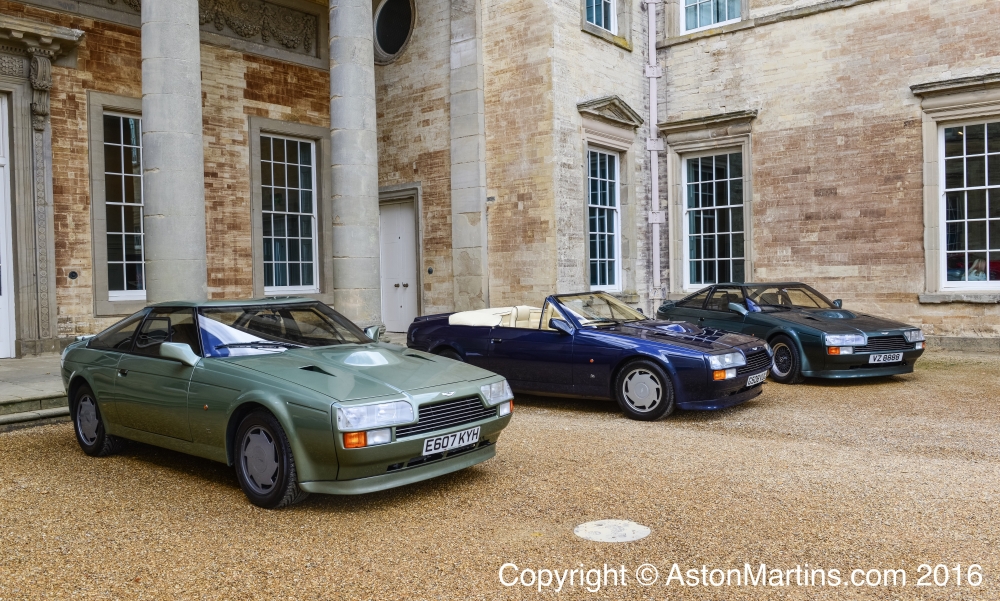
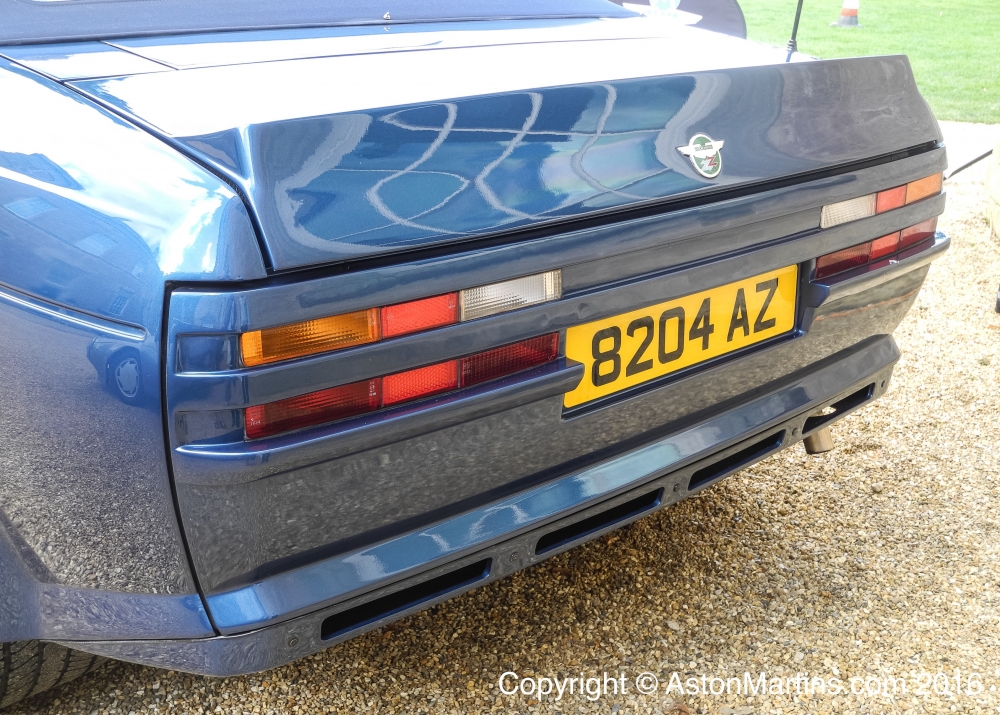
The standard V8 Vantage was at the time one of, if not the fastest cars in the world; by reducing the wheelbase, loosing the rear seats, tweaking the engine and fitting a new slippery body with flush fitting glass, the Zagato became the ultimate Aston.

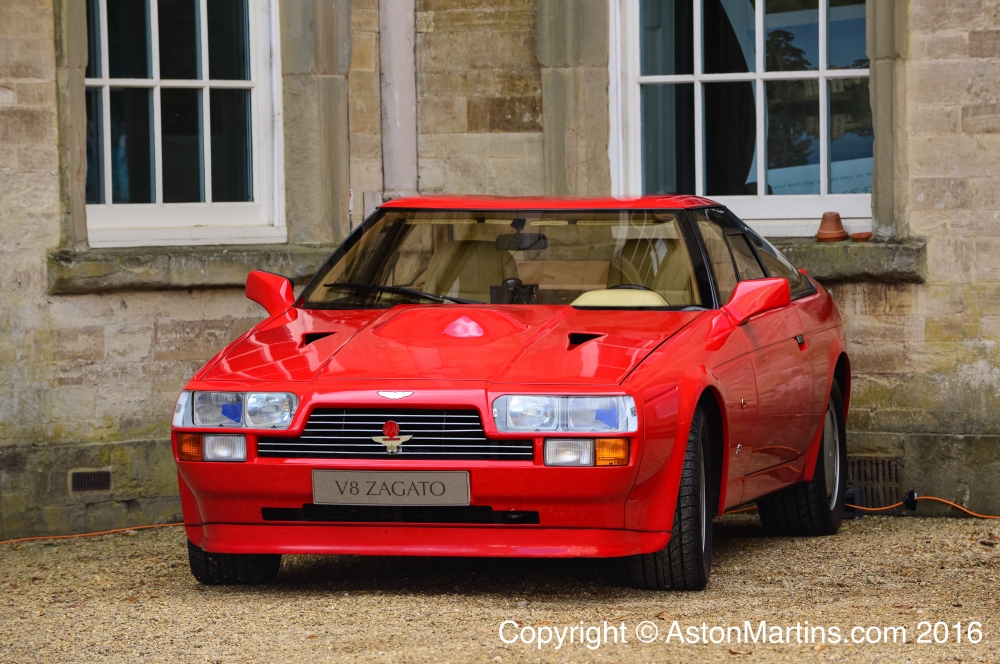
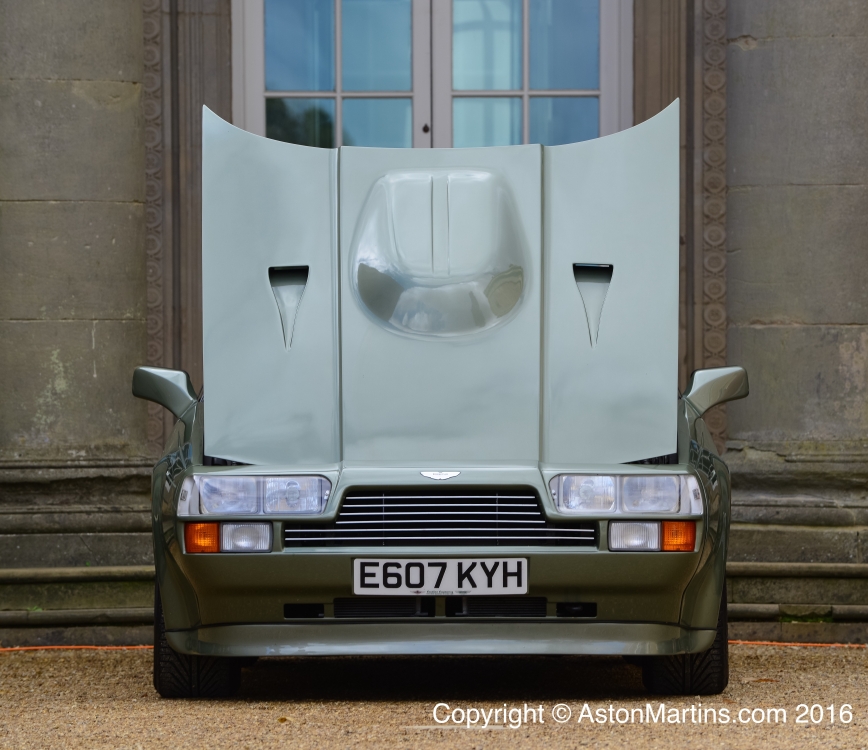
Unfortunately, many were not overly impressed by the final styling of the new Zagato. One of the most controversial aspects of the design was the ‘power bulge’ which was so necessary to house the airbox for the massive Weber 48 IDA carbs bored out to 50mm. Although a flat bonnet was originally intended with a fuel injection system underneath, this would probably not have produced sufficient power to achieve the promised 300 kph top speed.

The V8 Vantage Zagato was displayed at the 1986 Geneva Motor Show where three examples were shown; one on the AML stand, one on the Zagato stand, and on top of a lakeside hotel.

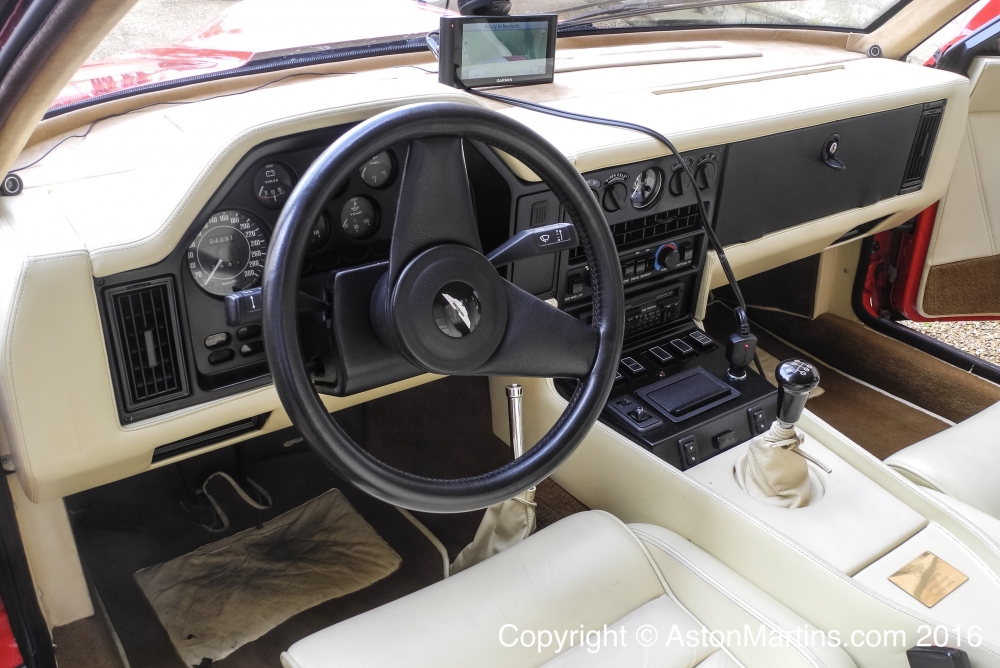
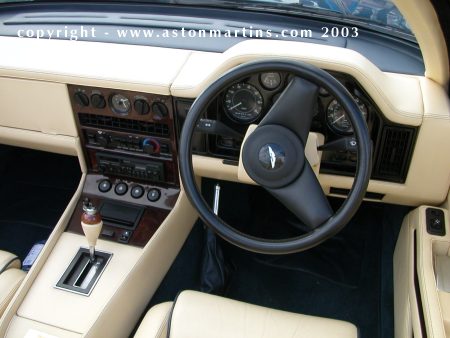
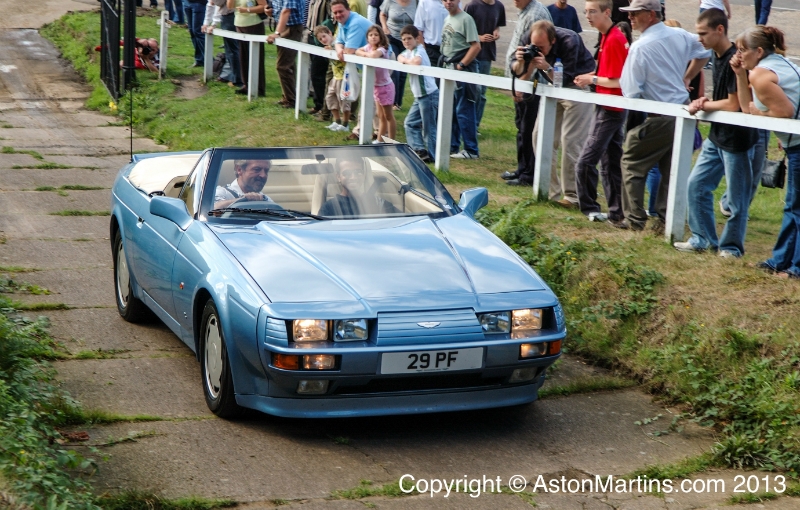
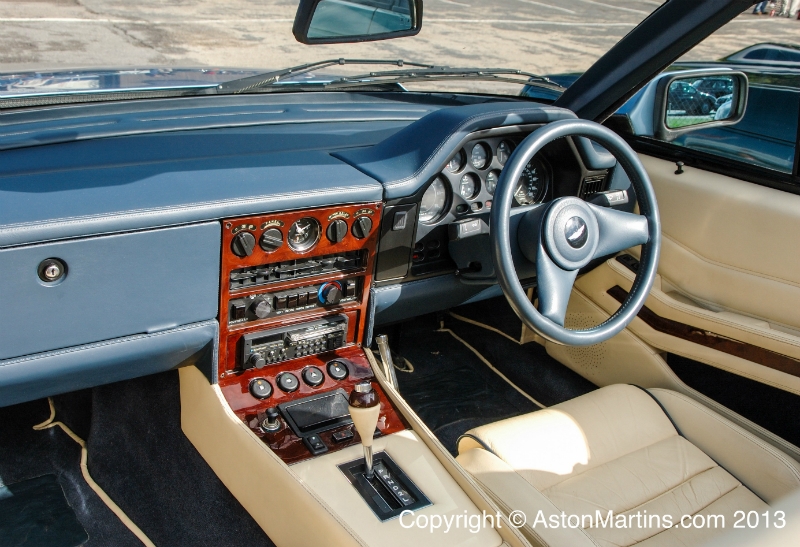
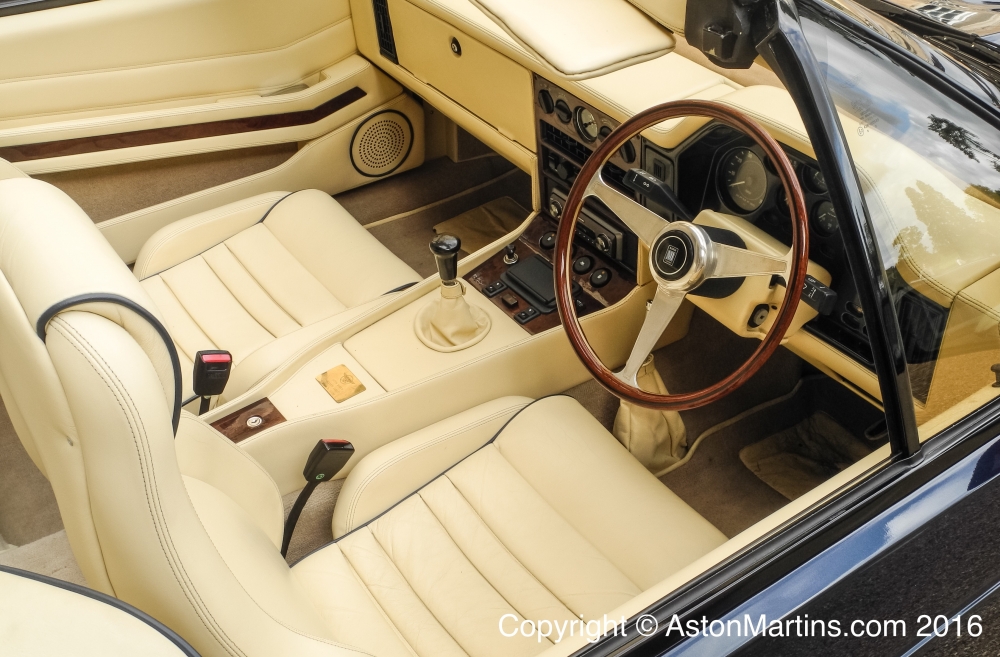
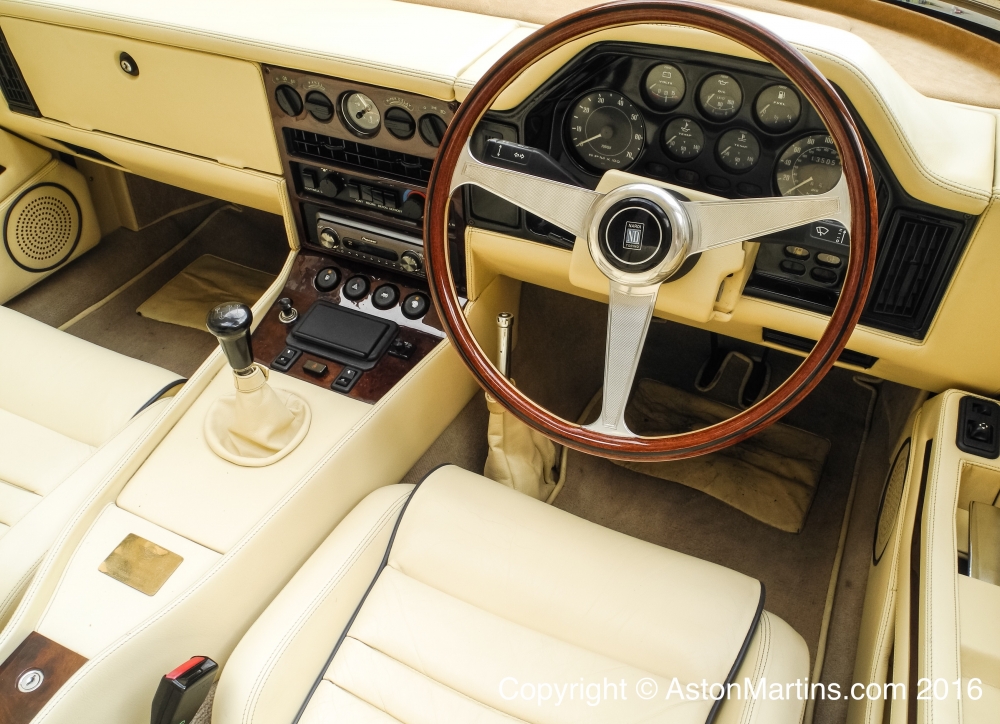
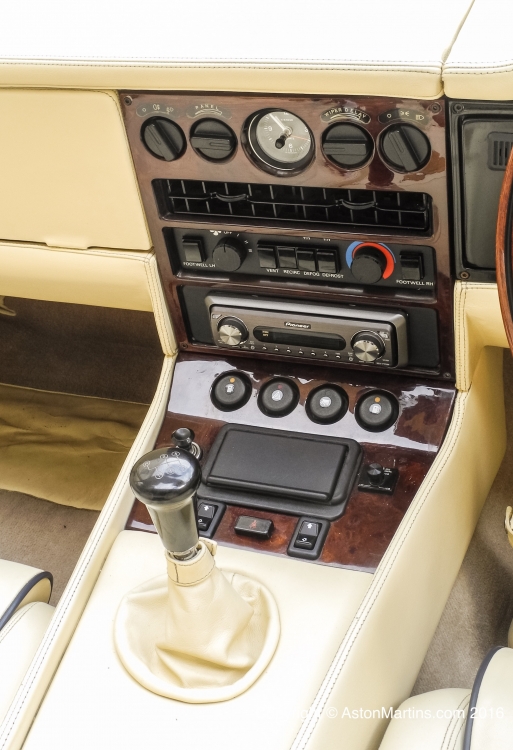
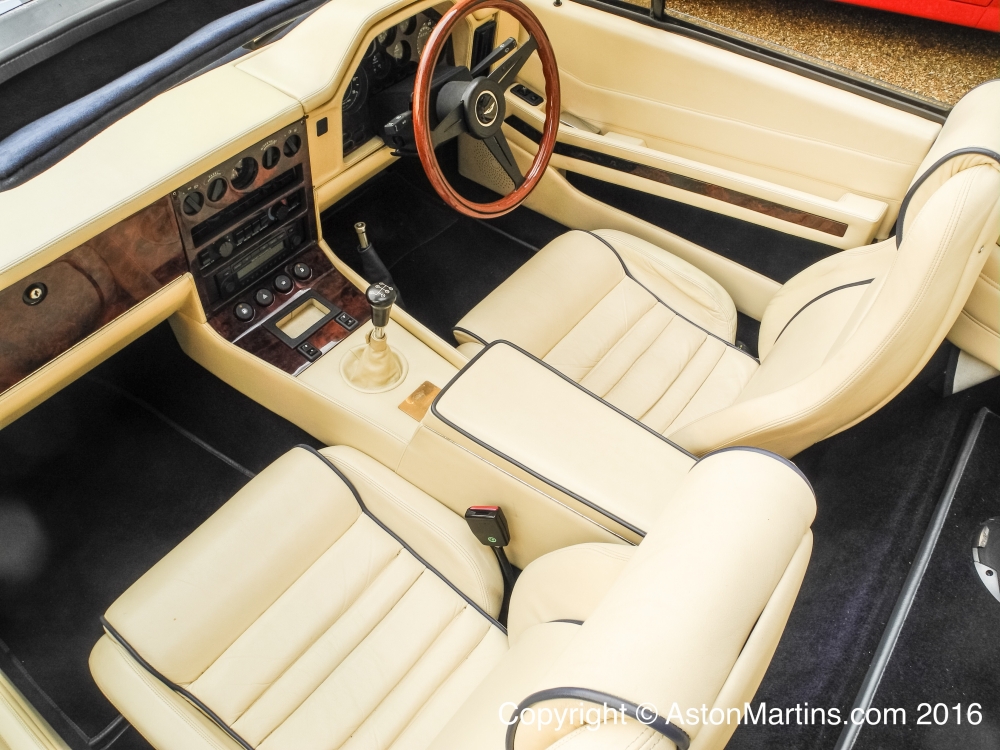
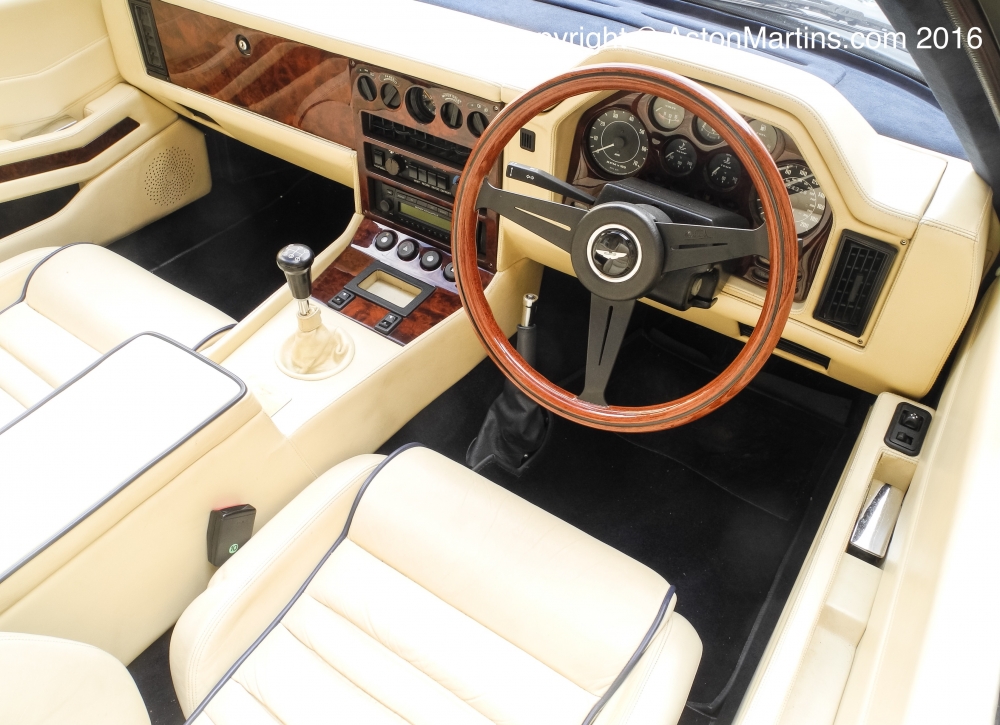
The interior of the Zagato was simple and modern when compared to the standard Vantage. Some of the later cars received walnut veneers to the dashboard and other cars had a 3 spoke Nardi steering wheel in place of the two spoke leather item shown here.

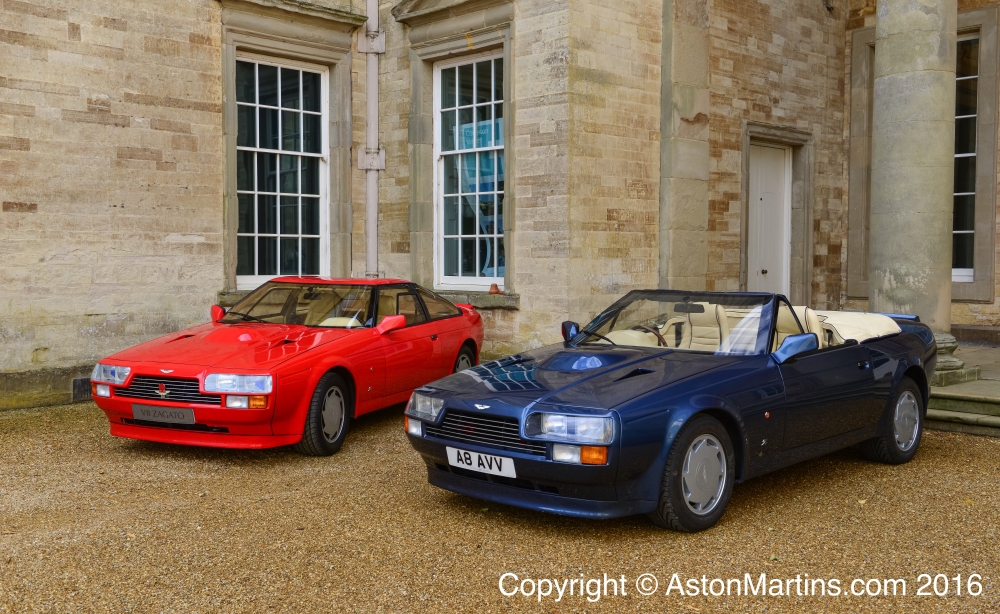
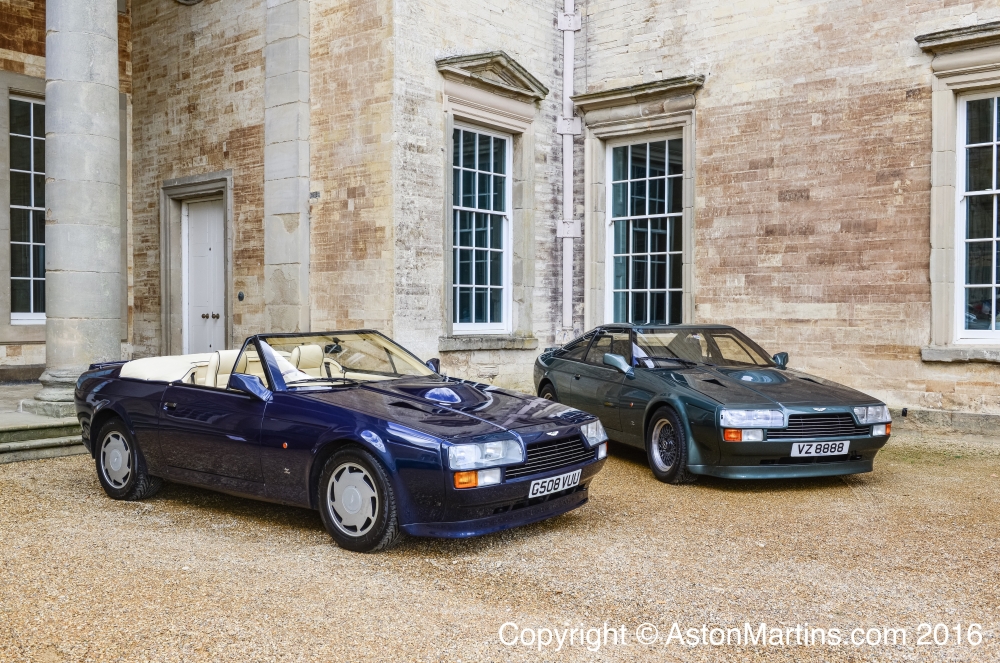
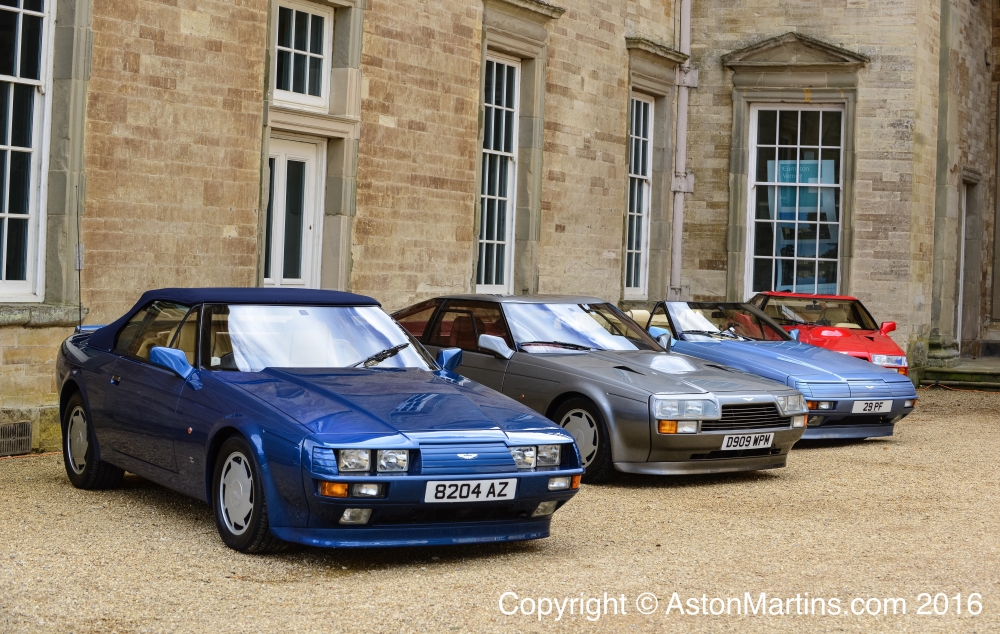
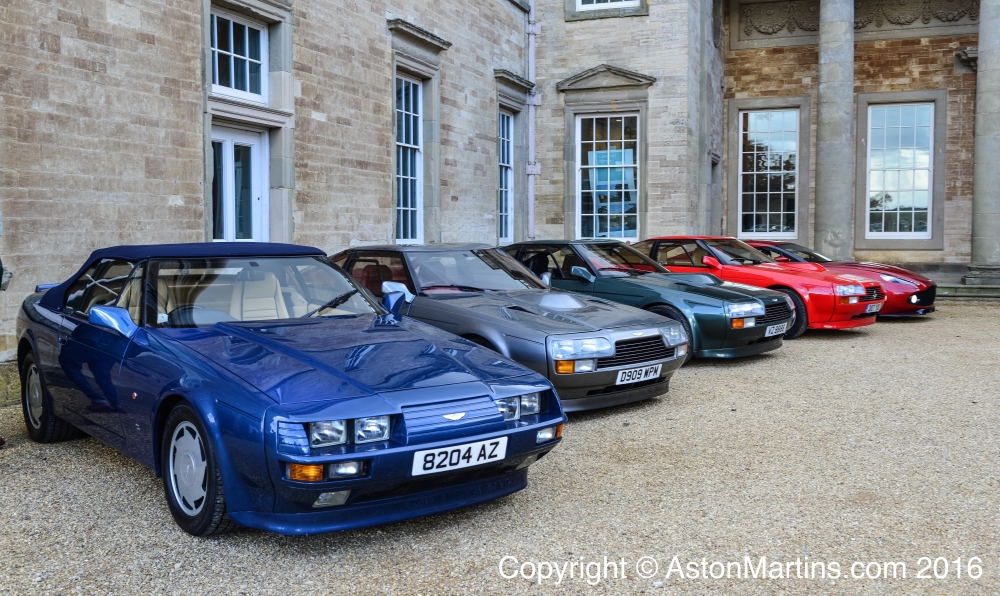
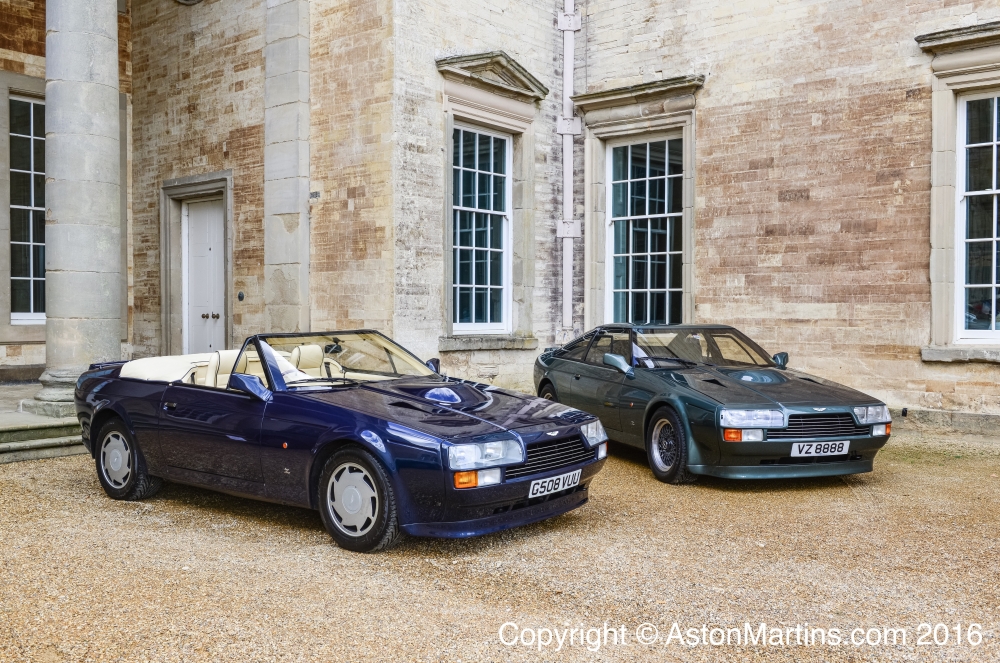
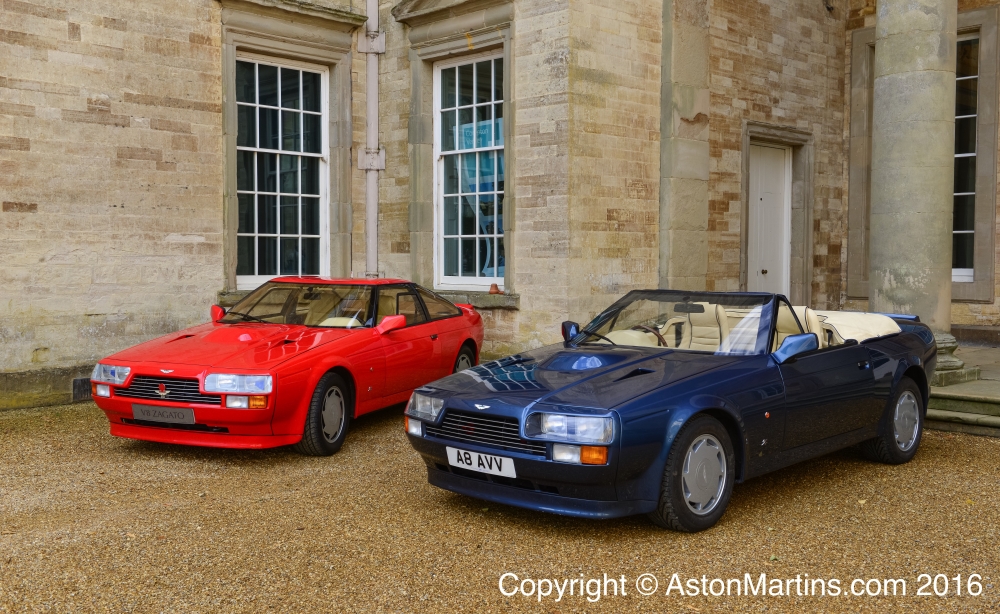
The dark blue metallic Zagato to the right is the same car, but 13 years later. The car now has a 7 litre R.S.Williams engine and has been converted to left hand drive.

The Vantage Zagato was never designed with racing in mind (unlike its contemporary, the Ferrari 288GTO). Only in more recent times during AMOC events have Zagatos actively competed. An here is one such car which has been extensively modified for the race track including a 7.0 litre R.S Williams fuel injected engine. The first photograph shows the car in road going form. The second picture, taken in the paddock during a 1999 AMOC meeting, shows the Zagato still in it’s original metallic blue finish with minor racing modifications. The third photograph, taken during the 2000 season shows many changes including stripped out interior, enhanced brakes with V600 style wheels, a modified air intake in the power bulge and a change of colour to Aston Racing Green. For the 2001 season, the bonnet air intake was ditched.

Performance from the 432 bhp engine fitted to the prototype car was phenomenal and even now is just about the fastest production Aston of all time. The true maximum speed of 185.8mph was achieved by the French magazine Sport Auto on an empty piece of motorway whilst the French Police were at lunch, just short of the planned 300kph. The 0 to 60mph time came up in just 4.8 seconds. Power output of the remaining production cars was pegged at around 408 bhp with the addition of power sapping emission equipment. But the factory service department could uprate them for the owners.

Lagonda Limousine

Lagonda Limousine

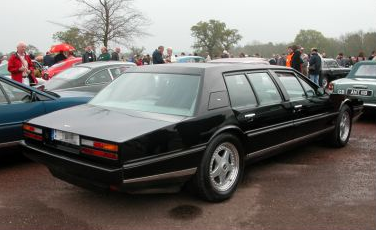
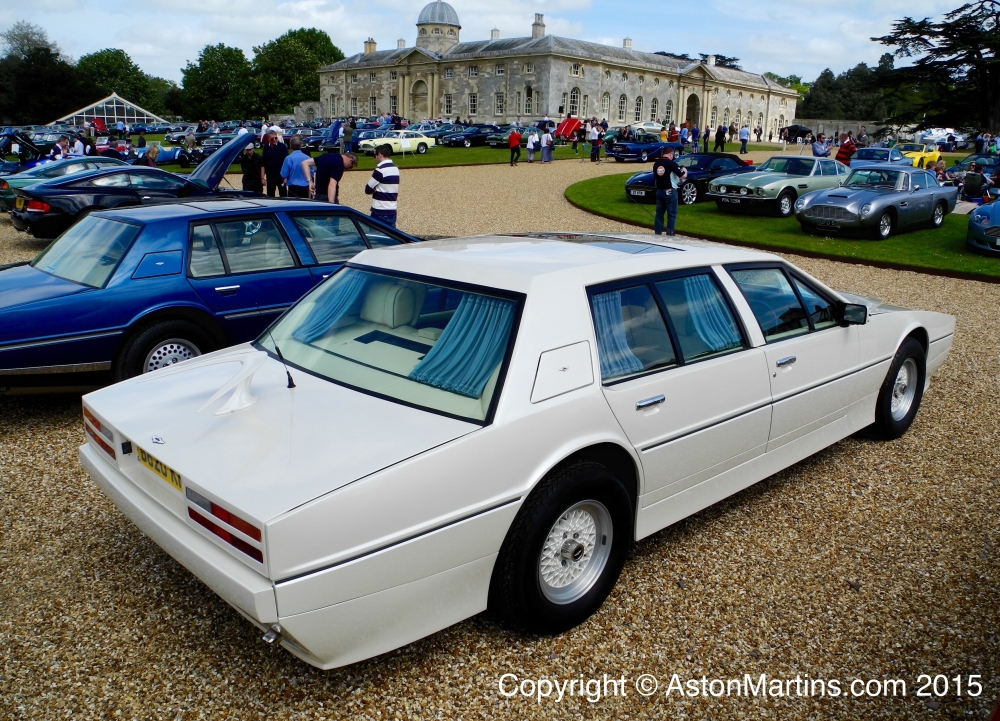
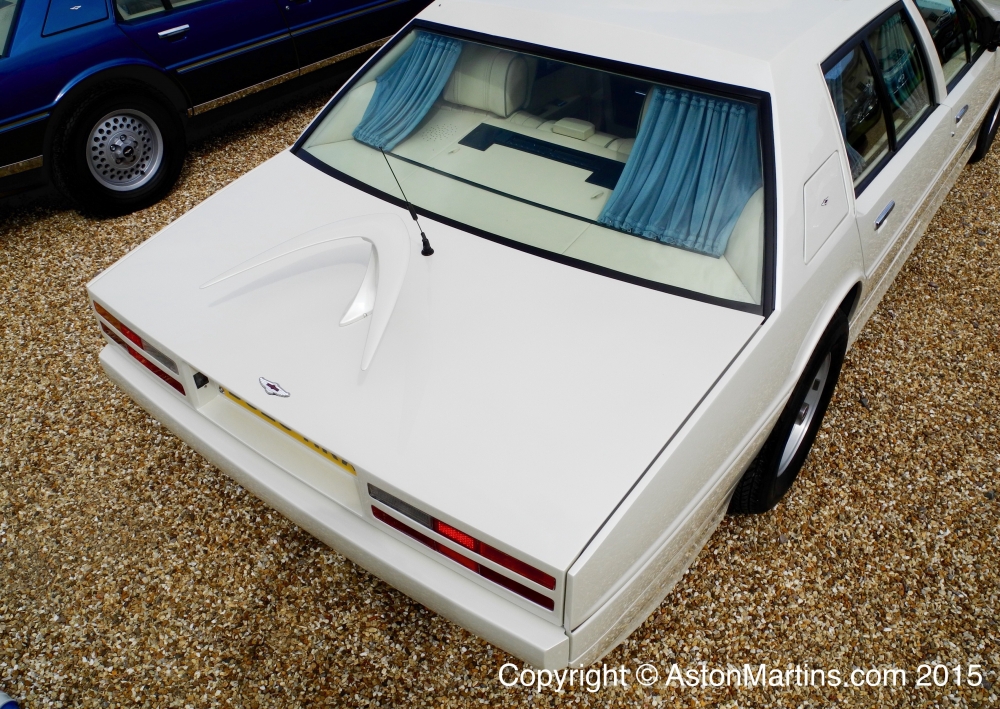
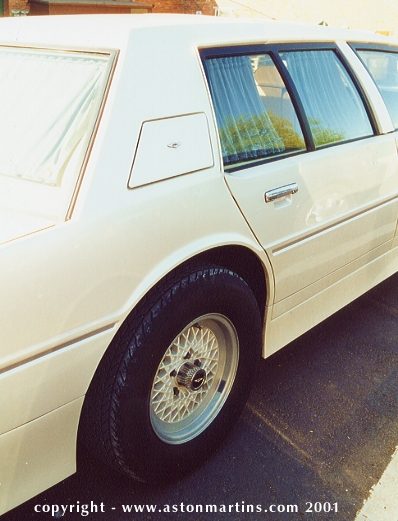
I first saw this example in 1996 when it was German registered. I caught up with it again in 2005 when it had been re-registered in Latvia. The rear view shows that the limousine must have increased rear headroom over the standard car.

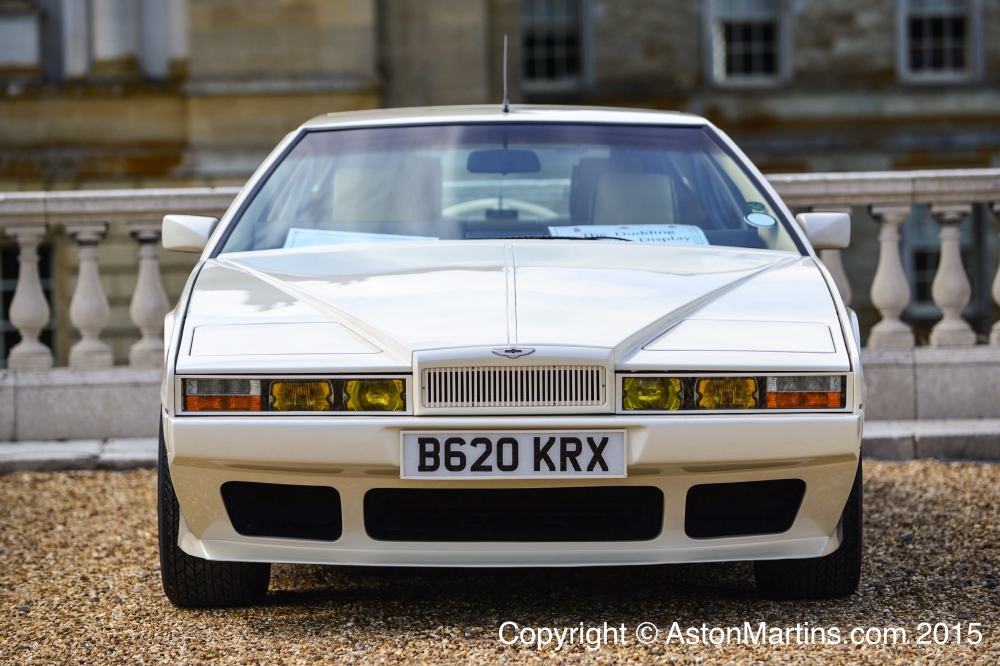
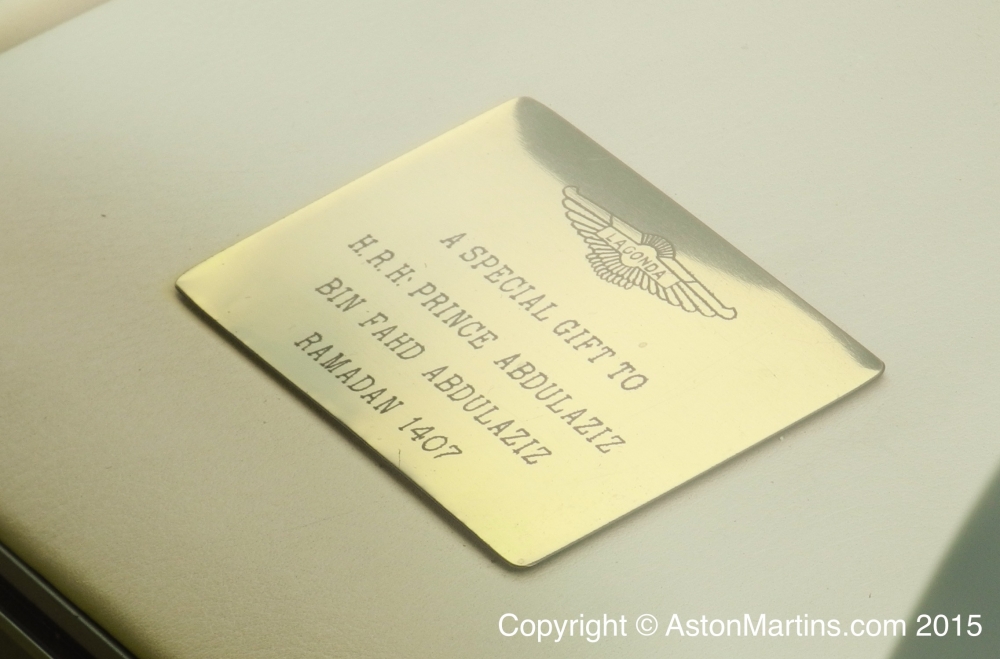
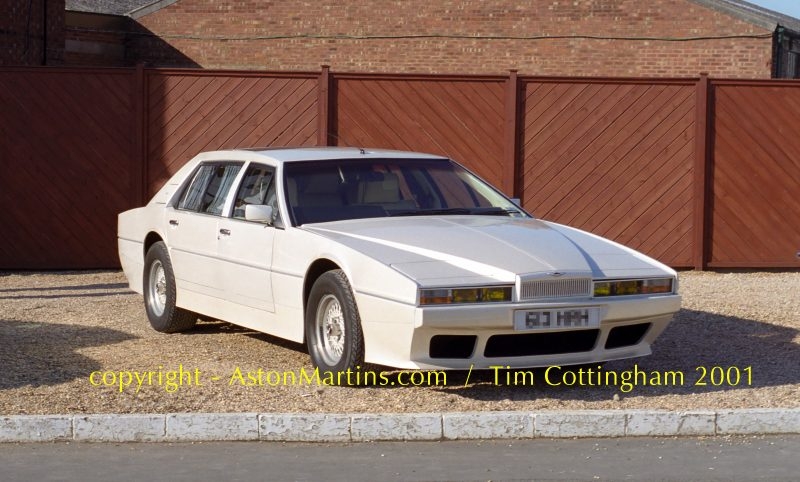
This single example of a RHD limousine was built for HRH Prince Abdulaziz Bin Fahd Abdulaziz. Finished in pearlescent white and featuring the full Tickford bodykit, this is a unique and extremely eye catching car with real road presence.

For more Lagonda’s – please visit astonmartinlagonda.net>

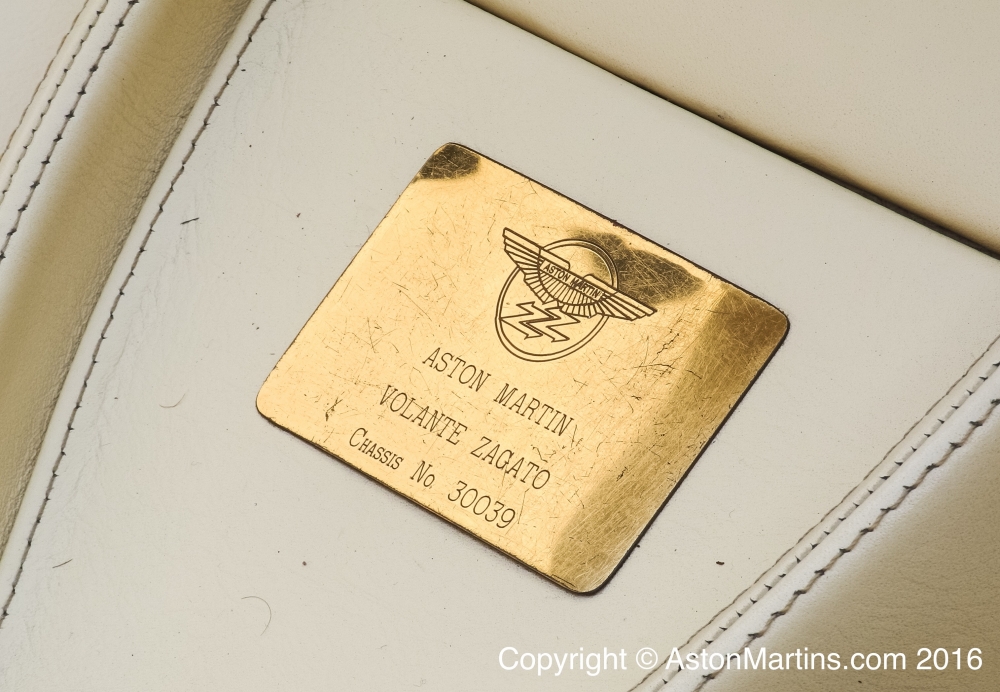
V8 Vantage Zagato Volante Prototype

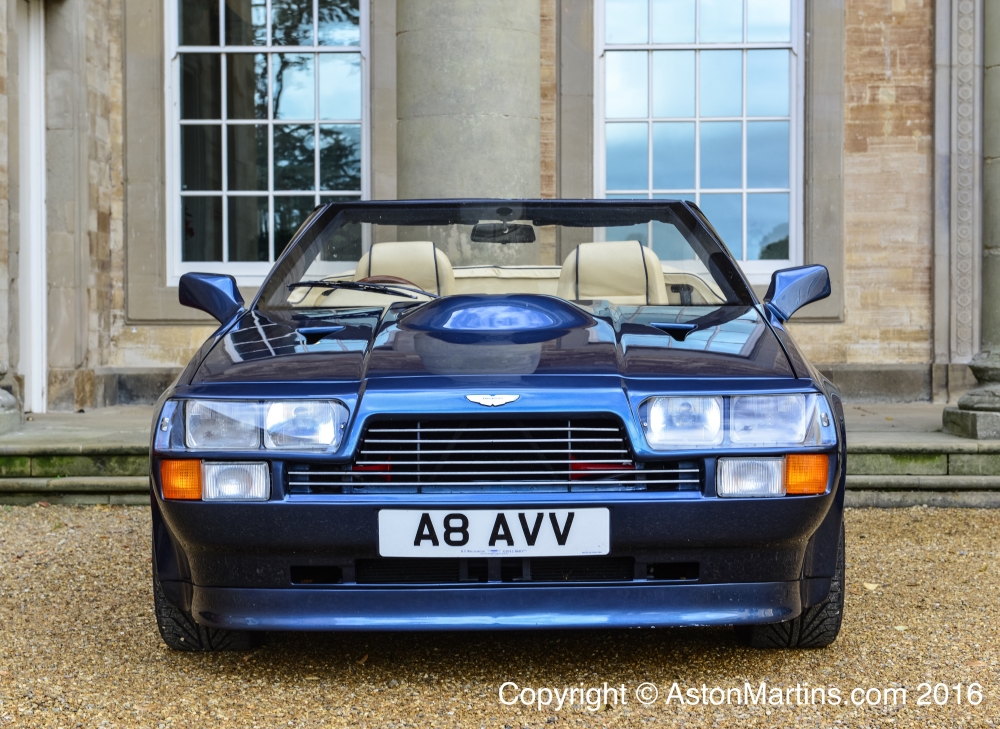
Following the show, the car was sold to a Middle Eastern collector and was not seen for some time until it returned to the UK after 20 or so years away. Many of the photographs here show the car when it was offered for sale by Bonhams auctioneers at Works Service in 2012.

Zagato Lagonda Rapide DP2051

Purported to be powered by an Aston Martin V8 engine although there was no reason for an engine to be fitted as the car was only a rolling shell. It was rather a benign design except for an awkward downward kink in the window line just behind the ‘A’ pillar. This gave it a somewhat broken back appearance which may have halted any possible production plans.

The car still survives in a private collection.

V8 Volante Zagato

V8 Volante Zagato

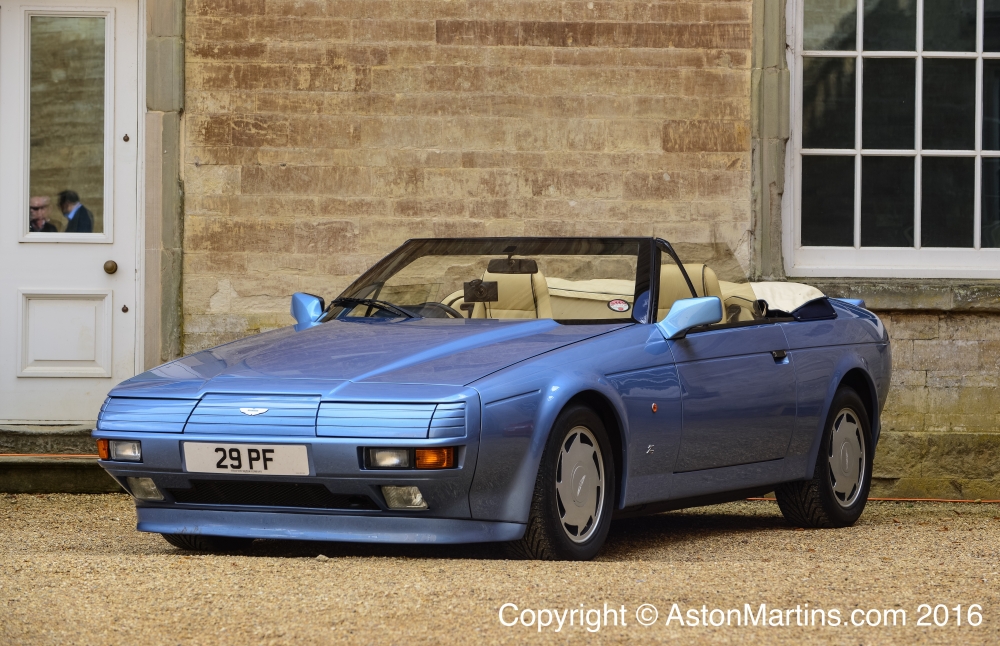
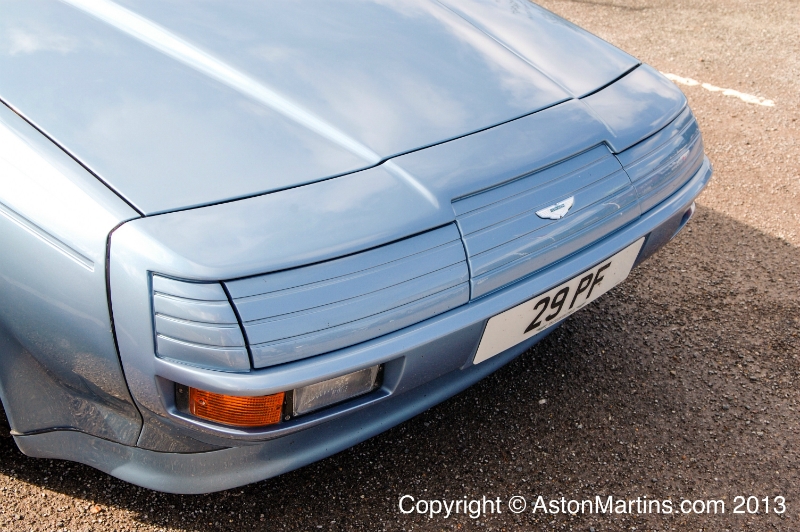
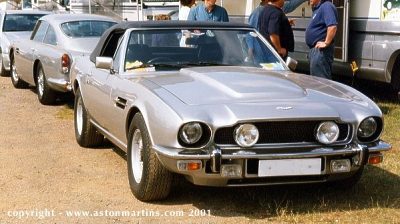
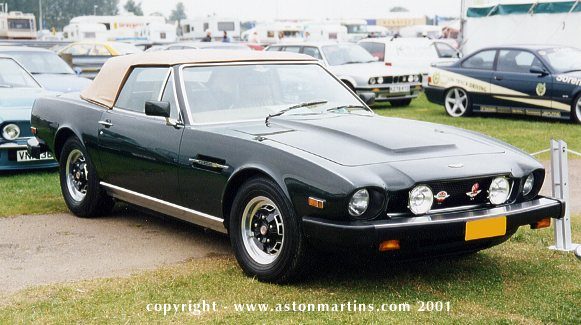
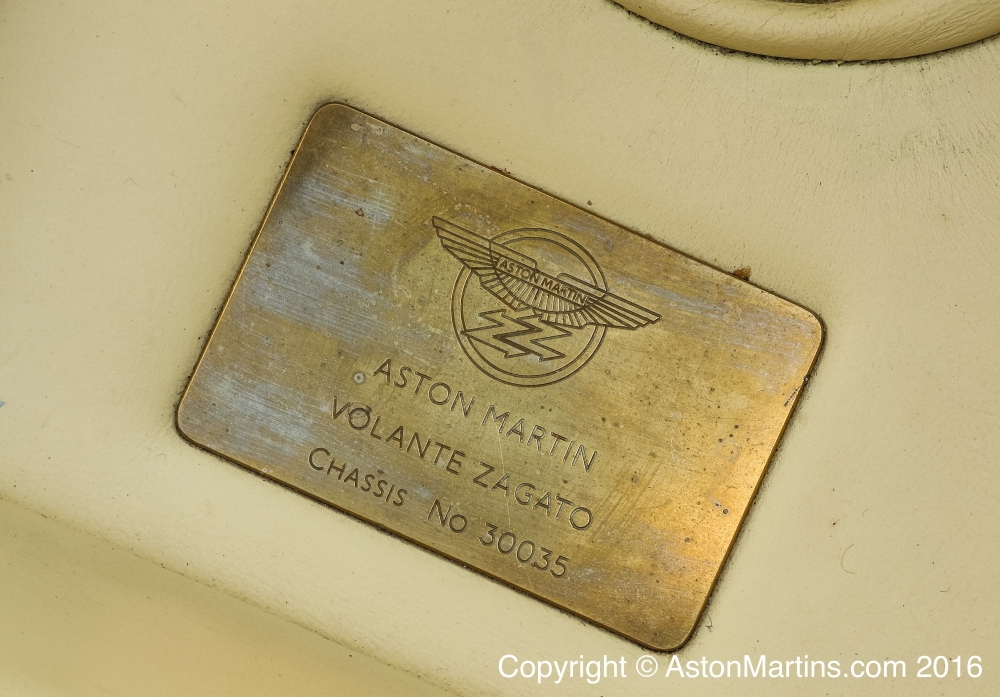
Apart from the lack of a fixed roof, the major external change from the coupe was a new dummy radiator grill and pivoted ‘eyelids’ to cover the head lamps when they are not in use. Extra strengthening added 35kg in weight and together with the efi engine with at least 100 less brake horse power, performance only slightly ahead of the V8 Volante, with a claimed top speed of 160mph and 0 to 60 mph in 6.0 seconds.

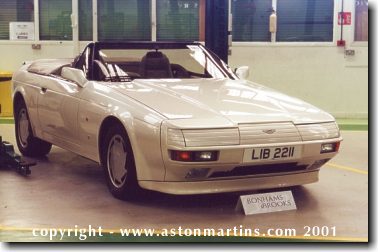
The car above, finished in Porsche White with contrasting grey interior and matching hood, was on sale at the Bonhams/Brooks sale at AML Works Service in May 2001. It is chassis number 10, the first car delivered to a private customer and is unusual in having the 5 speed manual gearbox – most other examples were automatic.

This unusual Volante Zagato (above) features the cleaner front grille and light arrangements of the coupe. Possibly two cars were built in this way, one was later converted to Vantage specification which probably makes this car unique. It was photographed at the 1999 AMOC Le Mans 40th anniversary meeting at Donnington Park.

Although initially AML intended to build just 25 Volante Zagatos, by the time that production ended in 1989, 37 production cars had been completed. Although most stayed true to the original V585 specification, some were later converted to Vantage specification or 6.3 litre spec by the Customer Services Division (now called Aston Martin Works) and others were uprated to 7.0 litre by RS Williams.

V8 Volante Zagato to Vantage spec

Is it just my eyes or is the styling of the Vantage Volante more settled and attractive than the coupe. How fast? who knows, but certainly in excess of 180mph and 0-60 in under 5 seconds.

The car above not only was built to Vantage spec with Weber carburettors but the engine was enlarged to 6.3 litre spec by Works Service before delivery.

V8 Volante (Weber carb)

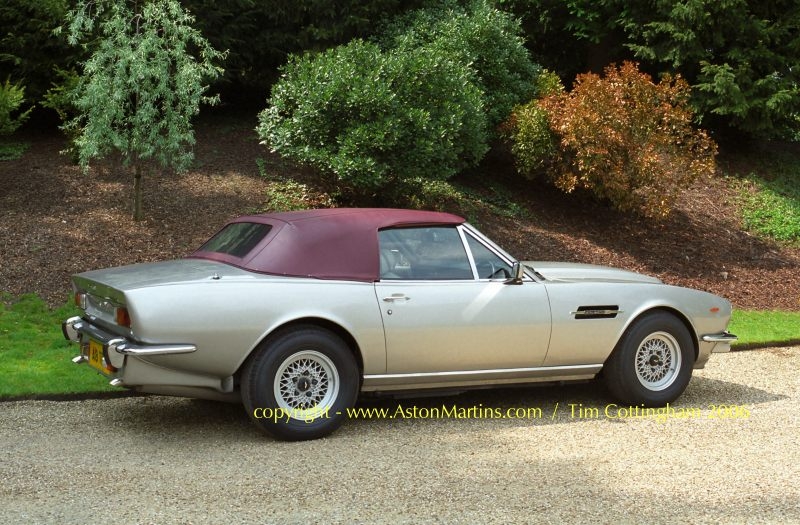
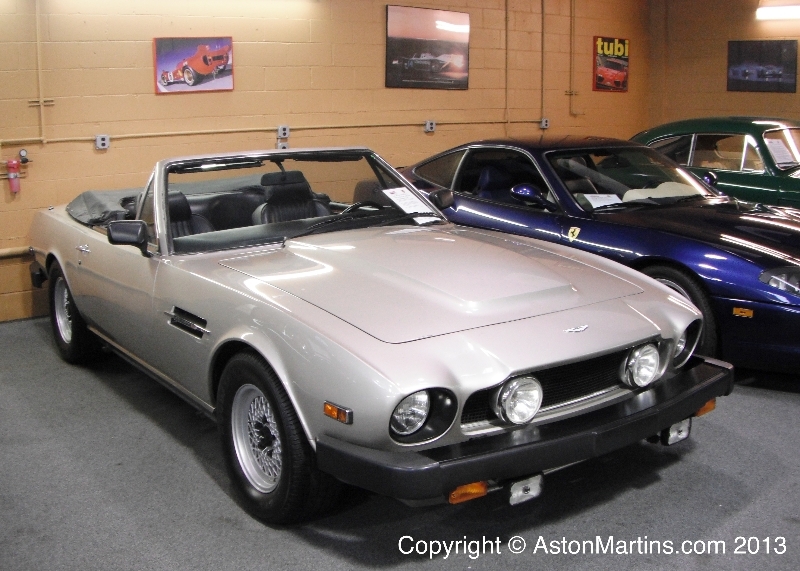
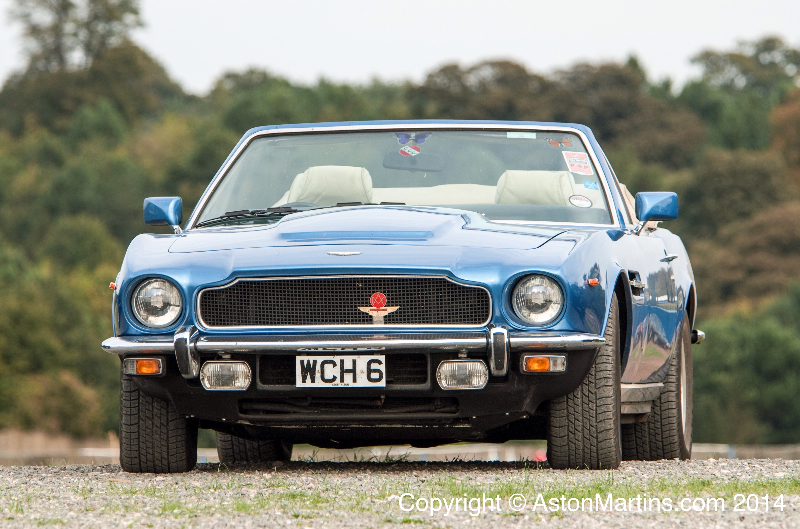
The separate chassis of the V8 needed some additional strengthening to compensate for the lack of a roof and thus added an additional 70 kg to the weight. This blunted performance slightly as did the standard fit automatic gearbox; yet a maximum speed of a little over 140mph and 0-60mph 7.7 seconds was more than satisfactory.

The car was so popular in the US that for many months, the only right hand drive example was the prototype (pictured above). This car was shown at the UK motor show in 1978, was extensively road tested and reviewed in motoring magazines and was the personal car of Alan Curtis, who at the time was Managing Director of AML. It is still finished in it’s original Tourmaline Blue although it no longer carries the prestigious AML1 numberplate.

Picture below is an early right hand drive series one Volante, easily identified by the bulge in the bonnet needed to clear the four Weber carburettors. Indeed, this style of bonnet was first seen on the Volante and only transferred to the saloon with the introduction of the ‘Oscar India’ four months later. This was once a works car and thus wore the famous AML 1 registration number .

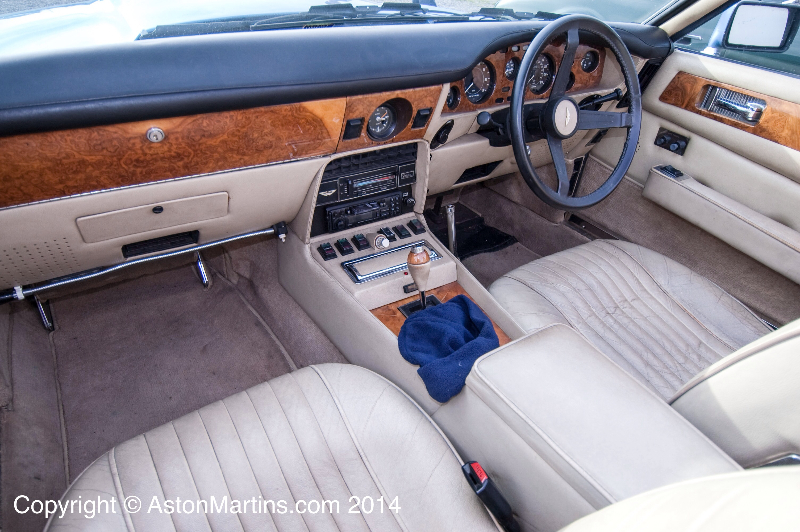
Walnut veneers made a welcome return to Aston Martins in the Volante. And again, a few months later, the saloon also received the the rich burr walnut veneers. Wood has been a feature of Aston Martins ever since then and until 2001 with the Vanquish, which has no wood inside whatsoever. The car with the blue interior is a rare manual Volante.

As one might expect, the Volante is more sought after than the closed saloon and often used values are at least 100% higher. But the blue car above was somewhat the exception to the rule at the Brookes/AML auction in May 2000. Whilst only described as ‘fair’ condition, the early Volante found a new owner for a modest £19,550 including commission. I would doubt you could buy the same car today for such little money.

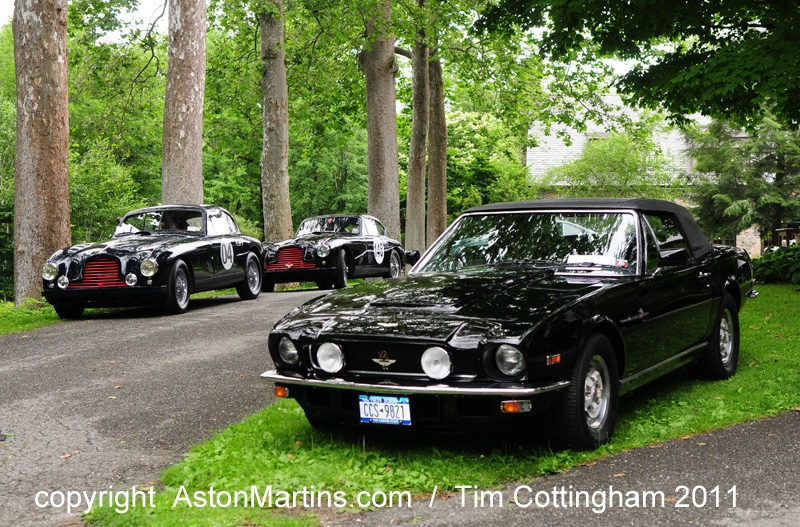
All four Volantes above are later carburettor cars and are fitted with the attractive BBS cross spoke alloy wheels which replaced the GKN wheels Even with the power operated hood erected, the car is still extremely handsome.

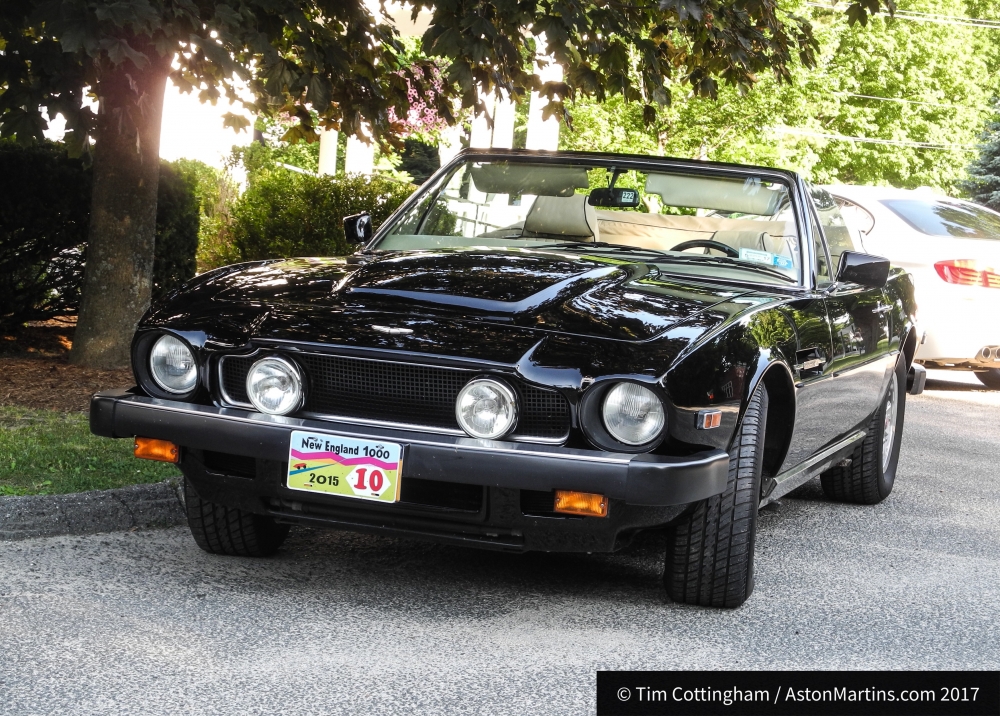
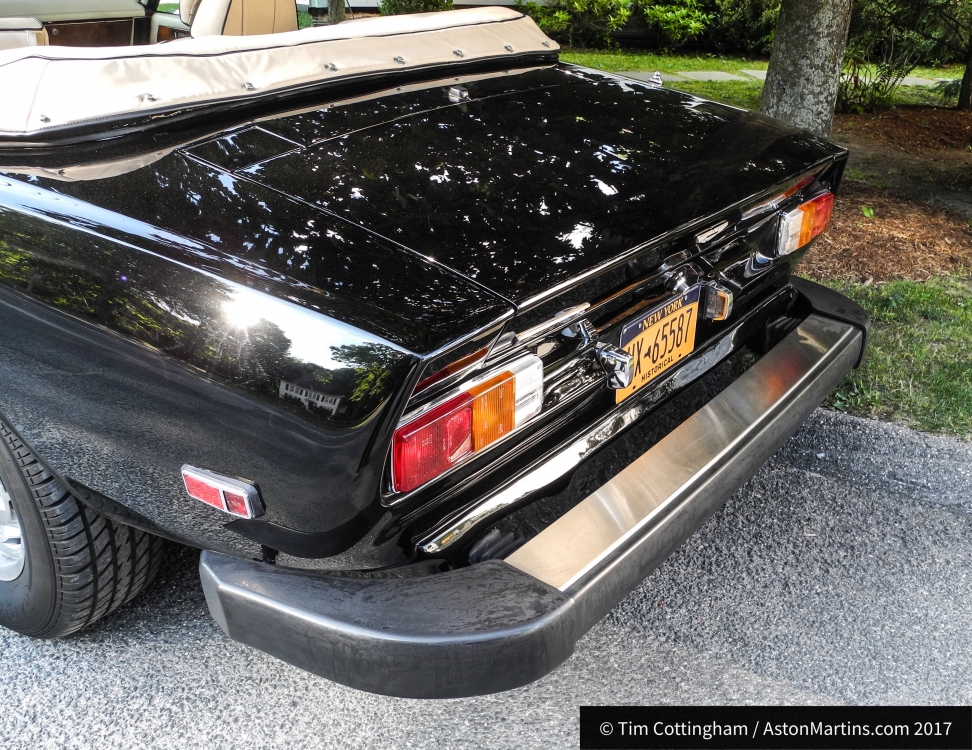
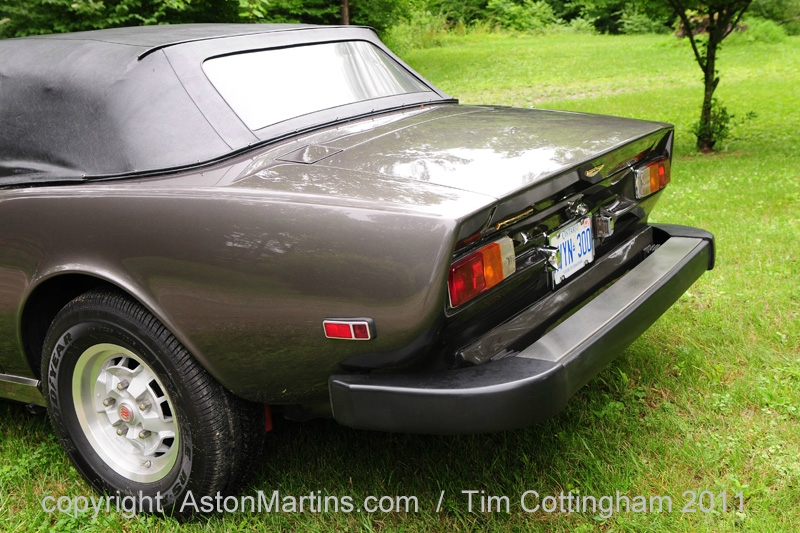
Initially the US cars had chrome bumpers just like all the European cars. But after 1979 the huge black rubber DOT safety bumpers were standard on cars for the US market. This example is typical of cars exported to the US after 1979, although it actually resides in the Netherlands.

Many US owners would like to convert their cars back to chrome bumper Euro spec. Not too difficult for the front, but the rear needs modifications to the bodywork. See the V8 Volante Weber efi page and visit Autosport Designs for more information. And before you book your car in for a conversion, I will add that despite their looks, the US bumpers do provide excellent protection for the coachwork.

Production of the carburettor Volante continued until January 1985 with the introduction of the revised fuel injected car; a total of 439 examples were completed.

The Elite class at the 2003 AMOC Spring Concours, Waddesdon Manor

The Elite class at the 2003 AMOC Spring Concours, Waddesdon Manor
Bulldog

Bulldog

This drivable concept car was developed to demonstrate the ability of the factory to produce a supercar for the 80’s. William Towns styled the Bulldog soon after finishing the AM Lagonda and thus created the ultimate wedge shaped sportscar design – with initial engineering work by AML chief engineer, Mike Loasby. When Loasby moved to work for DeLorean in 1979, the work to finish the car was given to Keith Martin who developed the car over the next three years. It was strongly supported by the then Managing Director of AML, Alan Curtis, who named the car after an aeroplane that he flew called the Scottish Aviation Bulldog. Within the factory it was known by the code name K-9, perhaps after Dr. Who’s robotic dog. Certainly the area of the factory that the car was built was known as ‘the Kennel’.The Bulldog is powered by a twin Garrett AirResearch turbocharged 5.3 litre V8 originally with Bosch Fuel Injection from the DBSV8. Power output on the test bed was claimed to be excess of 700 bhp, although installed in the car this would have been in the region of 600 bhp. I have read elsewhere on the web that the theoretical top speed is in the region of 237mph, a think this is a little optimistic; I would guestimate upto 210 mph. During testing at MIRA ‘only’ 192 mph was recorded so Bulldog was the fastest V8 powered AM, loosing out to the AMR1 with a confirmed 217mph. It was however well and truly trounced by the One-77 and the Valkyrie.
Pirelli P7 tyres are used all round fitted to Compomotive split-rim alloy wheels. Around the circumference are fitted wheel disks with blades to direct cooling air to the brakes. This feature was later seen on the successful racing Porsche 956 sportscar. Front wheels are shod with 225/50’s whilst rear wheels have massive 345/35 tyres.

Very serious consideration was given to a small production run of between 12 and 25 examples but the car remains totally unique. When AML changed hands in 1981, the new Chairman, Victor Gauntlett considered the company had more pressing problems and the Bulldog was sold off for a reputed £130,000 to a Middle Eastern Prince.

Of special note were the pair of massive power operated gullwing doors which took the height of the car from just over a metre to nearly two. The mechanism is actually based on that used power the V8 Volante hood mechanism.

This left hand drive car of both great length and width only seats two occupants. Instrumentation was provided by the then ‘state of the art’ LED technology and touch type sensors straight out of the new AM Lagonda.

Many detailed changes occurred in the 40 years that has elapsed from the cars unveiling. The silver over light grey machine was repainted during 1981 to two tone metallic green. The original brown leather of the interior was replaced by stone leather piped in brown. Other additions to the car included (rather bling) gold plated trim to switches and gear stick, roof mounted stereo, ugly but useful rear view mirrors and a TV showing the rear-view of the car.

The black and white 1980 press images below were taken by AML photographer, Roger Stowers back in 1980 and are very interesting to compare to the more recent photographs.

I first photographed this unique car during a very rare public appearance in the AMOC marquee at the 1997 Coys Festival, Silverstone and subsequently at the Stratton Motor Company open day, 1998. Interestingly at this time, the car has lost the fuel injection system initially fitted and had quad Weber carburettors. These were, I think of the side draught type and were paired up within the ‘V’ unlike the down draught type fitted in a line down the centre as would be found in a V8 Vantage. More recently, the Bulldog was one of the star cars at the Aston Martin Centenary Celebration at Kensington Palace in 2013. At this time, the car was still a non-runner but attempts to get it moving under its own power again continued through 2014 to no avail.

Despite being only an engineering exercise, interest in this drivable usable concept car remains extremely high. Up until 2016, the Bulldog remained the only publicly seen fully engineered mid-engined Aston Martin. The mid-engine version of prototype V8 Vantage,  AM305 from 2000 was dropped before ever being seen by the public and the DP-100 Vision Gran Turismo only exists in the virtual world and as a full-sized model. The spiritual successor to the Bulldog announced in 2016 – Aston Martin together with Red Bull Technologies unveiled the mid-engined AM-RB 001, hypercar which went into limited production in 2021.

In 2020, Bulldog was sold to a collector and moved to Classic Motor Cars in Bridgenorth to undergo an extensive restoration. I was extremely fortunate to see the car midway through the first year of the restoration in September 2020. The plan was to bring the car back to 1980 spec with modern fuel injection and for it finally to crack the 200 mph barrier.

By late Summer 2021, the car was about finished and was put on display at the Hampton Court Concours of Elegence.  It was also seen at the 2022 AMHT Aston Martin Festival at Brooklands together with Concorde.

By June 2023, the car was prepared to break the 200 mph barrier.

« Newer PostsOlder Posts »