Latest News - 01/09/24

What's New @ AstonMartins.com?

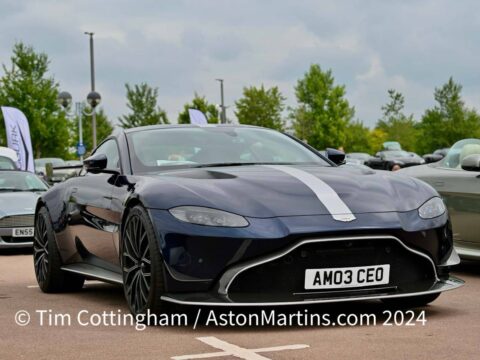
Vantage AM6 CEO by Q

DB7 V12 Vantage Volante ‘Stratstone Jubilee’ Edition

 Particulars of the unique and ‘fully loaded’ Jubilee are listed below

  • Coachwork finished in special order Jubilee Blue
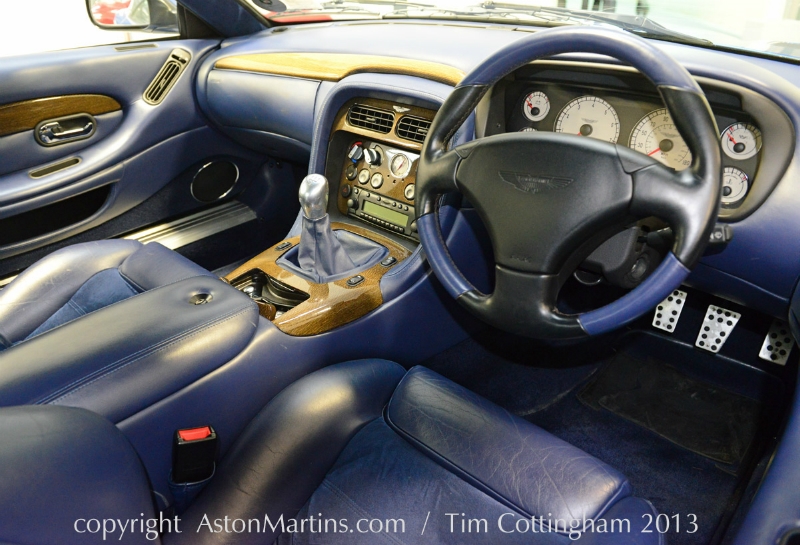
  • Magnolia Hide Interior with perforated seat centres and Jubilee embossed head restraints
  • Contrasting Navy Blue dash top roll, door tops rear quarter panels and seat piping
  • Hood cover on Volante piped in Magnolia, hood in blue
  • Dark blue Wilton carpets edged with Magnolia hide
  • Blue over carpets edged in Magnolia with ‘Jubilee’ embroidered logo in silver
  • Parchment Alcantara headlining
  • Special order dark Italian Walnut
  • White dials with silver jubilee graphics
  • Special order 19 inch wheels
  • Silver brake callipers with blue Aston Martin lettering
  • Touchtronic Transmission
  • Premium audio plus satellite navigation and Tracker 24 hour
  • Heated front screen
  • Fitted Umbrella (Black/Silver Handle)
  • Large Bore Tail Pipes
  • Satin Pedals
  • Unique wide mesh chrome grille with ‘Jubilee’ badge and chrome door mirrors
  • Clear side repeater lenses
  • Numbered Jubilee sill plaques
  • Handbook bound in Navy Blue hide and silver embossed plus a numbered limited edition gents chronograph watch

All 24 cars were pre-sold and their lucky owners took delivery at a very special ceremony held at Thornbury Castle. The cars were especially hidden from the excited new owners during the daylight hours in a large marquee especially labelled ‘Tinnars Moat Craft Fair’ – Tinnars Moat is of course an anagram of Aston Martin. After a lavish meal, the sides of the dining marquee were dropped and the cars were revealed.

In addition to the UK/European cars, there were a further 26 cars made, all left hand drive, for the North American market to exactly the same cosmetic specifications.

DB7 V12 Vantage Volante GTS II
DB AR1

DB AR1

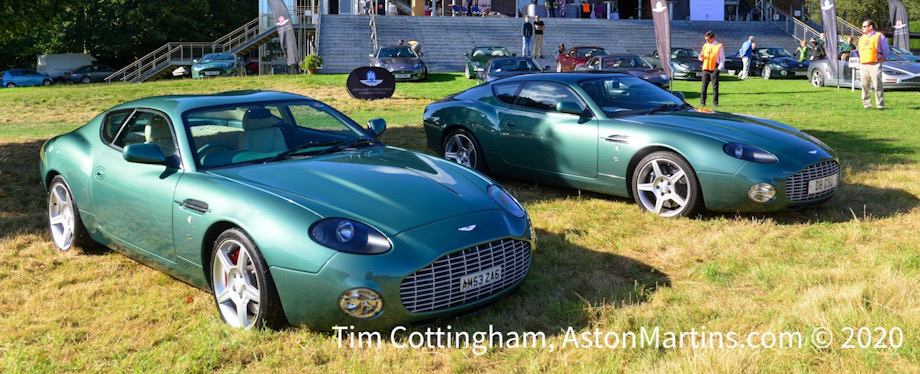
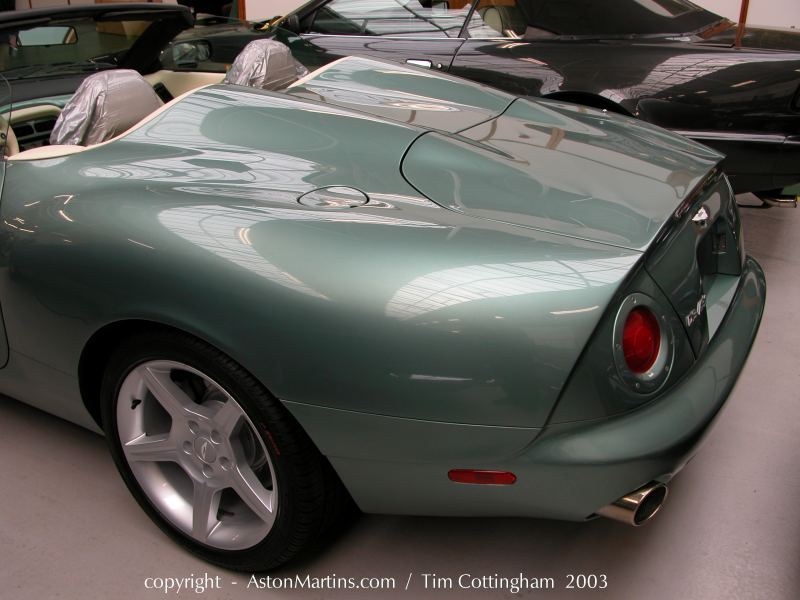
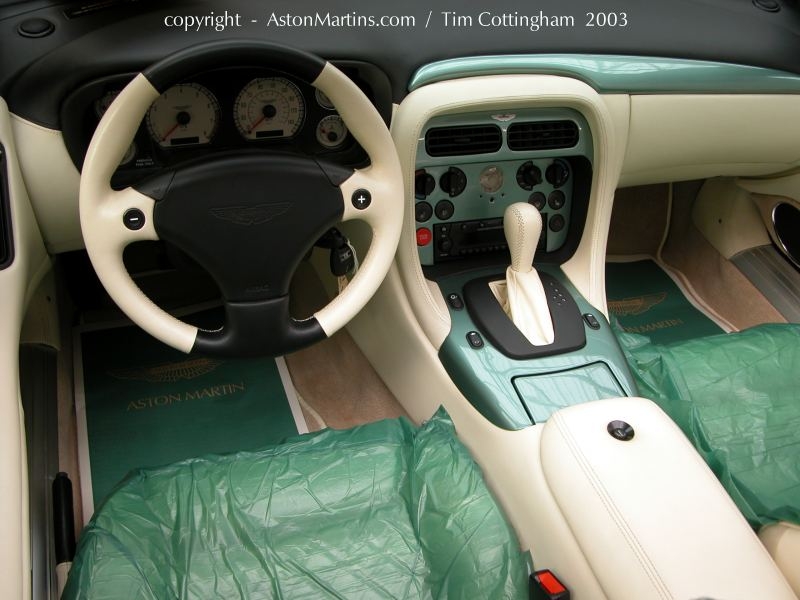
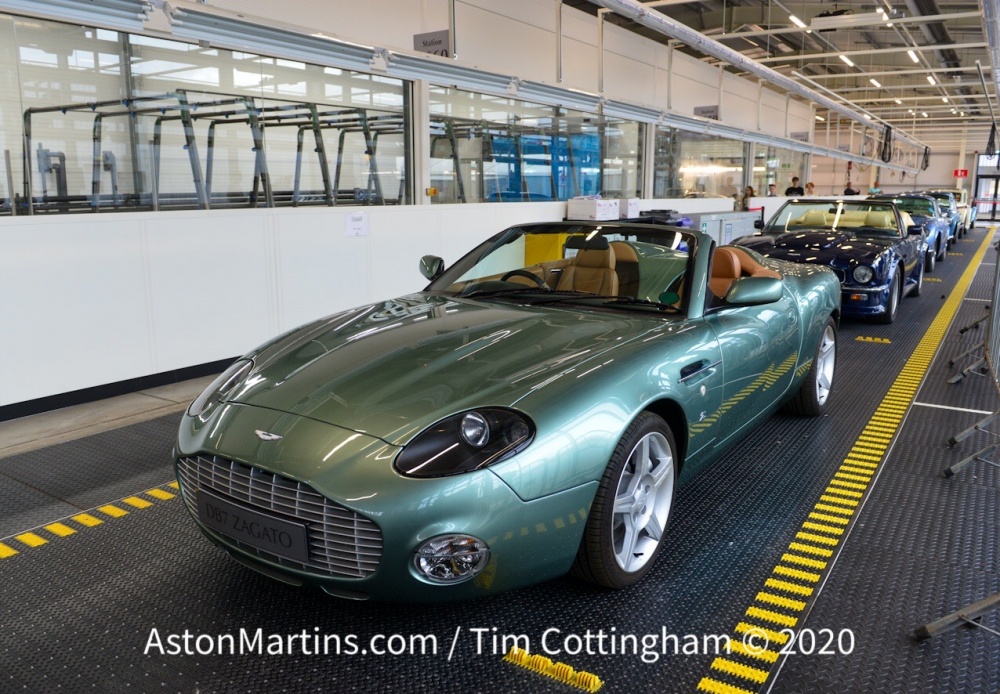
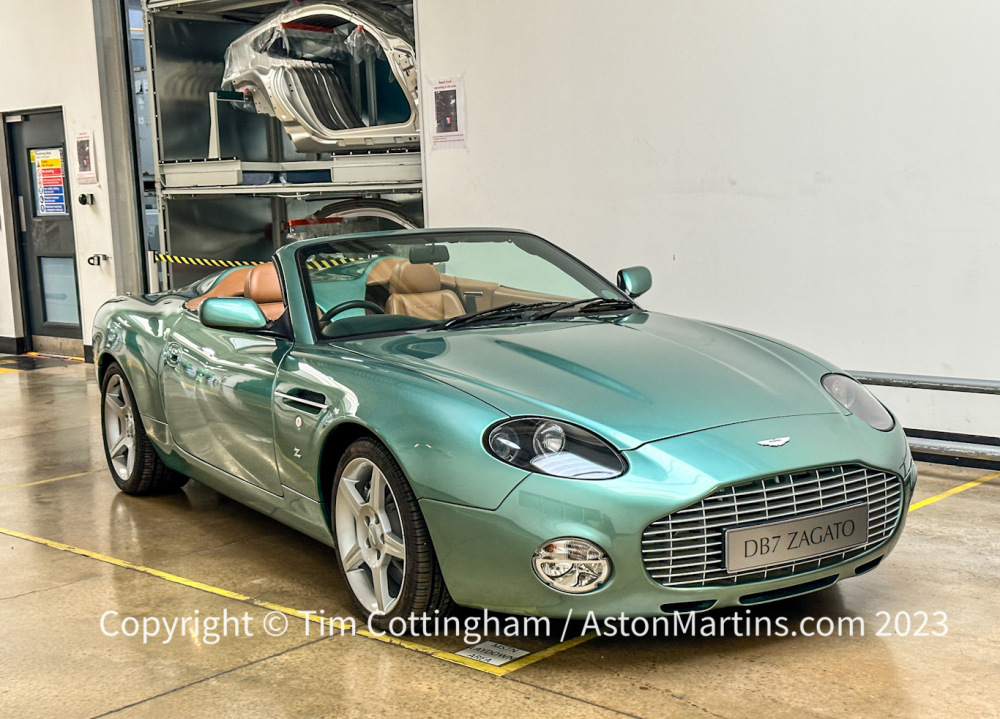
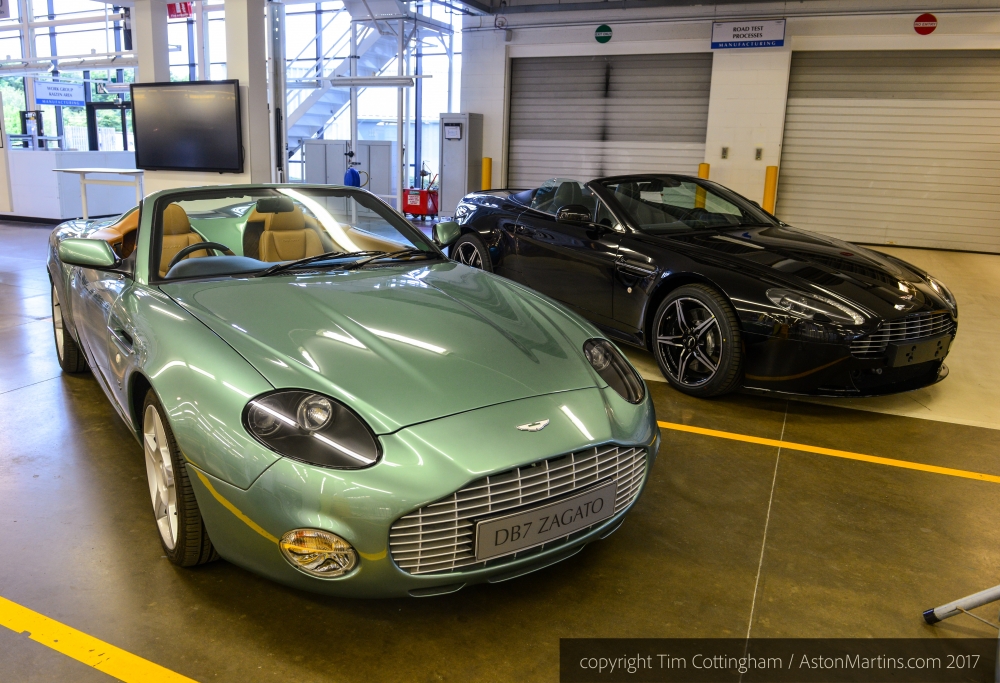
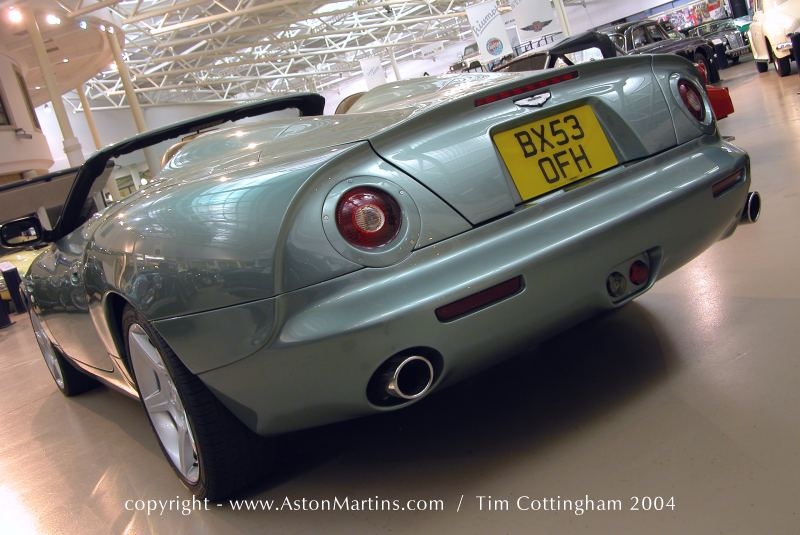
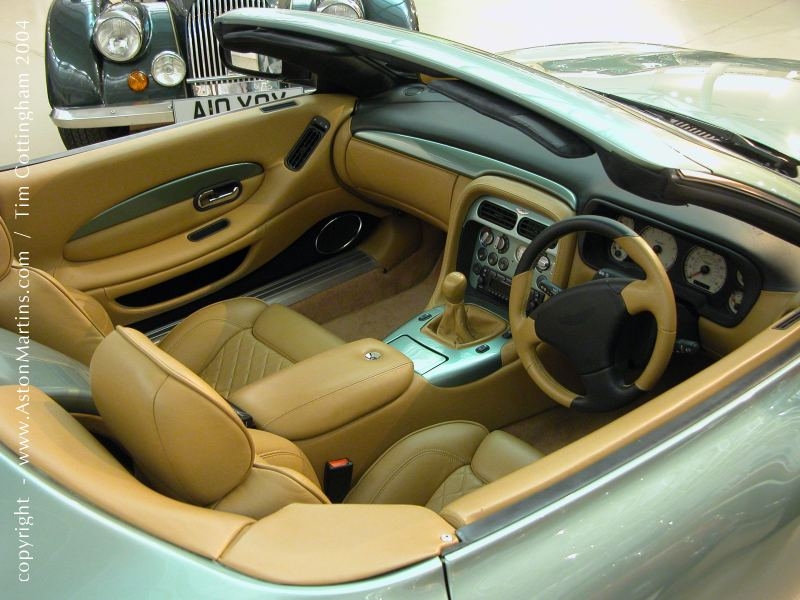
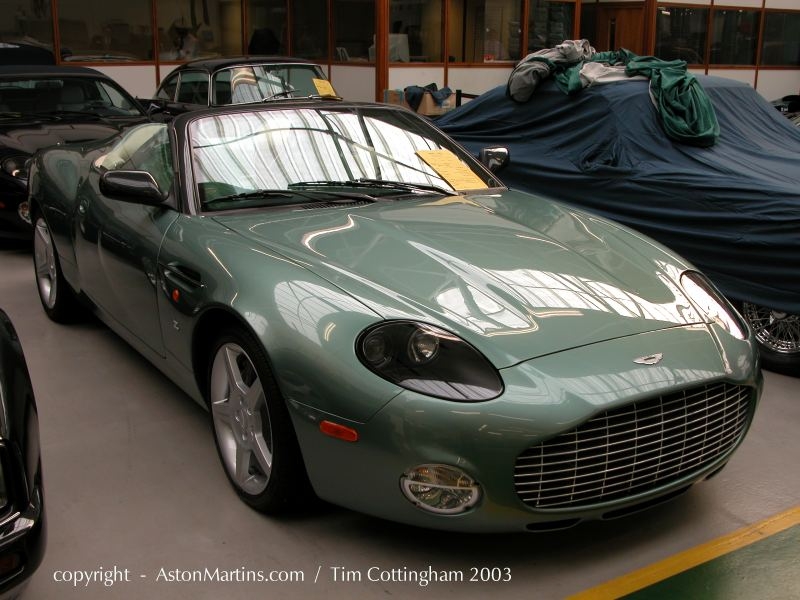
The prototype car, converted from an early DB7 Vantage Volante was initially shown to potential clients in Los Angeles just prior to the public unveiling at the LA Auto Show in early January 2003. A very limited production run was then planned and within only three months, all 99 planned production examples were apparently taken up by eager enthusiasts. Right from the start, AML didn’t want this car to be seen as an open DB7 Zagato, and I must admit I didn’t understand exactly why but now I know. The DB7 Zagato chassis is shortened, whereas the DB AR1 chassis is kept as the standard length due to the demands of US safely regulations. If the chassis had been shortened to the length of the DB7 Zagato, the AR1 would have to have undergone further expensive crash testing.

The DB AR1 was based on the DB7 Vantage Volante and features coachwork designed and executed by Zagato in Italy. The rare six speed manual car is powered by an uprated ‘GT’ version of the V12, with power boosted slightly to 435bhp, torque to 410 lb ft plus an active sports exhaust system similar to that on the V12 Vanquish. Far more DB AR1’s were made with Touchtronic 5 speed transmission mated to the regular 420bhp rated engine. This enables the manual car to achieve 184mph and 0-60 in 5.0 seconds whereas the auto was limited to 165mph and does the dash to 60 in 5.1 seconds.

The DB AR1 was intended to be the last Aston Martin to be built at the DB7 production facility, Bloxham, before it early in 2004. Oddly, during a tour of the new Gaydon facility during September 2003, a small number of DB AR1 bodyshells were spotted around the paint shop.

Not all the DB AR1’s were delivered to the US. Eight left hand drive cars were delivered to customers in mainland Europe, mostly Germany and a single right hand drive production example has remained in the UK for a very fortunate customer.

Generally speaking, the DB AR1 appears to be been the least practical road car AML have ever made. Few if any of the examples reaching the second hand market appear to have covered many miles. Collectors in the UK took advantage of the strong pound to re-import during 2007 this fascinating car for use on dry Summer days only. You will see below one UK example with a rudimentary canvas hood retro fitted. I’m also aware that one owner is having a hardtop made here in the UK which might work quite well.

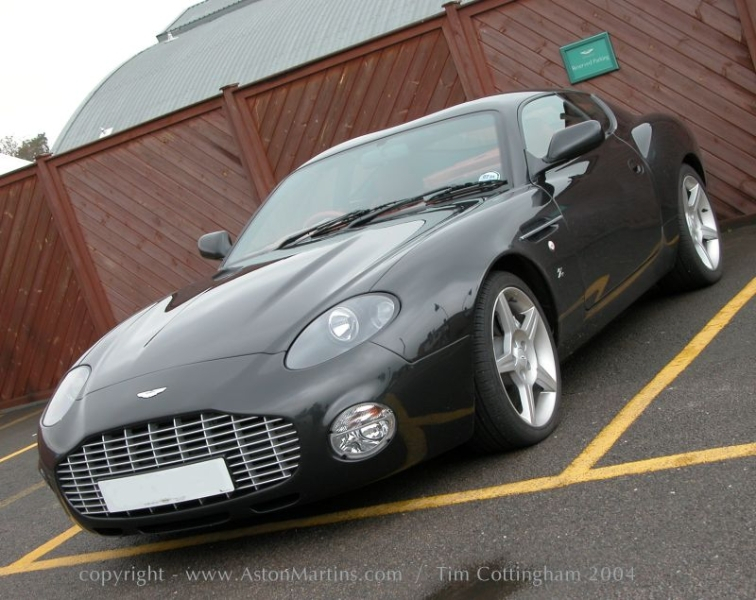
The car above is the prototype car from the LA Auto Show and was based on a converted 2002MY Vantage Volante. One feature only carried over to tiny number of production cars is the charcoal windscreen surround; most production cars have body painted windscreen surrounds.

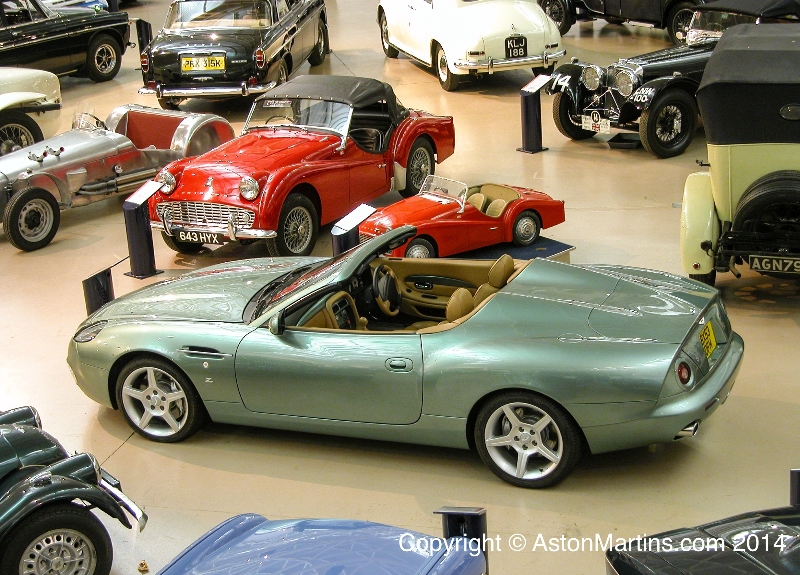
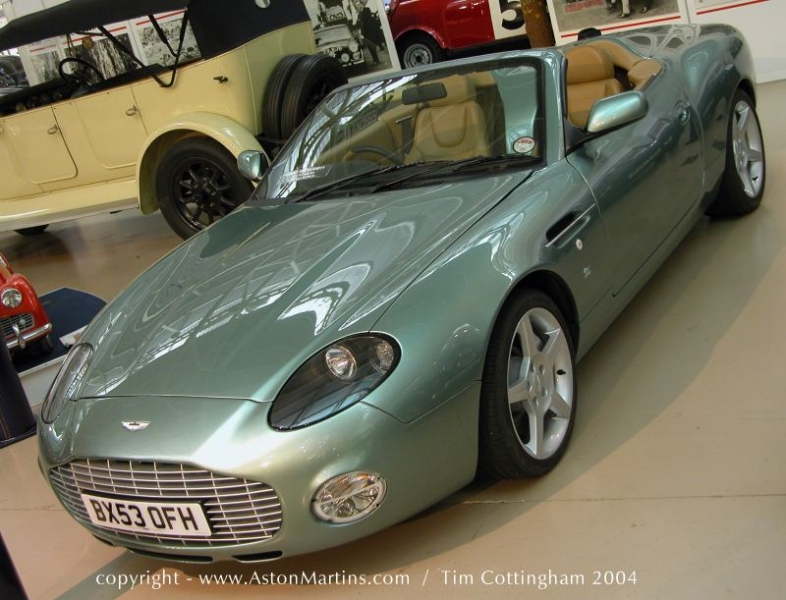
The car featured above is also a unique DB AR1 as it is chassis number 100 out of a customer production run of 99 cars. This example is chassis number 800100, right hand drive, six speed manual transmission that has been retained by AML for their collection. I photographed it in October 2004 at the British Motor Heritage Trust Museum at Gaydon, Warwickshire where it can often be seen on display.

All rights to supply parts for the DB AR1 are now held by the Dutch Aston Martin Heritage specialist, Noble House.
DB7 V8 by Works Service

The finished car received the Driving Dynamics bodykit, brass coloured mesh grilles and the 5 spoke lightweight Dymag GT wheels. The bonnet was especially made in aluminium with twin power bulges together with bespoke aluminium wings and boot lid.

The above photograph has been especially supplied to me by a friend at Aston Martin Works.

DB7 V8 GT1 for Le Mans

Hastily prepared for the qualifying weekend and driven by Eric Helary and Alain Cudini, the car failed to qualify for the 1995 race by the narrowest of margins. It was unfortunate as the DB7 had become victim of the intense rivalry between the other GT1 cars, the McLaren F1 and Ferrari F40 GTE. Despite being on the reserve list, it didn’t race in anger; it’s owner was so exasperated being classified below 3 others, he retired the car. I believe that if the car was able to be entered in the GT2 class, it would have raced, and maybe even finished. The car now resides in the owners motor museum, Manoir de l’Automobile, in Brittany, France.
These photographs, taken at Manoir de l’Automobile, have been very kindly provided by a visitor and friend to the website, Jacques Labbe – I am much indebted to Jacques for these pictures

 Manoir de l’Automobile

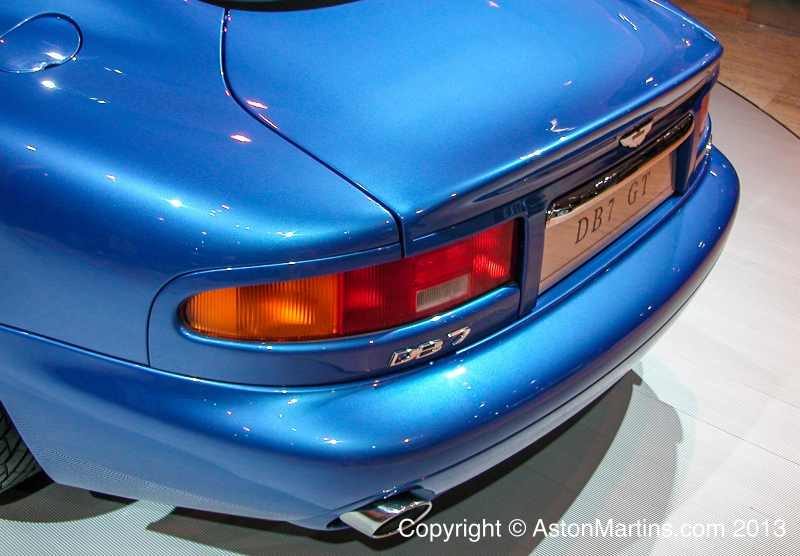
DB7 V12 GT

DB7 V12 GT

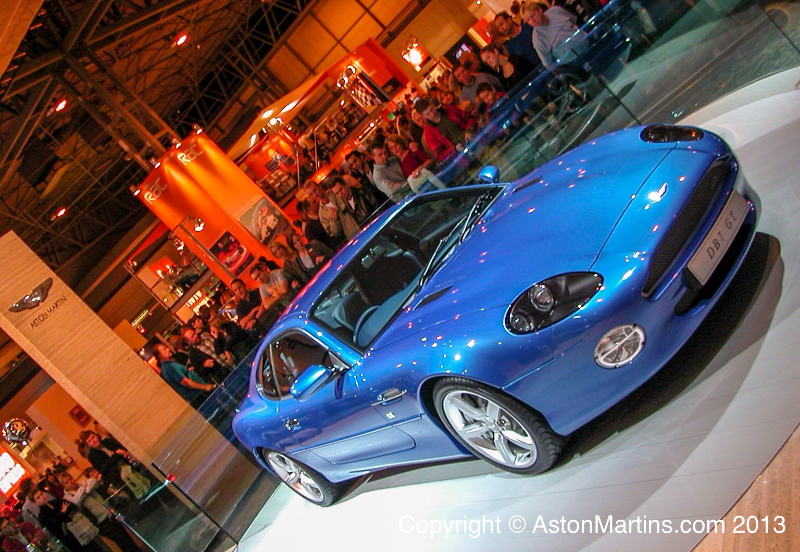
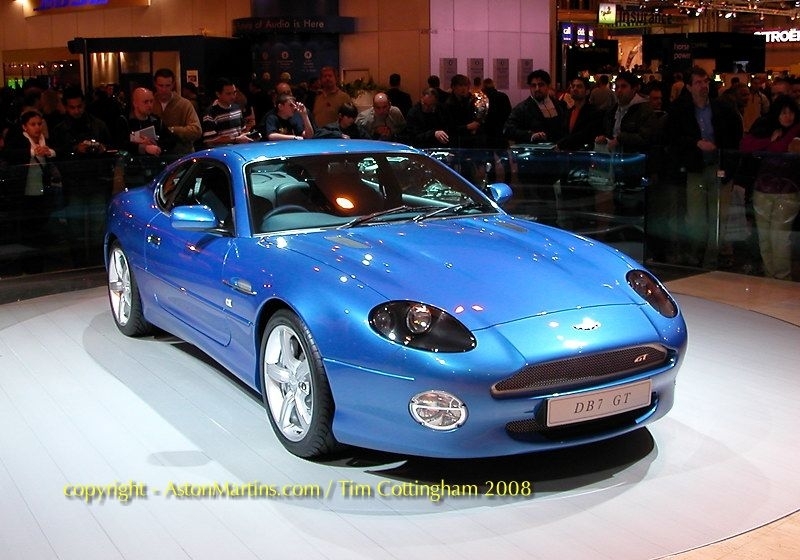
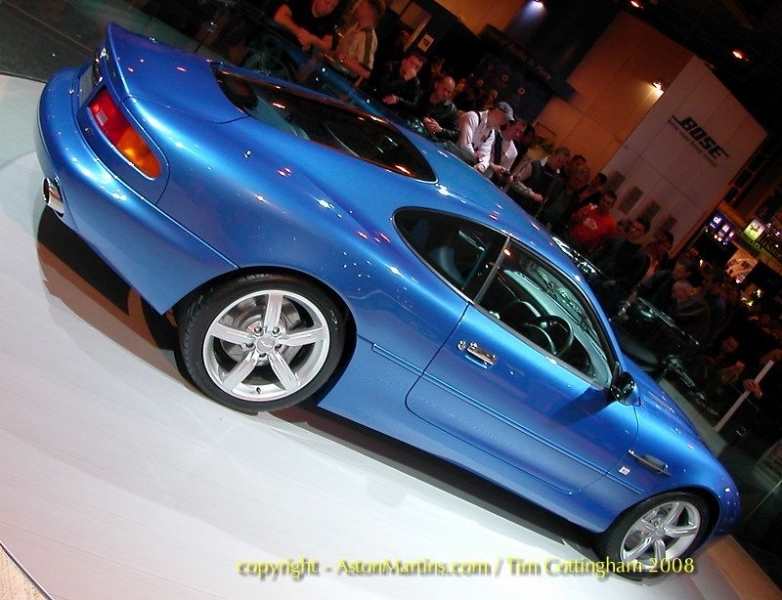
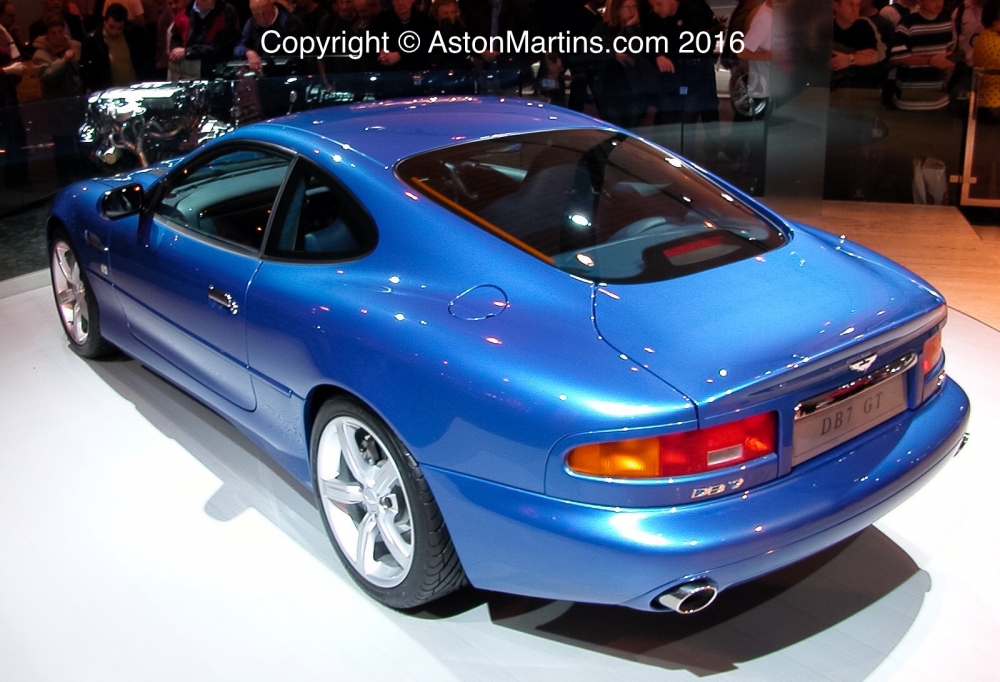
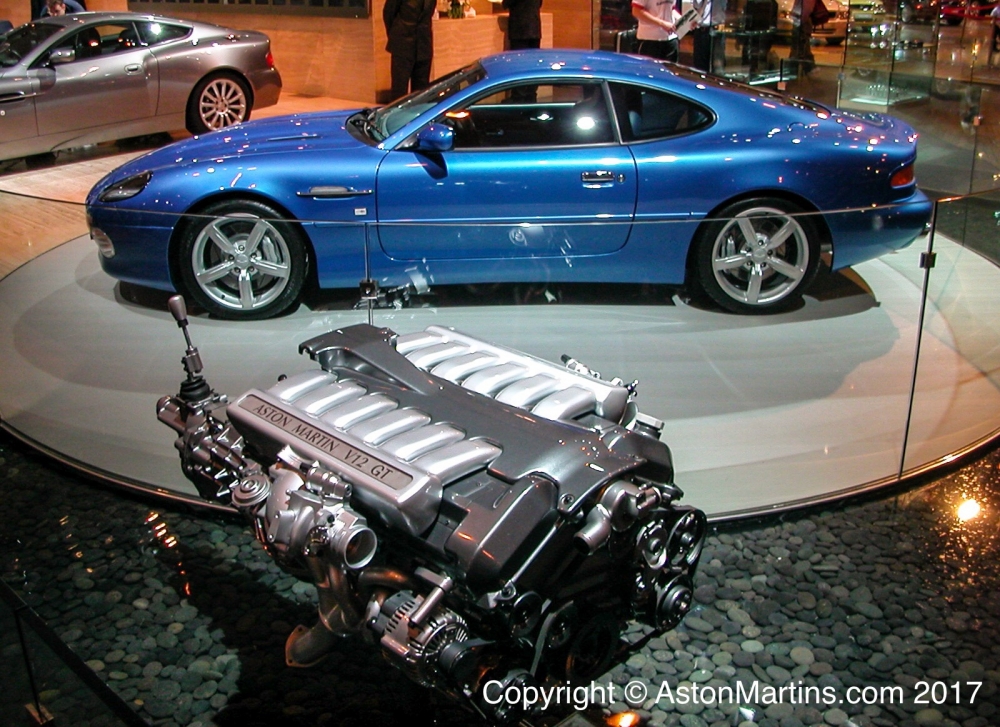
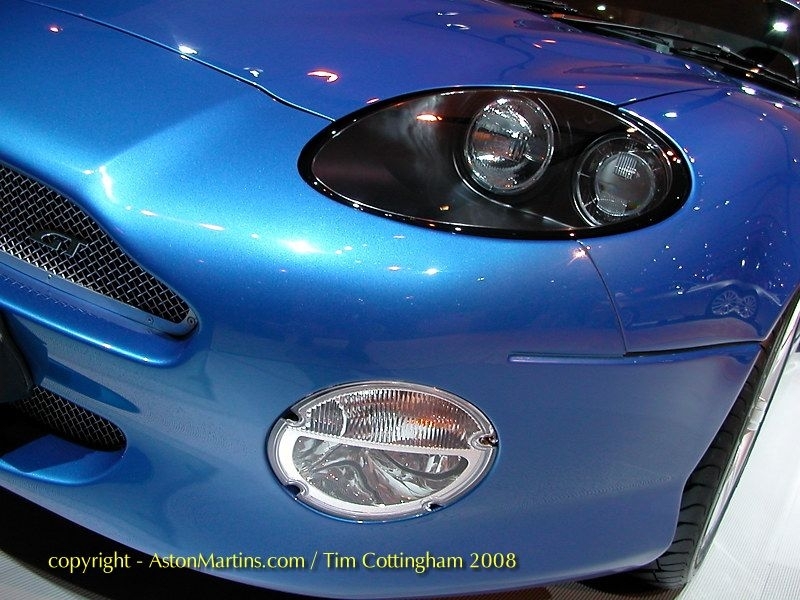
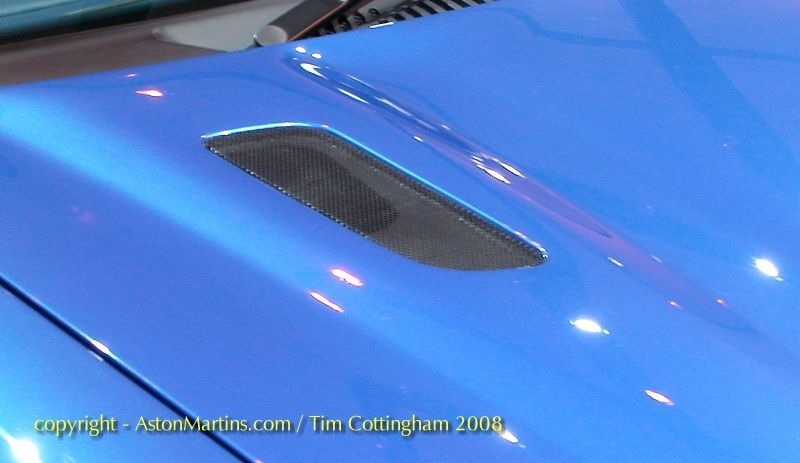
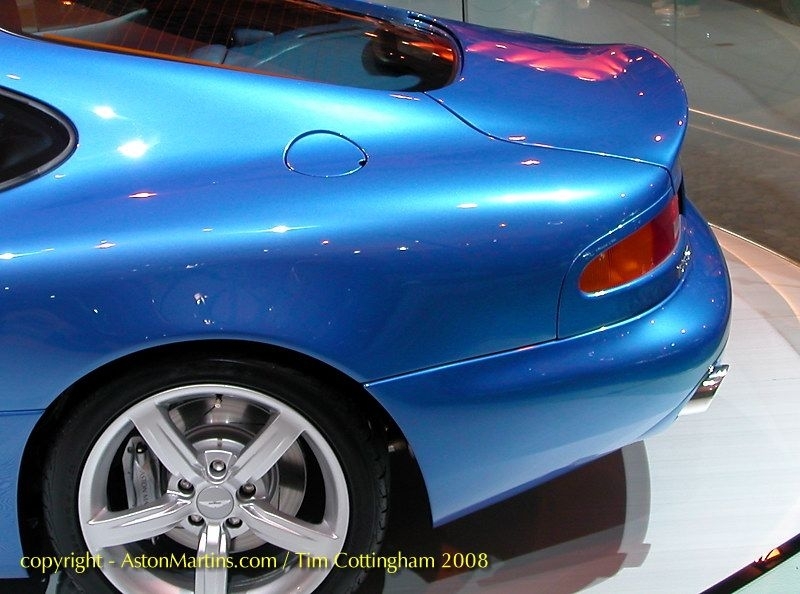
The V12 was tweaked to deliver 435 bhp (an increase from 420 bhp of the DB7 Vantage) and also additional torque – up from 400 lb/ft to 410 lb/ft. The suspension was substantially modified and had thus stiffened the chassis by 20%. Special attention was paid to the aerodynamic balance for high speed stability with the adoption of additional sweeps for the undertray, wheel arch liner extensions and a revised boot lid spoiler which emphasises the new look. These additions helped to reduce lift by almost 50%. The car also featured twin bonnet vents not dissimilar to those seen on the V12 Vanquish for better air-flow management and to help dissipate heat. Also fitted was a distinctive wire mesh radiator grille and lower air intake.
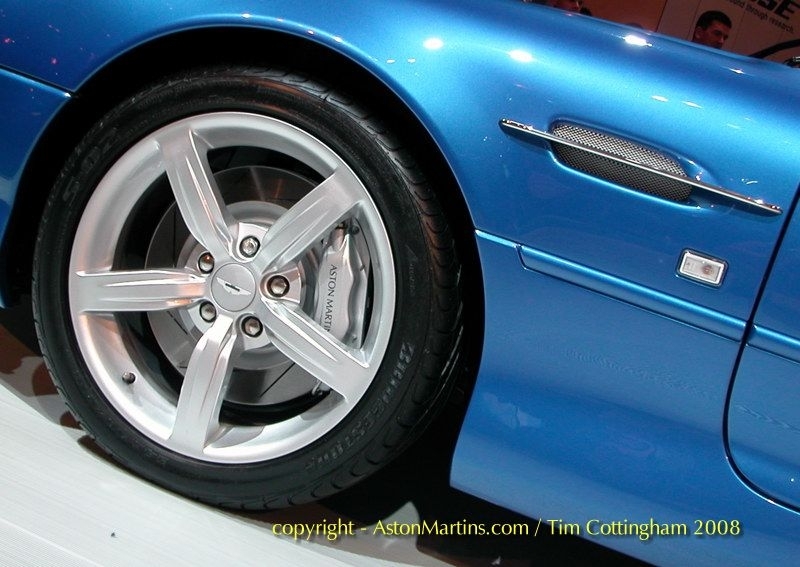
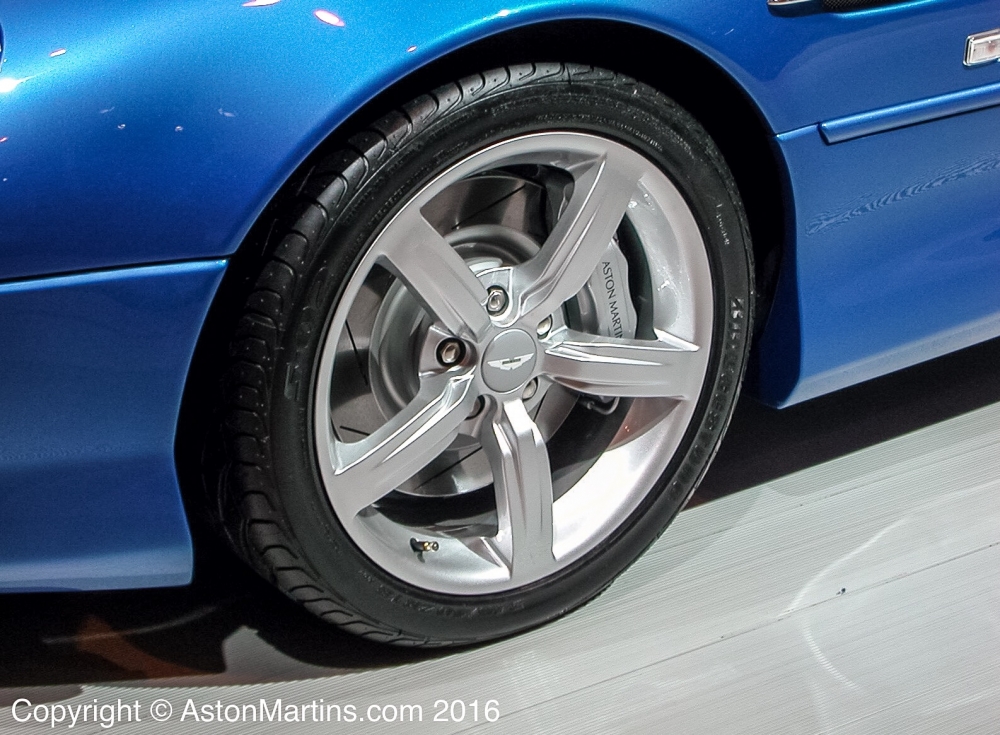
Unique 5 spoke 18 inch alloy wheels were fitted with 245/35 front, 265/30 rear low profile Bridgestone tyres that provide optimum levels of performance and grip. Also the GT featured a free flowing exhaust with a by pass valve to give an exhaust note just like the V12 Vanquish. The revised quick-shift gear lever on the DB7 GT and racing twin-plate clutch enabled the driver to maximise use of the increase in power and torque and offers a faster gear change than the standard  DB7 Vantage. Larger Brembo brake discs and upgraded pads also improved braking performance.

The final drive was changed from the 3.77 in the Vantage to 4.09 in the GT, so although top speed remained at 185 mph, acceleration wad much improved, reducing the time to 60 mph from 5.7 seconds, to a shade under 5 seconds.

The launch car, finished in Vertigo Blue, featured in all of the press photographs, the brochure and also on the AML stand during the 2002 British Motor Show at the Birmingham NEC. This important car was sold to an enthusiastic AM owner at the 2013 Bonham’s Auction held at Aston Martin Works.

Deliveries began in early 2003 when production was split 50:50 between the DB7 Vantage and the DB7 GT/DB7 GTA. It now appears that a total of 191 GT’s were built during 2003, with just 85 of these cars for the UK market and 64 for the US. Thus if you want a DB7 for long term ownership, this rare run-out model has to be the one to search out and keep.

Aston Martin Works Service and dealers worldwide are also able to upgrade the regular DB7 Vantage to resemble the GT with the optional wheels, bonnet vents and GT boot lid, although such cars are not to confused with real GT’s.

V12 Vanquish

V12 Vanquish

The V12 Vanquish was not only the most advanced Aston Martin of it’s time – it was a quantum leap from the previous V8 powered cars. Designed by Ian Callum, who also was responsible for the DB7; the V12 Vanquish remained extremely faithful to the Project Vantage although every panel is subtly different. It’s 6.0 litre V12 engine was developed from that already available in the DB7 Vantage with new design inlet manifolds, camshafts, valve gear, crankshaft and exhaust system. Power had been tweaked up to 460bhp giving a top speed of 190mph and acceleration to 60mph in 4.7 seconds.

The six speed manual transmission is linked to the electronic drive-by-wire throttle and controlled through F1 style twin paddles mounted on the steering column so that a clutch pedal is not needed. Developed in conjunction with Magnetti-Marelli and Ford RVT, the advanced paddle shift gear change incorporated electronics matched to hydraulics which enabled almost imperceptible gear changes in just 250 milliseconds. Some journalists at the time were critical of the V12 Vanquish ‘flappy-paddle’ gear-shift yet many enthusiasts still love it. For those who do not, Works offered a conversion to ‘stick shift’ which has seen a reasonable take up.

The main body structure was formed from extruded aluminium sections bonded and riveted around a central transmission tunnel constructed entirely from carbon fibre. All the exterior panels were produced from ‘super-formed’ aluminium, tailored and bonded to the central structure by hand for a perfect fit. Whilst eight Connolly hides were still needed (later replaced by Bridge of Weir following the demise of Connolly), wood trim was initially banished from the car. But of course, Works Service will now enhance the V12 Vanquish with a choice of three walnuts or genuine carbon fibre panels. Unusually, the car could be specified as a two seater with load space (known as 2+0) or, for an additional £5000, as a 2+2, although the rear seats are nothing like as generous as those in the previous V8 models.

Initial demand for the £158,000 V12 Vanquish was astonishing, far greater than any previous model ever made at Newport Pagnell; AML initially claimed that the first three years production had already been sold shortly after the model introduction. Planned production was expected to be about 300 per year, although output started at around 500 a year. The 1000th production V12 Vanquish was delivered to it’s Japanese owner during the July of 2003. I visited Newport Pagnell twice during 2002 and three times in 2003 and the factory was a hive of activity. A majority of the cars in production at that time were one of the many silver or grey hues but I’ve also seen cars in British Racing Green,  black, dark metallic blue, light metallic green and metallic ruby red.

In total,  1,503 V12 Vanquish were build before the standard car was replaced by the more powerful V12 Vanquish S in 2004

Aston Martin V12 Vanquish AML1

How to identify a ‘non-S’ V12 Vanquish

Exclusive pictures of V12 Vanquish production

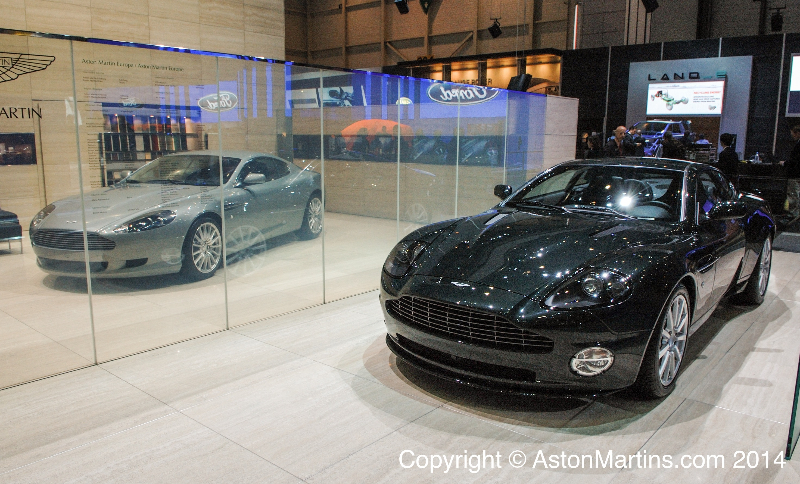
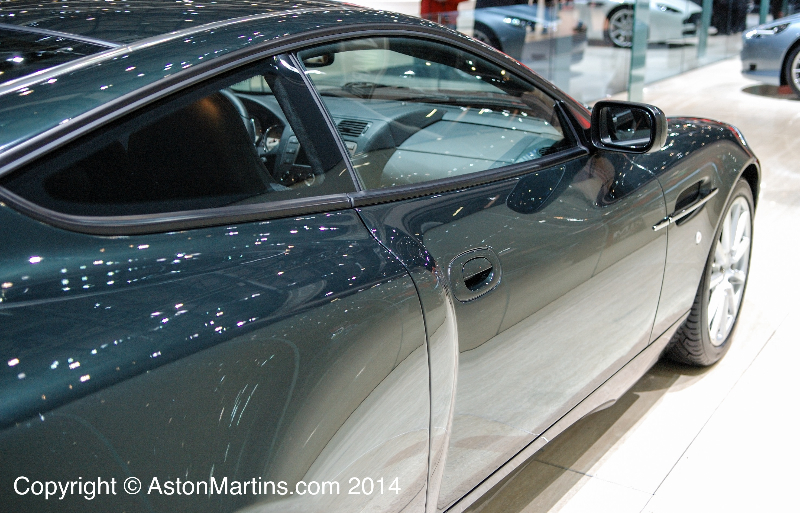
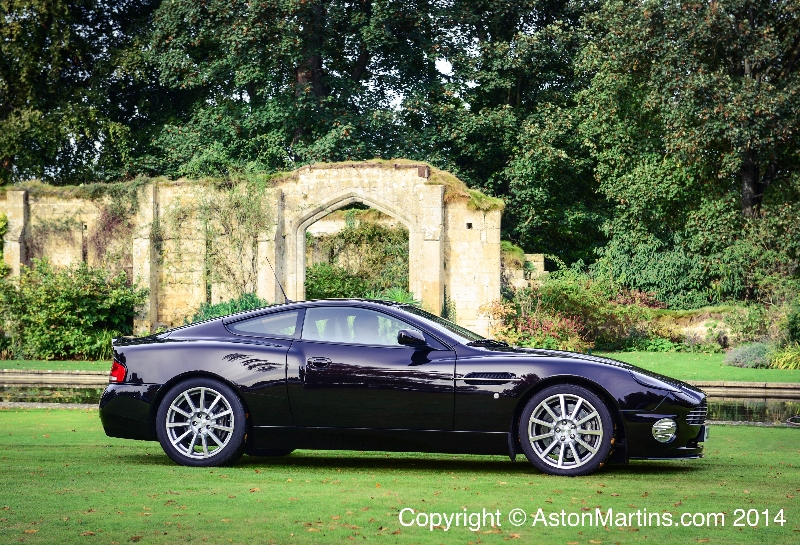
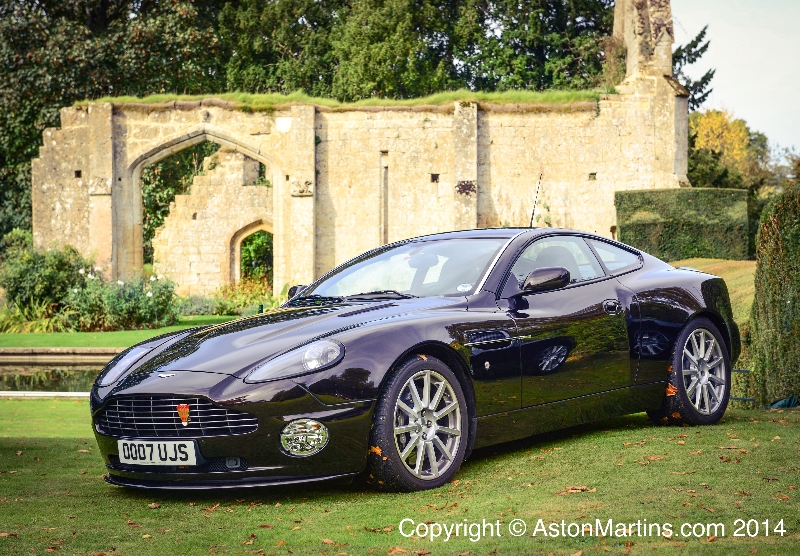
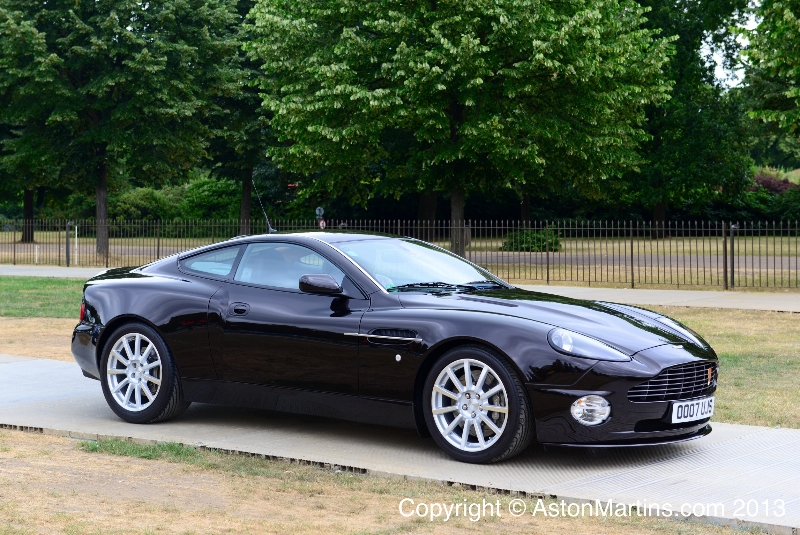
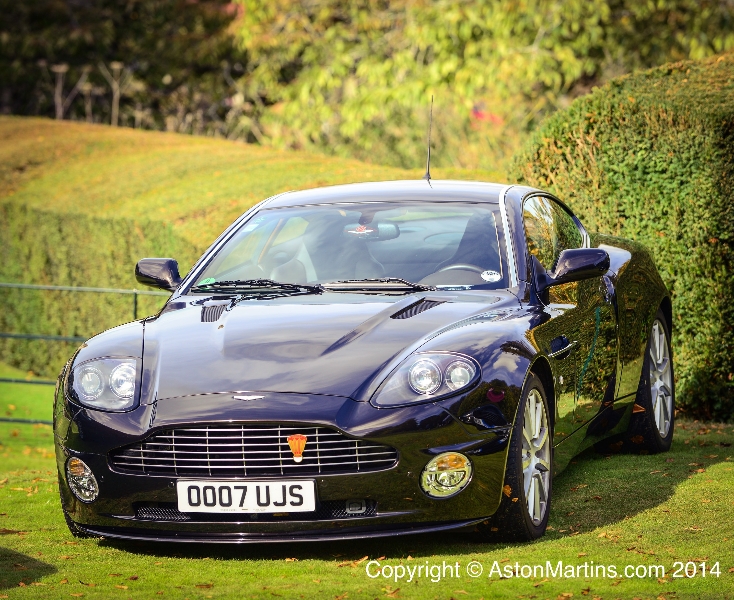
V12 Vanquish S

V12 Vanquish S

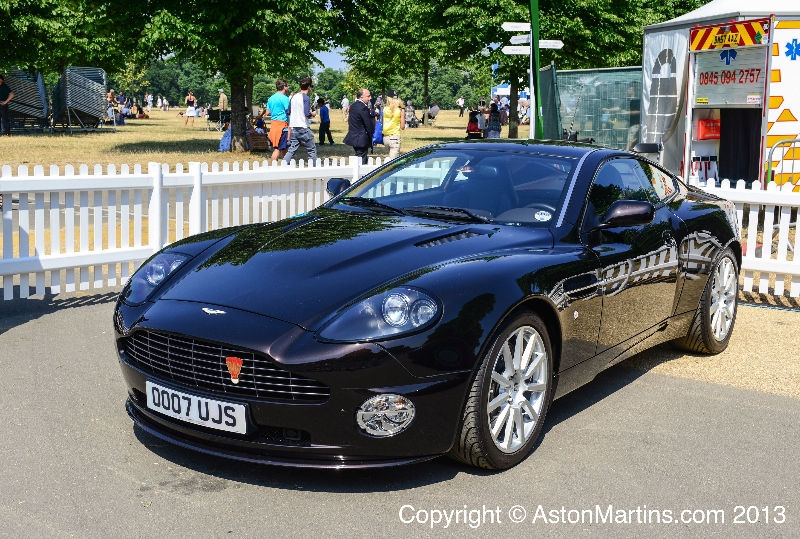
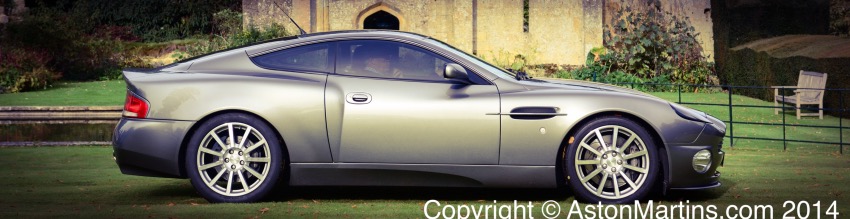
Not so subtle was the claim that AM made for the V12 Vanquish S – a top speed in excess of 200mph, which at the time have made it the fastest road going Aston Martin ever, a crown only recently lost to the One-77 and V12 Vantage S. To achieve the magical 200, the V12 engine, still displacing 5.9 litres (AM love to call it 6 litres) was enhanced with new cylinder heads featuring fully machined inlet ports and combustion chambers to improve airflow, revised engine mapping and new fuel injectors. The result of the reworking  moved the output to 520 bhp (up from 460) with a very useful 425 lb ft of torque (up from 400).

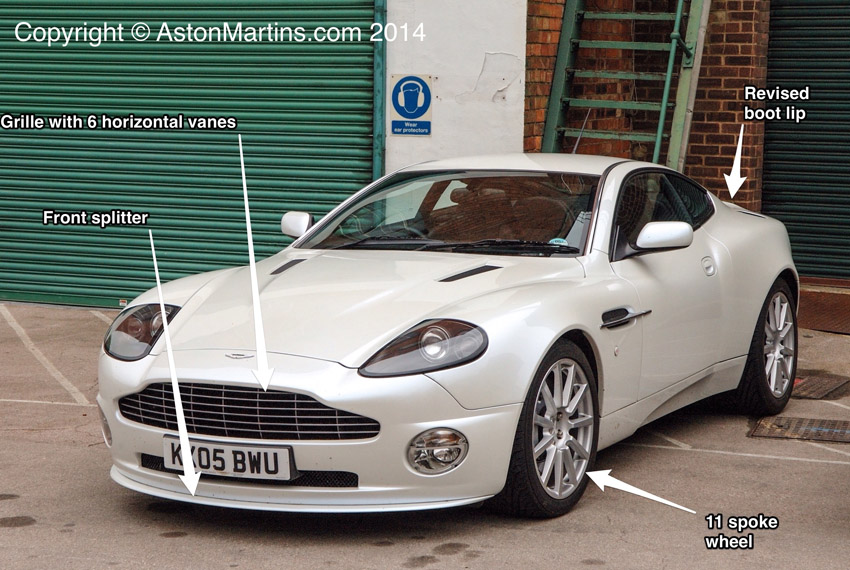
The suspension, brakes and steering were exactly the same as has already previewed on the Sport Dynamic Package announced a little under a year previously. You may think that the wheels are the same as the 2001MY V12 Vanquish – not so – if you count the spokes, you will see that the S wheel has 11, one less than the standard car. AM claimed the 0-60mph dash could be achieved in 4.8 seconds – which is 0.3 seconds slower than they initially claimed for the standard car. This is to be expected by the change in the final drive ratio, raised from 3.69:1 to 4.30:1, needed to achieve the headline grabbing 200mph claimed top speed.

As with the standard car, the S could have been ordered as either a 2 seater (2+0) with a shelf for luggage or a 2+2 with rear seats only suitable for small children.

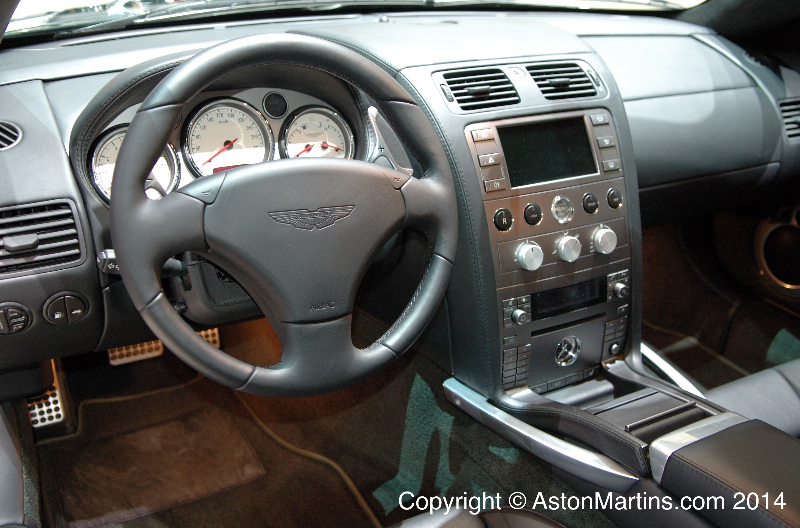
The V12 Vanquish S interior has some differences from the original car. The central backlit etched glass starter button had already been taken from the DB9 but the big change came with the whole centre console covered in leather instead of being painted. For the 2006MY V12 Vanquish S, the interior received a DB9 inspired make-over to the centre console. The a new 6.5 inch full colour satellite navigation system screen took prominence moving the starter button and gear selection switches down. These last of the line cars are sometimes referred to as ‘big screen’ although I must point out also that the sat-nav wasn’t fitted on some overseas markets where the mapping data did not at the time exist. The climate control knobs were similar to those in the DB9 and the in car entertainment system was now a 900W Alpine system (but Aston Martin branded) that has replaced the previous Linn system. Oddly the clock moved so far down the console this it must be hardly visible to the driver. The cupholder was revised and the car had a Bluetooth phone system. The 2006 V12 Vanquish was I believe unchanged on the exterior except for the adoption of a bee-sting radio antenna at the back of the roof similar to that seen on the smaller V8 Vantage.

Features of the V12 Vanquish S

How to spot a V12 Vanquish S

Although discontinued in 2007, the US got their last V12 Vanquish S, chassis 502254 a year before in June 2006. Federal law required automatic deactivation of the passenger airbag with a child in the seat and it just wasn’t worth the effort for AM to re-engineer this feature with only a years worth of production left in the model.

Delivery of the first V12 Vanquish S appeared to have occurred very shortly after the Paris Salon launch announcement as I saw my first  customer ‘S’ in early October 2004. The price at launch for the S was only slightly more than the original car – up from £163,000 to £174,000.

By the end of production in July 2007, the total production of the ‘S’ had reached 1086 examples including the desirable  Ultimate Edition. It was to be the last ever car to be built at the Tickford Works in Newport Pagnell and as such, will always be considered one of the greatest Aston Martins of all time.

Aston Martin V12 Vanquish S

V12 Vanquish S (by Project Kahn)

Project Khan also make similar modifications to the DB9 (they call it DB9S) and the V8 Vantage.

DB7 V12 GTA

DB7 V12 GTA

Other than the gearbox, engine specification and badging, the GTA is otherwise identical to the GT. This includes the wheels, suspension and braking upgrades as well as the additional vents, mesh grille and upturned spoiler on the boot.

The DB7 GTA is an even rarer car than the DB7 GT, with only 112 ever built; 60 of which were sold on the UK market and only 17 for the USA.

« Newer PostsOlder Posts »