Latest News - 01/09/24

What's New @ AstonMartins.com?

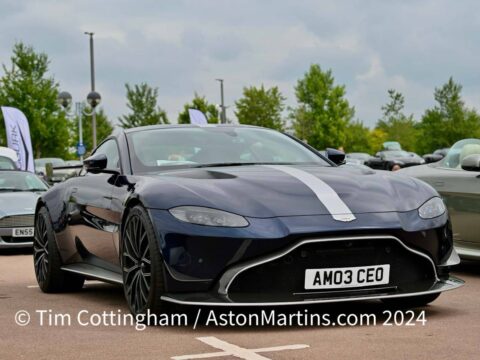
Vantage AM6 CEO by Q

DB5 for 007 James Bond (Casino Royale)

I was able to photograph this car in May 2006 whilst it was on display in the Heritage Restorations section of Works Service at Newport Pagnell. I also saw it a few months later at Works Service where it is undergoing a restoration. To date, six different DB5’s have actually appeared in four different Bond films although I still believe a DB5 would also have appeared in ‘The World is Not Enough’ had the footage not ended up on the cutting room floor.

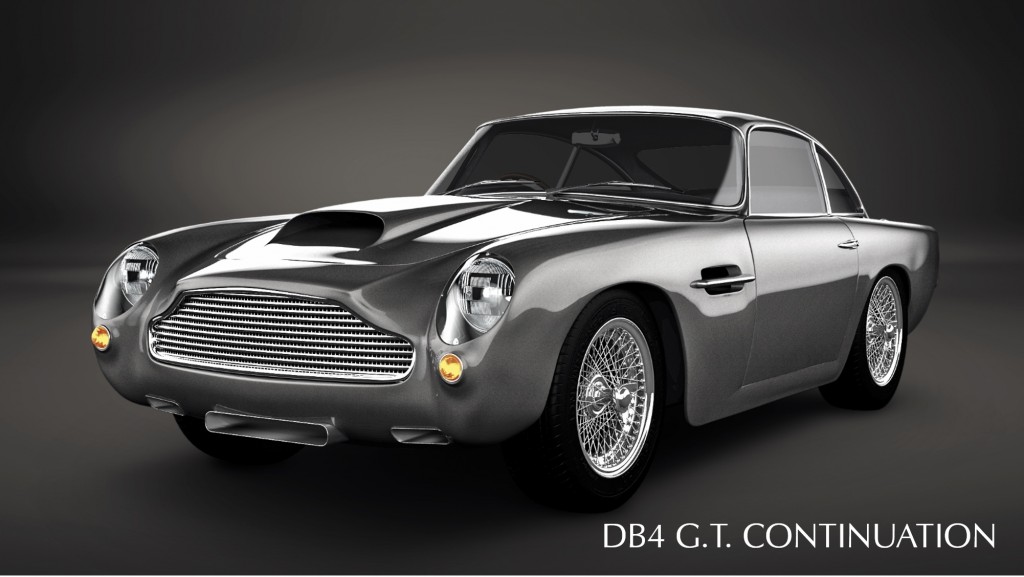
DB4 GT Continuation

DB4 GT Continuation

Launched way back in 1959, the DB4 G.T. was d esigned for the gentleman driver, equally at home on the road and the racetrack. It was evolved from the production DB4 and introduced in the same year Aston Martin scored its historic outright win in the Le Mans 24 Hours, the DB4 G.T. was a true supercar of its day. Shorter, lighter, sleeker and with a more powerful version of the legendary 3.7-litre straight-six engine, not only was the DB4 G.T. Britain’s fastest passenger sports car, it was a born winner, scoring a debut race victory at Silverstone in the hands of Sir Stirling Moss. Only 75 DB4 G.T.s were built between 1959 and 1963. Of these only eight were lightweight models. Most of which survive today, and values now comfortably exceed £3m.

Remaining faithful to the design of those original eight factory lightweights, each DB4 G.T. continuation will be built with Aston Martin Works’ unrivalled experience and exemplary attention. Employing a blend of old world craftsmanship and modern techniques, continuation cars benefit from improvements in engine performance, handling, braking and safety, with great care taken to ensure these enhancements build upon the original’s exceptional qualities while retaining its feel and character.

Underlining that authenticity are the continuation car VIN numbers, which carry on from the last original DB4 G.T. ordered – Chassis DB4GT/0202/R – for an unbroken bloodline and impeccable Newport Pagnell-built pedigree spanning half a century.

Rendering of the upcoming 2017 Aston Martin DB4 GT continuation

Rendering of the upcoming 2017 Aston Martin DB4 GT continuation

At its heart is a version of the celebrated Tadek Marek-designed straight-six cylinder engine with two spark plugs per cylinder, transmitting its 340bhp to the rear wheels through a four-speed manual transmission and limited-slip differential, just as in the original DB4 G.T. Thanks to its shortened wheelbase the DB4 G.T. is a strict two-seater blessed with greater agility than the regular four-seater DB4. Its body follows the original construction, with thin-gauge aluminum panels fitted over a tubular frame. To improve the accuracy and consistency of the panels, the continuation car’s bodywork uses state-of-the-art digital technology, before being hand-finished in time-honoured tradition.

Fittingly for a car created to celebrate one of Aston Martin’s most illustrious competition models, the DB4 G.T. Continuation is built to be enjoyed on track. Aston Martin Works has created a two-year international track driving programme held at a number of the world’s finest race tracks, including the spectacular Yas Marina circuit in Abu Dhabi. The ultimate arrive-and-drive experience, customers may also take advantage of Aston Martin’s dedicated driver training team. Comprised of expert instructors, including Aston Martin Racing’s multiple Le Mans class winner (and Goodwood Revival regular) Darren Turner, they will help customers master driving techniques from an era when track driving was more art than science.

The first of the 25 cars was delivered to it’s new owner in the autumn of 2017, at a cost of around £1.5 million.

Short Chassis Volante

The bodywork is similar to the DB5 convertible but shares many DB6 features such as the interior trim, split front and rear bumpers and an enlarged oil cooler opening. Whilst at the back the boot lid is unswept with DB5 Convertible like rear wings mounted with the Triumph sourced DB6 style rear light clusters. Knowing these details make this car easier to identify.

In addition to the regular triple SU equiped engine, the short chassis could also be specified with the Vantage engine complete with triple Weber carburettors.

One of the cars featured below, arguably the best example of a short chassis Volante was shown on the lawn at the Pebble Beach Concours d’Elegence in 2013. The car achieved 2nd place in the Aston Martin Centenary class and can be seen crossing the famous ramp to recieve the award.

DB5 for 007 James Bond (Skyfall)

I first saw chassis DB5/2007R in 2010 when the car was being auctioned by RM at their annual sale in London. At that time, the car was painted in its original livery of green with tan leather. In 2011, the car was hastily prepared for the film by being painted silver and having the leather recoloured. It has been in great demand since being centre stage during the premiere of the film having been road tested my many classic car magazines.

Not sure if you can see this clearly in the photographs but Works didn’t go to the trouble of actually cutting a panel in the roof for the ejector seat. This was merely represented by a vinyl sticker tracing the edge of the non-existent hole.

DB5 Sports (by Royle and Co)
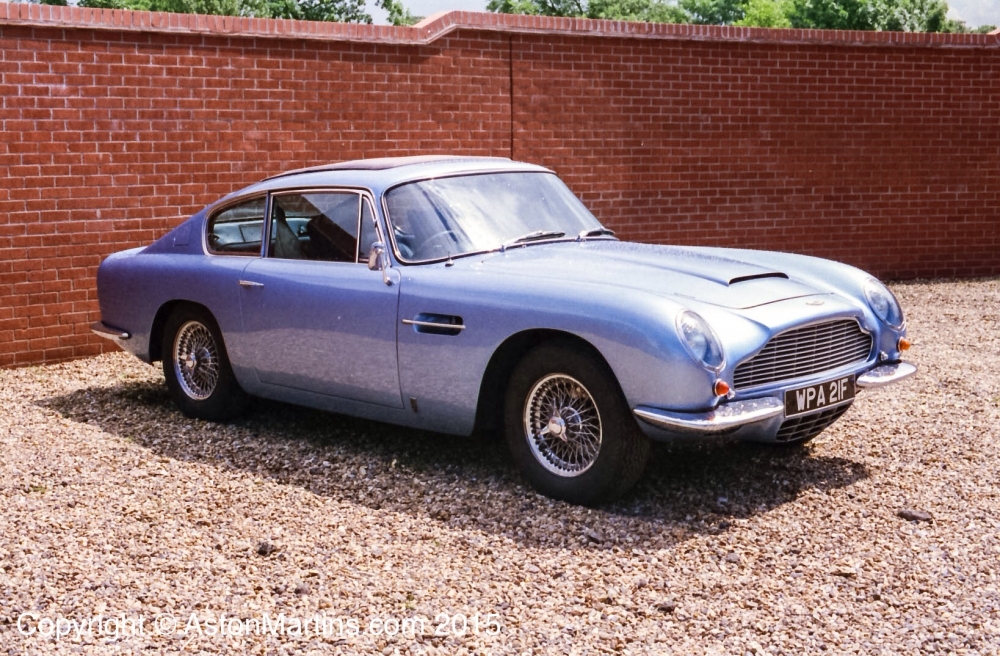
DB6 Saloon

DB6 Saloon

The changes to the DB6 were more structural than mechanical; indeed the construction of the car no longer followed the ‘Superleggera’ principles and the badges on the bonnet were soon deleted. The engine was carried over from the DB5, triple SU’s giving a claimed 282bhp and a claimed 325bhp from the triple Weber equipped Vantage.

When production on the DB6 was superseded by the Mark 2 version in July 1969, around 1325 examples had been built making them the most numerous of the DB4/5/6 line.

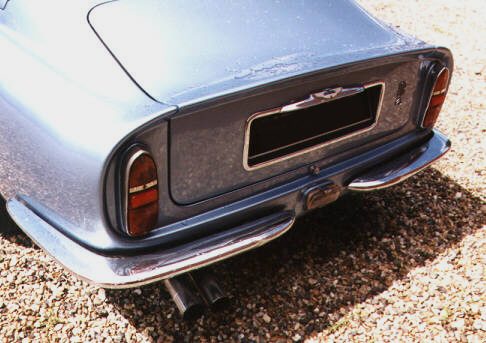
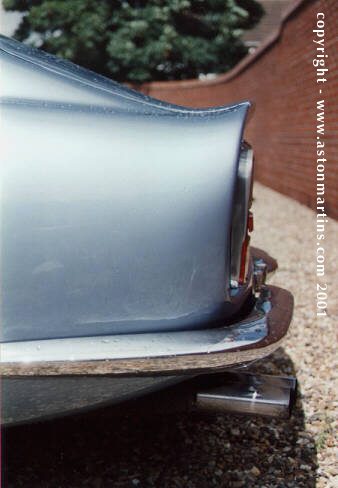
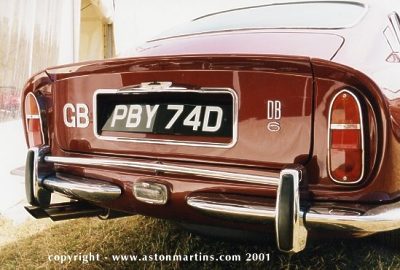
Here’s the controversial swept-up tail close up and unique to the DB6. In certain circles, it is described as a Kamm tail although this description is not necessarily correct. A true Kamm tail is sharply truckated. Developed from those used on the Project cars, it was designed to reduce lift and enhance aerodynamic stability at speed. Of course, nowadays, many cars have spoilers and aerofoils, but in the late 60’s if was very rare indeed, even on other high performance cars.

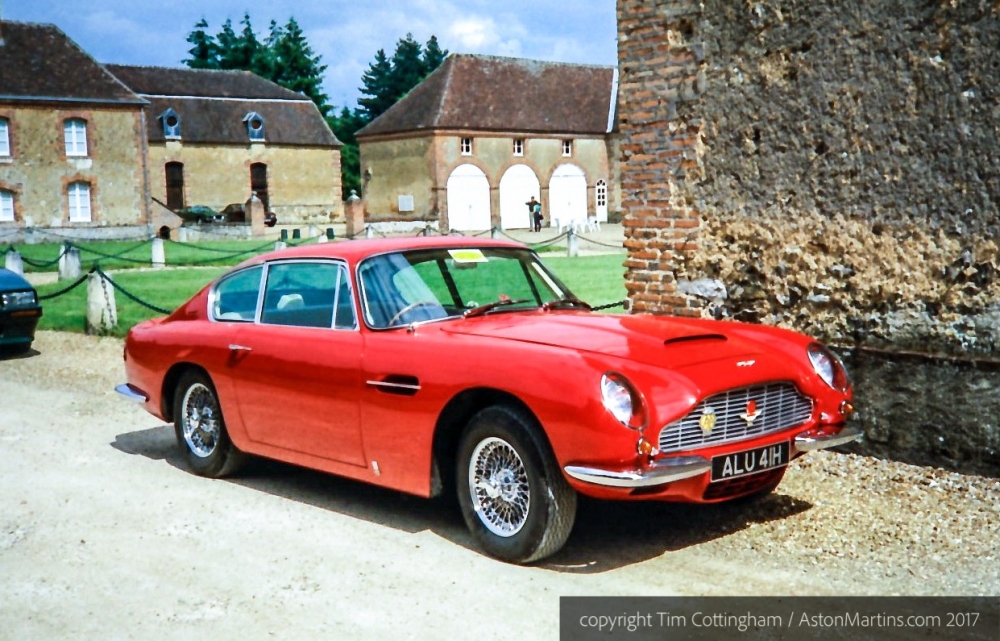
A fine DB6, sold in Coys Silverstone Auction in 1999. Interestingly it features over-riders and bumpers normally seen on cars sold in the US. Whilst the DB5 featured unique single Lucas rear light lenses, those on the DB6 were ‘borrowed’ from the contemporary Triumph TR4A and TR5.

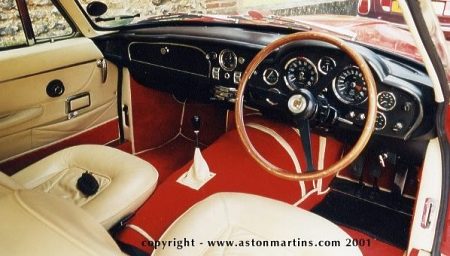
The interior of this Fiesta Red DB6 is trimmed in Magnolia Hide. I adore the matching red carpets but suspect that the car left the factory with something more sober. The ‘V’ shaped stitching pattern on the seats is unique to the DB6 Mark 1. The DB6 is a popular first Aston Martin; relatively inexpensive when compared to a DB5 yet a more thoroughly developed motorcar.

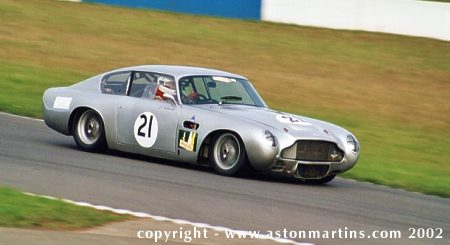
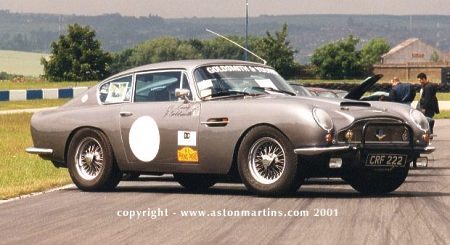
This DB6 is unique in being the only example modified for racing. The car is owned and driven by John and Gillian Goldsmith, of Goldsmith and Young, Aston Martin restorers in Wiltshire, UK. The car started out as a wreck which John decided to prepare for racing after being told that it would never be competitive against the ‘lightweight’ DB4’s. How wrong they were.

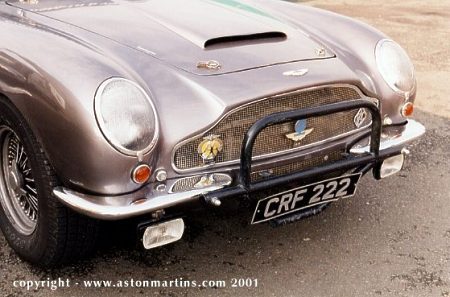
And another example of the work of Goldsmith and Young is this ‘1997 Peking to Paris Rally’ DB6 complete with ‘roo’ bars. Again the car started out as a wreck but made an excellent basis for a classic rally car. Goldsmith and Young now have there own website which you may like to visit at www.aston-gyl.com.

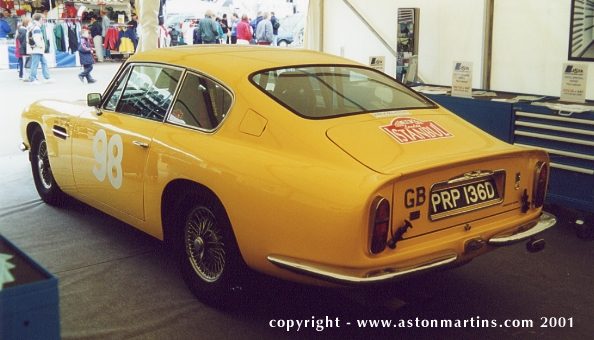
The yellow car (above), another DB6 with plenty of miles under it’s belt, took part in the 2000 London – Istanbul stage of the Round the World Rally which it won outright. The car also completed the 6,000 mile Trial to the Nile HERO event in 2002 without problem – a very well travelled Aston Martin.

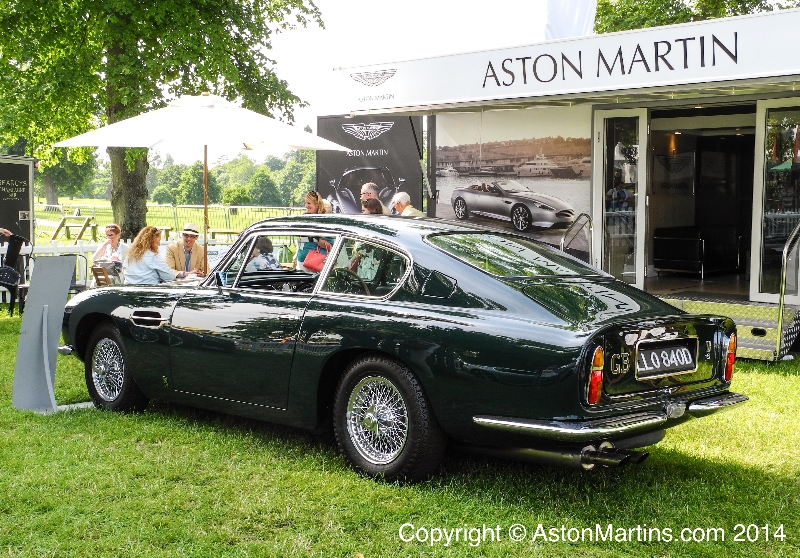
In March 1966, the Beatle, Paul McCartney took delivery of this DB6, LLO840D. Finished in Goodwood Green with black leather upholstery and optional chrome wheels with three-ear spinners, the car eventually came onto the market at the AML/Bonhams & Brookes auction in 2001. Whilst the popular press talked the potential price to £50,000, unfortunately the car failed to sell. A year or so later, the car resurfaced again after a full restoration at AM Works Service and is still owned by AM themselves. The car retains a reel to reel tape recorder in the dashboard and it is reputed that Paul used this to record his initial lyrics and melody that became the huge Beatles hit, ‘Hey Jude’

DB6 Volante

DB6 Volante

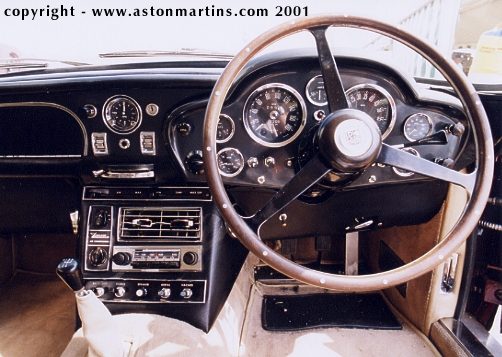
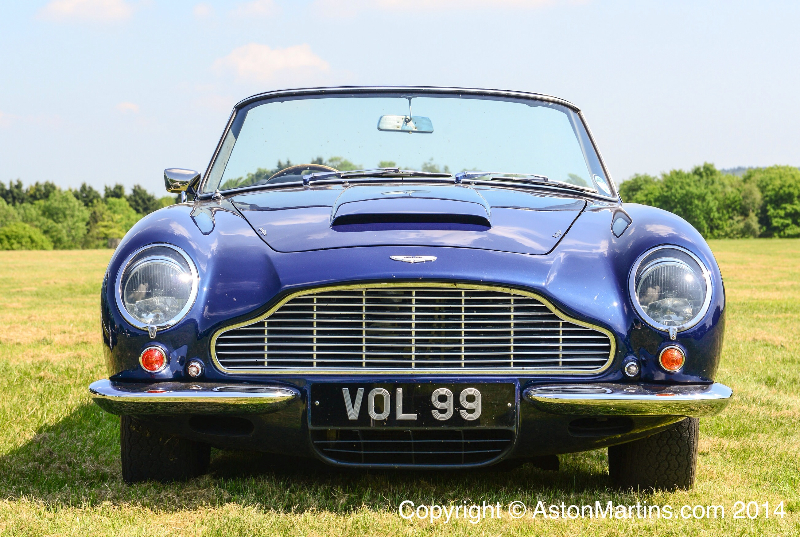
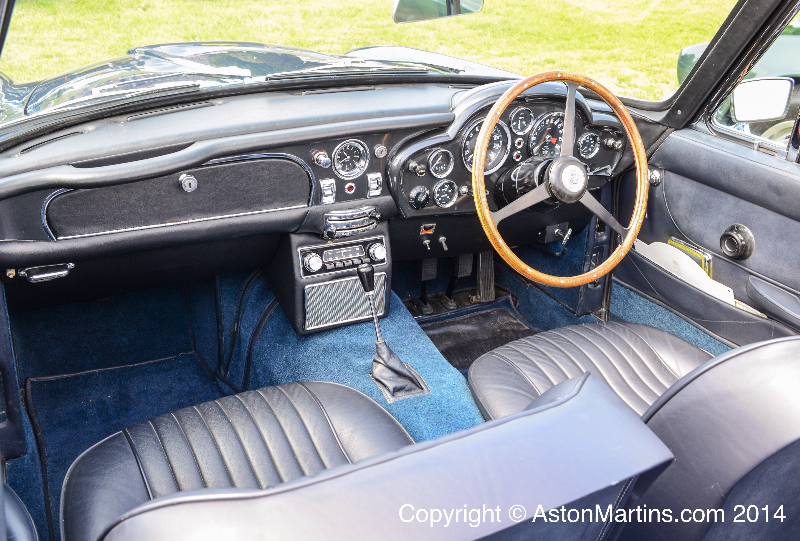
The DB6 Volante interior is identical to that of the saloon. Unlike the earlier convertibles, the body colour is not always carried across the dash. The Kamm tail of the saloon was also to be found on the Volante although arguably with a much more pleasing result.

Their timeless elegance and relative rarity, with only 140 produced (29 received the more powerful Vantage engine), has ensured that these are amongst the most desirable Astons ever.

DB6 Shooting Brake by Radford

The conversion was extensive and affected the whole car from the windscreen backwards. One problem with the conversion was that the tubular structure of the roof was cut away and the new extended roof was supported by steel fabrications thus reducing the inherent rigidity of the original vehicle. The rear hatchback was a single piece hinged from the top and assisted by springs.

The interior was cleverly designed to hold as much as stuff as possible. With the rear seat folded down, the car offered an uninterrupted payload platform of 1.75 meters by 1 .05 meters and a volume of 1.1 cubic meters, although with suspension unaltered, it would have been unwise to carry a large deal of additional weight.

As the mechanical and chassis specification of the car remained the same as when first built, Radford still claimed to reach 150 mph and was marketed with the tag-line ‘The world’s fastest dual-purpose vehicle’. Also Radford claimed the Shooting Brake would be able to brake from 100 mph to a standstill in 6 seconds, although we must assume this is without a heavy payload in the back. As each shooting brake began life as a completely finished DB6 saloon, the additional conversion to a  shooting brake added more than £2,000 to the cost.

The example shown on this page is a Radford converted car and has lived in the US for many years.

In addition to the Radford converted cars, two or maybe three DB6’s were converted to Shooting Brakes by FLM Panelcraft, another London coachbuilding company.

DB4GT Zagato Continuation
DBS V8 prototype

DBS V8 prototype

« Newer PostsOlder Posts »