Latest News - 01/09/24

What's New @ AstonMartins.com?

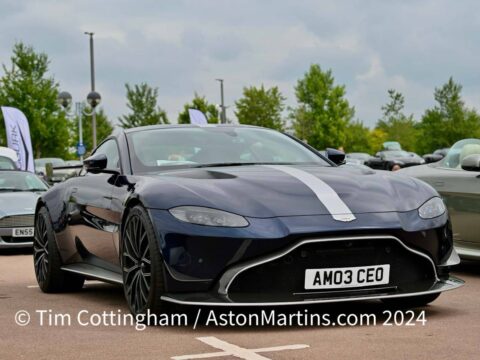
Vantage AM6 CEO by Q

Lagonda Rapide Shooting Brake

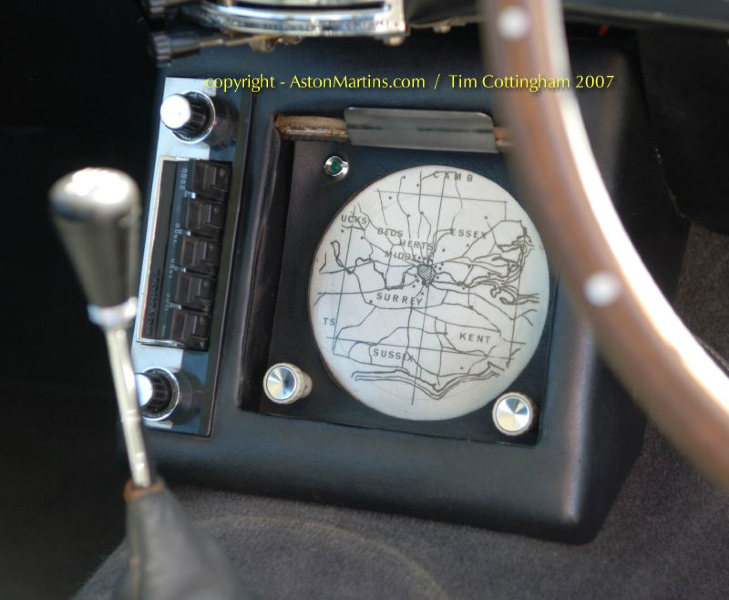
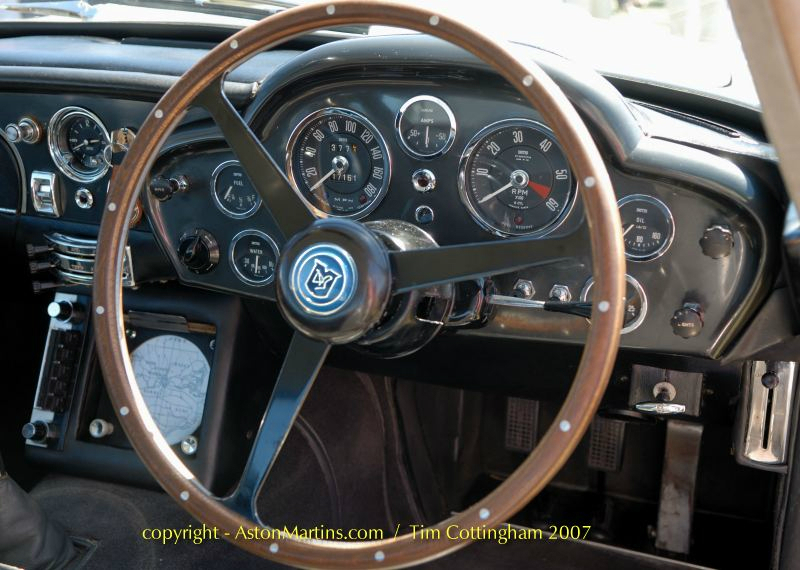
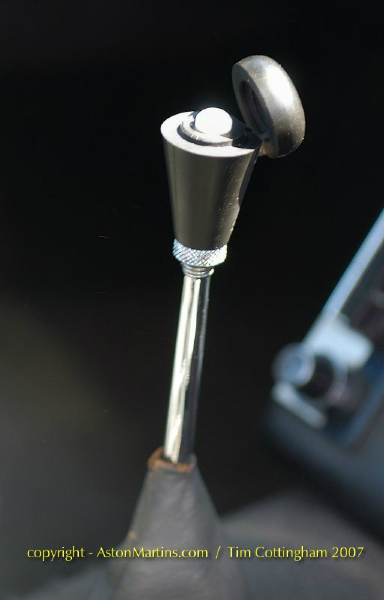
This is chassis LR/107/R which has undergone that total transformation by the Carrosserie Company (UK) Ltd of Barnard Castle, County Durham during 2005/6.

The drawings were not of sufficiently high quality and needed redrawing these to enable work to commence on the bespoke Shooting Brake. Built from the same gauge tubing in true Supperleggra style and in keeping with the original build this was then clad in hand rolled aluminium the same gauge as the original coachwork. The original boot lid was reused and cut down to fabricate into a tailgate complete with rear wash wipe and heated rear screen. Fully folding rear seats were then made and trimmed in grey leather to match the original rear seats.

The car was photographed at the AMOC Autumn Concorse at Chatsworth, September 2007 and has subsequently been sold into a private Aston Martin collection.

A photographic record of the building of this car can be seen on the Carrosserie Company website. Another interesting article on this car can be found on the Lagonda Club website

DB5 Saloon

DB5 Saloon

Cars fitted with the standard 282 bhp engine (triple SU carbs) could be expected to record a maximum speed of 148mph. Only 65 cars of a total production run of 898 coupes were fitted with the optional Vantage engine equipped with triple Weber carbs which produced 314 bhp. Genuine examples of the DB5 Vantage are considered very desirable indeed although many standard cars have over time also been modified to ‘Vantage’ spec.

There were many detailed improvements with the DB5 which included the fitting of an alternator, tinted glass, four exhaust silencers and electric windows. Unfortunately all this and more added an extra 113 kg to the weight. Initially the DB5 had the same 4 speed David Brown gearbox from the DB4 with an option for the 5 speed box from the German company, ZF. A little way into production and the 5 speed ZF box was made standard fitting. Close to the end of production, the DB5 also received front side lights next to the indicators as seen on the DB6 and cars built in this way are quite rare.

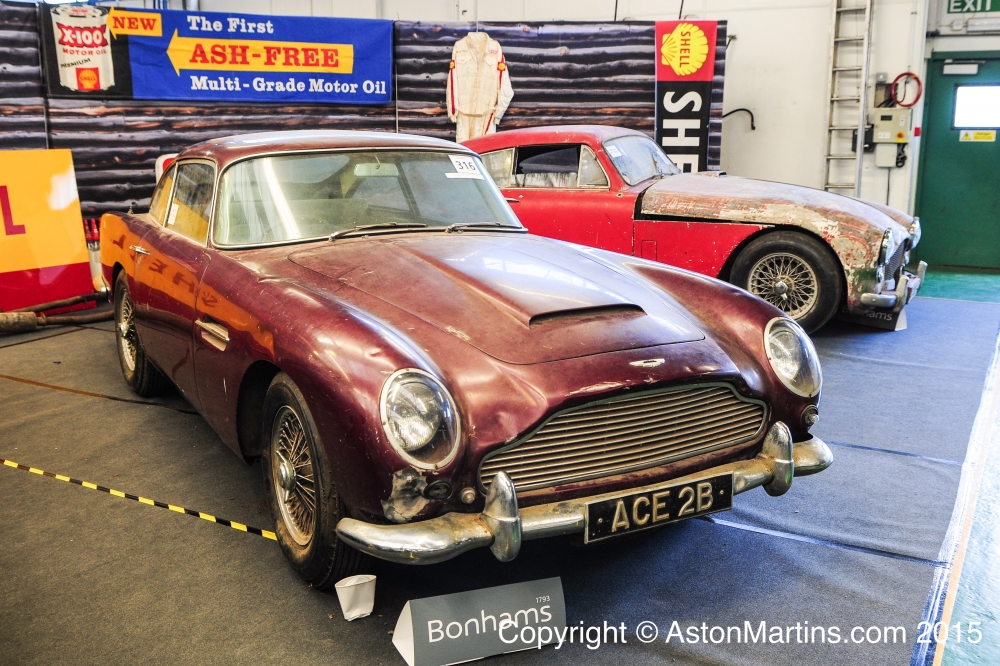
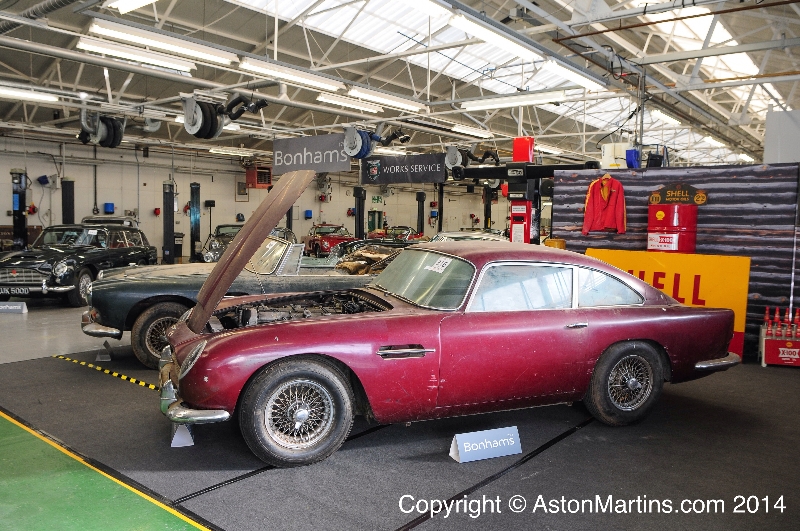
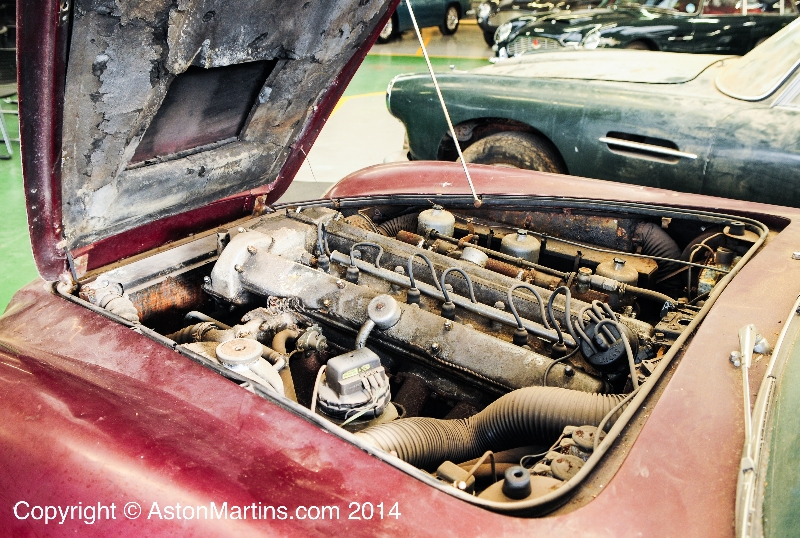
One problem with the DB5 is the market is paying a great deal of money for the nice cars, well out or reach of the average enthusiast. So people ask me about buying a wreck and ‘doing it up’ themselves. I usually would discourage this although especially as ‘barn finds’ now fetch serious money at auction, often the same as compete road registered cars.

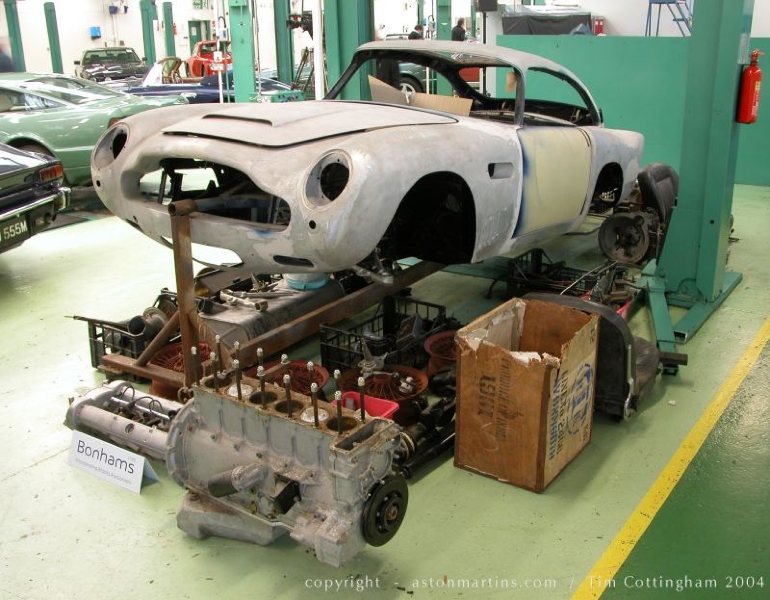
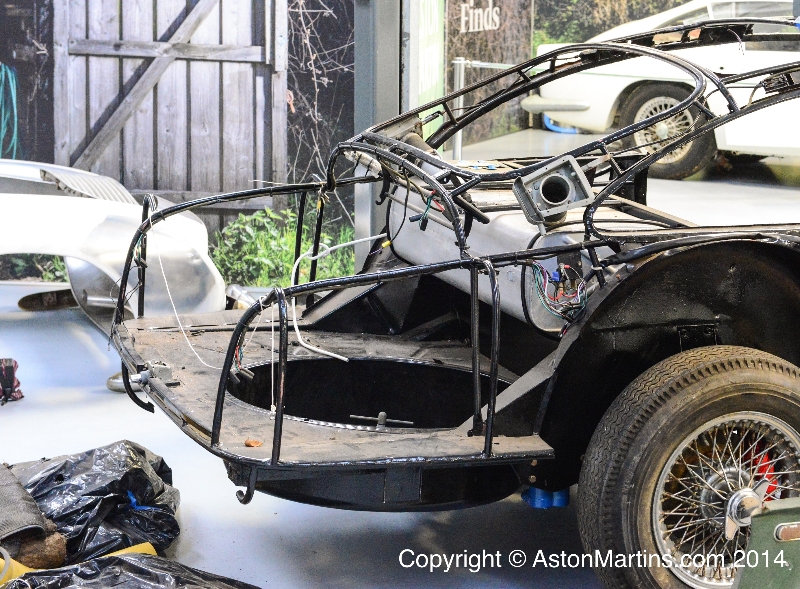
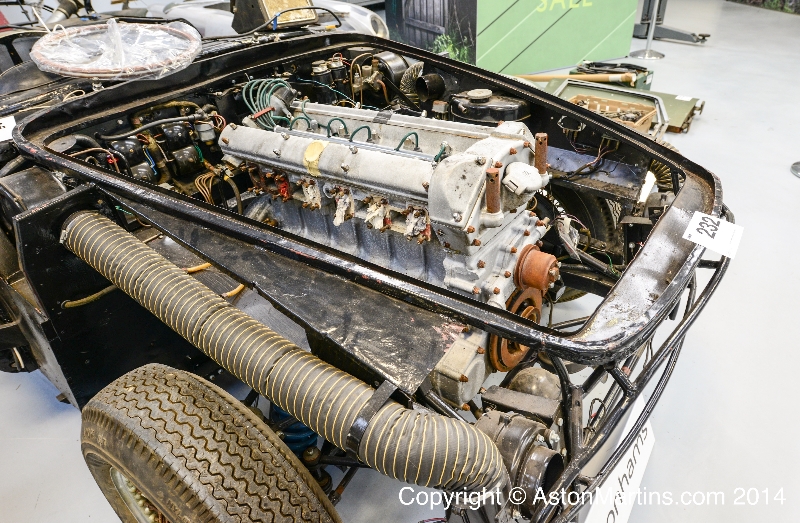
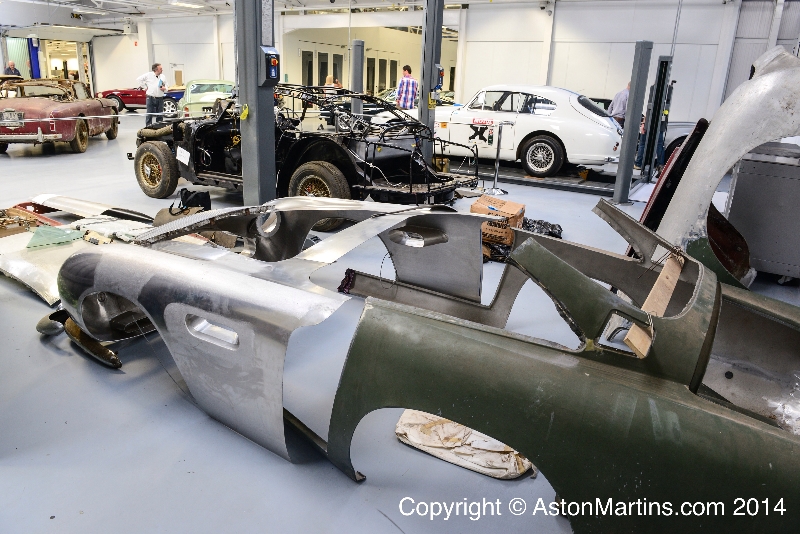
The car below is another ‘barn-find’ DB5. This particular car was part way through a home restoration but was never finished before the sad death of the owner. The car passed into the hands of the AMOC who decided that the best way to ensure it’s future was to sell the car and parts at the 2014 Bonhams Aston Martin auction. Shown here without panels give a good view of the Superleggera method of construction.

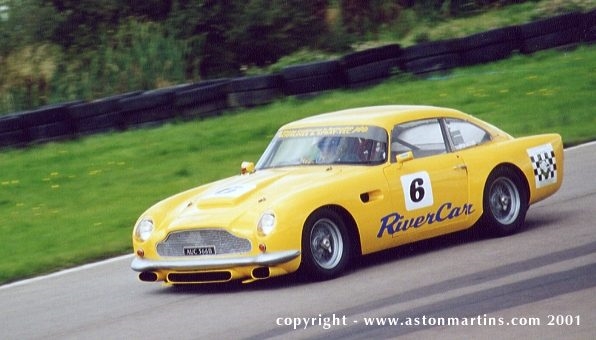
The car in the pictures below has a fascinating story to tell. An American owner fitted it with a Rolls Royce radiator and Mercedes headlights (sorry – no pictures!). Then in 1975 the car was stolen. It was rediscovered by Police divers at the bottom of the River Seven. After being rebuilt for the track, the car has been a regular at AMOC race meetings ever since and regularly at the front of the field. It is now know and forever as ‘The River Car’.

DB5 Convertible

DB5 Convertible

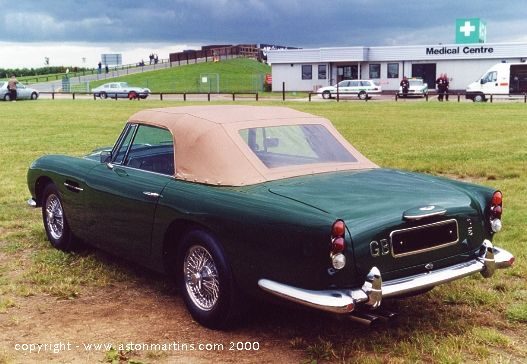
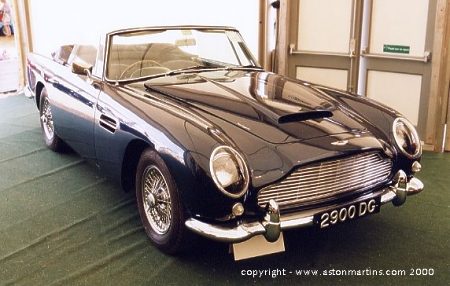
An exceptional example of the convertible with a superb colour combination between the hood and coachwork, photographed during the concours at the AMOC Horsfall meeting, 2000.

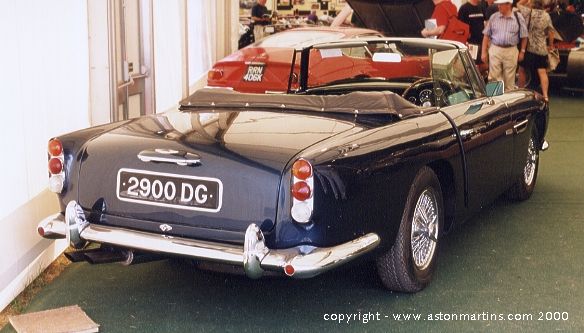
This early DB5 Convertible, the fourth built and finished in Acapulco Blue was auctioned at the 1999 auction at Coys Festival, Silverstone. The DB5 convertible is blessed with the same six cylinder, 4 litre engine of the standard car, occasionally with triple Webers making it Vantage spec.

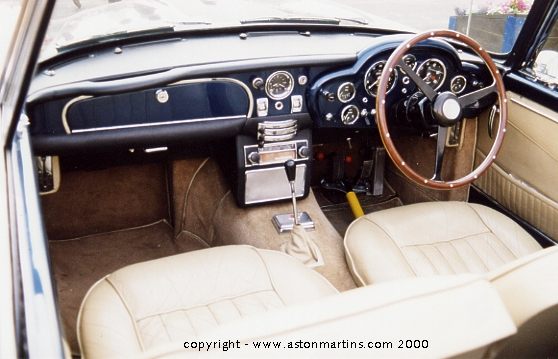
Another blue car, but this time with stone leather and the correct pleated seats. DB6’s had seats with distinctive V stitching. The DB5 convertible continued with the tradition started with the DB4 convertible with a body coloured dashboard.

In two years of production, only 123 convertible versions of the DB5 were built, with only 39 with left hand drive.

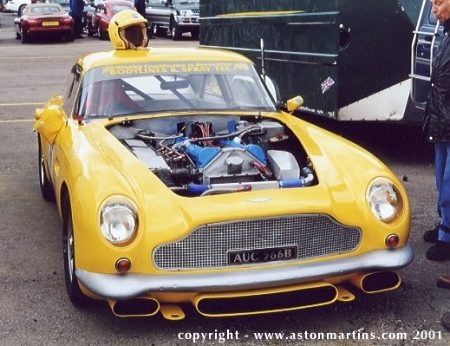
DB4 Works Prototype DP2155

Modifications performed by Works Service, Newport Pagnell include –

  • Chassis shortened by 5 inches to DB4GT specification
  • Six point removable roll cage fitted
  • Prototype independent rear suspension
  • Engine enlarged to 4.7 litres, twin plug DB4 GT head, (351 bhp @ 6000 rpm with 334 lb/ft of torque @3500 rpm)
  • 5 speed ZF gearbox
  • Enlarged brakes with 13 inch front discs with Brembo callipers

The car was entered into the AML/Brooks Auction in May 2000 and sold for an astonishing £161,000 including buyers premium – a figure in excess of what one might have expected for a DB4GT at that time.

DP2155 was again sold at Bonhams AM Works auction in May 2010, for the sum of £485,500


DB4GT Zagato Barchetta Replica

This ambitious project was undertaken by the Derby based company Aston Engineering, based on a standard DB4 chassis and a sketch provided by owner. This was substantially re-engineered with a shortened wheelbase and substantial strengthening to improve torsional rigidity following the removal of the roof. No fabric roof appears be have been made for the car – if it rains, the driver and passenger will get wet, much like the similar DB AR1.

The engine was uprated to 4.2 litre specification and with tuning, the straight 6 cylinder produces around 350 bhp. The finished car is about 25cm shorter and 130 kg lighter than the donor car, so with the 4.2 engine, the Barchetta is a more than a match for the regular Zagato

Just to be clear – this is not an actual period Aston Martin model or indeed built by Zagato but is a wonderful way of taking a poorly DB4 and making something different from the normal ‘replica’ that has become rather too commonplace.

DB5 Shooting Brake by Radford

At that time, the factory was way too busy just making the regular DB5, so David Brown made an arrangement with the coachbuilding firm of Harold Radford (Coachbuilders) Ltd. to make further shooting brakes to meet the demand. Radford were already experienced in building the not wholly dissimilar Bentley Countryman shooting brakes. The conversion was extensive and affected the whole car from the windscreen backwards. One problem with the conversion was that the tubular structure of the roof was cut away and the new extended roof was supported by steel fabrications thus reducing the inherent rigidity of the Superleggera system. The rear hatchback was a single piece hinged from the top and assisted by springs.

The interior was cleverly designed to hold as much as stuff as possible. With the rear seat folded down, the car offered an uninterrupted payload platform of 1.75 meters by 1.05 meters and a volume of 1.1 cubic meters, although with suspension unaltered, it would have been unwise to carry a large deal of additional weight.

As the mechanical and chassis specification of the car remained the same as when first built, the car was still claimed to reach 150 mph and was marketed with the tag-line ‘The world’s fastest dual-purpose vehicle’. Also Radford claimed the Shooting Brake would be able to brake from 100 mph to a standstill in 6 seconds, although we must assume this is without a heavy payload in the back. As each shooting brake began life as a completely finished saloon, priced at £4,412, the price of a finished shooting brake was boosted by £2,000 when ordered through AML. In some cases, customers also sent pre-registered cars to Radford for conversion too. Thus it is hardly surprising that only 12 were built (8 RHD and 4 LHD), all of which are believed to survive, making them the rarest DB5 variant.

Following on from the DB5 Shooting Brake, Radford went on to build another six similar cars based on the DB6.

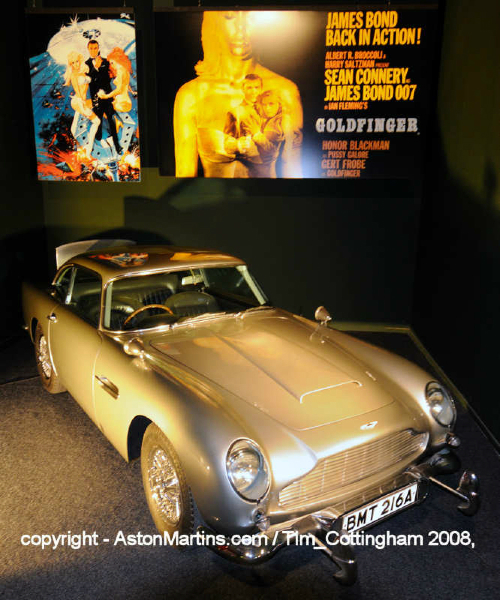
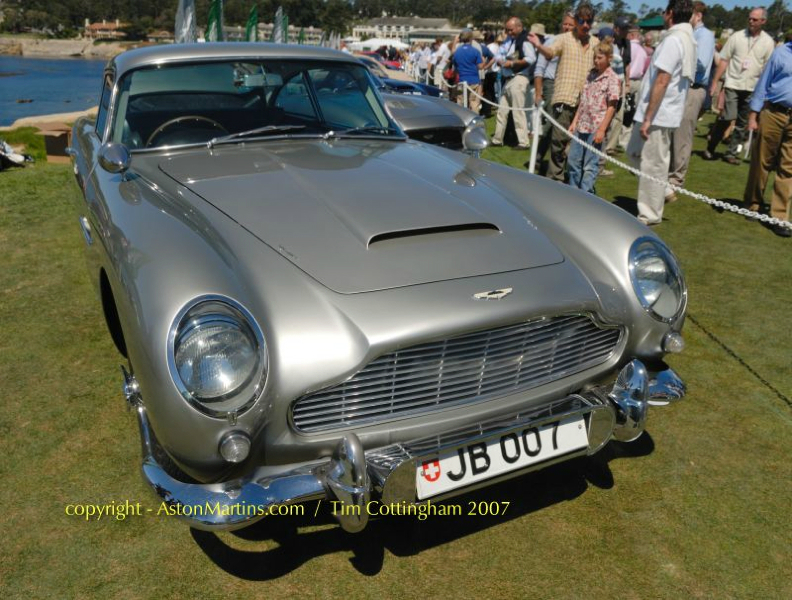
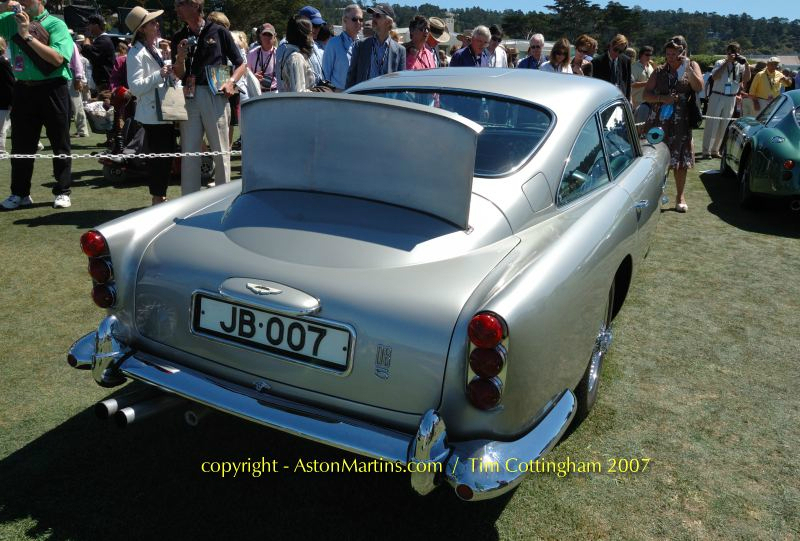
DB5 for James Bond (Goldfinger/Thunderball)

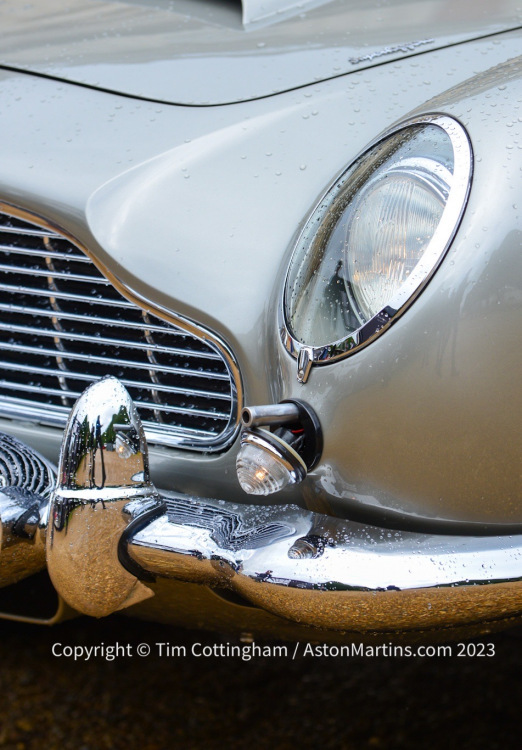
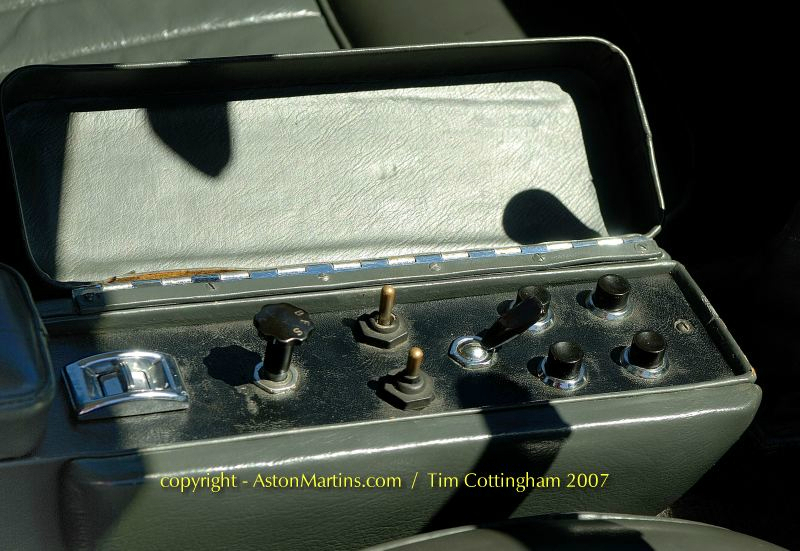
The Silver Birch DB5 was crammed full of secret gadgets – many of which are total fiction, whereas some have become commonplace in modern cars. Modifications to the DB5 for the film were………..

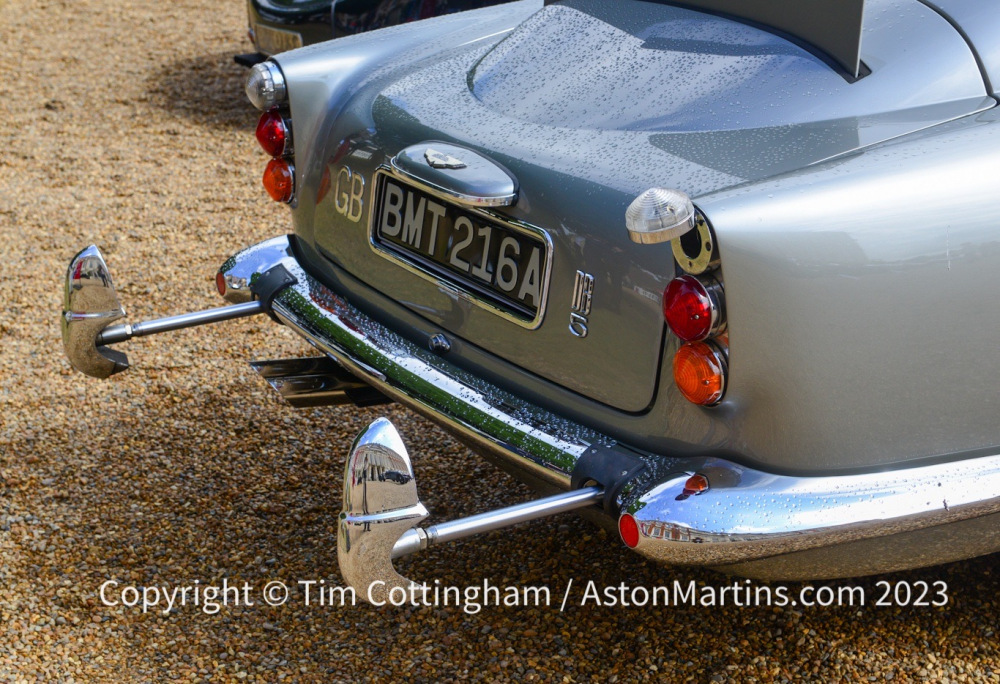
  • Front and rear extending over-rider rams
  • Front firing .30 calibre Browning machine guns behind the front indicators
  • Retractable tyre slashers (three eared spinners)
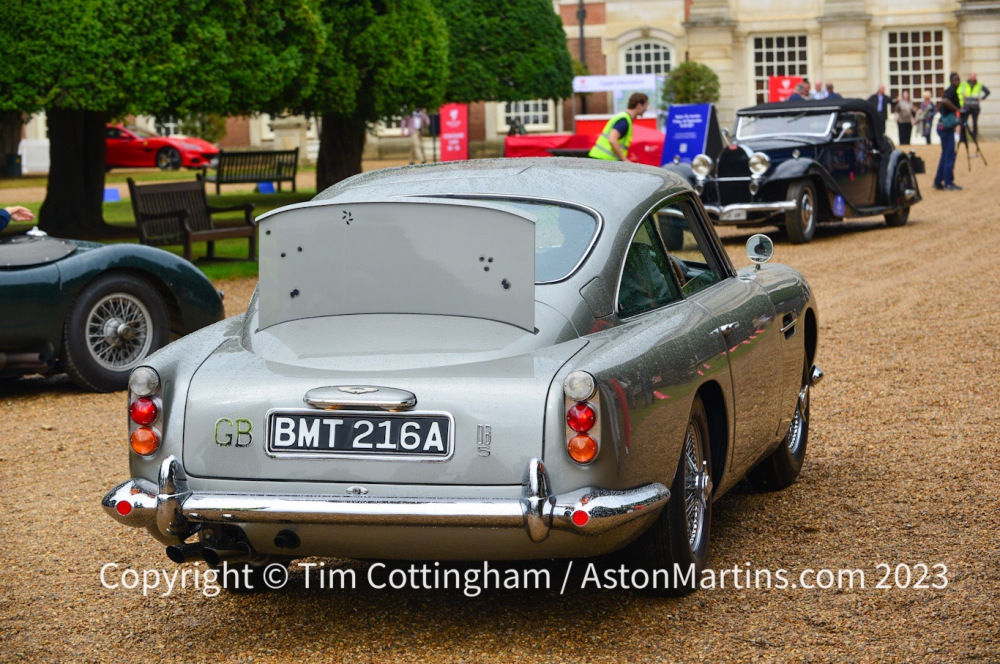
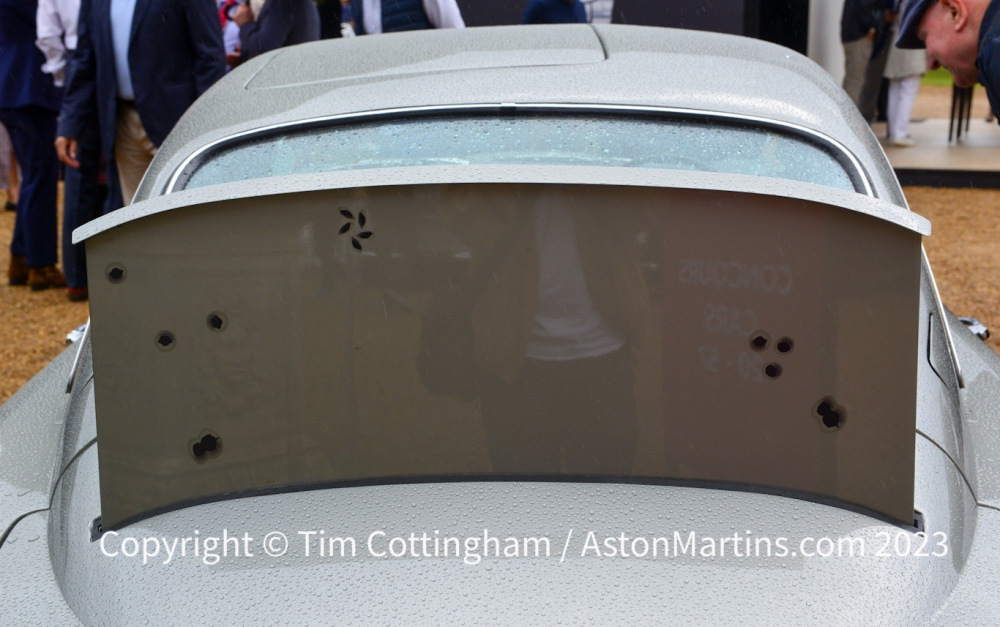
  • Retractable rear bullet proof screen
  • Radio telephone concealed in secret door compartment
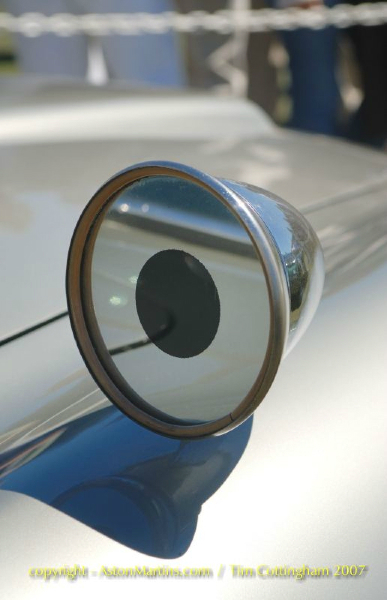
  • Radar scanner in racing type wing mirror, tracking screen in the cockpit
  • Passenger ejector seat – roof panel jettisoned just before the seat is fired
  • Oil slick ejector from nearside rear light cluster
  • Triple spiked nails (calthrops) from the offside rear light cluster
  • Cartridge for smoke screen released through the exhaust pipes
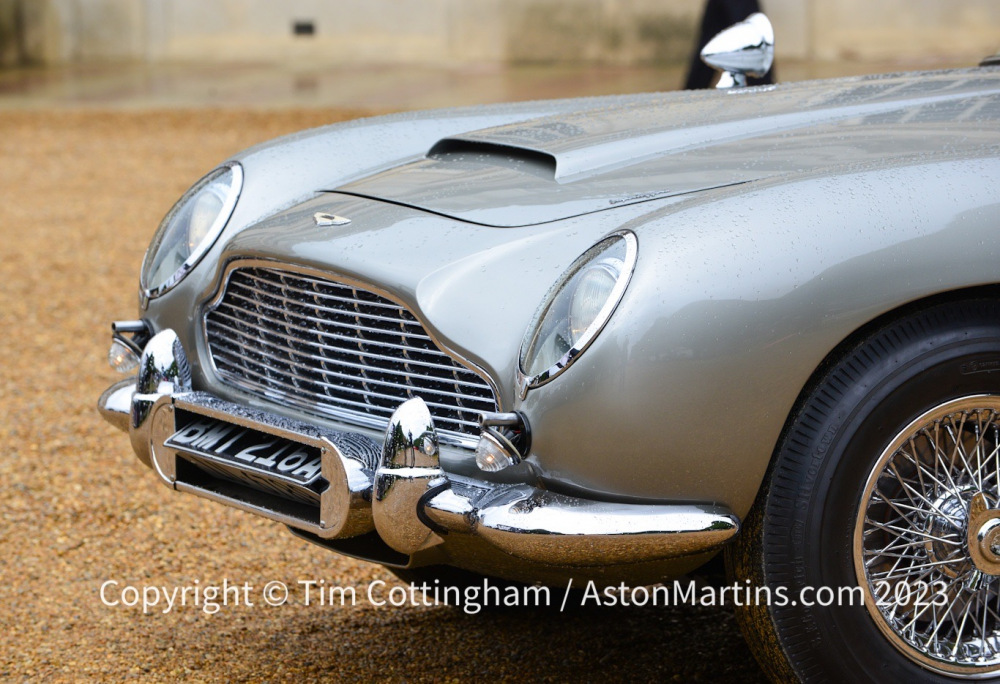
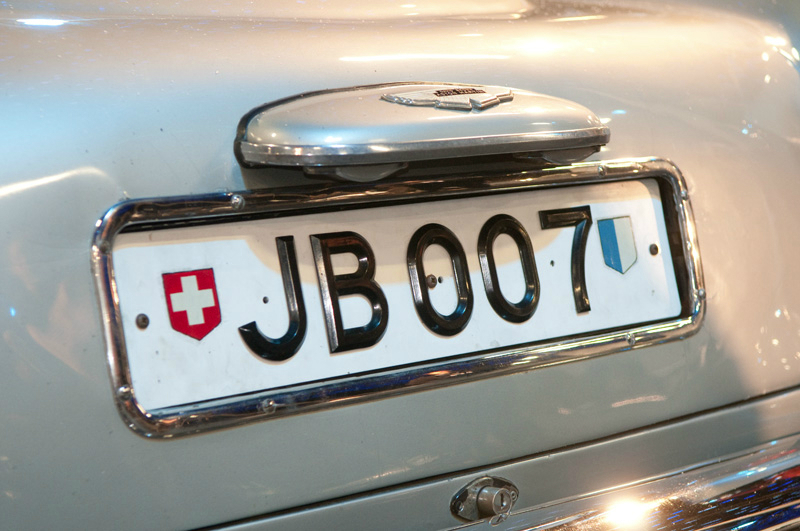
  • Revolving number plates (BMT216A – UK, 4711-EA-62 – France and LU6789 – Switzerland)
  • Armaments drawer under front driver seat
  • Bullet-proof front and rear screens

Initially, the effects car, DP216/1 was the only car with the extras fitted by the film production company, DB5/1486/R was in effect just a standard road car used for much of the driving sequences. But such was the demand for the 007 DB5 to appear around the world to publicise the films, the road car, DB5/1486/R  had the 007 extras fitted by the Aston Martin factory.

Both Goldfinger DB5’s also appeared in the 1965 James Bond film, Thunderball, with the addition of a Jet pack in the boot and rear firing water cannons. By 1968, the full effects car, DP216/1, still owned by AML, was returned to the Works and all the film company fitted special effects were removed prior to sale as a normal road car. Shortly after this DP216/1 was then refitted with replica effects by a Kent coachbuilder before being sold to an American collector. This car was stolen in June 1997 from a hanger in Florida and it’s whereabouts remain unknown. It may never be seen again.

The road car, DB5/1486/R, was privately owned in the USA by a collector from 1968 for more than 40 years and was seldom seen in public. Then in 2010, the owner decided to sell and the car was offered at the RM sale in London for £2.6 million (pictured here) – to another US collector.

As demand for the original movie cars to appear at events during the 1960’s was huge, two further DB5’s were converted by the factory for promotional work.

In writing this web page I have made great use of the book ‘The Most Famous Car in the World’ by Dave Worrall, the complete history of the James Bond Aston Martin DB5 which I can highly recommend.

DB5 V8 Saloon Prototype
DB4GT Zagato replicas, recreations & evocations

So far as I can reasonably say, all of the cars here are ‘real’ Aston Martins. That is that they are based on a genuine Aston Martin DB4/5/6/S chassis and an Aston Martin straight six cylinder engine as designed by Tadek Marek. I have steered away from featuring re-bodied DB7’s and avoided like the plague absolute fakes with no disenable Aston Martin parts whatsoever.

As FAS302 is on sale, it has it’s very own website. This particular car is quite interesting as it is a accurate replica of DB4GT/200/R, the very first Aston Martin Zagato.  The original front of 0200/R was damaged in a racing accident early in its life and was never repaired to it’s original ‘shark-nose’ shape. All other Zagatos had a simplified nose, so FAS302, with original spec ‘shark-nose’ is quite unique and genuinely attractive.

I must though issue a small note of warning over Zagato replicas based on genuine DB4 chassis. As the chassis has to be modified by having some length cut out, DVLA in the UK have considered theses cars of indeterminate age. As such, they would probably not be eligible for the rolling 40 year exemption from annual MOT testing and vehicle excise duty. Worse is that they may apply a ‘Q’ non-age related numberplate. 

DB5 James Bond ‘Works Replicas’

DB5/2008/R

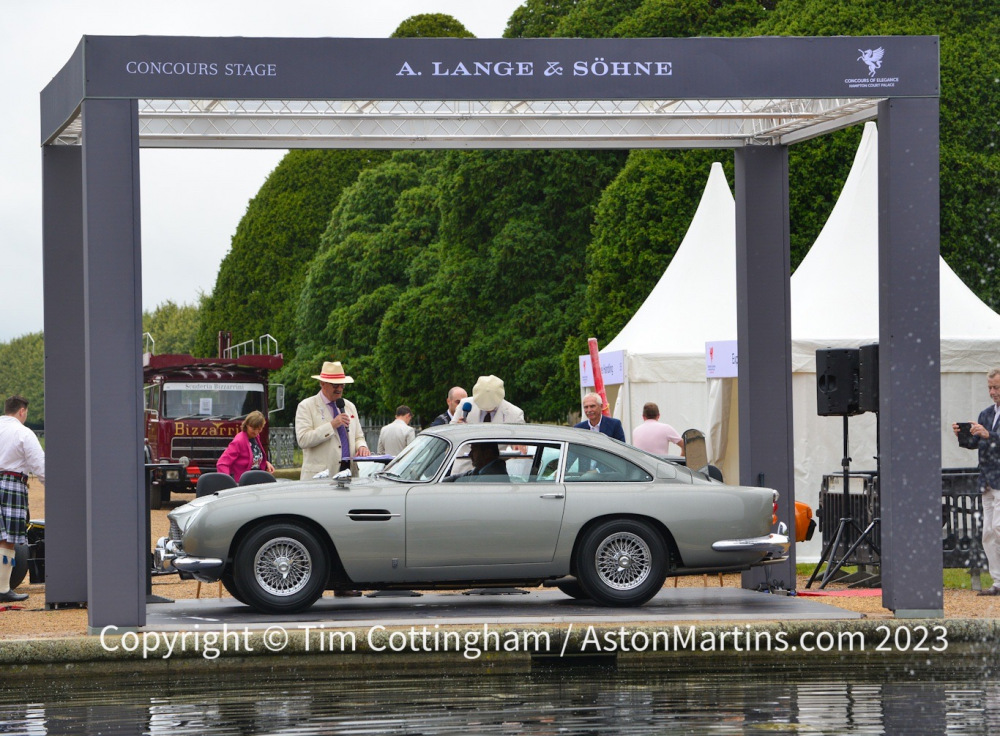
DB5/2008/R was for many years on display in the Smoky Mountain Car Museum but was offered for sale by RM auctions in January 2006 where it achieved a price of just over $2 million. It is believed to have been sold to a Swiss collector and was restored in Switzerland by Roos Engineering in 2010. It is now part of a private collection in the UK and was spotted at the 2023 Hampton Court Concours of Élégance.

DB5/2017/R

The final works replica, DB5/2017/R is part of the Dutch National Motor Museum, the Louwman Collection, which I have photographed both in its home and at the Pebble Beach Concours d’Elegance in August 2007.

« Newer PostsOlder Posts »