Latest News - 01/09/24

What's New @ AstonMartins.com?

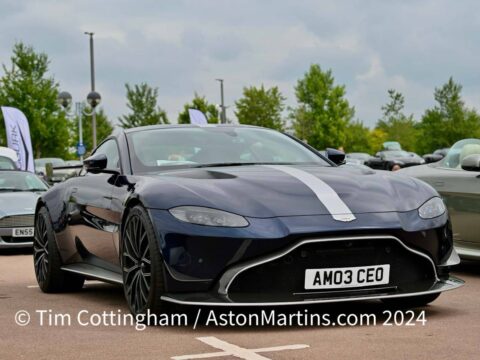
Vantage AM6 CEO by Q

DB7 V12 Vantage prototypes

Once these development cars have finished their life, they are usually scrapped totally. There are two main reasons for this. Firstly, to prevent any sub-standard or worn-out components being re-used on a car. And secondly, once scrapped, the car manufacturer can reclaim the VAT it has spent on the cost of the car. Many of the pictures below were taken in 2000 and 2001 of the ‘scrap yard’ at the back of the Newport Pagnell factory that is normally well off limits to the public. Most had been removed and scrapped by 2002.

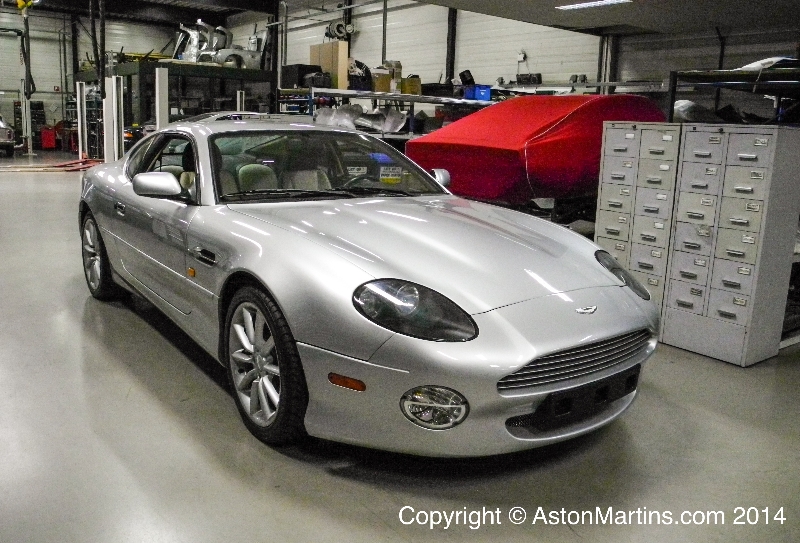
In addition to the cars stored at the factory, which were subsequently destroyed, six engineering  prototypes were sold off to special customers on the understanding that they would not be put on the road. Most but not all of these cars have been converted to race car spec although non has yet seen use in competition. One car that has been completed back to road spec is the silver DB7 engineering prototype, DP004 (below) which is part of a collection at Nobel House, the Dutch Aston Martin Heritage specialist.

DB7 V12 Vantage Coupe

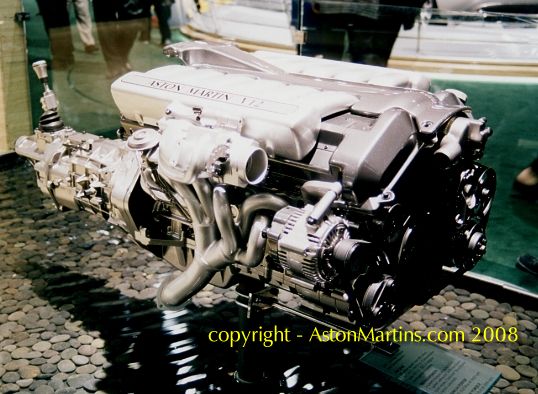
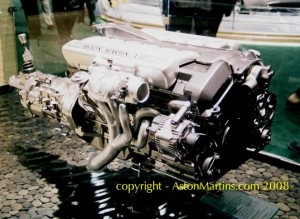
To the left is a display version engine from the DB7 Vantage, the first of a totally new generation, destined to became the future of Aston Martin during the first decade and a half of the 21st century. For the DB7 Vantage, the 5.9 litre, 48 valve, all-alloy, 60º V12 engine delivered 420 bhp and 400lbs ft of torque. Developed in close co-operation with the Ford Research and Vehicle Technology Group and Cosworth Technology, the V12 was designed to operate at a maximum speed of 7000rpm, features four valves per cylinder, twin overhead camshafts for each bank of cylinders and a sophisticated Visteon electronic management system. To cope with the massive increase in power, much of the chassis and suspension was extensively modified together with larger Brembo brakes.

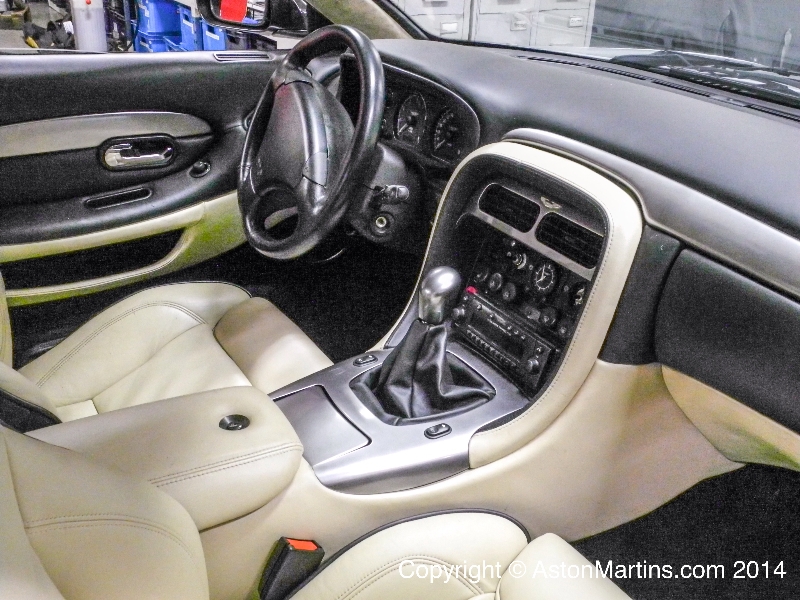
Initially the car was available with either a six speed close ratio manual transmission (184 mph top speed, 0 to 60 mph in 5.0 seconds) or a five speed automatic (limited to 165 mph top speed, 0 to 60 mph in 5.1 seconds). From 2000, a highly acclaimed ‘Touchtronic’ system became available, developed in conjunction with ZF. The system has three transmission modes available to the Vantage driver. As well as a standard ‘automatic’ mode there is also a ‘sports’ mode where up changes were made at higher engine speeds. But drivers could also select ‘touchtronic’ mode which is a sequential manual mode. Gears can be changed by either moving the gear lever back and forth or by using ‘+’ and ‘-‘ buttons on the steering wheel.

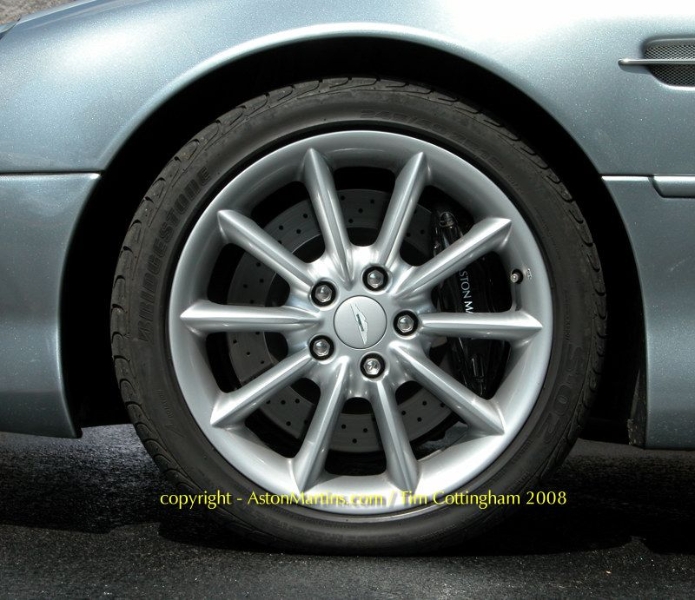
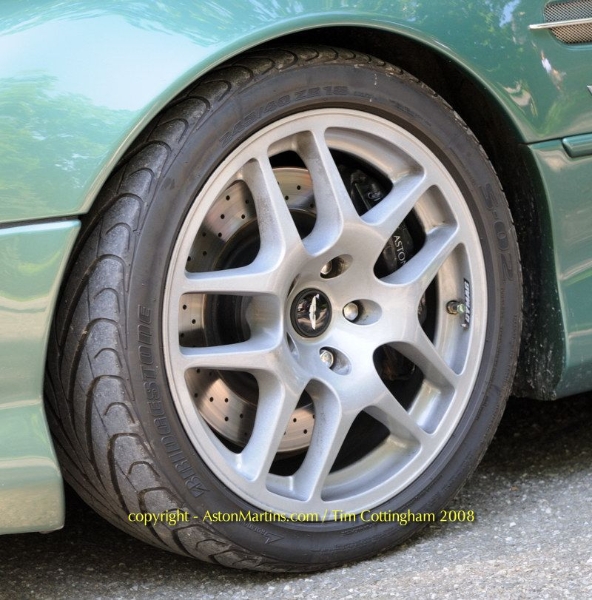
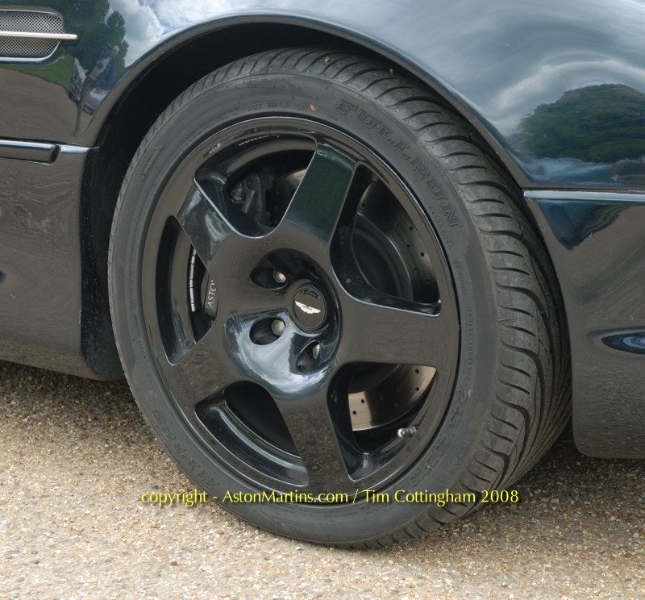
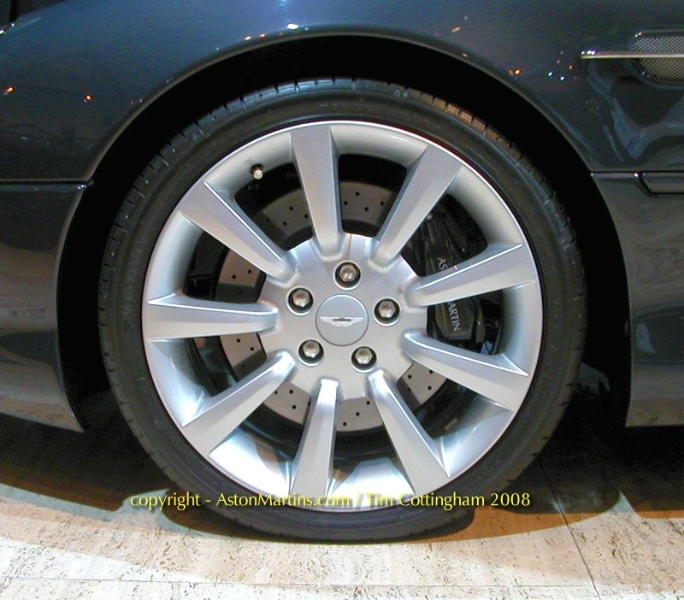
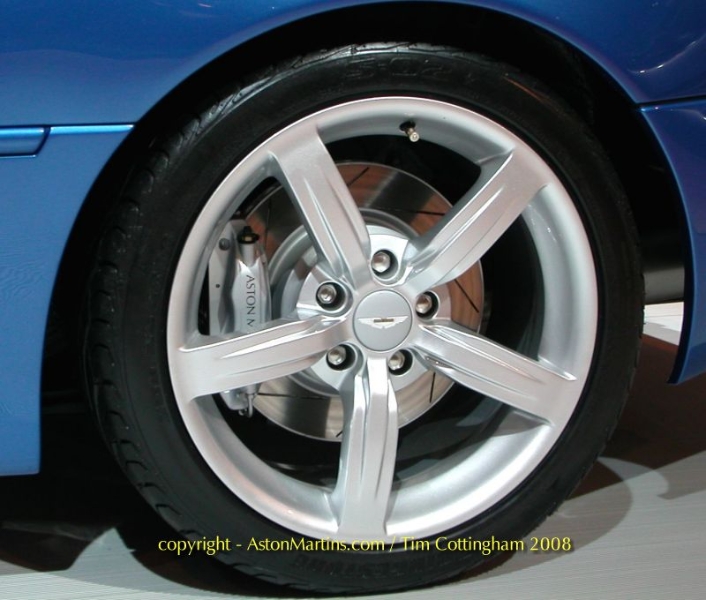
The images above illustrate the possible approved wheel options for the V12 DB7. The first image shows the standard 18 inch diameter, 10 spoke item. The second image shows the 18 inch 10 spoke ‘classic’ magnesium Dymag introduced in 2000. Dymag also make an 18 inch chunky 5 spoke design, known as ‘sport’ – perhaps the rarest DB7 wheel seen here finished body colour. The fourth image shows the 19 inch, 9 spoke design first offered in late 2001 for the 2002 model year. Lastly it is also possible to see V12 Vantages with the 18 inch 5 spoke wheel as fitted as standard to the V12 GT.

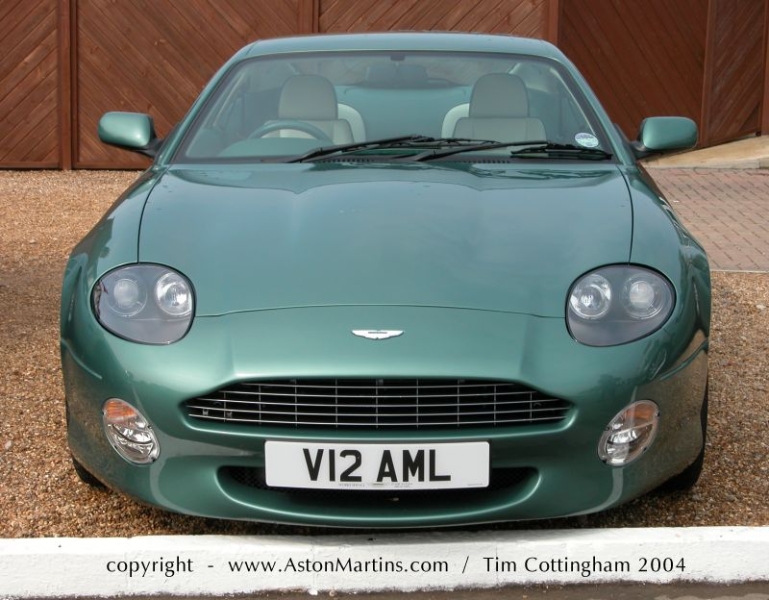
Below is the very last DB7 ever, which was completed by December 2003. It’s a right hand drive V12 Vantage coupe, chassis number 304458, finished in Aston Martin Racing Green. The car is being retained by the factory as it is occasionally displayed at the customer reception area at the Gaydon factory.

Total DB7 Vantage coupe production reached 2091 cars during four and a half years of building at the Bloxham site, which, together with the Volante and GT was an all time record for an Aston Martin model. The DB7 was replaced by the DB9 coupe in 2003.

DB7 V12 Vantage Volante

I guess the speed was restricted so that an over-enthusiastic driver doesn’t loose the roof when exploring the the extremes of the performance envelope. The Vantage Volante shares all the exterior features of it’s closed brother. The V12 engine (in stage 1 tune) needed more cooling air than the 6 cylinder and so the trademark Aston grille was enlarged. This meant the creation of new indicators and driving lights which were moved to a new position. These units are reminiscent of features on both the Project cars (DP212, DP214 and DP215) and the DBR1 race car.

Total production of the DB7 Vantage Volante reached 2059 examples, only a fraction behind the number of coupes built.

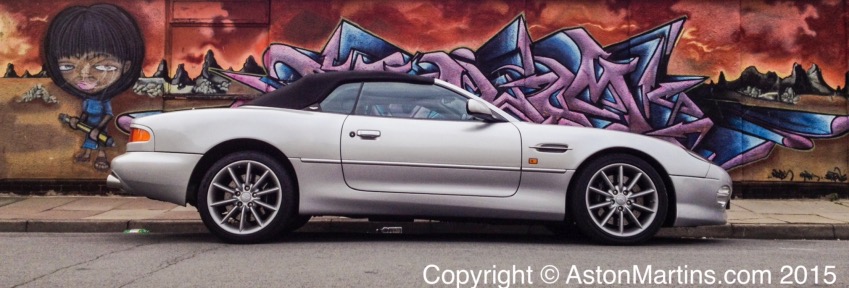
Aston Martin DB7 Vantage Volante

DB7 Vantage Volante in Dunhill Silver

DB7 V12 Vantage GTS II
DB7 V12 Vantage Volante LWB
DB7 V12 Vantage Driving Dynamics

Just to be clear, the rear lights are not officially known as Jaffa lights, but at least to my mind as reminiscent of the Jaffa grapefruit sold in the UK.

DB7 V12 Vantage Coupe ‘Stratstone Jubilee’ Edition

 Particulars of the unique and ‘fully loaded’ Jubilee are listed below

  • Coachwork finished in special order Jubilee Blue
  • Magnolia Hide Interior with perforated seat centres and Jubilee embossed head restraints
  • Contrasting Navy Blue dash top roll, door tops rear quarter panels and seat piping
  • Dark blue Wilton carpets edged with Magnolia hide
  • Blue over carpets edged in Magnolia with ‘Jubilee’ embroidered logo in silver
  • Parchment Alcantara headlining
  • Special order dark Italian Walnut
  • White dials with silver jubilee graphics
  • Special order 19 inch wheels
  • Silver brake callipers with blue Aston Martin lettering
  • Touchtronic Transmission
  • Premium audio plus satellite navigation and Tracker 24 hour
  • Heated front screen
  • Fitted Umbrella (Black/Silver Handle)
  • Large Bore Tail Pipes
  • Satin Pedals
  • Unique wide mesh chrome grille with ‘Jubilee’ badge and chrome door mirrors
  • Clear side repeater lenses
  • Numbered Jubilee sill plaques
  • Handbook bound in Navy Blue hide and silver embossed plus a numbered limited edition gents chronograph watch

All this for a ‘just’ £120,950 – the standard Vantage coupe could be bought for £95,000 – admittedly without any extras what-so-ever.

All 24 cars were pre-sold and their lucky owners took delivery at a very special ceremony held at Thornbury Castle. The cars were especially hidden from the excited new owners during the daylight hours in a large marquee especially labelled ‘Tinnars Moat Craft Fair’ – Tinnars Moat is of course an anagram of Aston Martin. After a lavish meal, the sides of the dining marquee were dropped and the cars were revealed.

In addition to the UK/European cars, there were a further 26 cars made, all left hand drive, for the North American market to exactly the same cosmetic specifications.

DB6 Mark 2 Volante Electric Conversion Prototype

First thing that needs to be stated is that this car, a rare DB6 Mark 2 Volante is not a factory replica such as the continuation DB4GT, DB4GT Zagato or the Bond spec DB5’s. This is a genuine old Aston Martin that has had it’s 4 litre straight 6 engine exchanged for an electric motor, control system and battery pack. So, whatever lawmakers throw at old, thirsty and polluting Aston Martins, the technology now exists to keep them on the road, guilt free.

What is neat is that the conversion is fully reversible. At anytime, the owner can have all the fancy electrical equipment removed and the conventional powertrain reinstalled.

So far, the EV Volante is acting as a testbed for the technology although in the near future (maybe 2020), the system will be made available to other DB’s, V8’s and Lagonda’s. Aston Martin Works are claiming the weight of the EV power pack and output are a  match for the 282 bhp straight 6 so the suspension and brakes are unchanged. No word on performance as yet but given time and the inevitable march of technology, there is no reason to believe that the electric conversion should match and even exceed that of the original petrol car. Works are a little tight-lipped about the tech but it is believed it owes quite a bit to that used in Aston Martin’s first production EV, the RapideE, the first Aston Martin built in Wales.

Sadly the car is almost silent in operation. Despite keeping the exterior look absolutely as standard, the wonderful sound of the petrol engine is lost. You could of course have this replicated but it would be maybe a tad tasteless. 


DB7 Zagato Prototype ‘Georgia’

By August 2002, the pre-production car was unveiled to press and potential customers in an exclusive gentleman’s outfitters in Saville Row, London, just a year after the chance meeting at Pebble Beach. The DB7 Zagato was well received indeed even with a price, estimated to be in the region of £160,000, a £60,000 premium over the standard car. AM stated that production would commence once sufficient orders had been received. Initially it was decided that between 75 and 99 could be built but after huge interest, the run was capped at 99 with many more customers on a waiting list. Collectors were no doubt very keen to own such a car; prior to the DB7 Zagato, the joint efforts of AM and Zagato had only ever produced 109 cars. The design was principally the work of Zagato but with input from Henrik Fisker, who at the time was Aston Martin Head of Design.

The production DB7 Zagato was subsequently unveiled to the public at Paris Motor Show in late September 2002, but sadly, AML decided that as every car has already been pre-sold, it wasn’t necessary to be displayed at the British Motor Show at the Birmingham NEC in late October 2002.

The prototype car known internally as ‘Georgia’, initially started life as a early production DB7 Vantage Volante, which explains the ’99 ‘T’ registration plate. Initially the wheels were of a different design and the wing mirrors were the Citroen CX type as used on the DB7 i6. By the time that I saw the car at Newport Pagnell in May 2003, the wheels and wing mirrors had been changed to those of the production car. In addition to this prototype which had retained the standard 420bhp engine, a second confirmation prototype was built from scratch to full Zagato specification. This car given the last chassis number in the series, 700100, was retained by AML following time as a press demonstrator.

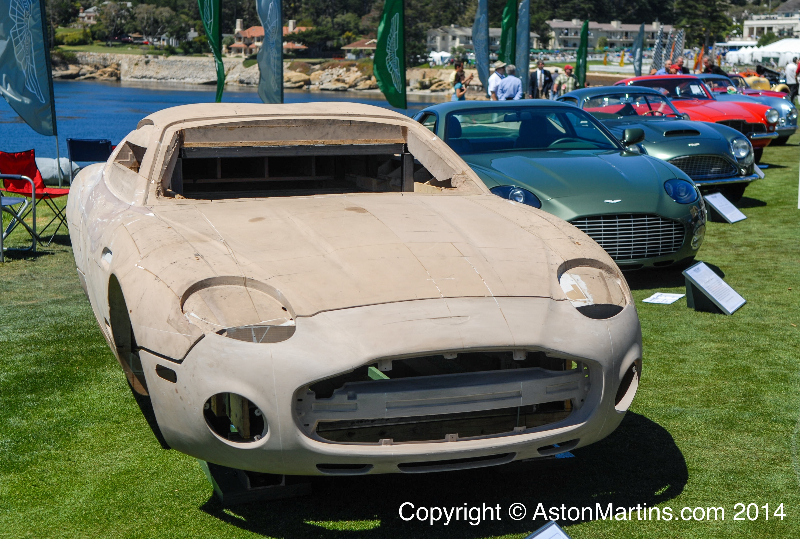
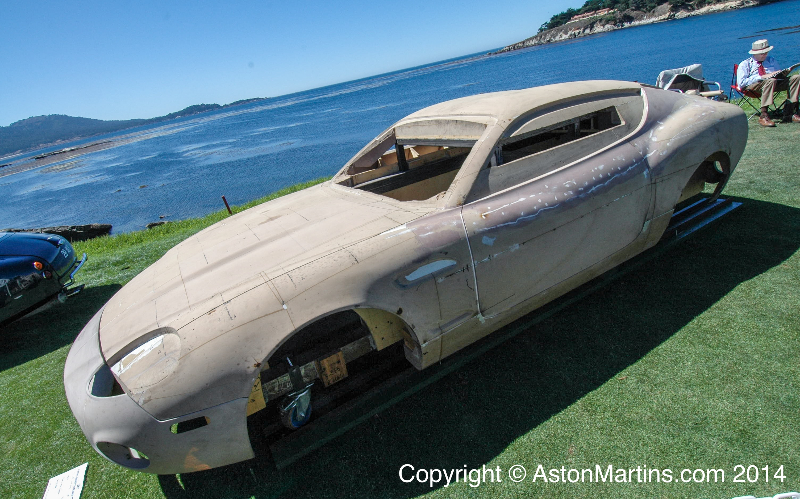
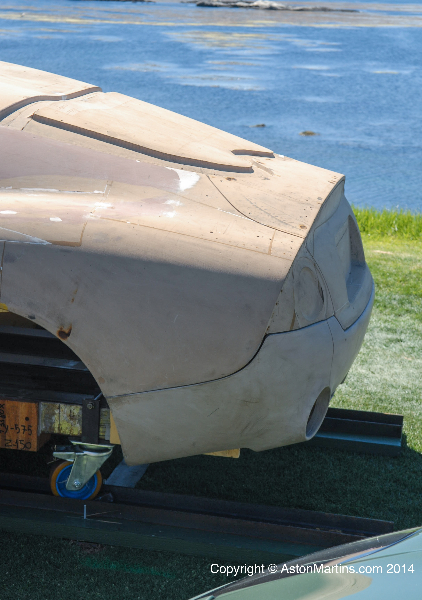
A very rare opportunity to photograph the DB7 Zagato styling buck (‘master’ in Europe) came about when it was displayed alongside chassis number 17 (perhaps the only US registered DB7 Zagato) at the 2007 Pebble Beach Concours d’Elegance. The buck is made of Epo-wood over wooden box sections that are further mounted on steel beams with trolley wheels attached to allow it to be moved easily. The buck was used by Zagato in Turin to shape the actual panels of the production cars.

DB7 Zagato

DB7 Zagato

The engine is a modified version of the familiar 5.9 litre V12 with a new exhaust system to produce an output of around 435 bhp. The modified DB7 Vantage Volante chassis was built in the UK, then shipped out to Milan for Zagato to hand fit the body panels, mostly of aluminium. So, thankfully, even in 2003, Aston Martin were still offering a ‘coachbuilt’ car in the best traditions of Newport Pagnell. With the reduction in length, the rear seats were deleted and the boot was rather small too – the Zagato is strictly a two seater. The DB7 Zagato was the first Aston Martin to use Aniline leather as standard in place of the more durable pigmented leather.

Distinguishing features on the Zagato car include a new deeper variation on the classic AM grille design; the rear also mimicking the grille shape and a wonderfully shaped rear screen which my daughter christened ‘the sunglasses’. Whilst both the headlights and front lights are straight from the standard car, the rear lights are pure Italian. Of course, the trademark Zagato ‘double bubble’ roof is a strong feature. The boot panel is an unusual drop down type.

All 99 production cars found happy owners, and a 100th car, a pre-production example was retained by the factory and can occasionally be seen at the Gaydon factory, BMHT museum also at Gaydon or the with the AMHT collection at the Barn

Below, are some very rare photographs were taken at the new AM Gaydon facility during the 2003 AMOC open day. Although the DB7 Zagato was supposed to be being built at the nearby Bloxham factory, these completed bodyshells were photographed both in the new class leading paint shop and in the storage facility prior to being taken to Bloxham for assembly.

The above DB7 Zagato, chassis 100, was retained by Aston Martin and is cared for by the Aston Martin Heritage Trust at their museum in Oxfordshire.

A rare sight of two DB7 Zagatos taken at the 2019 DB7 Celebration Event

All rights to supply parts for the DB7 Zagato are now held by the Dutch Aston Martin Heritage specialist, Noble House.

« Newer PostsOlder Posts »